A key referent in the history of Colombian photography, a tireless teacher remembered by several generations of graduates from Bogotá universities, a photographer who placed high demands on himself as well as on his audiences, Abdú Eljaiek is an essential artist in any understanding of the visual history of Colombia during the second half of the Twentieth Century, yet remains scarcely known outside his native country.
His essentialist, reflexive work is faithful to its own principles and to the idea of a type of photography that is spontaneous yet sophisticated in its resources. To that purpose he photographed natural spaces and traditional architecture, shot portraits of his era’s artists and intellectuals, and portrayed common people; his use of natural light and the simplest technical elements, taken to the maximum potential, has been a unique application of the “less is more” maxim in the field of photography.
Eljaiek was born in 1933. He studied at the School of Fine Arts in Bogotá between 1951 and 1953, and later worked in the fledgling Colombian TV industry as a primarily self-trained camera assistant, cameraman, and editor: “Sometimes when film rolls were taken in for development —and all the material was shot in the film—I noticed that 10, 20, 50 feet of film were left over. I picked up those leftover pieces of film and saved them inside a little box. When they needed an editor, I volunteered myself. I was taught how to splice the film pieces, and at night, after work, I stayed so that I could work on my own material.”
During that decade, Eljaiek began to work in El Tiempo newspaper as a portrait photographer for the Sunday supplement. This connection was to prove decisive since those “Sunday readings” congregated the most prominent intellectual figures of the era as contributors to their pages. This is how he made the acquaintance of the artists, writers, and poets that gathered at Automático Café around the poet León de Greiff; one of the photographers Eljaiek most admired, Leo Matiz, was a member of the group, and thus the younger artist able to show.
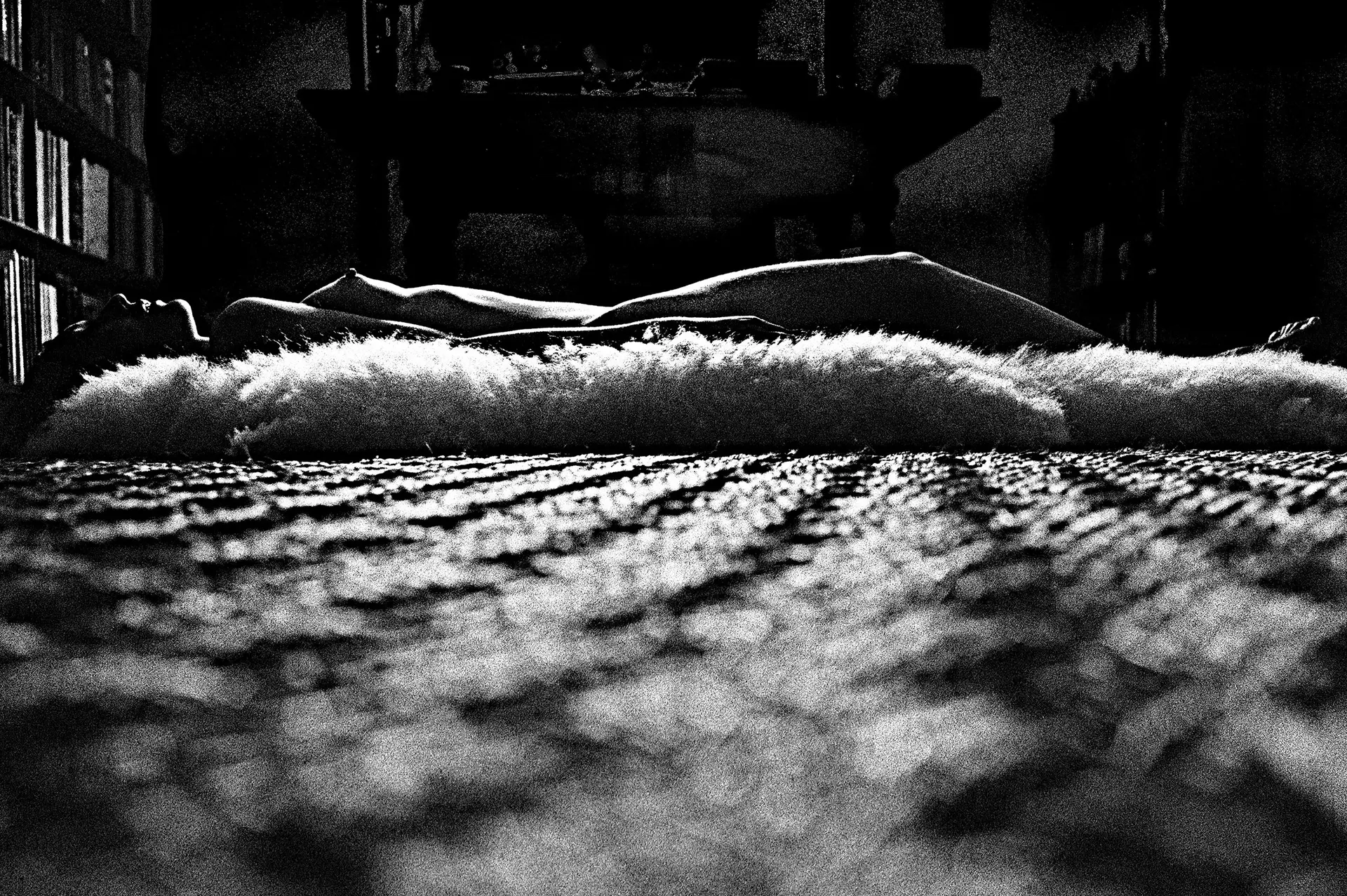
In 1963, Eljaiek presented his earliest exhibitions in the Arte Moderno and El Callejón galleries, the latter owned by Casimiro Eiger and the place where such artists as Grau, Ramírez Villamizar, Wiedemann, and Guayasamín, among others, also exhibited their work. But it was in 1969 that Eljaiek’s photographs found significant resonance, due to an exhibition that proved controversial in the cold, conservative city of Bogotá. The previous year, in that now-legendary 1968, Eljaiek and the poet Eduardo Mendoza Varela created a series of female nudes, shot in the latter’s library. The model, chosen for her charisma and beauty (and also because she volunteered) was Dora Franco, then an art student and later the most celebrated Colombian fashion model of her era as well as a salient fashion photographer in her own right.
The resulting images, all in black and white, exhibited at the Colombian-American Center in Bogotá—the institution supported the show with no hesitation, given that the public viewing of photographic nudes was par for the course in the United States—were met with intense rejection, and the model was the victim of verbal assaults on opening day. Seen today, these images cannot seem any more innocent; it is difficult to understand how taboo nudity was at the time.
Interestingly, the scandal positioned Eljaiek as one of his generation’s representative voices. Also, besides his portraits of Franco, Eljaiek chose figures of the era that stood out for their uniqueness and their identification with the free-spirited, emancipatory energy of the 1960s. The sociologist priest Camilo Torres and the already mentioned poet León de Greiff posed for his camera, in the midst of spontaneous conversations that highlight the photographer’s ability to encapsulate each of his subject’s characters.
Almost immediately afterward came Eljaiek’s collaborations with various writers. With Eduardo Caballero Calderón, in 1970, Eljaiek produced a book titled Yo, el alcalde (I, Mayor), portraying the same characters and the same environments that his admired Luis B. Ramos had captured for a previous volume by the same writer—Diario de Tipacoque (Tipacoque Diary)—two decades earlier. In 1975, he published, with the writer and art critic Fausto Panesso, Los Intocables (The Untouchables), dedicated to the same group of artists that Marta Traba and Hernán Díaz had portrayed—Traba in words, Díaz in photographs—a decade before in Seis artistas colombianos contemporáneos (Six Contemporary Colombian Artists, 1963). With the exception of Wiedemann, who passed away in 1969, Panesso wrote and Eljaiek portrayed Botero, Obregón, Grau, Negret, and Ramírez Villamizar in their studies. While in his collaboration with Caballero Calderón Eljaiek was following on Ramos’ steps, on this occasion he had an opportunity to revisit the subject and the characters that his colleague and contemporary Hernán Díaz had photographed so well.
In 1977, Eljaiek launched, in collaboration with Eduardo Mendoza Varela, Permitido en Colombia (Allowed in Colombia), a documentation of the ecological damage to the León River in Urabá and one of the first pro-environment documents produced by a writer and a photographer in Colombia. The entire print run was picked up by the lumber concern that sponsored the photographer’s journey in an evident miscalculation of Eljaiek’s ability to capture and willingness to denounce its abuses. There were more collaborations with authors in the following four decades, but there is as of yet no single volume gathering Eljaiek’s extensive, diverse, and complex oeuvre.
Technically, Eljaiek’s masterful handling of light is widely acknowledged and lauded by his colleagues. Using natural light is always foremost among his preferences, as we mentioned, because it “possesses the sweetness and a fidelity beyond any other mode of illumination,” as Hernán Díaz put it.
Efraím Cárdenas, who was Eljaiek’s disciple for several years, remembers: “Abdú was a very simple photographer, very European; he worked with natural light, with the surrounding environment, with the minimal elements. But he has a very special eye for seeing and composing images. I saw him illuminate the Colón theater in an incredible way. All he carried with him was a camera and a pocket flash. He had all the lights turned off and began to paint with his flash, shooting it in different directions. I saw him illuminate an entire factory with just that, a pocket flash.”
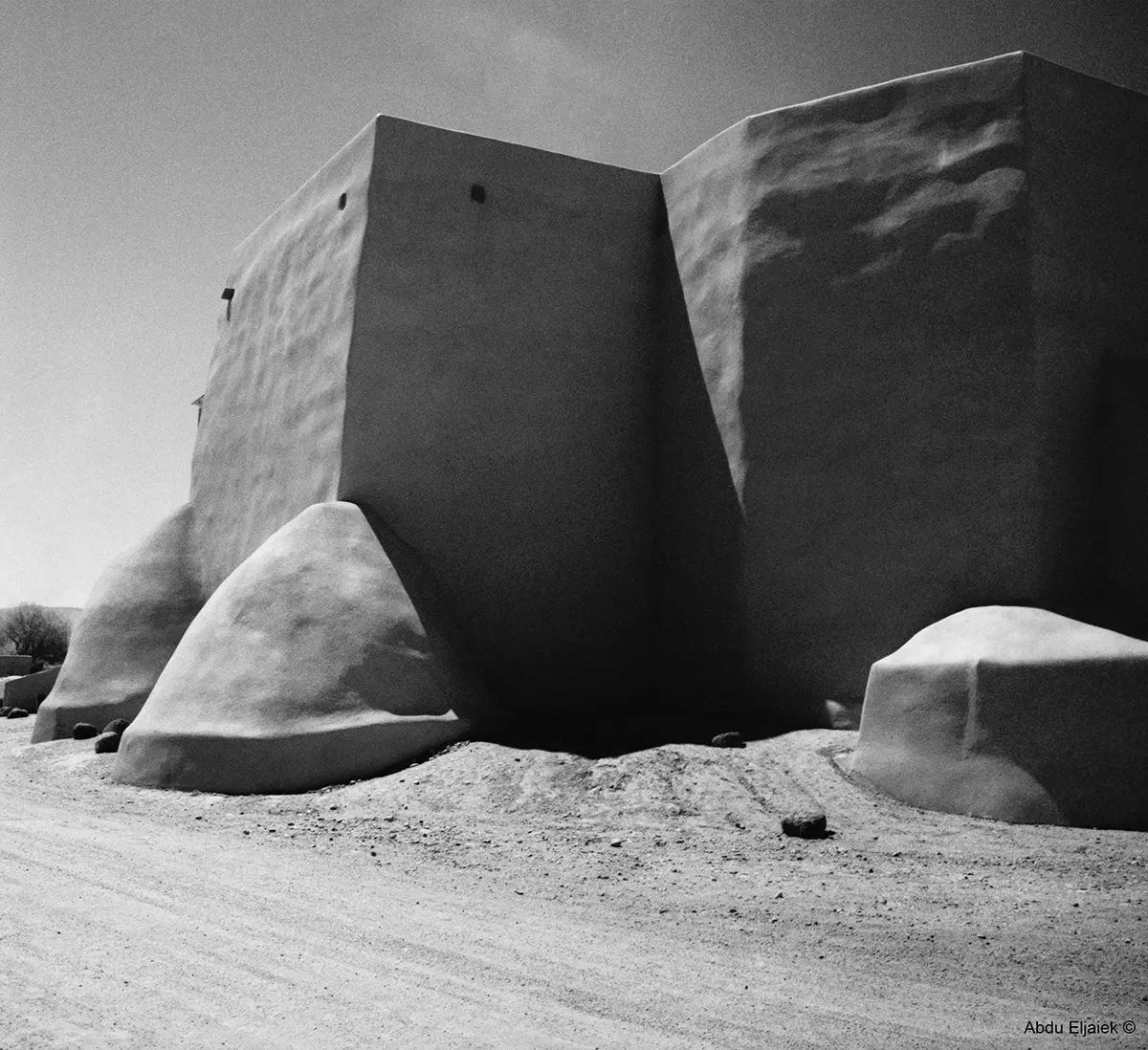
To a significant degree, the success of Eljaiek’s images is based on his ability to take maximum advantage of the capacity of his equipment in an open field. A good example of this is the images he created in 1973 after being invited by the State Department to travel around the United States. Equipped only with 10 rolls of film and two 35-mm cameras, including his loyal Canon F1 and his telephoto lens, he visited San Francisco, Punta Lobos, the Grand Canyon, the Moab desert, Monument Valley, New Mexico, and Taos, places he had first become familiar with through the images produced by his predecessors, the legendary photographers of the f/64 group.
The journey included an encounter with Ansel Adams in Carmel. Eljaiek, a purist of spontaneity, met Adams, a purist of premeditation. At a given moment, Eljaiek confesses to Adams that he did not use the zones system, to which the old master responded: “That doesn’t matter. What matters is that the shot is well exposed.”
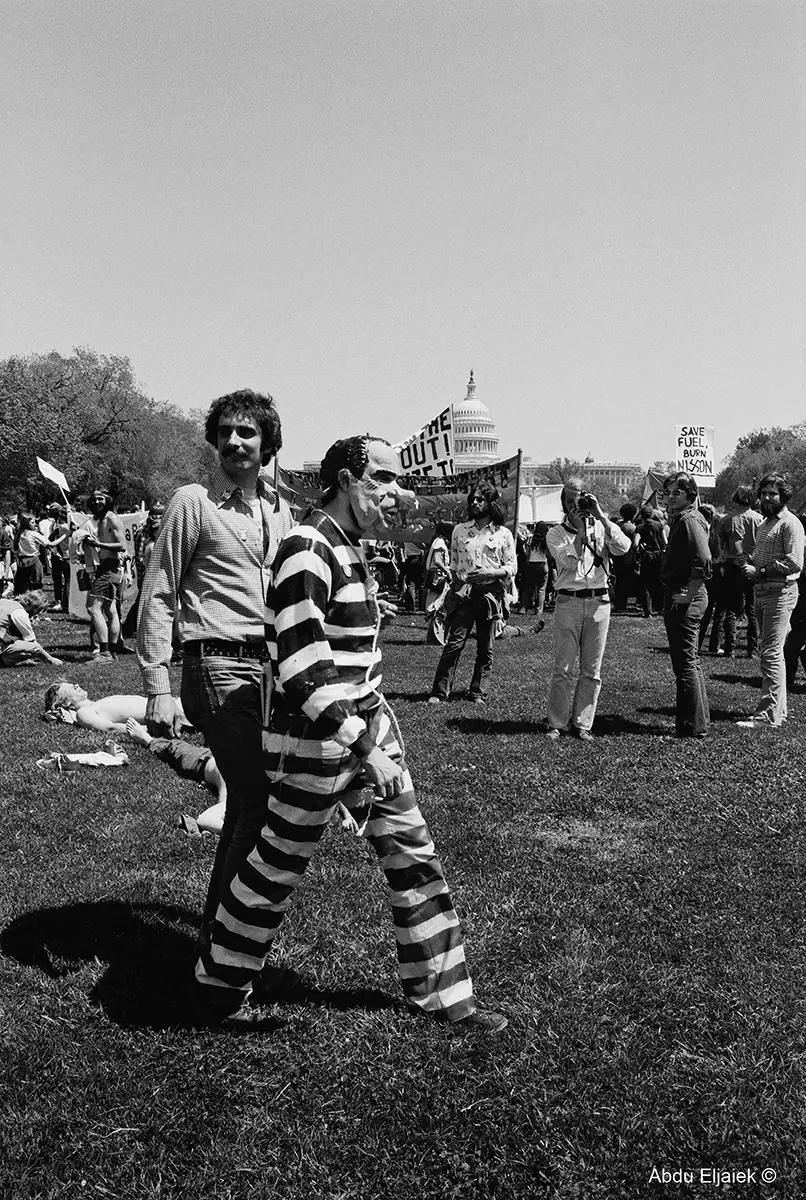
In that trip, Eljaiek made excellent use of values that were at the core of the work of f/64, such as a clear focus, an austerity that was not after an elaborate poetics but did express respect and admiration for nature, the use of natural light, a tendency towards the timeless and the eternal in a single image. The following year, at the Colombian American Center in Bogotá, he presented the experience in an exhibition that stood out for its innovative display arrangement.
A little over four decades later, in 2017, and in the same space, Eljaiek’s US sojourn was revisited in the exhibition Go west! Abdú Eljaiek -Estados Unidos, 1974, an occasion to once again contemplate his direct and indirect tributes to the landscapes of North America and their great photographers—Edward Weston, Minor White, Adams—and to admire his ability to achieve maximum effect with a minimum of elements.
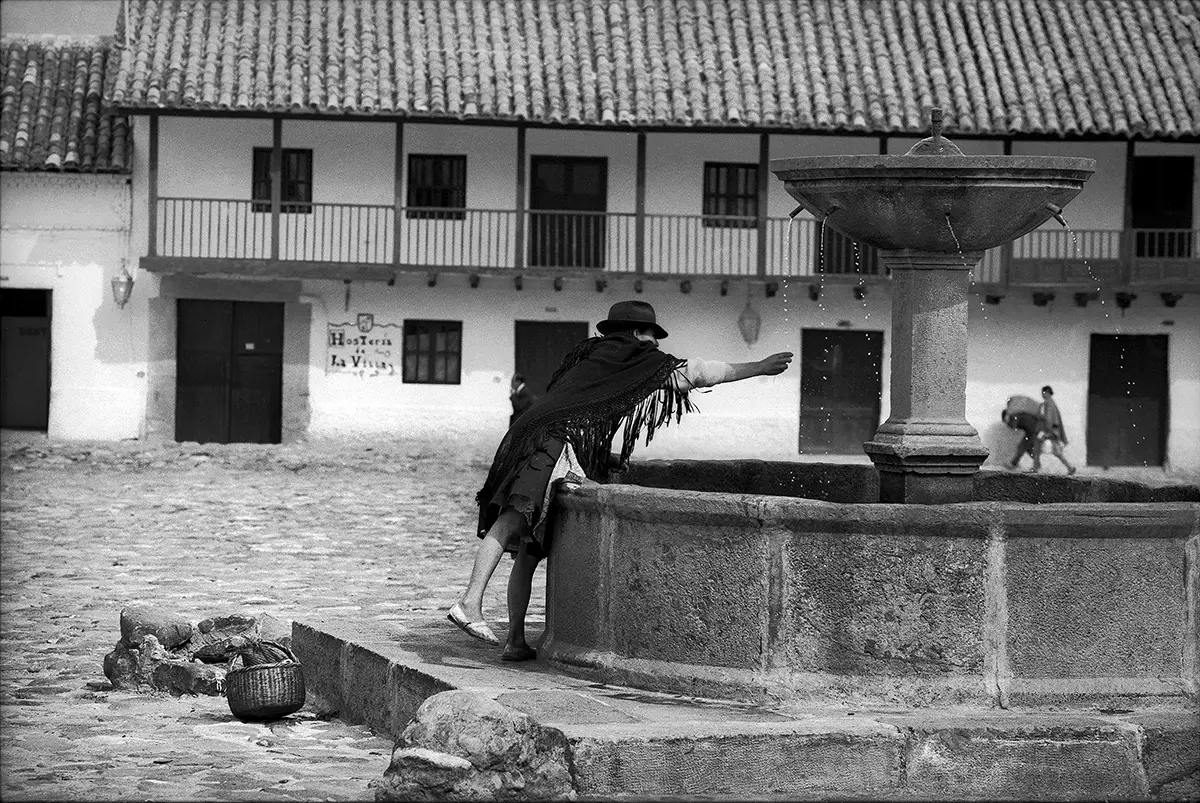
Generous with his knowledge and expertise, Eljaiek has been a devoted teacher. His role teaching elements of cinematographic technique to Jorge Silva or the legendary documentary film Chircales (1966-1970), which Jorge codirected with Marta Silva, has not been sufficiently acknowledged. During the first half of the following decade, in his studio in Palomar del Príncipe, Eljaiek trained some of the best photographers of the period, such as Efraím Cárdenas, Javier Sandoval, Ricardo Gamboa, Sergio Trujillo Dávila, Viki Ospina, and Diego Samper. Photographers like Ramón Giovanni and Santiago Harker, among others, also received Eljaiek’s advice during their education. And he has been as generous with his contemporaries as he has been with his disciples. In the course of his life, Eljaiek had to struggle against incomprehension and the low aesthetic value assigned in Colombian culture to photography, and he has recognized his colleagues as valuable communicators who engaged both aesthetic and technical aspects with dignity, tenacity, and ambition. Besides Hernán Díaz, whom he always acknowledged and admired—a mutual feeling, it is worth noting—Eljaiek mentions Hernando Oliveros’ technical skill, Francisco Carranza’s and Carlos Caicedo’s mastery of the photo essay, Fernell Franco’s unique poeticism, Efraín García’s (Egar) narrative excellence, Gabriel Carvajal’s consistency, anthropologist and archaeologist Gerardo Reichel-Dolmatoff’s talent, and the architect-photographer Germán Téllez, whom he deems “a magician.”
Téllez left behind two extraordinary photo books, the first and second parts of Crítica e imagen (Critique and Image, 1977 and 1998), and Eljaiek also had Colombian architecture as one of his preferred subjects. In his case, it was folk constructions, which he explored in depth in the colonial town of Villa de Leiva. The quicklime walls, the cobblestones, the clear skies, and the almost blinding light of the Andean plateau, all present in this town of dominantly Spanish architecture, have for many decades helped the photographer discover the interplay of light and shadow and himself in it, the contrast between volumes—of the walls, the roofs, the churches. His love for the inhabitants and landscapes of Boyacá, the region where Villa de Leiva is located, is undeniable. In a recent interview, Eljaiek was asked what work from the entire history of art he would take with him forever, and he answered: a little Ráquira horse.
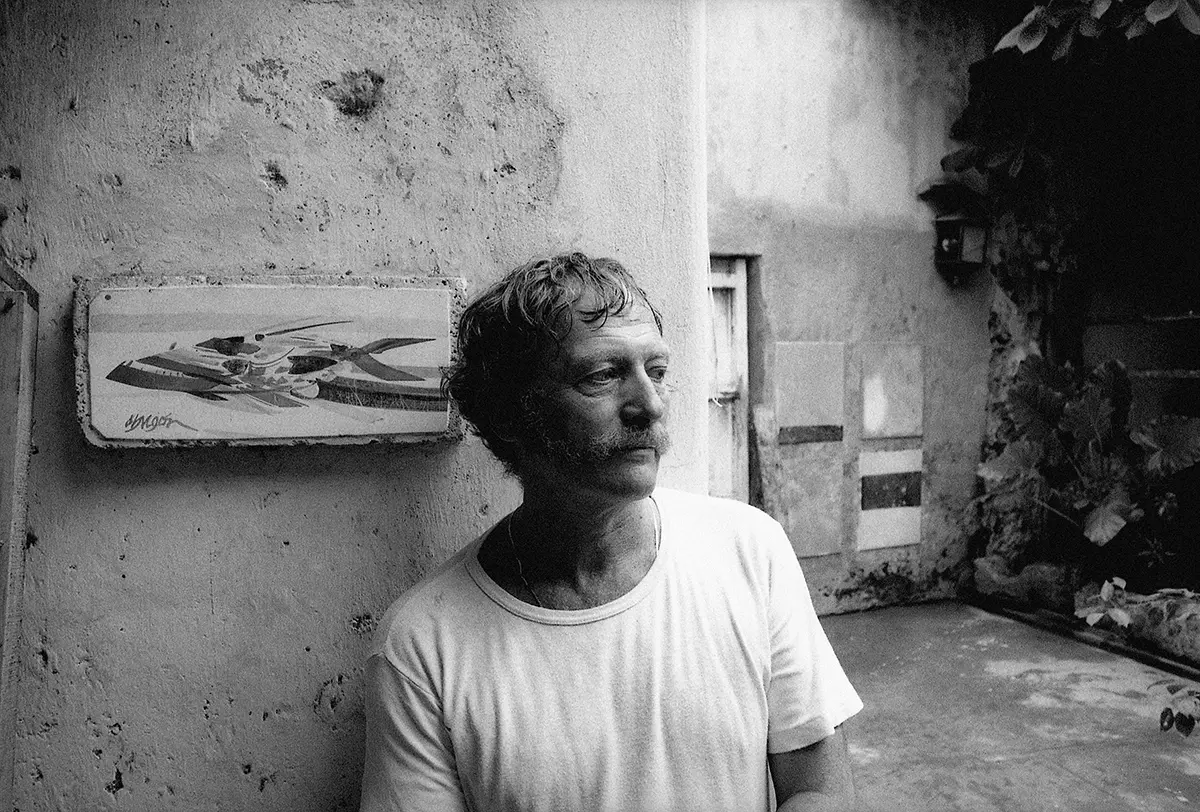
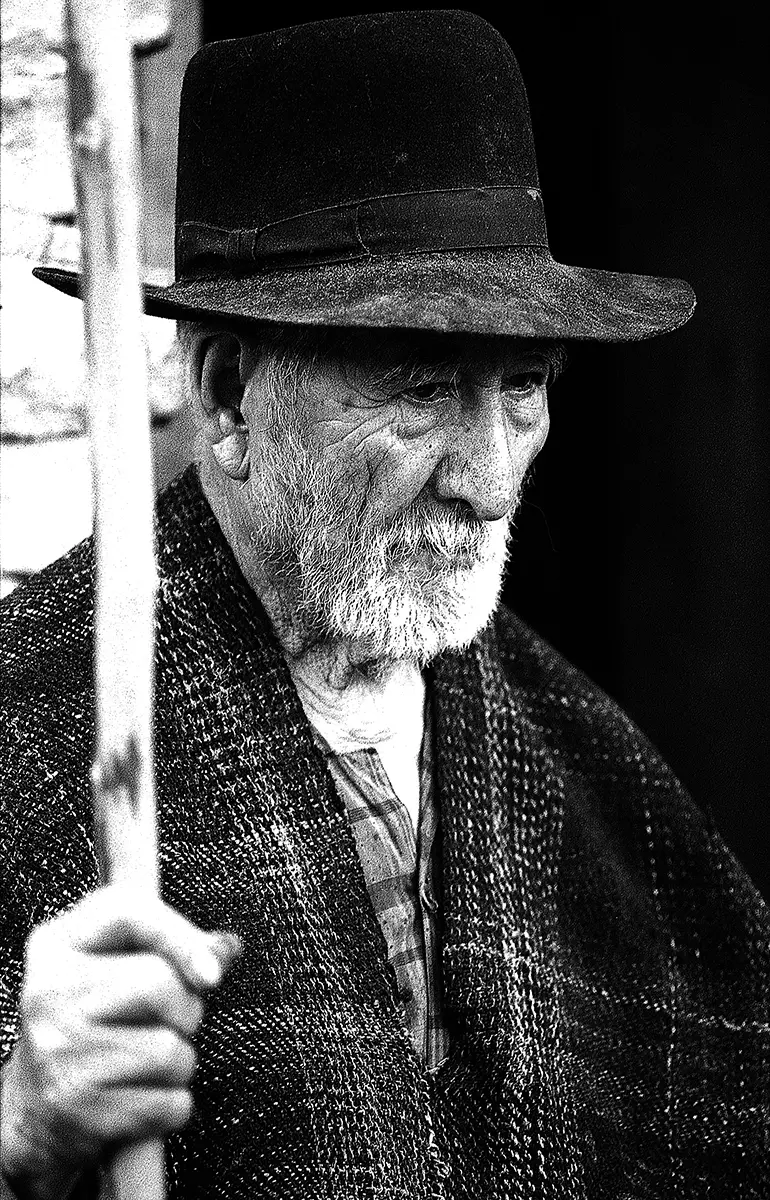
The latter anecdote is all the more significant if we remember that, if Hernán Díaz showed us what Cartagena really was in his anthology photobook Cartagena morena (Swarthy Cartagena,1973) and Gerardo Reichel-Dolmatoff introduced us to the Indios de Colombia (Indians of Colombia, 1991), there can be no doubt that the visual identity of the plateau peasantry was in good measure the result of Eljaiek’s years of effort, not only depicting the local architecture but also the landscape and its peoples, all brought together in one of a scarce handful of books that have been published with his work, Villa de Leiva (1997), featuring images captured there in the course of 30 years.
In recent decades, Eljaiek has taught at several Bogotá universities, retiring only at the age of 80. Retirement has not slowed him down, however. Since the advent of digital media and our arrival to a truly post-photographic era, Eljaiek has devoted himself with great enthusiasm to reworking some of his older images, subjecting them to post-production processes that he would have perhaps rejected in the past but now enjoys, with full awareness, as an opportunity to push his own boundaries and to arrive at an aesthetic refinement that can only be based on his long experience.
Already an octogenarian, in recent interviews Eljaiek has shown himself to be positively confident in the present, asserting that the best moment in the history of humanity is the one we are living through. We, his public, hope for his career to achieve as it nears the end recognition it deserves, and for a large retrospective of his life and work to be organized soon.
* All the photographs are digitalized complying with printing and conservation standards. Courtesy of the artist.
SANTIAGO RUEDA
Independent curator, contemporary art researcher.