The Republic of Panama could be defined, like many others, as a nation of deep contrasts. Its capital is a city of violent juxtapositions, where the horns of cars and the songs of tropical birds fuse into a single chord; a city of harried passages between the rainforest and the megalopolis, between descendants of wealthy Jewish families and the Kuna Indian. Yet, despite the luxurious skyscrapers and shopping malls, a shroud of uncomfortable silences extends over every day in Panama City, a veil that hides most of its truths, which are nevertheless acutely necessary if one is to understand the complex essence of the country. “A country often pigeonholed by stereotypes,” says Gerardo Mosquera, closing with that sentence in his introductory essay for LARA Panama 2017.
Latin American Roaming Art (LARA) is an itinerant residency held annually since 2012 in different cities throughout the region. Each edition invites eight artists (three from the host country, five from other Latin American nations) to a stay that includes visits to iconic sites, tours, and exchanges with local residents. José Roca, the director of the program, designates for each occasion a curator in charge of the exhibition. For LARA Panama, it was Gerardo Mosquera.
Among LARA’s main goals are to reveal an “other” Latin America to its artists; to foster new spaces for dialog between artists and their surroundings, and to break through stereotypes by means of shared direct experiences. In Panama, the boundaries between nature and man, the physical and social contexts of the Canal, and specific explorations of History became, perhaps, the most relevant semantic axes.
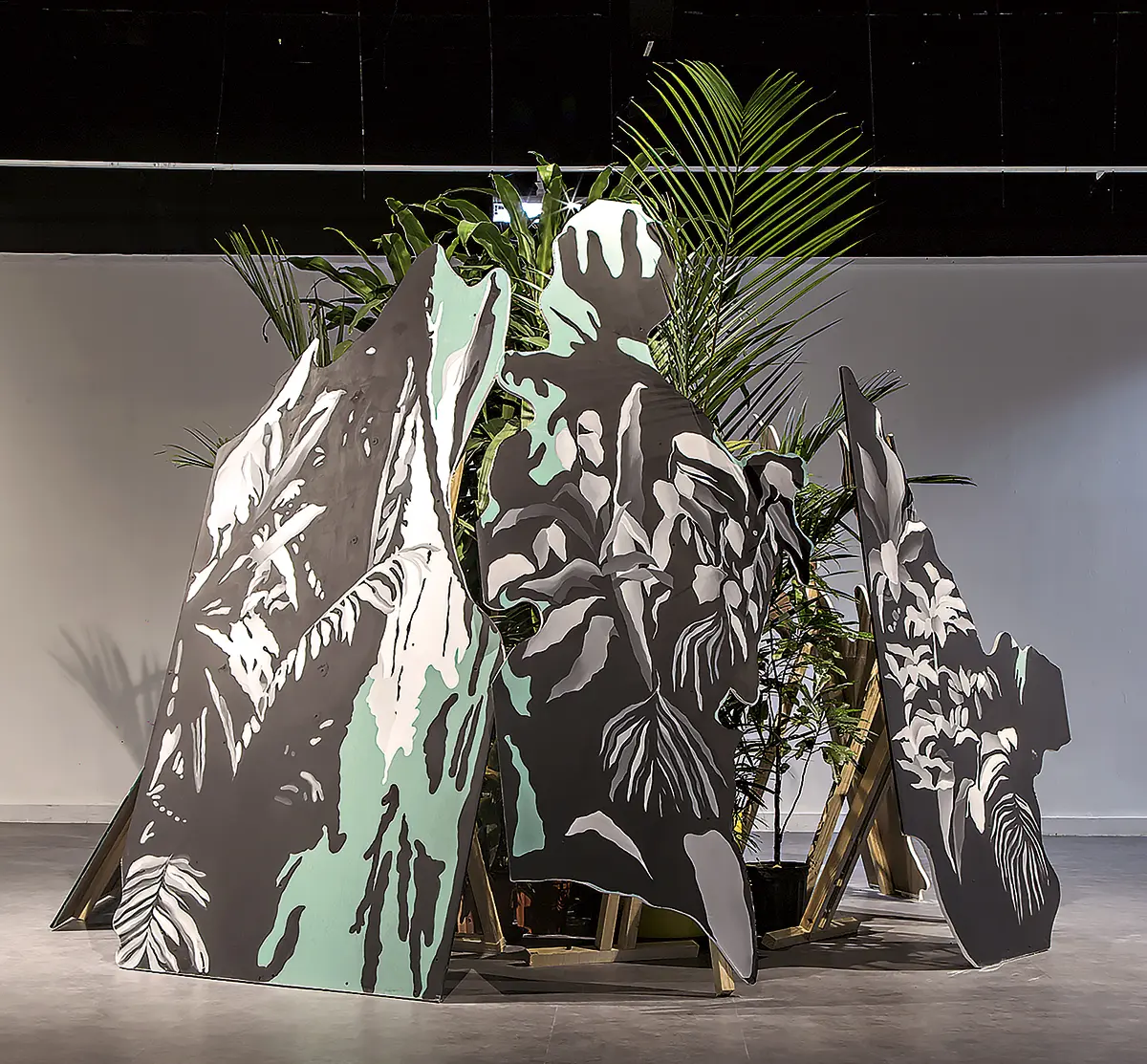
Muro de contención (Retaining Wall) from the series Vitrina para un árbol muerto (Showcase For a Dead Tree), by Andrea Mármol (Guatemala, 1988) is a good starting point for this journey. According to Mármol, human beings build their path through the coercion and repression of their environment. Her installation features plasterboards, painted like tropical plants, fencing in a handful of actual tropical plants. The containment of nature by means of artifices that imitate it, also speaks to the opacities of Panamanian society, its taboos, and its silence.
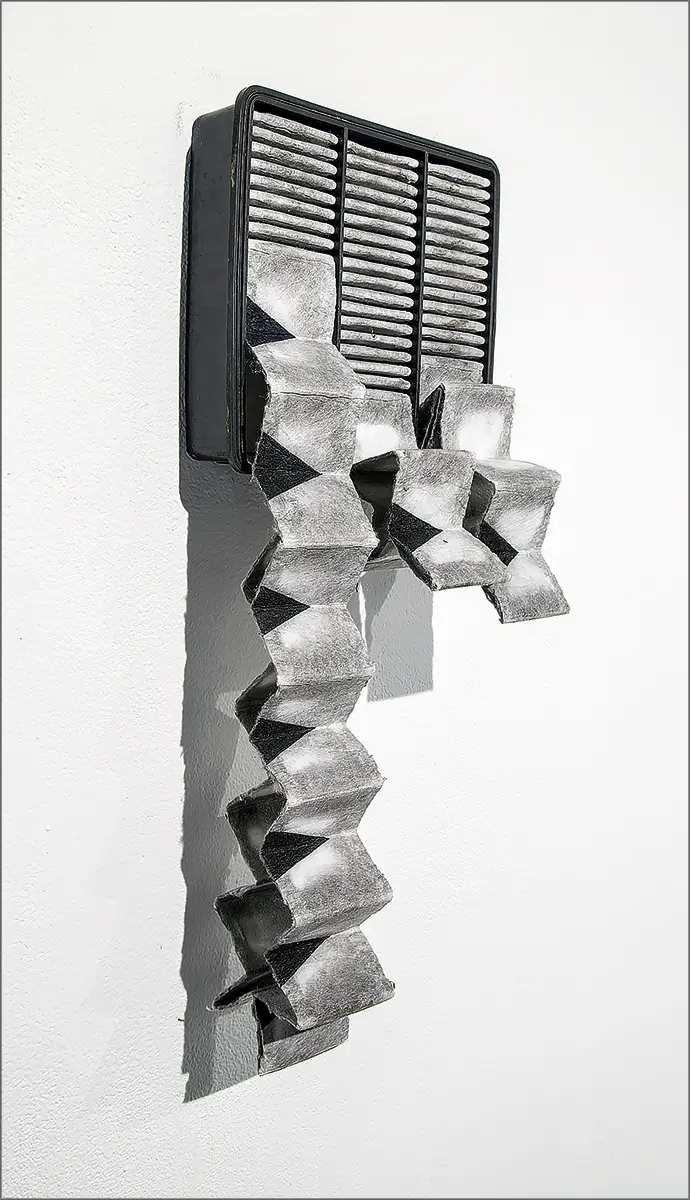
Adán Vallecillo (Honduras, 1977) engages this relationship from the opposite angle, this is to say, through a reordering of the human elements by nature and art. Fósiles (Fossils), one of three works by Vallecillo on exhibit at the LARA show, gathers bricks and pieces of concrete picked up from the banks of the Canal. Their straight angles (which the artist attributes to human hands) have been eroded, reordered to the beat of Mother Nature. For Vallecillo, the new shapes with which discarded objects settle into the natural world are fascinating. Like released convicts seeking to reinsert themselves into society, they disguise their perfect geometries and round their edges in order to camouflage them in their irregular environment. Vallecillo’s Expandibles (1-6) [Expandables (1-6)] and Fuselaje (1 y 2) (Fuselage 1 and 2), walk along the same lines. Both works are the result of a reutilization of human castoffs, of a desire to extend the usefulness of things that have already cast into oblivion.
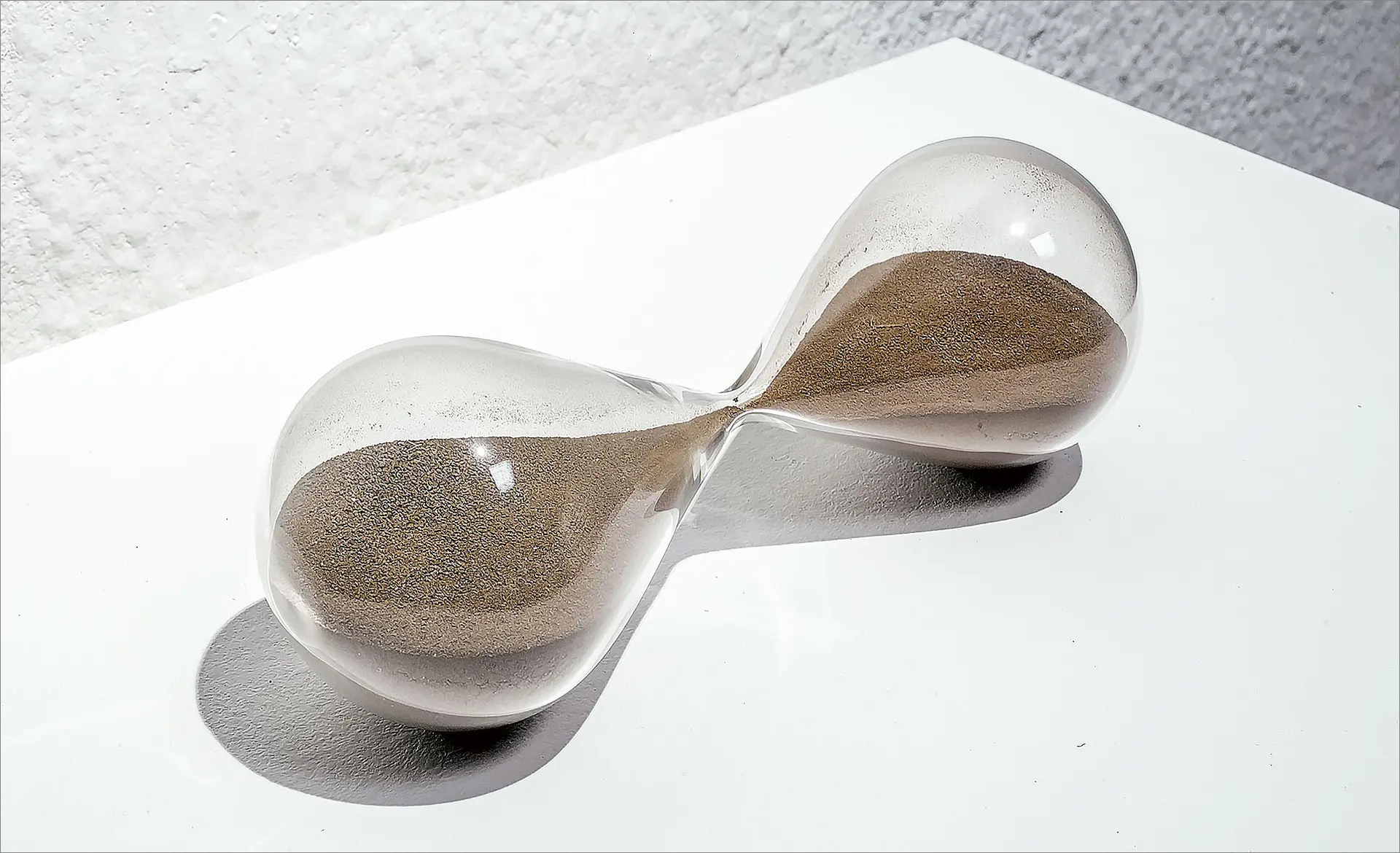
Glenda León (Cuba, 1976) sustains a much more sublime voice. Tiempo de las Américas (Time of the Americas) deliciously summarizes the symbolic essence of the Panama Canal. An hourglass arranged horizontally, filled with soil from the Canal’s north and south banks in each of its corresponding sides. The sand samples never touch, never mix—they will never again come together. For them, the time has come to a stop, it has been devoured by human hands. León’s work warns us about the power of our species and about the Pantragruelian magnitude of its actions.
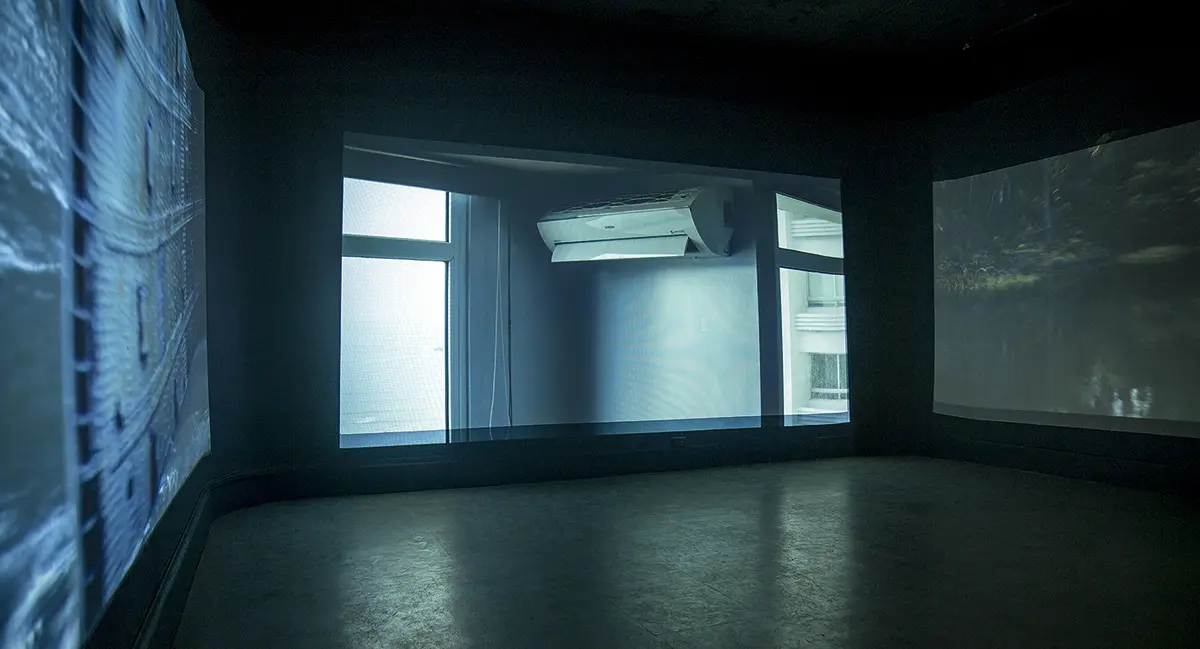
For her part, Katherinne Fiedler (Peru, 1982) feels this relationship between mankind and nature is much more organic. Her video installation Confluencias (Confluences) translates reality as a whole, without segmentations or borders. A kind of butterfly effect where the cadence of an air conditioner sets the tempo for the entire universe around it. Wordlessly, Confluencias perfectly connects the various ecosystems of Panamanian reality in an almost lyrical harmoniousness, and, like no other work on this exhibition, finds delight in the flavors of its own silence.
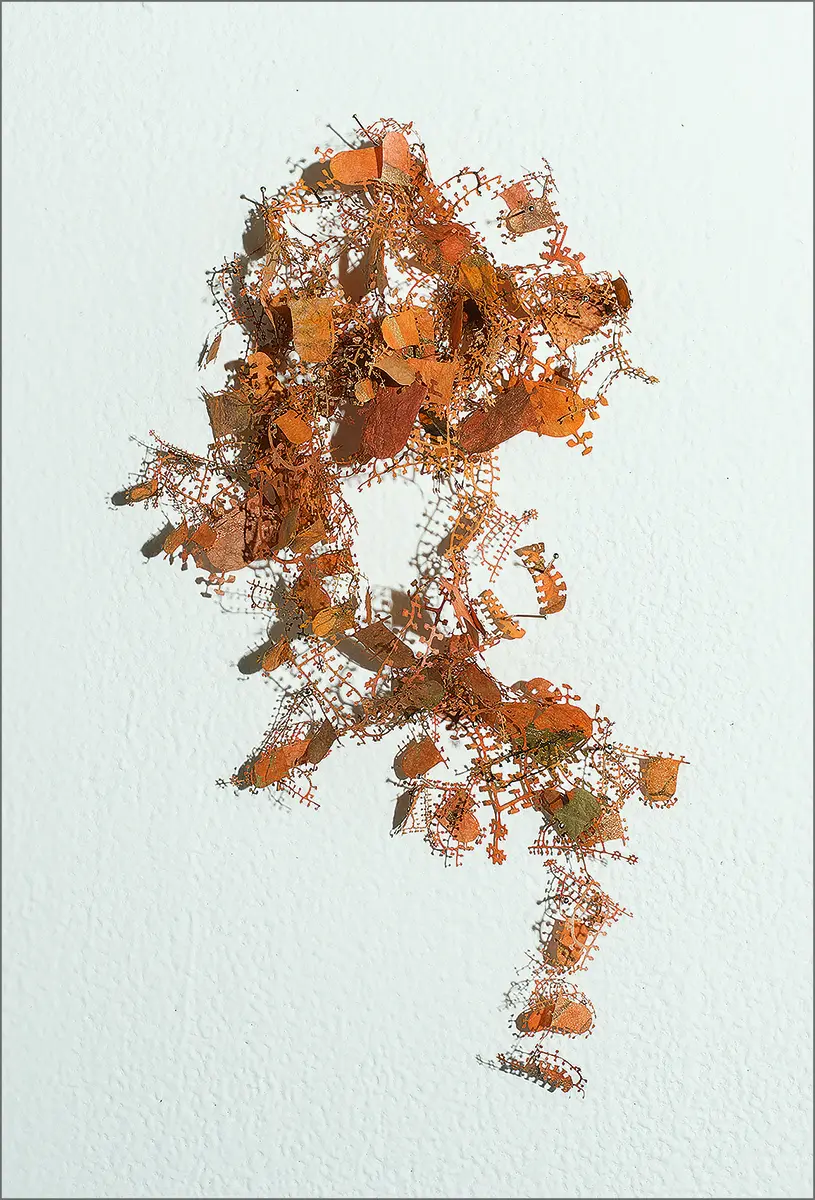
A similar sensation emerges from the work of Frances Gallardo (Puerto Rico, 1984). The feeling that everything is relative, that time can be stopped (as in Glenda León’s work) or hastened until tropical forests are transformed into suburbs. Something like what happens in Panama City, with the sudden urban explosion it has undergone in recent years. Gallardo’s installation, Terramóvil, is able to touch that fiber, spreading like a fungus into every room in the museum.
Some of the works on exhibit, meanwhile, delved into socio-historical aspects of Panamanian life. ¿Qué tienes en tu carpeta? (What Do You Have In Your Folder?), an installation of 21 photographs and 250 folders by Eric Fajardo (Panama, 1959), interrogates common behaviors among the Panamanian citizenry, but also among those who tend to judge them. It all starts with a simple gesture, illustrated in the photographs: the habit of carrying folders under one’s arm. The analysis, the possible readings, are left to the viewer, next to a pile of folders. The viewer will decide whether to take them with him or her; in other words, whether to consume the work and in that way join the group of people that started playing. Beyond its similarities with Félix González Torres’ gesture, Fajardo’s works are an attempt to assimilate prejudices and to shorten the gap between what we are and what we believe ourselves to be.
For his second work on exhibit, the installation Fundamentos del buhonero (Foundations of the Peddler), Fajardo explores the history of his country. He retraces the steps of the Panamanian street peddler in the Calidonia district. It can even be said that Fajardo travels to the future and, like a veritable social archaeologist, brings back the results of his research, the fossils he has found, for exhibit in the museum. For him, the street peddler is a symbol of Panamanian reality, fervently anchored to the roots of a country1 that nevertheless excludes him to the empty areas of its discourse, diluted between US commercial brand names and spanglish.
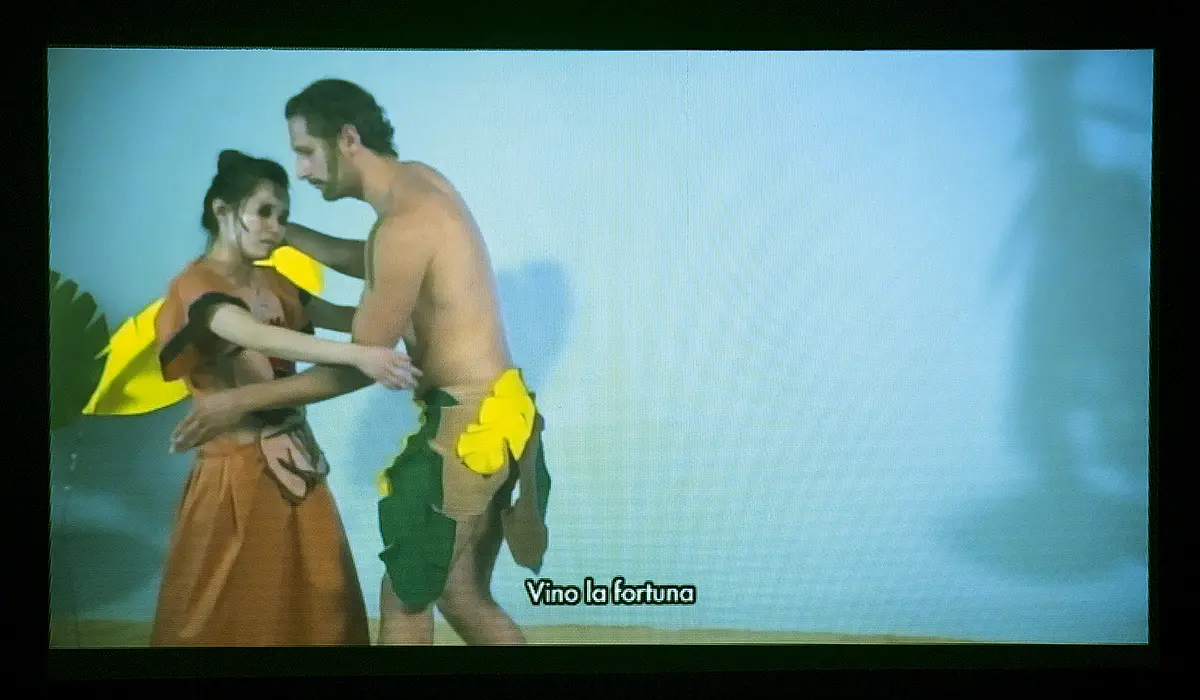
Rachelle Mozman (Panama, 1972), similarly also obsessed with the ironies that course through the history of Panama, makes use of symbols and resources taken from theatrical representation. Displaying a poetic dominated by satirical elements, her video The Dying Cavendish plays with the narratives of the United Fruit Company and their echoes in contemporary Panama. Mozman drags us through a wholly absurd, almost hypnotic script in order to refresh damaged memories and imbue them along the way with an element of postcoloniality.
One of the works in the exhibition comes in an entirely different flavor from the rest. The installation Slaying the dragon projects an essence that, more than the translation of its context, feels like a kind of autobiography. José Braithwaite (Panama), a self-taught artist, unfurls a majestic work of art that rearticulates the former home of his deceased grandmother. An old, humble home with wooden walls in the Rio Abajo neighborhood—with all its “patrimony”—begins to fracture into many different portions, and is restructured into an entirely new meaning.
A home, which is a basic necessity and a possible source of income, is twisted into a kind of altar that transcends the material world, and connects, by means of art, to the eternal, spiritual realm. The adaptation of functionality in absurdity and the saturation of symbols that inundate the space result in an extremely complex and unique work of art, isolated from any contamination. Slaying the dragon is also a reflection of the artist’s mental processes, of his creative blossoming, of his grief in the face of loss, and his search for a place in the world.
Finally, LARA also featured works by María José Arjona (Colombia, 1973) and Manuela Ribadeneira (Ecuador, 1966). Their works were not connected to Panamanian reality2, yet were interestingly threaded into the exhibition.
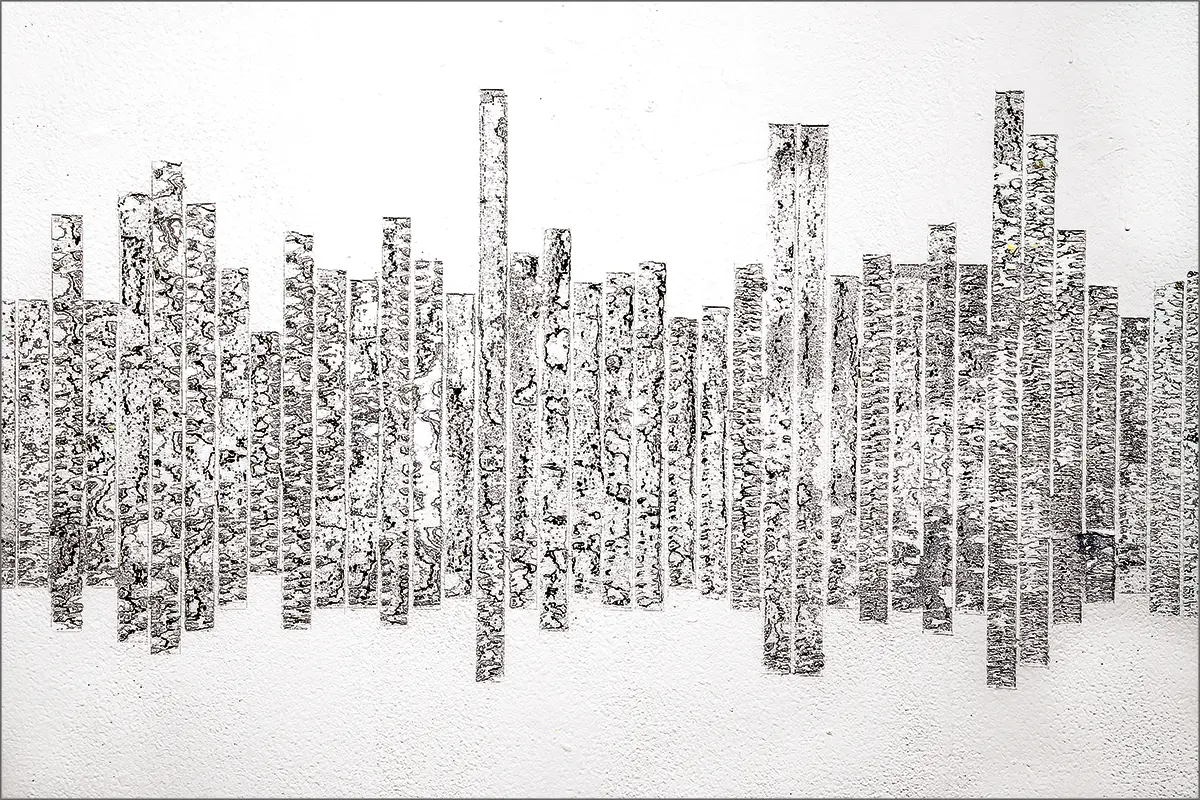
Ribadeneira, presented a bas-relief mural representing the patterns of sound produced by volcanoes about to erupt. Harmonic tremors play with the sleeping bear that inhabits very society, with the melodic calm that precedes the irruption of chaos. Arjona, in turn, presented an installation about her encounter with Wang Od, the last tattoo artist in the Kalinga region, in Buscalan. Rather than the traditional ink tattoo, Arjona received from Od three applications of solid carbon, as representations of the past, present, and future. Her installation Remember to remember dialogs with this event, emphasizing the absolute necessity that a country has of its history—the need to carry it under our skin if it comes to that, in order not to forget and not to fall into the emptiness of being nothing.
The Canal not only as a blessing for commerce but also as a scar on the continent, with significant consequences. The peddler not only as part of that marginal—and as such, uncomfortable—truth that many would want to silence, but also as an insoluble element of the country’s identity and its history. The city and its skyscrapers not only as symbols of progress but also as a fungus that expands and contaminates. Of all the intentions contained in LARA Panama, I find the most value in the affirmation of new ways to conceive the reality of what is known as the “Hub of the Americas” by means of art—to understand it beyond the basic stereotypes it promulgates. This is why the works on exhibit avoided, perhaps intentionally, certain familiar clichés, such as the impoverished reality of indigenous people or the ample imagery available about corrupt officials and bankers.
With each work, with each new way of looking, society gained nuances and meanings. It became more intense. It became deeper. This is a society whose greatest ill, even more than the poverty and social inequality it contains, might be an inability to read its own silences, an incapacity to realize the gaps in its own history.
NOTES
1. In 1856, a dispute between a peddler and an American, about a slice of watermelon that the client refused to pay for, escalated into what became the first American military intervention in Panama. The episode is known as the Watermelon Slice Incident.
2. Alongside the works created by the participants, LARA included works by two artists who were present in its previous edition, who had won residencies at the Manila Metropolitan Museum (Philippines) and at FLORA ars+natura (Honda, Colombia), respectively.
*Courtesy: LARA
RIGOBERTO OTAÑO