MÓNICA KUPFER
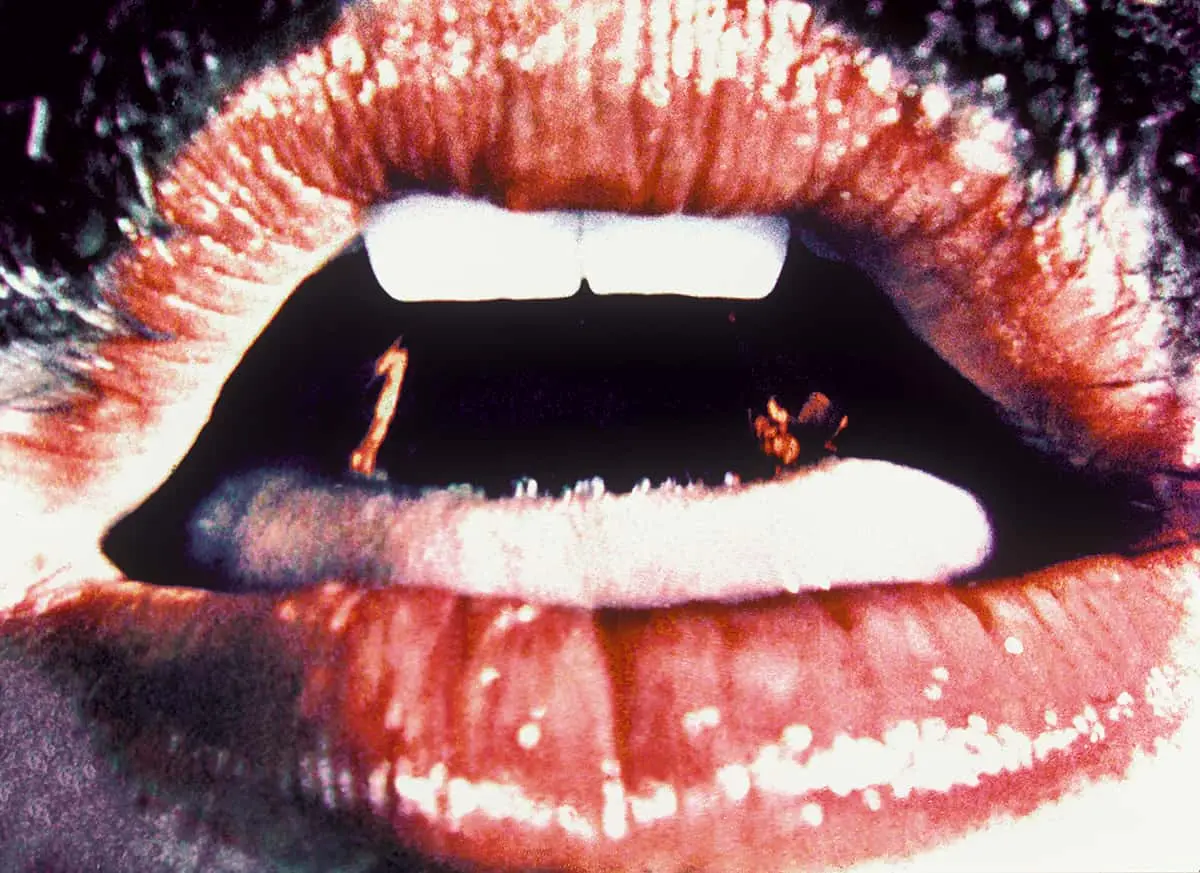
A large portrait of a woman and the photograph of an open mouth attract the attention of drivers and pedestrians to Los Angeles’ Hammer Museum’s windows. The hand-drawn rectangle on the woman’s face seems defiant; in the other photo, the sensuous tongue is most provocative. Inside the museum, I find myself, for the third time in my life, standing before Mexican artist Monica Mayer’s installation titled The Clothesline. In this version, the lines are strung across a structure painted shocking pink. The artist invites us to expunge traumas by writing down our experiences with sexual harassment on index cards in order to display them, next to so many others, on the clothesline. This time, I filled out my card.
Radical Women: Latin American Art, 1960-1985 is a crucial exhibition because it uncovers the extraordinary—but to a large extent, unknown or obliterated—production of experimental works by Latin American women artists from the sixties to the eighties. The product of extensive research carried out by curators Cecilia Fajardo-Hill and Andrea Giunta, the show includes works by 120 artists and groups from fifteen different countries, created during a turbulent sociopolitical time in the region. It is a historic exhibition that documents and contrasts art by Latin American women, including Latinas and Chicanas in the United States, who contributed to the development of contemporary art and deserve to join the international art historical narrative from which they have so far mostly remained excluded.
The artworks in this show, which trigger feelings that range from pleasure to rage, offer visitors a powerful experience. There are numerous confrontational pieces that reveal both aesthetic explorations and rebellion against sexual discrimination, social oppression, and political repression, which characterized that time of dictatorships and military governments. The exhibition offers both moments of discovery and re-encounters, as there are new names and previously unseen works, but also pieces by some women who are already prominent in the region’s historiography, such as Marta Minujín, Lygia Clark, Liliana Porter, Cecilia Vicuña, and Ana Mendieta, among others.
In spite of the decades that have passed, many of the works feel currently relevant because we observe them against the background of our current political moment, with its resurgence of nationalism, struggles over gender issues, and manifold discriminations. It is not, however, an exhibition of specifically feminist artists because most of the women included did not refer to themselves as such, nor—with the exception of Mexico—live in countries that had organized feminist movements. Rather, they share a Latin American transnational history of sociopolitical impositions and artistic sidelining, against which they reacted through traditional media, such as painting, printmaking, and weaving, as well as the more experimental language of performances, installations, photography, and video art.
The artists included also share the “notion of the body politic” that the curators describe as the concept at the core of the exhibition. In the outstanding exhibition catalog, they point out how, between the 1950s and the 1970s, the iconography of the body in Latin American art changed dramatically, a shift they attribute to the women who altered the course of contemporary art. The idea of the body—and its multiple manifestations—provides the unifying thread for the 250 works in this large exhibition, which were organized on the basis of nine themes that help the viewer take in the almost over-abundant amount of visual and intellectual information.
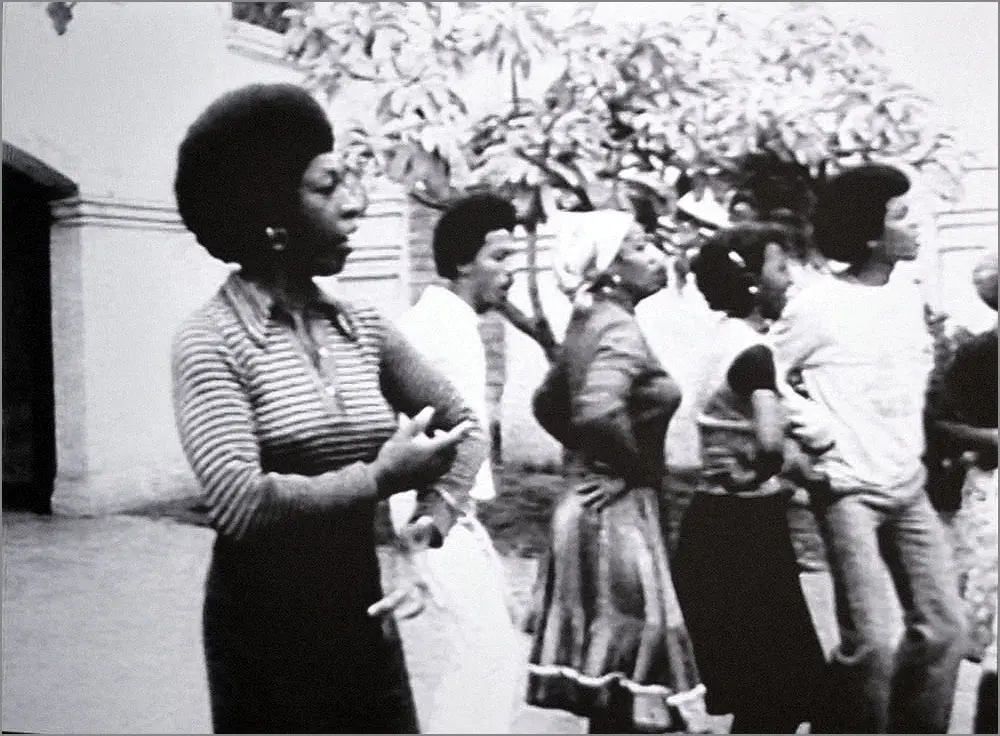
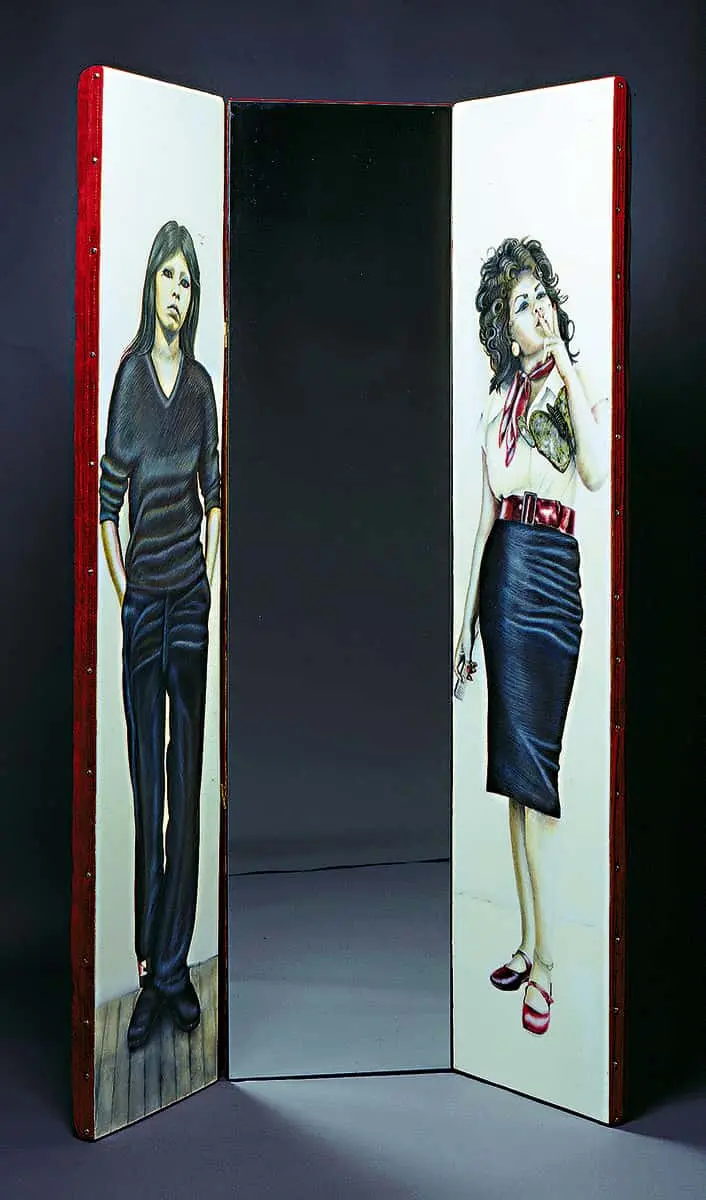
The exhibition begins with a video of the powerful performance They Shouted Black at Me (1978) by the Peruvian poet Victoria Santa Cruz. While she vociferates: “Yes, I am black, and so what?”, extolling her identity, other works in that section of Self-Portraits question the roles society imposes on Latin American women. In her series of photographs titled Tina América (1976), Brazilian artist Regina Vater transforms herself into different female characters, ranging from innocent student to bohemian woman, from simple housewife to sensual actress. In The Three Marias, Californian muralist Judith Baca forces the visitor to acknowledge him or herself in a mirror placed between two life-size painted portraits of Chicana women. Another Chicana artist, Yolanda López, photographs herself as a symbol of female empowerment against a background typically used for images of the Virgin of Guadalupe; while Patssi Valdez creates self-portraits in a cinematographic style that offer a counterpart to the traditional representation of Mexican women in the U.S. Most unusual among the self-portraits is Peruvian artist Teresa Burga’s conceptual and technological installation, based on numeric measurements and the results of medical tests.
The exhibition flows smoothly from the subjectivity of the self-portraits into a section of art linked to nature. One’s eyes are immediately drawn to the outstanding installation titled Epidermic Scapes (1977/1982) by Brazilian artist Vera Chaves Barcello in which patterns on the skin’s surface trigger geological, botanical, zoomorphic, and sexual associations. It is surrounded by the documentations of numerous performance works, perhaps because this is a medium that allows for the physical interaction of the female body with the landscape and the earth. We see how Ana Mendieta carves her silhouette on the soft ground of a riverbank and then lies down in it; the Brazilian Mara Alvares incorporates her naked body into the rich vegetation of a jungle, and Silvia Gruner of Mexico leaves footprints in the sand during futile efforts to hike up a dune. Other works such as O Ovo (1967) by Lygia Pape and Passagem (1979) by fellow Brazilian artist Celeida Tostes offer dramatic metaphors of birth.
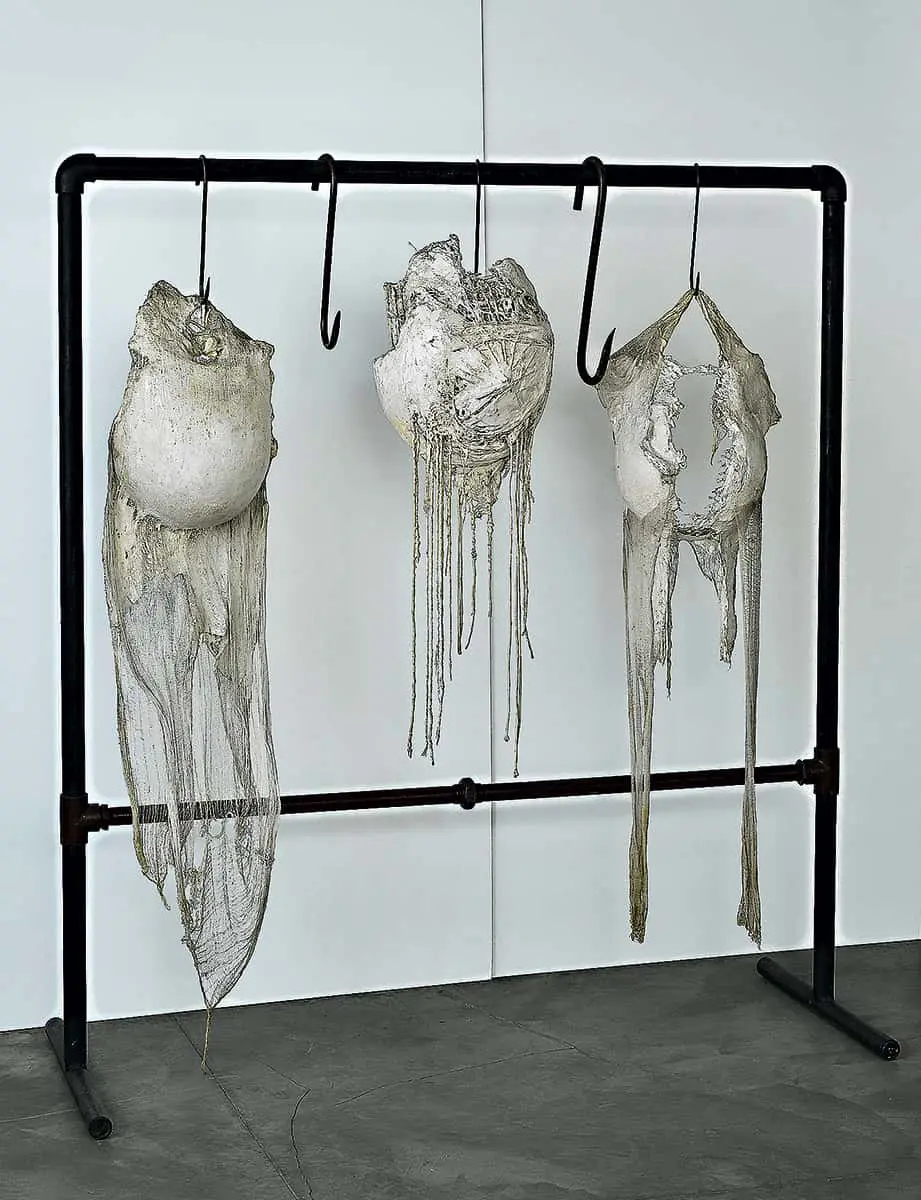
Issues related to the body connect the different sections of the show. Upon entering the second exhibition space at the Hammer Museum, one is stunned by the direct view towards the installation titled Bellies (1979-1983) by Peruvian sculptor Johanna Hamann: a set of three pregnant, white, and frayed bellies hanging from butchers’ hooks. One can see it from the previous section titled Performing the Body, which contains multidisciplinary works that feature performance, dance, and theater, in a space dominated by a large-format projection of computerized dance videos by Ana Livia Cordero. Nearby, there were small images of unusual artistic performances by Margarita Azurdia of Guatemala and Martha Araújo of Brazil. Beyond them, were electronic tablets on which to view videos and showcases with works on paper, against the background sound of chanted, repetitive prayers.
The exhibition with its numerous displays and a huge amount of works seems overwhelming, but also irresistible. The installation is reminiscent of the design of avant-garde exhibitions in the 1950s and ‘60s, such as some of São Paulo’s first biennials. The large white space was subdivided using “floating” walls to create smaller exhibition areas of variable sizes, in some cases defined by curved partitions that decreased in height to create seating areas for visitors, thus giving this huge exhibition a human scale.
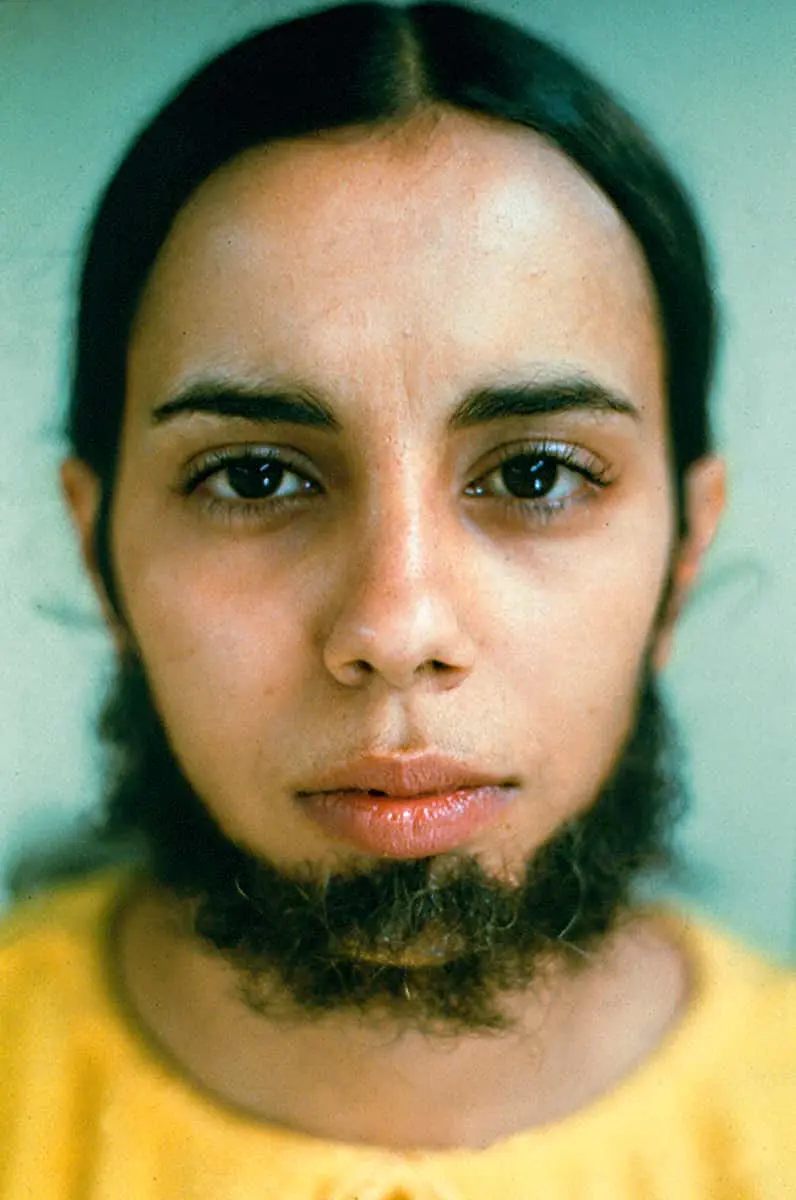
In the section on Mapping the Body, where Hamman’s piece is displayed, the exhibition hones in on what the curators describe as the rediscovery and reconceptualization of the body as a subject in art, the “mapping of the body and its social inscriptions.”1 It includes works from the 1970s by Liliana Porter in which lines drawn on photographs move beyond the work and out onto the wall, questioning our perception of space and reality. There are experimental pieces such as a performance from 1972 by Ana Mendieta who stuck a friend’s beard onto her face as he was cutting it off his face, thereby creating a dual, feminine-masculine self-portrait, foreboding the intense discussions regarding gender versus sex in our time. Other works offer explicit references to biological processes, such as the daring performance titled March 11Ritual in honor of Menstruation of 1981, during which Colombian artist María Evelia Marmolejo ‘painted’ the floor and walls of the exhibition space with her menstrual blood.
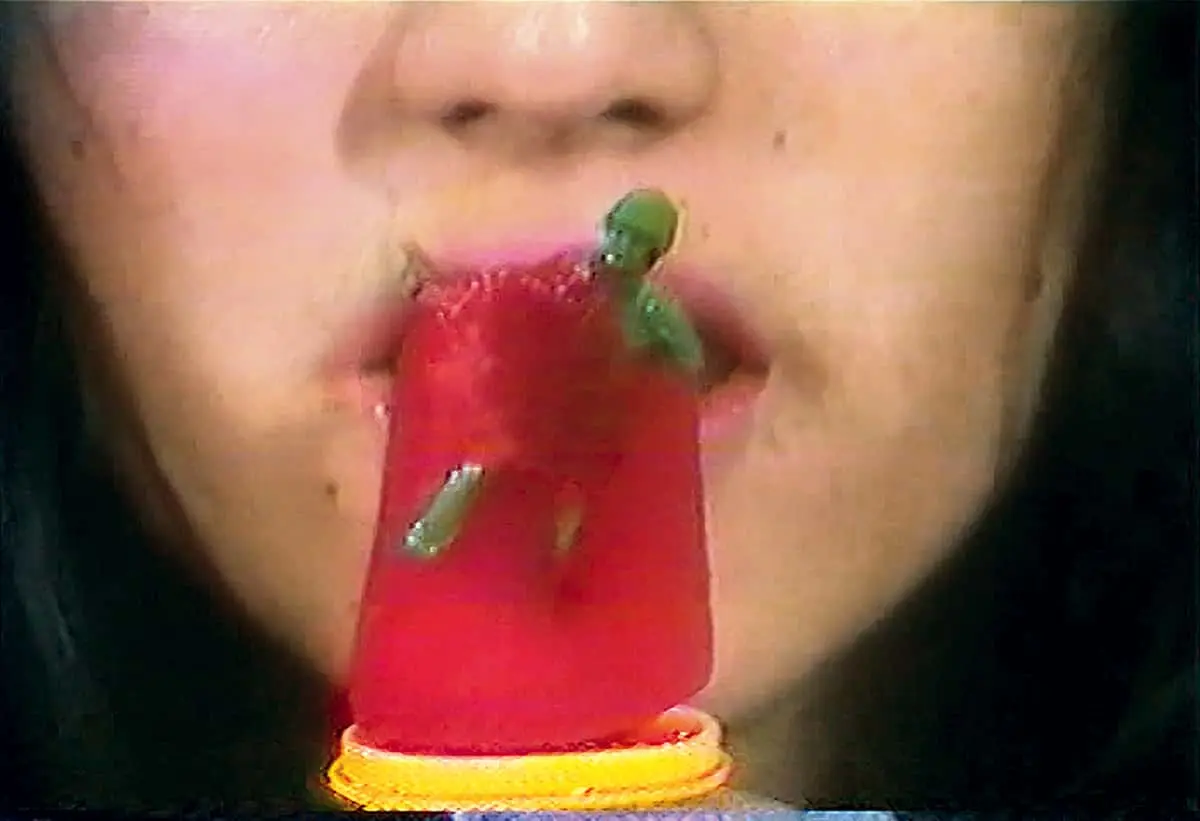
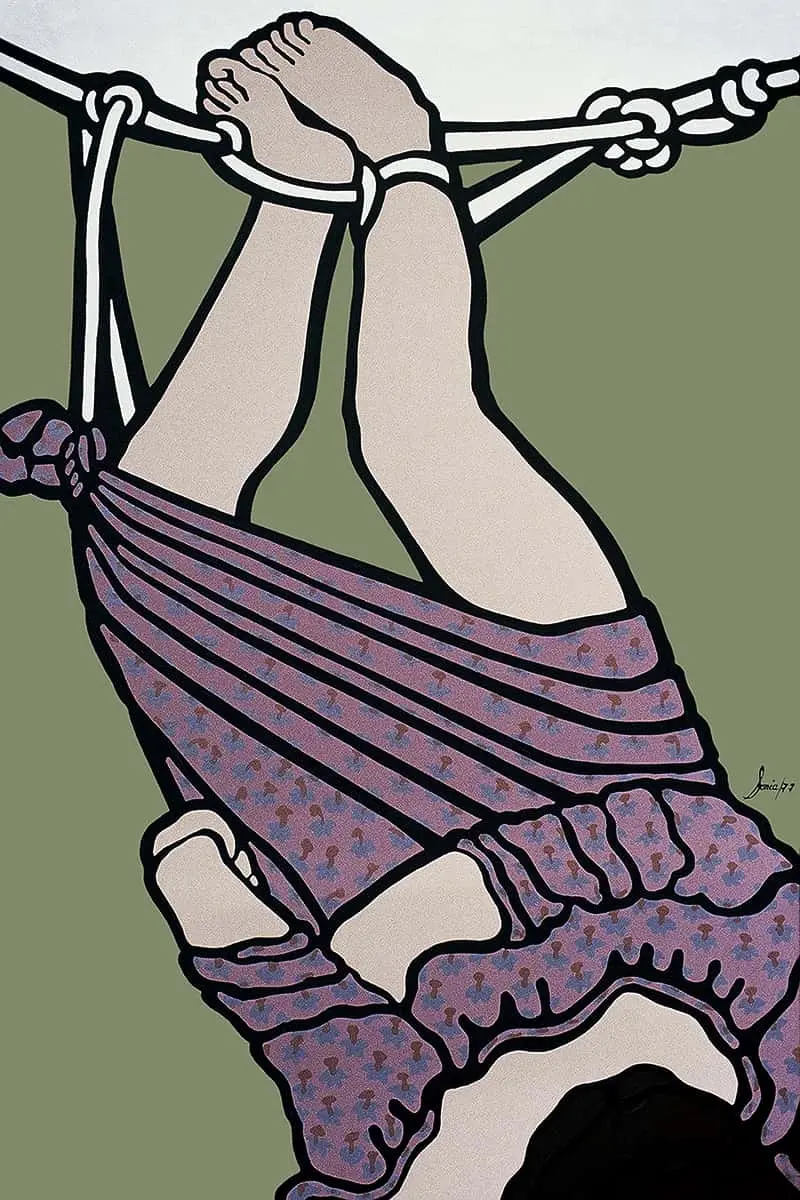
The artworks gathered around the theme of Resistance and fear tackle the relationship between the body and violence. There we discover that the monotonous prayers emerge from the video Popsicles (1982-84) by Chilean artist Gloria Camiruaga, which shows young women licking red popsicles under which plastic soldiers appear. This video (created during the Pinochet dictatorship) and other works in this section bring forth feelings of shock and pain due to the explicit and courageous ways in which they document shared traumas. We see female figures tied and hung by their feet in pop-style paintings by Sonia Gutiérrez from Colombia; self-portraits by María Maiolino who photographed herself with her nose and tongue between the blades of huge scissors; and A mile of crosses on the pavement, a public intervention by transgressive Chilean artist Lotty Rosenfeldt.
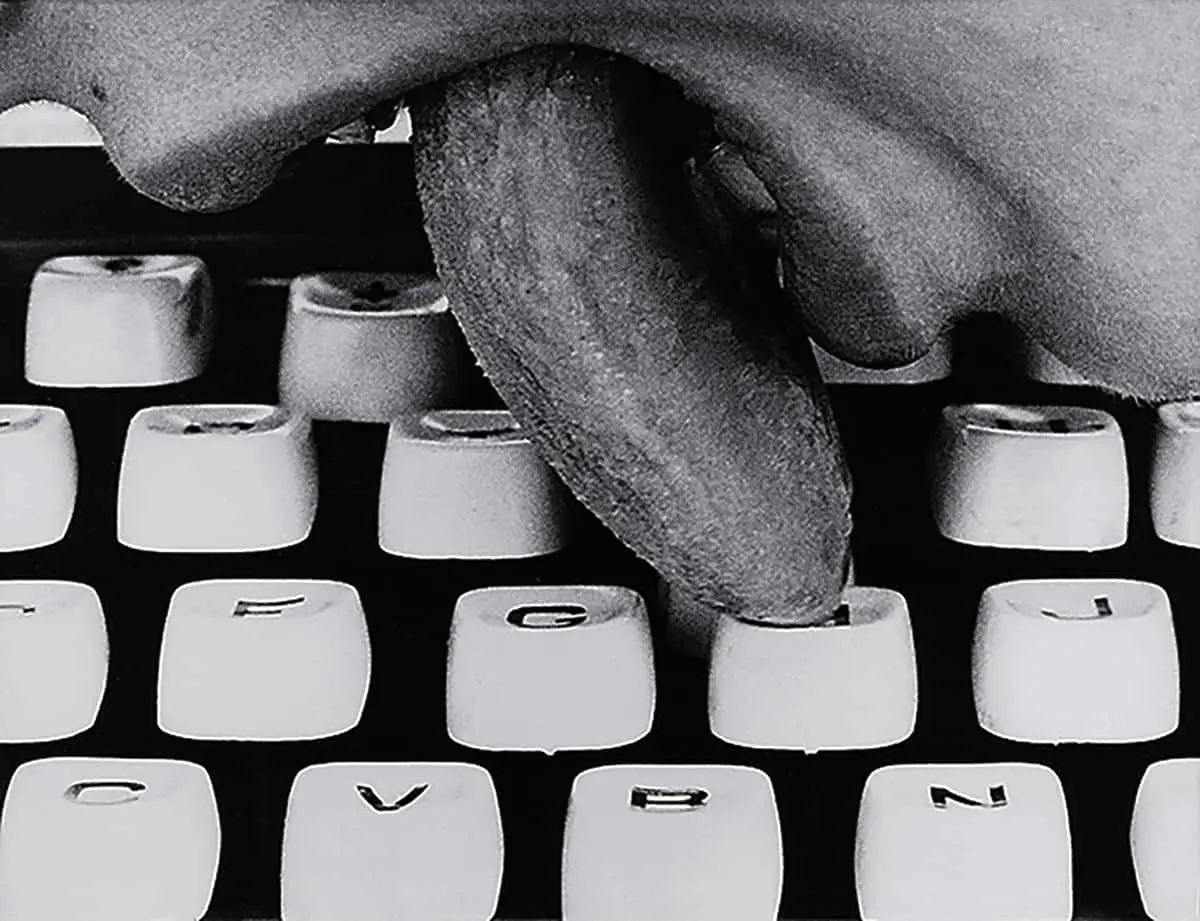
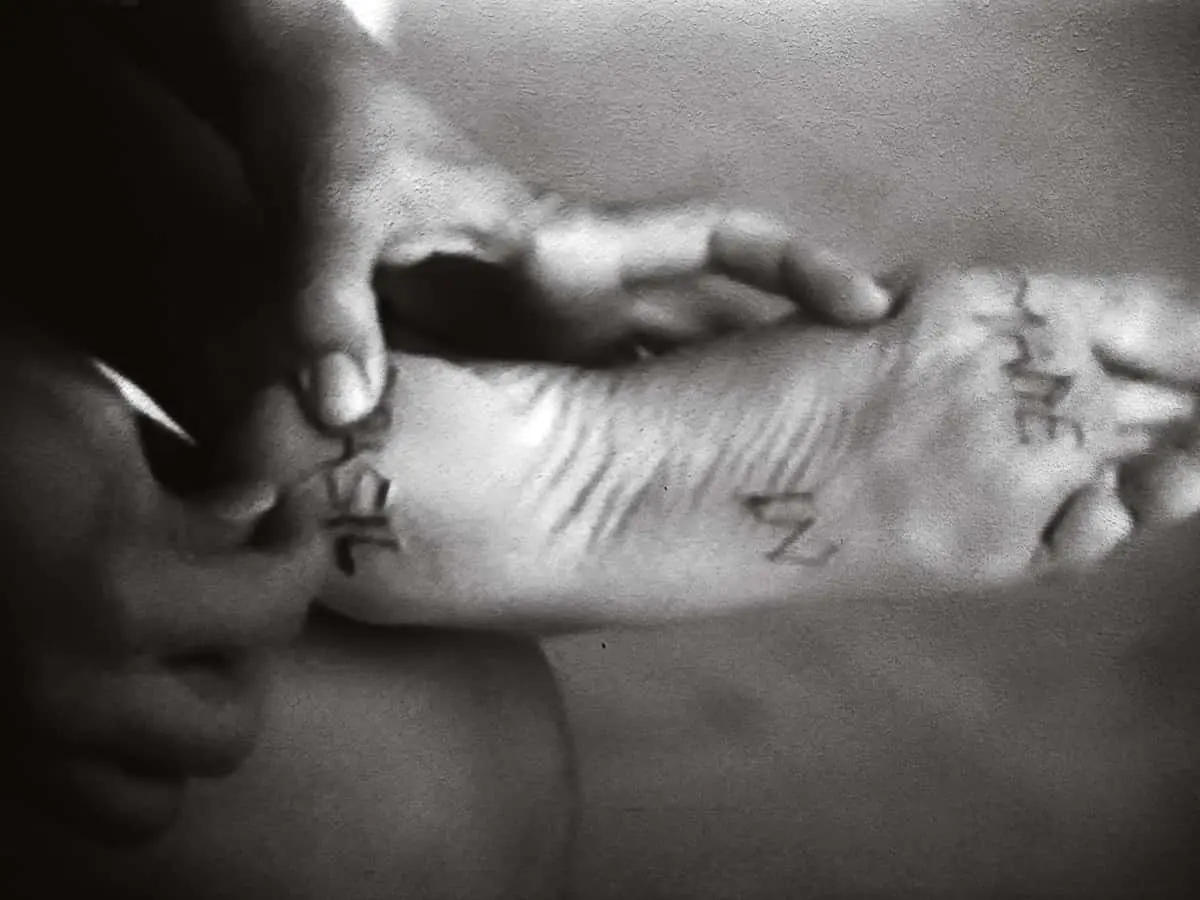
Other artists opposed the political system through language or the written word in works that managed to avoid censorship. The Power of Words sector includes compelling performance pieces such as Trademark (1975) in which Leticia Parente used thread and needle to embroider the phrase “Made in Brazil” onto the sole of her foot; and the public intervention by Janet Toro who managed to ask a considerable group of people her two questions (Why are you sad? Why are you smiling?) before she was confronted by the police. Marta Minujín wrapped herself in newspapers and submerged herself in the Río de la Plata until they dissolved, and Marie Orensanz created her legendary work Thinking is a Revolutionary Act (1975). One of the most powerful works is a series of photos titled Poem (1979) by the Brazilian poet Leonora de Barros: six black and white images in which her tongue interacts with the typographic keys of a typewriter, in an expressive, audacious, and sensual way.
The section of the exhibition titled Feminisms included works by women who specifically referred to themselves as feminists at the time. One of the highlights is the performance Mother for a Day by the artists’ group Polvo de Gallina, which included Maris Bustamante and Mónica Mayer. In this piece, they appeared on a television program during which they managed to dress the show’s host in an apron and a fake pregnant belly. Bustamante has other works in the show, such as Penis as a Work Instrument (1982), a mask she made replacing her nose with a penis; as does Mayer, whose Clothesline (first produced in 1978) receives visitors to the exhibition. Another notable Mexican feminist, Ana Victoria Jiménez, is present with her Chores Notebook (1978-1981), a series of impersonal photos of someone doing domestic work: we see hands cleaning a toilet, washing clothes, stirring the stew in a pot.
Under the concept of The Social Body, the curators declare that the works “affirm that the social is personal and, therefore, politically constituted.”2 These artists relate to “the other,” to marginalized or socially oppressed groups, people that they depict with a sense of humanity, not as mere sociological prototypes. This part of the show highlights photo series such as Women Under Fire (1980) by Isabel Castro, who documented the sterilizations without consent carried out on Chicana women in California; Adam’s Apple (1982-90), a sensitive exploration of transvestites’ lives by Chilean artist Paz Errázuriz; the amazing Zapotec people in Women of Juchitán (1979) by Graciela Iturbide; Humanario (1976) with its photos of psychiatric patients by Alicia d’Amico and Sara Facio from Argentina; and the portraits of the defiant women in the series titled Servitude (1974-1989) by Panamanian photographer Sandra Eleta.
Radical Women also includes works that refer to the region’s indigenous populations, such as the well-known photographs of the Yanomami people by Brazilian activist Claudia Andujar; and the postcards in which Anna Bella Geiger photographed herself mocking the style of the touristic images of the Bororo people. Surprisingly, although mestizo artists are most certainly present, the exhibition does not include any works created by indigenous artists, nor are there any artists of African descent. There is work to be done by future researchers and curators in order to draw attention to those “other” artists who have been doubly erased from the narrative, based on both gender and ethnicity.
The final section in Radical Women is dedicated to erotic art, and it is not surprising to find that sexuality is another issue the participating artists confront in open and daring ways. From a distance, one can already see Lygia Pape’s video Eat Me (1975) in which sensual lips and an open mouth display objects that the tongue moves in an insinuating way. It contrasts with other works, such as the more conceptual New Erotic Designs for Furniture (1971) by Cecilia Vicuña, or the impeccable and nearly abstract painting titled Lunar V (ca.1973) by Cuban artist Zilia Sánchez, a composition in which the eroticism is much more subtle but no less alive.
Radical Women is not just an exhibition of Latin American women artists, but rather of art by women who were deeply committed to politics, to their bodies, and to leading a truthful life. Although they did not all consider themselves feminists, the curatorial mission clearly was, because it rescues art created specifically by women and from a point of view outside the traditional canon. The curators showed courage in combining such remarkably heterogeneous works by artists from such different places, yet the exhibition reveals that they shared a certain transnational conceptual affinity that we had not yet understood. The photographer Sandra Eleta told me that, upon seeing the exhibition, she realized that she belongs to a spiritual sisterhood, to a united voice that shouted: Who are we? and Who do we dare to be? This exhibition and its well-documented catalog have done much to fill the gap in information available about these artists, in addition to proving the unexpected relevance of their works in reference to our own times.
Radical Women: Latin American Art, 1960-1985
Hammer Museum, Los Angeles, September-December 2017.
Brooklyn Museum, New York, April-July 2018.
Pinacoteca de São Paulo, August-November 2018.
NOTES
1. Cecilia Fajardo-Hill and Andrea Giunta, “Introduction” in Radical Women: Latin American Art, 1960-1985 (New York: Prestel, 2017), p. 17 (translated by the author), p. 19.
2. Fajardo-Hill and Giunta, “Exhibition Themes” in Radical Women, p. 49.
MÓNICA KUPFER