The neighborhood of San Felipe, situated in northeast Bogotá, has in recent years become the city’s arts district. New exhibition spaces have been established in the area, while older galleries and centers moved there as well. Nearly twenty art spaces have opened their doors in San Felipe in the last five years, among them KB Espacio para la Cultura. KB’s third year in activity featured, as a closing for its 2017 exhibition program, the project Nobilitas: de sangre azul y otros mitos, (Nobilitas: On Blue Blood And Other Myths), by María José Argenzio.
María José Argenzio, an Ecuadorian born in Guayaquil, studied in London and has participated in exhibition projects in different countries around the world for some 15 years. Her works are usually created through the use of artistic media that are based on the generation of situations where time, space, and the body of the viewers seem to define one another. This is how she has produced installations, interventions, and videos that highlight the ephemeral, transitory character of the human experience in connection with the moment and place where it occurs. Her work has revised the cultural construction of the local in relation to the hegemonic contexts that surround it, which imply relationships of power. This is why she has worked on the basis of cultural representations that shape narratives about Ecuador, bordering on one side with the idea of tropical nature and, on the other, with the colonialism that marks its modern history. This has meant working with fruits like bananas and materials like gold Her works revise the relationship between the past and the present and scrutinize in-depth the habits and customs that give shape to everyday life.
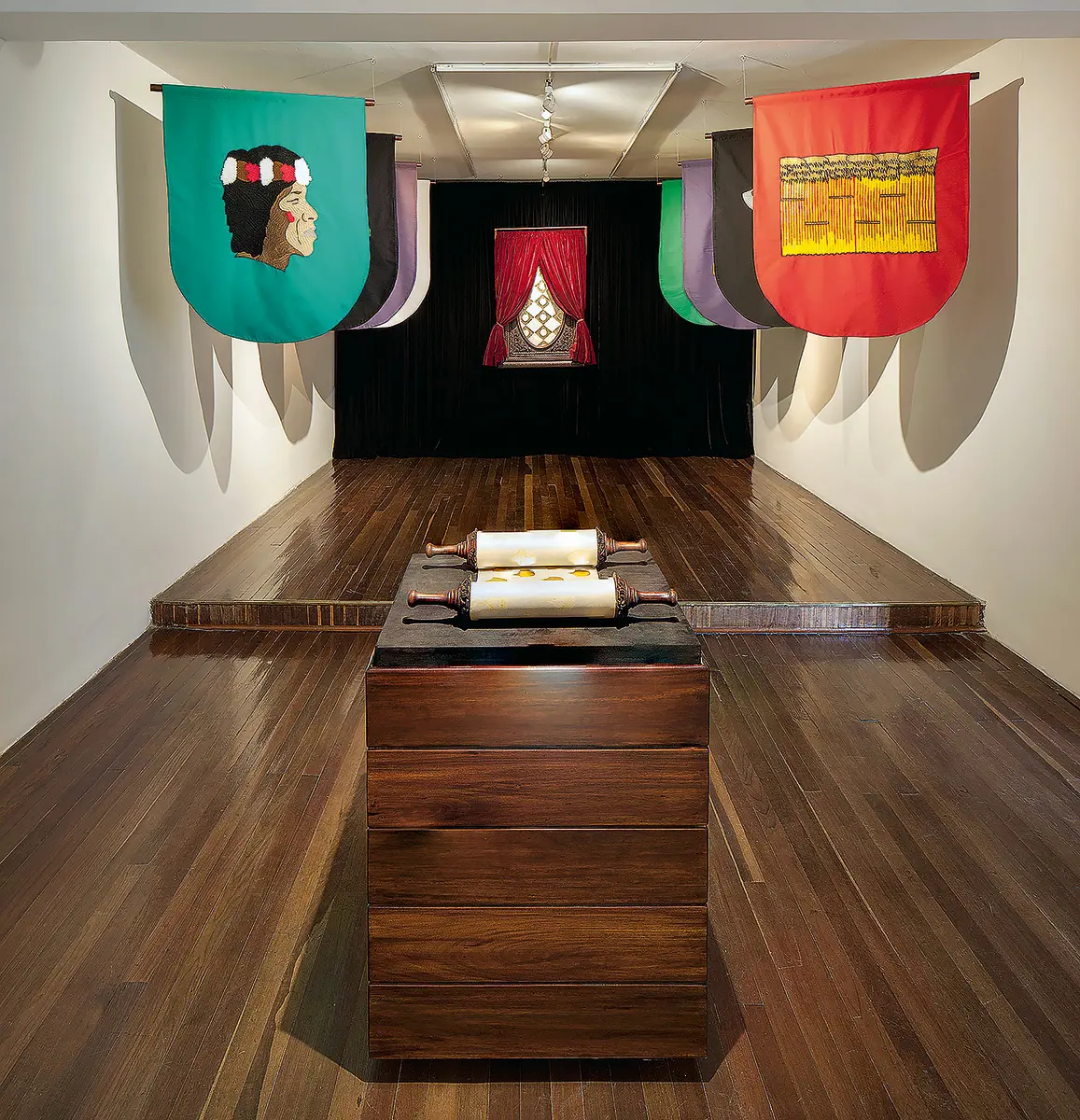
Her project Nobilitas: de sangre azul y otros mitos consisted of an installation of different elements connected to the world of heraldry. Argenzio’s interest in working with these elements came from their colonial associations, having to do with the way in which Eurocentric practices have been adopted in Ecuador since the Sixteenth Century. The adoption of such European cultural representations meant the gradual abandonment of the customs and concepts of the local indigenous communities—customs and concepts that with the passage of centuries came to be almost entirely superseded. The project Nobilitas: de sangre azul y otros mitos uses heraldry in a critical perspective, producing a counter-representation of its structural features. What is seems to be after is a symbolic replacement of the implications that have given shape to these coats of arms in the course of history.
Heraldry as a code for the representation of political and economic power emerged in Europe during the middle ages; in essence, it represents the weapons used by the members of a given hierarchical lineage, like the aristocracy and the Church. Over time, however, heraldry ceased to represent only individuals and began to be used also to represent entire social or territorial units, serving as a system for the identification of villages and towns.
María José Argenzio’s use of heraldry in this project is intended to produce a critique of the ease with which extraneous cultural models have been adopted for the construction of identities in the Ecuadorian context. These are, clearly, the effects of a colonial situation that has demarcated the modern history of Latin American societies. For that reason, Argenzio replaces the structural elements of medieval European heraldry with Ecuadorian cultural emblems, such as animals, plants, musical instruments, or architectural images, among others. In making this substitution, she is generating a counter-representation involving the use of the discursive structure of a cultural representation in order to mobilize the contrary discourse. In this way, the initial image can be “read” as a heraldic display, but upon analysis, the elements that are included in the “coats of arms” turn out not to point in the direction of the war, but to be there as icons of cultural identity that are associated with Ecuador’s indigenous culture and history. This notion is reinforced by the fact that the images in the banners have been embroidered, indeed, by indigenous women, adding to the density of their interpretation.
JAIME CERÓN