As part of a program of exhibitions sponsored by the Getty Foundation, Los Angeles’ Fowler Museum organized and hosted the exhibition Axé Bahía: The power of art in an Afro-Brazilian metropolis. Situated within the UCLA (University of California, Los Angeles) campus, the museum was established in 1963 as a space for collections and exhibitions of non-Western artifacts. Throughout its history, the Fowler, initially posited as an anthropology and ethnology museum, expanded its curatorial mission and began hosting exhibitions of contemporary visual arts from Latin America, Asia, Africa, and Oceania, both in solo events and in group shows that brought together works from disparate geographical origins and with diverse status. Axé Bahía: The power of art in an Afro-Brazilian metropolis, then, is in consonance with the Fowler Museum‘s recent history.
Curated by Patrick A. Polk (the museum’s curator of Latin American and Caribbean Popular Arts), Roberto Conduru, Sabrina Gledhill, and Randal Johnson, the shows make their interests explicit from their very title: the relationships between art, Bahía, and the Afro-Brazilian component. Over the last decade, Conduru has reflected on the meaning of Afro-Brazilian art, while Gledhill investigates the Afro-Brazilian cultural component specifically in Bahía, and Johnson is a well-respected expert in Brazilian culture who has devoted part of his work to the history of negritude in the country. There is, then, a variety of starting points for the four curators, which certainly contributed to the exhibition’s multi-faceted character: literature, art history, anthropology, and film. The fact that, for example, Roberto Conduru is a Brazilian-born scholar while Sabrina Gledhill is a British researcher raised in Puerto Rico who has lived in Bahia for decades, contributes to the overlapping of different points of view that complicate any simplistic categorization into insiders and outsiders, welcome aspects of an exhibition that presents itself as a panoramic of the region.
Upon entering the large space where the exhibition is on view and circulating between its nodes, which suggest dialogs between specific works of art, the title returns to the front of our mind: Axé Bahía. The curatorship puts particular emphasis on the religious and sacred aspects of the production of images in Bahía, in a trajectory that goes from the Portuguese invasion in the Sixteenth Century through the multiplicity of possible voices in contemporary art production. The word axé, from the Yoruba language, is associated with ideas of power and energy, not only in Afro-Brazilian religious practices but also in the everyday experiences of their practitioners: those two spheres are not existentially separate. Axé refers both to the sacred energy of the orixás (a personification or deity of the forces of nature in Afro-Brazilian rituals) and also to a set of objects found in a “candomblé terreiro (a yard where the rituals of the candomblé religion are practiced) that emanate from that force. It can also be used as a greeting or to express good wishes and expectations for the future.
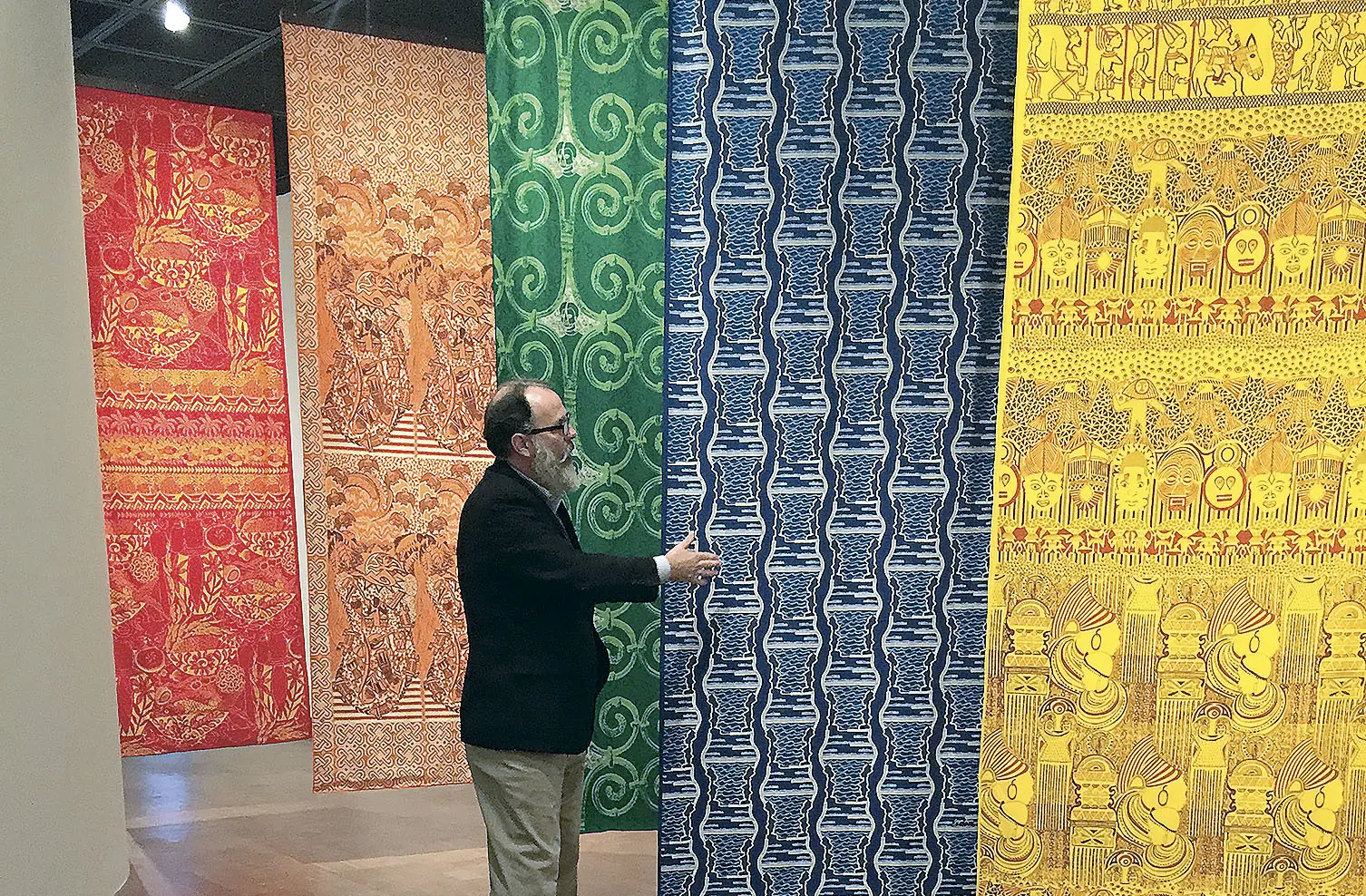
The different kinds of axé are emphasized in different works and aspects of the exhibition just as they are disseminated in everyday life in Bahía. Situated at the entrance to the exhibition space, the dialog between two artists was an exemplar in terms of the way in which the curatorship established conversation within the show. On the one hand, the audience was greeted by Divisor, a work by Ayrson Heráclito that was displayed for the first time in 2000. On the other hand, a series of textile items by designer Goya Lopes grabbed our attention with their colors and lightness. These two artists, both residents of Salvador, the capital of the state of Bahía, bring forth two very different ways to handle the Afro-Brazilian element in its spiritual dimension.
Heráclito, a visual artist who has delved into these issues for a long time—nearly three decades—uses materials culled from the rituals of candomblé. Inside an acrylic box, he creates a dividing line made with dendé oil (from a type of palm that grows in Brazil’s northeastern region) that stands out from its water and salt surroundings. The artist is more interested in the mystery of that image that in any quick reading of it: we see the contrast between the yellow hue of the dendé and the transparency of water, as well as the way in which the greasy material solidifies and suggest the partition of space into two. These elements can be looked at from different angles, be it the history of African slavery in Bahía or the culinary and usual uses of dendé. Meanwhile, Goya Lopes’ textiles deal with representations of negritude, religious iconographies, and the latter’s potential to be made into cards and prints. The relationship between religious-cultural practices and wardrobe and fashion is key for a designer who for decades has also carried forth solid research in the field. Color is a central element in her pieces, and her way of suggesting narratives based on human figures and symbols transforms her textiles into geometric patterns based on the tension between decoration and the representation of core elements of Afro-Brazilian culture.
Beyond the difference in terms of how they deal with images, the duo of Heráclito and Lopes is interesting inasmuch as it proposes a crossbreeding between agents acting in different dialogic spheres. While Heráclito is a visual artist with a growing presence and recognition in the international circuit (he participated in the most recent Venice Biennale), Goya Lopes also has gained space in the international arena, but in the fields of design and fashion. The way in which the curators not only brought together, in a non-hierarchical manner, individuals with a stable presence in the visual arts world but also creators from different places, working in different languages. If the intention was to bring to the audience a panoramic of Afro-Brazilian elements in Bahia, there could not have been a better choice of participants in the project.
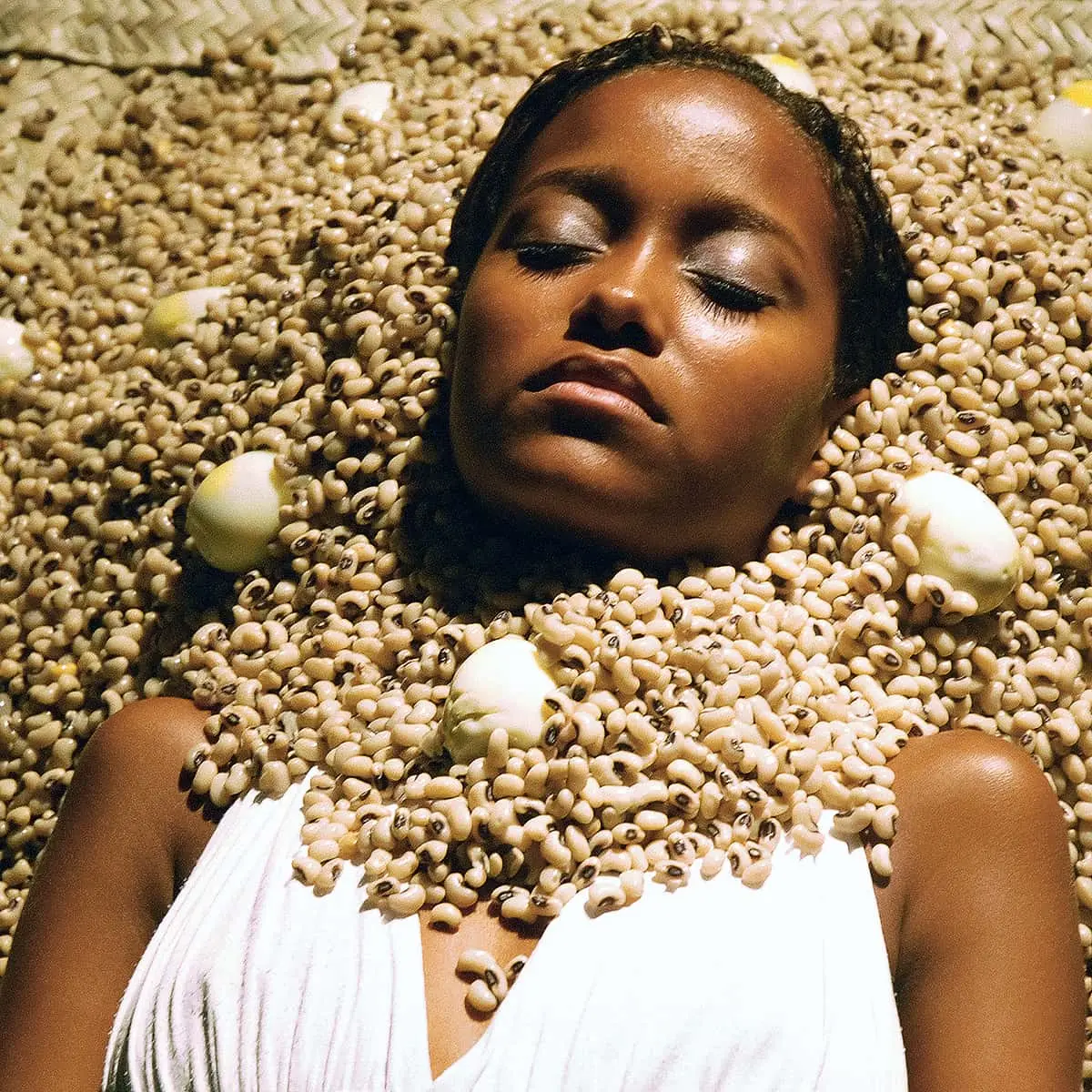
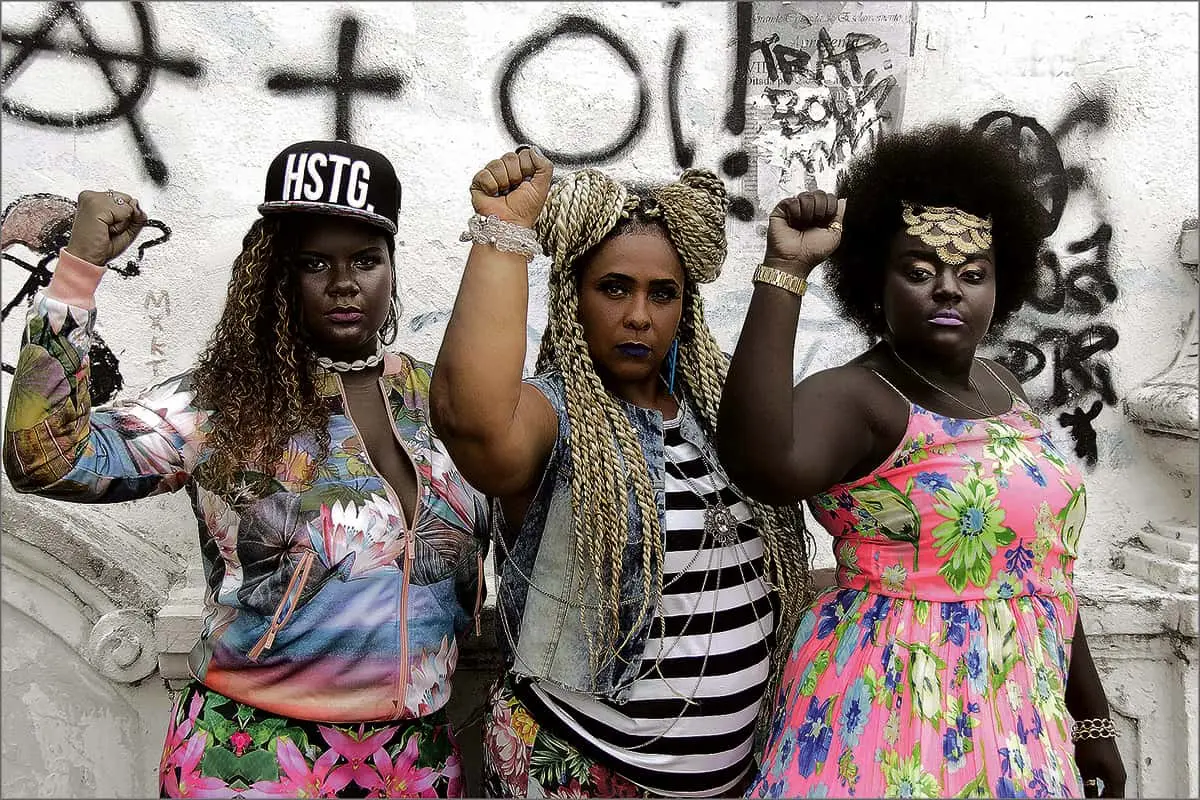
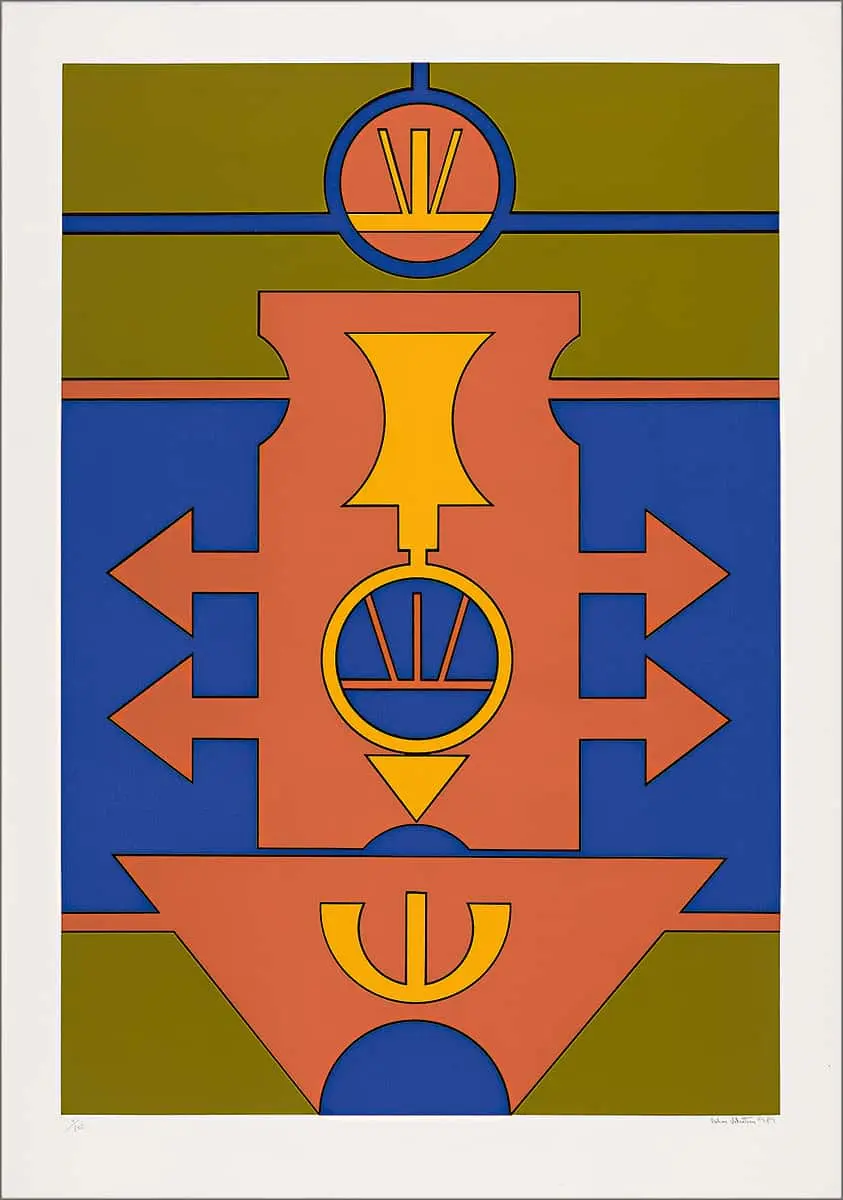
Another pillar of the exhibition was transhistorical dialog; how could a panoramic presentation of the production of art in Bahía not include encounters between Pierre Verger, Carybé, Mário Cravo Neto, Rubem Valentim, and Mestre Didi and such younger artists as Tiago Sant'Ana, Thais Muniz, Álex Ígbó, Helen Salomão, and Tauan Carmo? Fortunately, the works chosen for display are also a gamble in favor of younger generations of artists. This not only gives a fresh tone to the show but also proves that the most historically significant and best-known Bahía figures continue to produce different meanings in the present. It is also worth noting that the exhibition featured artists whose names resonate in the state of Bahía but are yet to achieve recognition in other regions of Brazil, or who at least were unknown to me: J. Cunha, Marco Aurélio Damaceno, and Oscar Dourado have followed interesting paths of inquiry and exploration, and their works deserve to circulate more widely in Brazil.
It was interesting to corroborate, even as the title of the exhibition included the expression “the power of art”, often we were confronted with what does not necessarily share the status of art as such. Posters, engravings, and objects made for their use in ritual are just some examples of the kinds of images featured, set in contrasts precisely with those words that are institutionally established as “visual art.” The decision not to partition “art” on one side and “visual culture” on another was also a successful move on the part of the curators, adding to the ingredients in a great cultural crucible presented in the form of an art exhibition. It is possible that the album covers, book flaps, postcards, and jewelry items included in the exhibition have a wider circulation than the artworks with which they share the space, but this datum does not imply a “better/worse” hierarchy between them, only that they have different kinds of access—something that is made clear for visitors as they take in the exhibition and contributes to the sustained exploration of the relationship between Axé and Bahía.
At the end of our visit, we were left with the certainty that investigations into art, visual culture, and the construction of identity-based on images of specific regions of Brazil are more than welcome. An exhibition like Axé Bahía: The power of art in an Afro-Brazilian metropolis, as well as the third edition of the Bahía Biennial, held in 2014, or the exhibitions based on images of the Amazon basin organized by Paulo Herkenhoff, bring to their audiences the relationship between image and cultural geography in a critical and kaleidoscopic manner. “Bahía”, always between quotes, is the land of writers like Jorge Amado and also of visual artists who are yet to achieve even half of Amado’s fame. It is a place of encounters, affections, conflicts, and power disputes. It is the birthplace of a future Brazilian nation and one of the cradles of candomblé but also, more recently, a place where religious intolerance is on the rise, as are specific attacks against Afro-Brazilian culture in waves of prejudice and hate.
More exhibitions like this are necessary not only outside Brazil but also throughout the country. In that way we contribute to the historical deconstruction of a vision of the Brazilian southeast as the great cultural core of the country, while also learning that any cultural regionalism, any notion of a “Bahía culture” or a “Bahía art” is always a construction, and, as such, an invention.
RAPHAEL FONSECA