The 9th edition of the Luis Caballero Award comes to a close. Once again the curtain falls with eight exhibitions in several spaces around Bogotá. A murmur is heard about the awe that some of them provoke, as well as about the disappointment of other proposals. And the latter starts to crowd the former out. “It is not as relevant as it used to be.” “Artists don’t engage it as seriously and with as strong a commitment as in the past.” “There are two or three projects that stand out above the rest.”
The History
These comments do not do justice to an event that has emerged as one of the most emblematic and important not only in Bogotá but in the country as a whole. If we take into account the routes into which the award has inscribed itself, we can ask about its relevance in the shaping of a history of art, about the way in which artists have turned their gaze towards the place where the work is “anchored” and, better yet, where it converses and communicates with their work. Hasn’t this been its purpose for some time now? Hadn’t the Luis Caballero Award been an invitation for artists to occupy a place in order to “converse” about its history? The Award has circulated in churches, museums, monuments, foundations, and surely many more spaces that might be escaping us here. The Luis Caballero Award has contributed directly to the consolidation of projects of a certain range without countering each artist’s own investigation or any efforts by private spaces. Many artists who have been a part of this Award remain active in the country’s art scene, and some have even made appearances in the international circuit. In other words: The Award has been able to consolidate risky artistic projects that would not have been possible without the resource of the space provided and its favorable conditions, or without the district’s production and logistic. What happened, then, with the 9th edition of the Luis Caballero Award, which closed its cycle in January of 2018?
It would be improper to point out that the exhibitions did not meet the standard, Or would it? Let’s propose at this point a concern that invites us to follow the course of our reflection.
The Artists
Here is the roster of artists: Lina González, Leonardo Herrera, Rodrigo Echeverri, Ana Patricia Palacios, Felipe Arturo, Adriana Marmorek, Luis Fernando Ramírez, and Juan David Laserna. Are we seeing in them artists who are strangers in the Colombian art scene? No. Are they artists whose careers and investigations differ from the projects presented? No. Have they been coherent with their project? Of course, they have.
Lina González has explored the situation of common individuals in the face of a society plagued by ethical inconsistency, political injustices, and religious arbitrariness. Her gambit focuses on insecurity in the streets, the “vote of confidence” to institutions of all kinds that steal on a daily basis, or on what the center means today: a place where fear of suffering the loss of property and identity is constant. A center is a physical place and a political place. There are mirrors and binoculars, there are incomplete objects, there is a difficulty to see our reflection in all of them. Impotence becomes a common denominator in situations that we, as spectators or as common citizens, cannot solve; it is an exercise with many entrances and no exit.
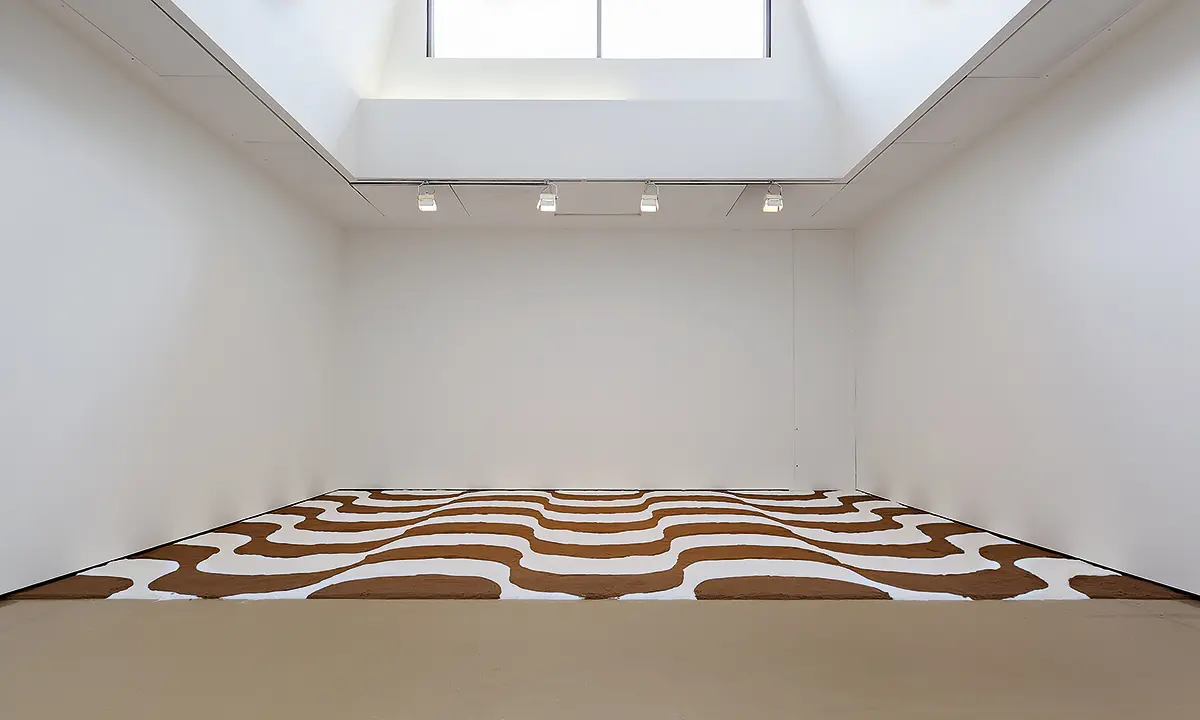
Leonardo Herrera has never ceased to work with the “underworld”, its causes and consequences, its struggles and anxieties. Leonardo Herrera has moved at the limit and with the limit. Where and how is a person who has been sentenced to jail born, how is that person made? What decisions alter the course of our lives? The periphery, marginality, that which lies between two worlds and as such belongs to neither but to the interstice, are all issues that Herrera’s projects engage. He makes fieldwork into a life experience. And little by little the rubber of life and of adrenaline elongates until it loses the shape of reality and becomes a thin line where what we would normally call good and evil come to fuse. Where do reality end and Herrera’s work begin?
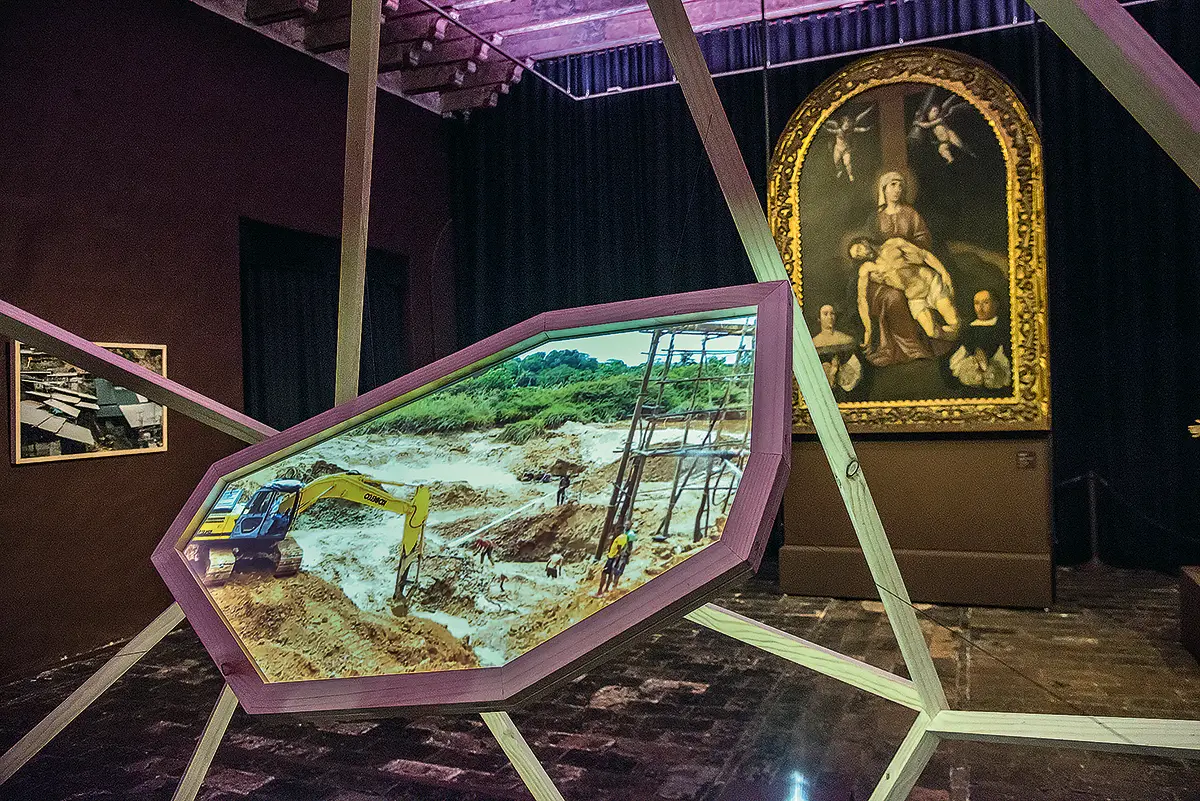
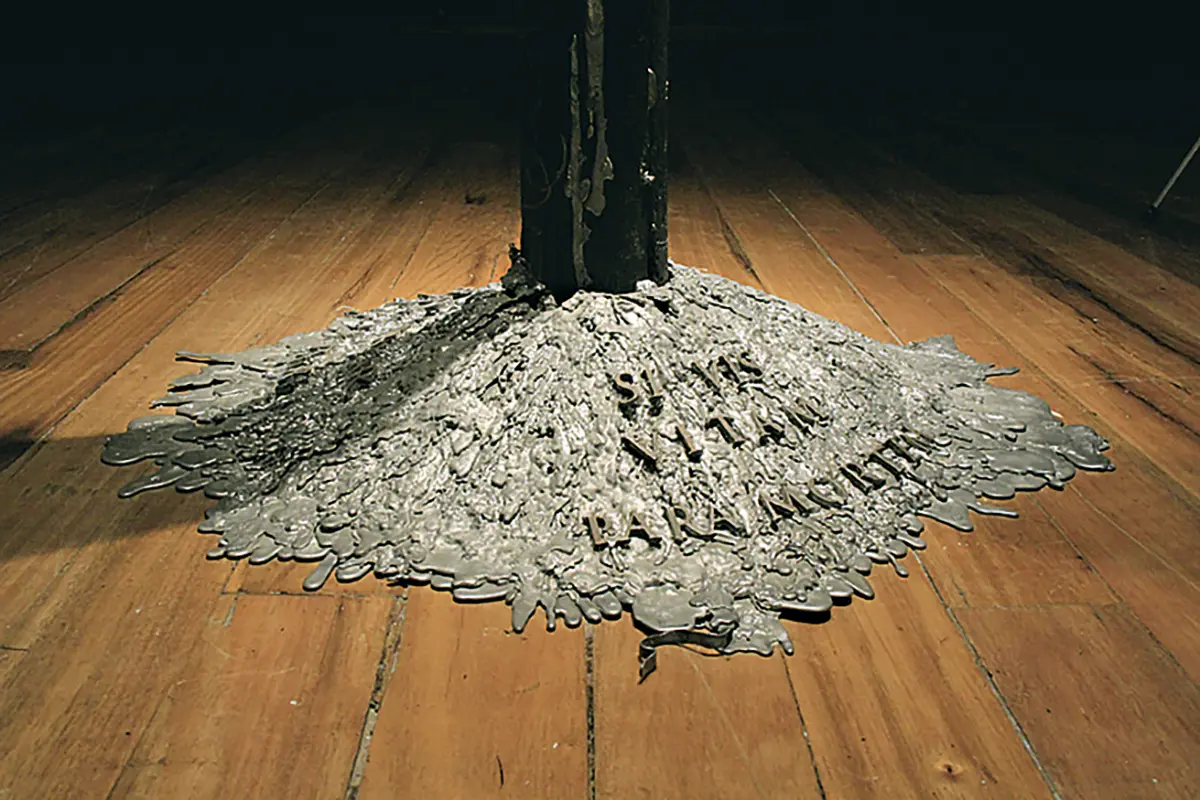
Similarly, Rodrigo Echeverri confronts the confusing colonial era with the political and ethical unmooring that pervades mining areas. Where in the past were dispossession, enslavement, and death, what name could we give today to the exploitation of minerals? What kind of people is able to see themselves reflected in a mirror that has been a swindle for centuries? Are we progressing? The constant reference to the words “progress” gradually makes two times turn into one as we walk around the Santa Clara Museum. A long time has passed, but the cracked reflection of our present remains the same as four centuries ago.
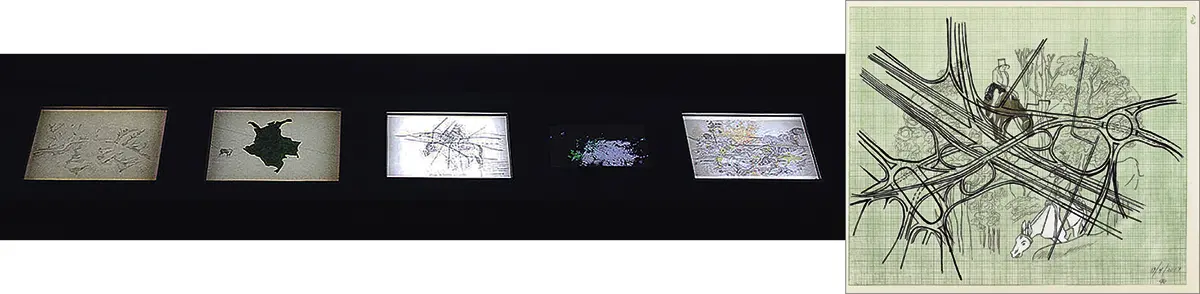
Ana Patricia Palacios has been working with routes, paths, connecting threads that are part of unknown landscapes and suggest a country within a country, a parallel reality. She takes us into places that are not on the map, not part of geography, and, in consequence, are not taken into a historical account. The road network is one thing; the way in which we experience, articulate, and appropriate them is another thing altogether.
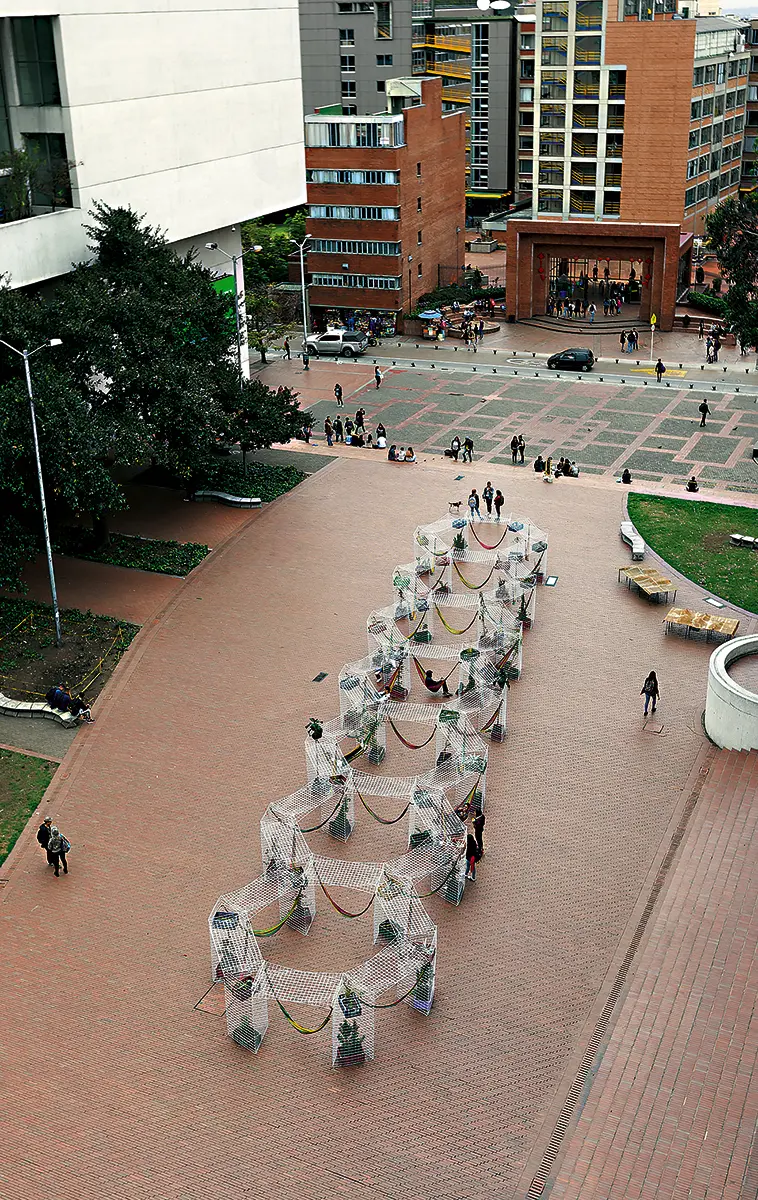
For nearly ten years, Felipe Arturo has consolidated a series of proposals about a journey he made to the Amazon River and its basin, its towns, and cities, its stories and myths. Arturo discovers analogies that approach the experiences that a Claude Lévi-Strauss could have had, and which helped him understand that there are social, mystical, and economic connections that go beyond any border or boundary. In his work, we find that the way in which we handle our appropriation of places, the way we inhabit them, the way we understand them, are often adapted to aspects that are much more organic and “natural” than one might suppose. We think of the Amazon river as something far away that does not belong to us, and which manifests itself in ways that are entirely different to live in the big city. What idea has we been sold about the nature of human beings and their way of existing? How far have we gone with presupposed ideas of progress and the boundary between nature and reason? Are we not immersed in a single flow of events and constructs that inhabit us transversally? A plant, a river, a topography are permanent mirrors that teach us to coexist with them, wherever we happen to be.
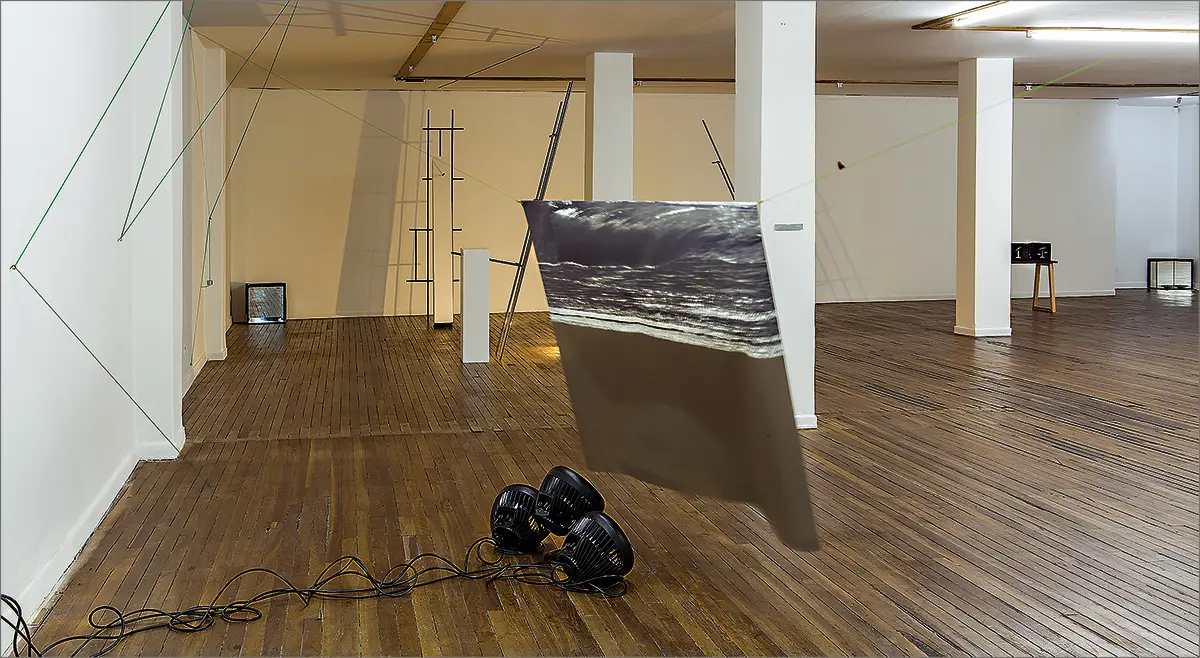
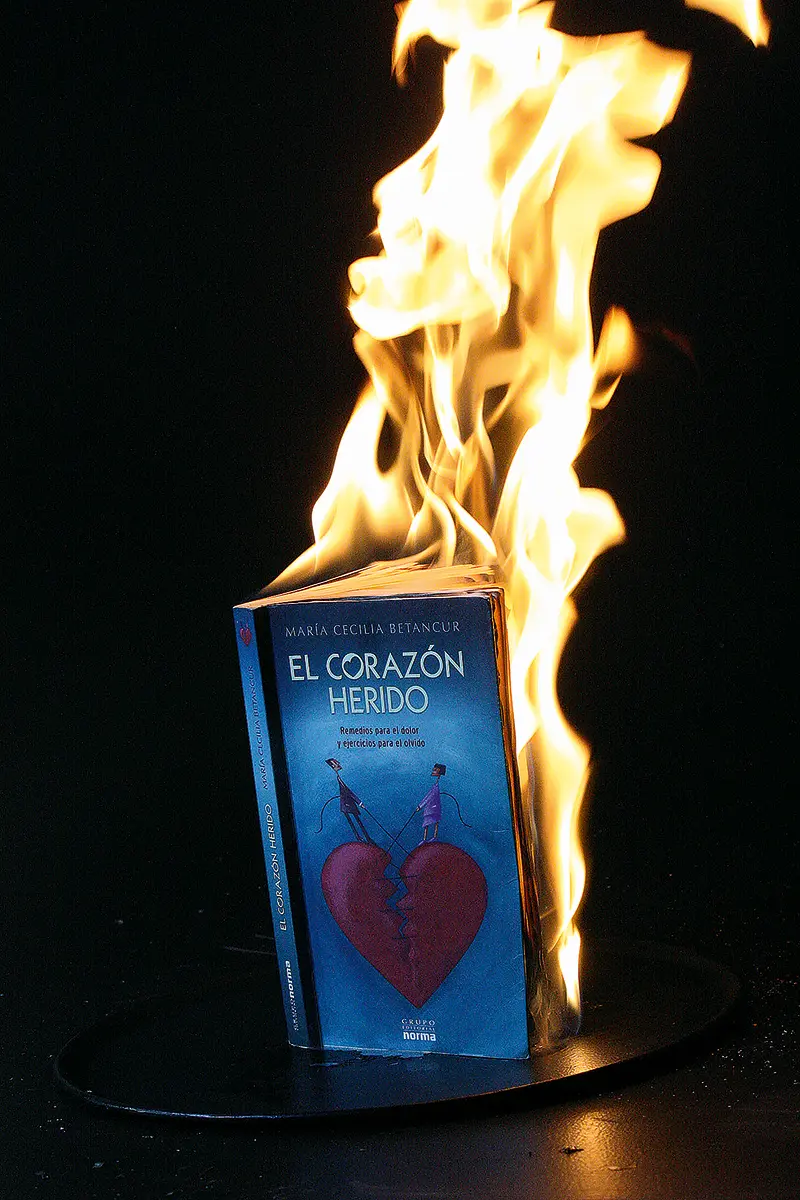
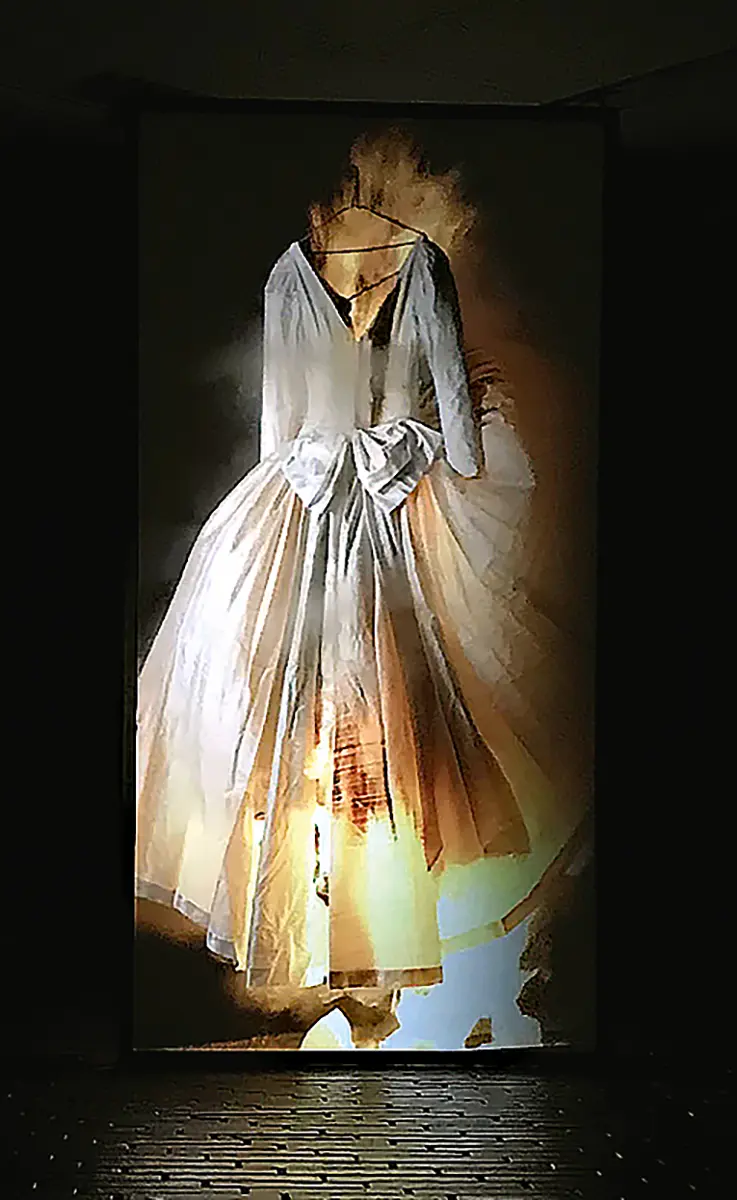
Adriana Marmorek has been carrying out investigations that have to do with desire, love, sex, and secrecy. She connects the museum as a center that collects works of art that must remain there forever, and the love that arises between two people and the way mementos are treasured and expected to last forever as well… Like unconditional love in marriage, for example. But none of that is anything but the linear construction of a thoroughly unpredictable and haphazard life. What is more relevant, the relationship between the museum and art, or the relationship between the museum and its collection? Our memory is gradually eroded by a cobweb-filled present Marmorek burns the archive and makes the exhibition turn into nothing but ashes. We are left with the ghost of an archive of relics—that is what love and the question about the museum become.
Honorable Mention
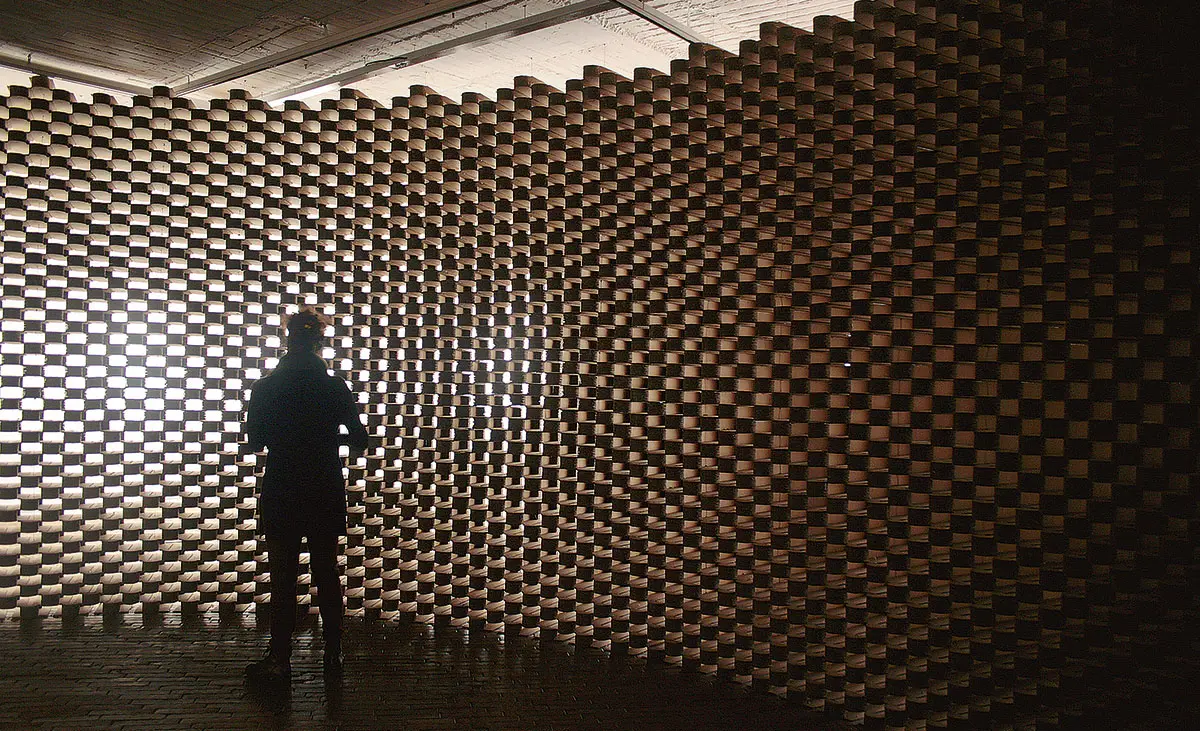
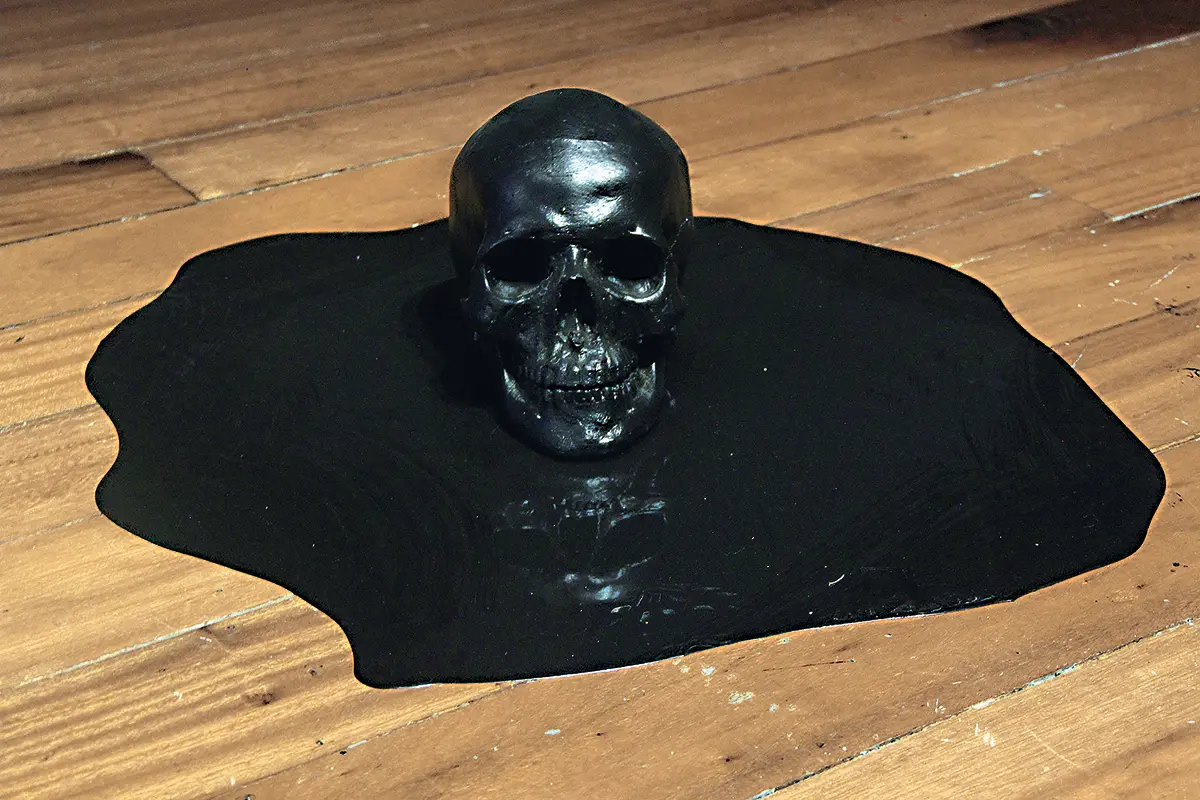
Because of his training as an architect, Luis Fernando Ramírez has always developed projects that “fit”, “question”, and “subvert” the spaces they occupy. He creates two characters aware of their historical moment, Jacqueline Nova and Lucio Celis, and places them in Bogotá at a time when the city’s Museo de Arte Moderno was in the planning stages (in the mid-1970s). His proposal plays with the history of the museum and with the vicissitudes of the arts during that era when a forceful conceptual quake was underway in the realms of culture, politics, and intergenerational relationships. It is worth mentioning the waves of sexual liberation, of student struggles, and of revolution that took place in the late 1960s in many parts of the West, which reached our shores also with a strong desire for change. The museum’s architectural project emerged in that era, and it bears witness not only to the historical moment but also to the possibility of writing about the all-encompassing uncertainties that still to this day impact that space for the nation’s art. Ramírez’s installation lets the air and the sounds that seep through the sinuous cracks of the architectural design mix with time and space. He signals towards the malleability of architectural spaces, no matter how emblematic, but above all makes us doubt the linearity of time. Such imposing subjects as time and space have been “disturbed” to the tune of an experimental sound passage that is characteristic of an era that for an instant was ours… This era.
The Winner
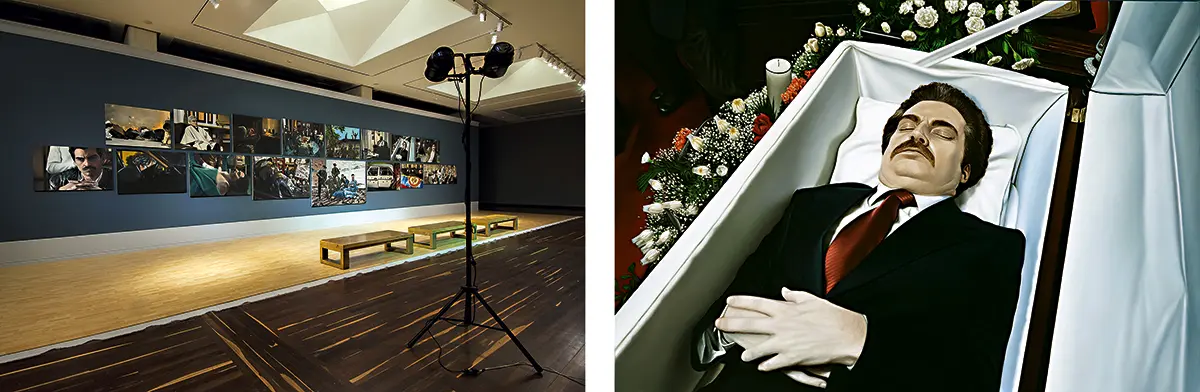
On his part, Juan David Laserna’s work has dealt with archives, stereotypes, and the way we build a “reality” and make it ours as absolute truth. His project, recipient of the award, is titled SET and it does not stray from the construction of reality and its appropriation in order to build more, What is “real” in Laserna? His project “registers” images that have been able to present a version of the truth in a TV series about Pablo Escobar. Ernst Jünger thought that there is no war without photography; in today’s world, the sad spectacle of war must be filtered through television. And of course, the construction of mythical figures like Escobar demands a detailed elaboration of moments that have not even been processed by documentary photography but have left behind a mystery that forces us to revise history. To fantasize about it and to rewrite it. Is this not, in the last instance, what we do every day? Is this not the search for truth that supposedly cleanses and purifies any outrage? We have believed that hundreds of assassinated Colombian kids were guerilla fighters; President has taken office after manipulating contexts in order to win elections; we have seen the laying down of weapons that did not exist we have been certain that evil only comes from evil. SET is a novel told in fragments. It is a “behind the camera” that points to the falsity or at least the manipulation of the truth. It is a theater within a theater much in the manner of Hamlet, leaving us with the sensation that all history is susceptible to be written and rewritten a thousand times. An archive, like the site hosting this work, also becomes a place where truth should be in constant motion. If we looked at this work in perspective, we’d have a mise en abyme with the Bogotá Archives as a stage for a narrative of the story of the city, in turn exhibiting a work of art that is a stage where a black chapter of our history is told—one that, in turn, has been told on television with incredible special effects, with a script adapted from a book by a journalist who intended to be objective and fair to reality. Even so, we know that history’s objective as it portends to be is always a narrative. The reality to which Laserna subjects us is a montage that we experience on a daily basis, and which sometimes, despite being aware of the ruse, we accept.
Addenda
What do we expect from the Luis Caballero Award? Isn’t it an invitation to revise problems, encounters, and missed encounters with our present? Where is the beauty of the work of art, or its magnitude, or its aesthetic power? The fact is, after this brief visit, what we have is a group of artists who have confronted a country where reality is not single and univocal. They are all posing questions about how is it that we have built a homogeneous way of looking at things and of building history. Perhaps this is the time to ask whether the same thing is happening in the arts: could it be that we expect a single way for the work of art to appear before us?
ANDRÉS GAITÁN T.
Critic and Curator. Visual Arts’ Advisor for the Ministry of Culture of Colombia.