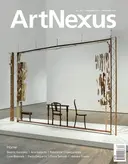
On exhibit at the Santa Barbara Museum of Art, in California, Any Moment Now celebrates the 25-year career of Valeska Soares (Belo Horizonte, 1957). Curated by Julie Joyce and Vanessa Davidson, and scheduled to travel to the Phoenix Museum of Art in early 2018, this exhibition is part of Pacific Standard Time: LA/LA, a far-reaching project that includes more than sixty such art shows across California. The project, an initiative of the Getty Foundation intended to explore in-depth and promote a dialog between Latin American and US Latino art, features large-format installations, photography, two-dimensional works, video, and sculpture, in a variety of materials and forms reflecting the depth and the vitality of the work of one of Brazil’s most renowned artists, who began to exhibit internationally in the early 1990s. Any Moment Now is Soares’ first large exhibition on the southwest coast of the United States and includes nearly fifty of her most relevant works so far.
An architect by training and a visual artist by choice, Valeska Soares shifts the focus of her original profession in order to explore through her art the idea of desire as a connecting thread. To that end, she subverts spaces, objects, and materials and emphasizes the generation of tension between opposites, the modification of spaces, and the evocation of narratives that range from the most personal and private to the political and civic. Soares vehemently asserts that her works have no defined meaning, but act as triggers for the viewer’s memories and life experiences.
Soares works in practically every possible format and with every possible material; in essence, she plays with ideas that hinge on a complex fabric of poetry, everyday life, found objects, and the narratives that derive from them, such as feeling, desire, and memory. Inspired by Roland Barthes, her favorite author, Soares works with such indefinable poetic-temporal spaces as love, time, remembrance, experience, and nostalgia. Joyce’s curatorial essay also suggests that the connecting thread in Soares’ work is the topic of love, the dichotomy presence/absence, with minimalism as her conceptual and critical framework.
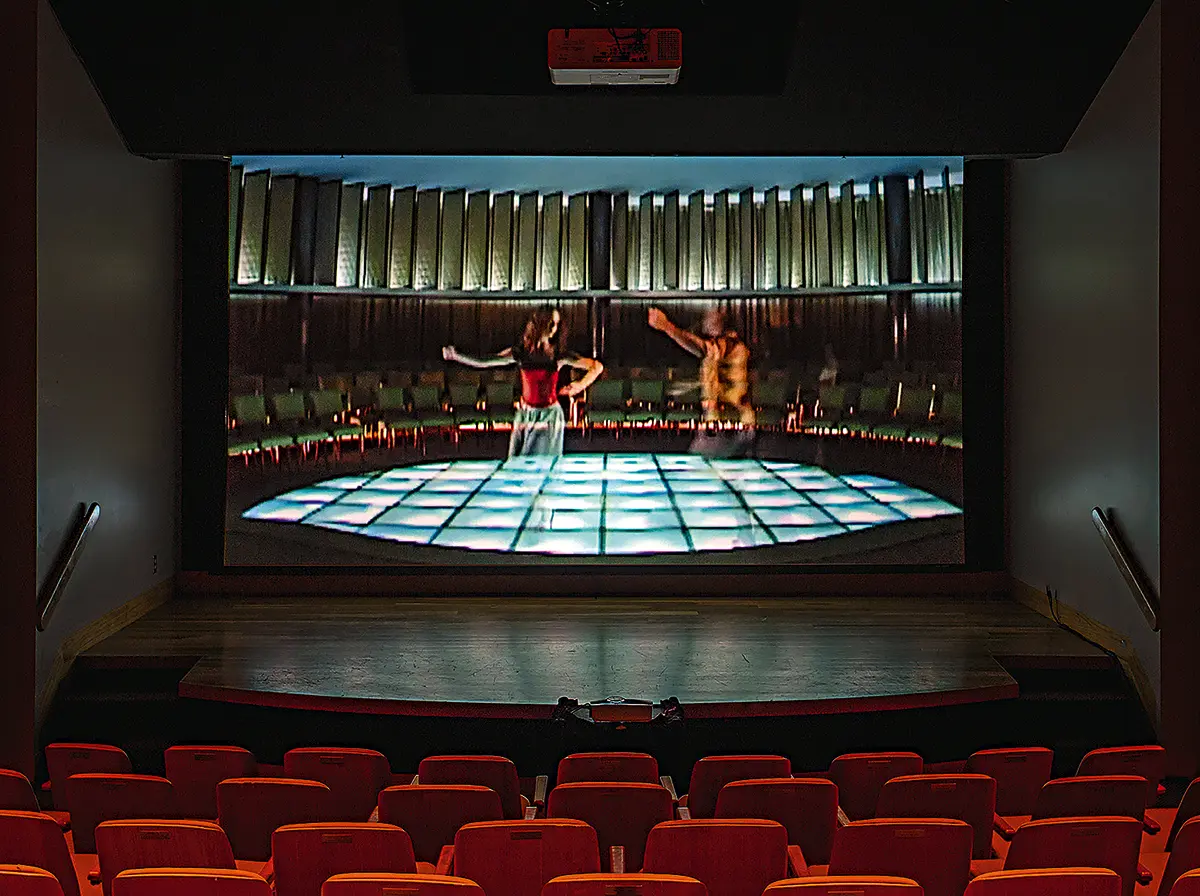
The exhibition begins with a video projected in the museum conference room. Tonight (2000) is a video and sound installation depicting a ghostly male/female couple on a dance floor, isolated and never coming together as they dance to a version of Burt Bacharach’s The Look of Love, a classic romantic hit of the 1960s. A sad story of missed connection and improbability, of dreams and love. The video was recorded in an old Belo Horizonte casino designed by Oscar Niemeyer, now repurposed as a museum. An exploration of the relationship between time and subjectivity, understanding time as a relativistic process, added to feelings of nostalgia for the past and for the idea of love, come together in this nearly eight-minute dance, whetting our appetite for what comes next. Joyce notes that the show does not follow a chronological sequence, but is rather structured around space and the connections that emerge between the works, promoted by the curators and also by Soares, an artist interested in prodding sensations and motivating viewers to explore inwardly. Soares points out that museums today do not foster experimenting with works of art; on the contrary, the less the public touches or intervenes, the better. She insists that the best course to follow is to wander directionless in the museum in order to encounter the work without any pre-directed (pre-digested) thoughts. For Soares, art must be experienced, free from any prior reading or explanation; all that comes after our encounter with the work, and this is why her exhibition includes no labels or descriptions.
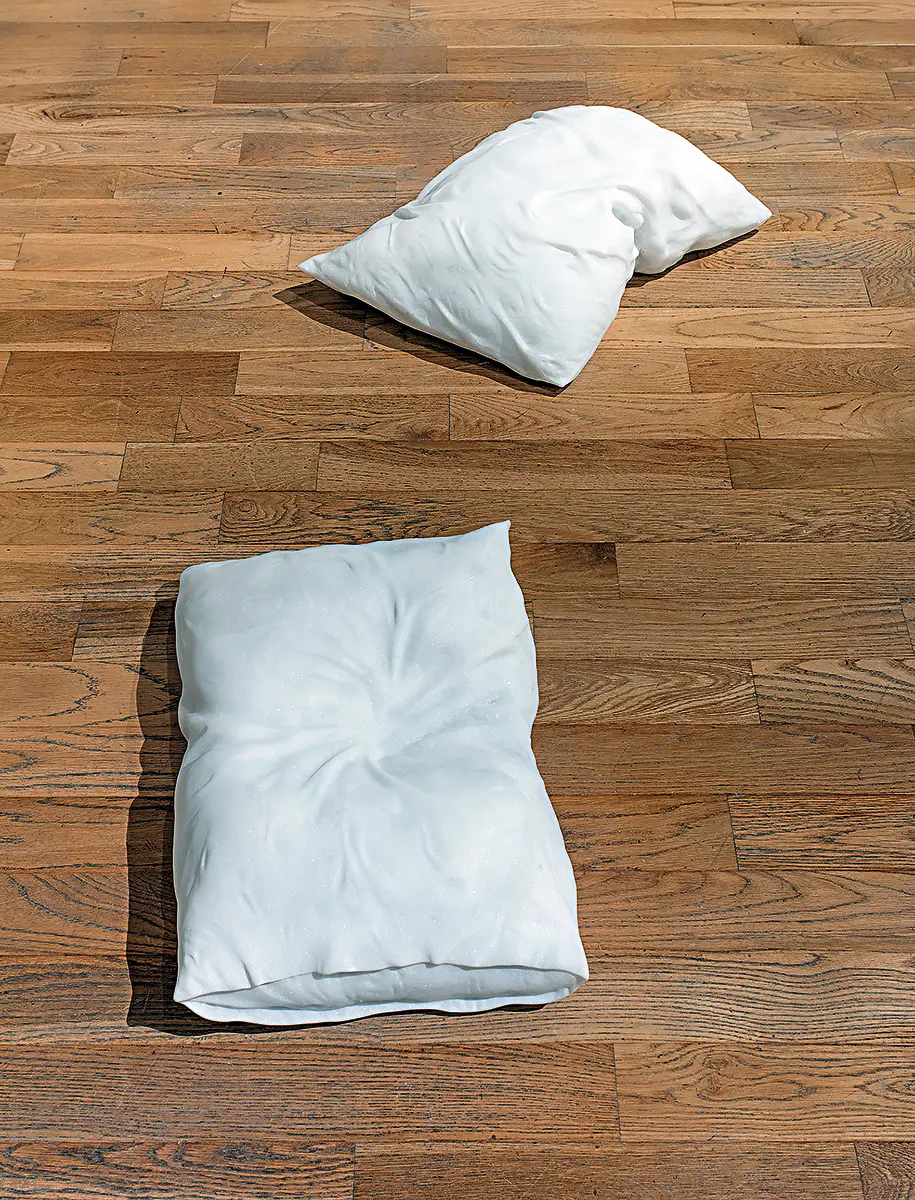
In this way, every one of Soares’ works becomes a poem, a phrase, a paragraph, an experience that tells a poetic story. This is the case of Duets (2009-2011), a group of marble pillows. Soares takes her material/furniture item/object and transforms it, removing elements and shifting the original function, rendering something different. Hers is an alchemical process. The cold white marble is transformed into warm pillows with the dents of sleeping heads on them. A canvas becomes the support for books; some metal cables hanging from the ceiling are transformed into penetrable works of art; those impossible chairs are now tables. Soares’ work has to do with collecting various objects, but these are explicitly not fragments of collections of like things. No. Soares wants to turn them around and make them into something else, giving them a new life and pushing them beyond an archaeological, anthropological, or archival space. For that, she works with rather less graspable concepts, such as the passage of time; desire; love and its stages; memory; loss; suffering; displacement; and back to love. Subjectivity, Soares’ says, is a poetic resource she wants to think through in order to represent those deeply human topics—which have paradoxically become almost obscene in our times.
A large portion of Soares’ oeuvre is built from household items, furniture, dinnerware, and old printed matter and materials. Reusing these objects and giving them new meaning, Soares opens up new possibilities and new symbolic contents. One example is Spiralling (2014), a group of eight old library ladders that are brought together to recreate the infinite motion of a spiral, suggesting an impossible, Escher-like space; another is Lugar común (Commonplace, 2016), where fours chairs become a table, nullifying both functions.
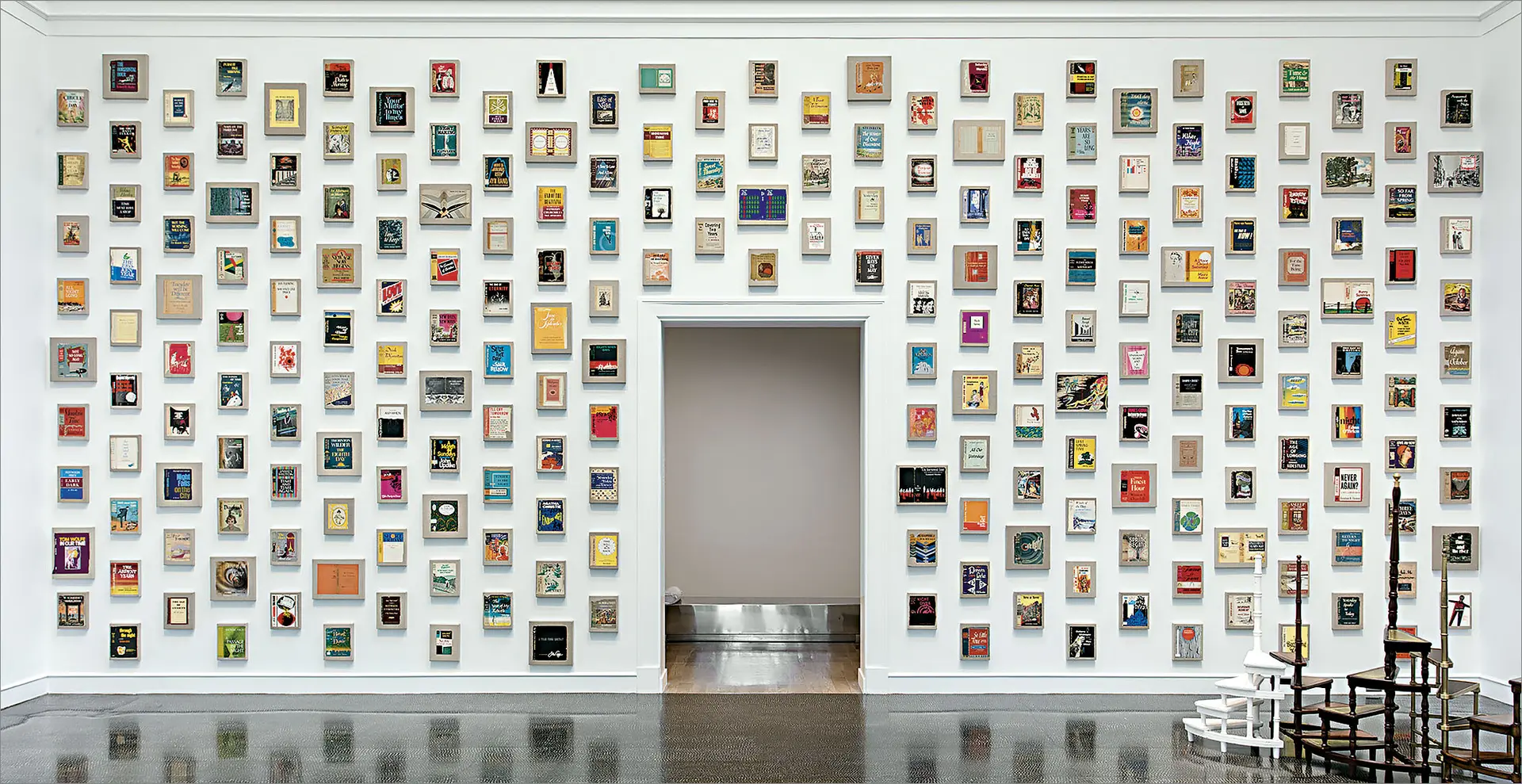
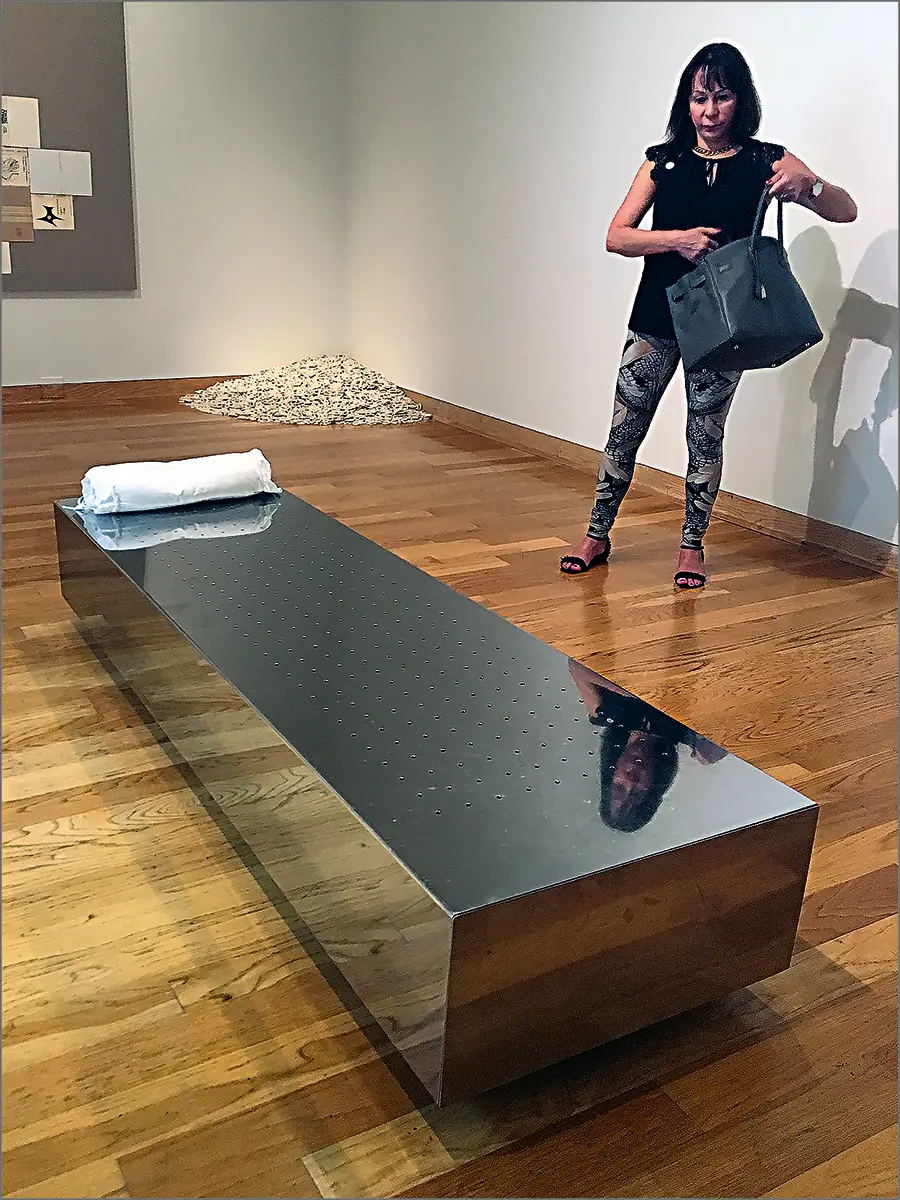
Books have also been key in Soares’ work, as literature is one of the keystones of her life. She uses all the elements of a book: dust jacket, covers, pages. She deconstructs books into fragments, transforming them into visual and chromatic elements. Soares has used this strategy in her extensive series Thresholds and Bindings. In them, books are used as pictorial elements, grouped by subject, color, and title, and adhered to canvases. These groupings become abstract studies in color and form but always continue to imply the subjacent reading of words and to construct new narratives and metatexts. For instance, Any Moment Now (2014), the installation that lends its title to the exhibition, is comprised of the covers of 365 vintage books, mounted on canvases as a kind of subjective reading map. Soares has used a variety of strategies to deconstruct the book-as-thing. She has taken dedication pages and installed them in an oval-shaped work, as in For-To (2007). She has used the text itself, as in Edit (Why?) (2012), where he took pages from Barthes’ A Lover’s Discourse: Fragments and blacked out entire sentences to produce a new reading. With the bulk of her oeuvre, Soares suggests a complex weaving of poetry and everyday experience, between found objects and derived poetics that trigger spaces of introspection in their viewers. She develops concepts as part of her training in the use of objects and searches for architecture’s most poetic possibilities, imaginary spaces, sites where imagination can be activated. Personal narratives, desire, and lust, as in Finale (2007), consists of a large mirror table completely covered by vintage glasses, goblets, and jars, painted in various colors with golden rims. Some of the glasses contain remnants of wine, tequila, scotch, or champagne, which eventually begin to smell and evaporate. The mise-en-scène suggests the aftermath of a party. There is also Fainting Couch (2001), a stainless-steel bed with 297 holes, on top of which rests a feather pillow. Inside the bed are fresh lilies that are changed every week. Visitors are invited to lean on the bed and experience everything at once: the aroma, the coldness of the steel, the softness of the pillow, a moment of quiet introspection. On a corner near the bed is La Dédicace (de Fragments) (2007), which piles together (bringing to mind Félix González Torres’ mountains of candy) a number of letters in white porcelain based on the section of the same title in Barthes’ A Lover’s Discourse: Fragments. Reading it is impossible, yet it contains several other texts.
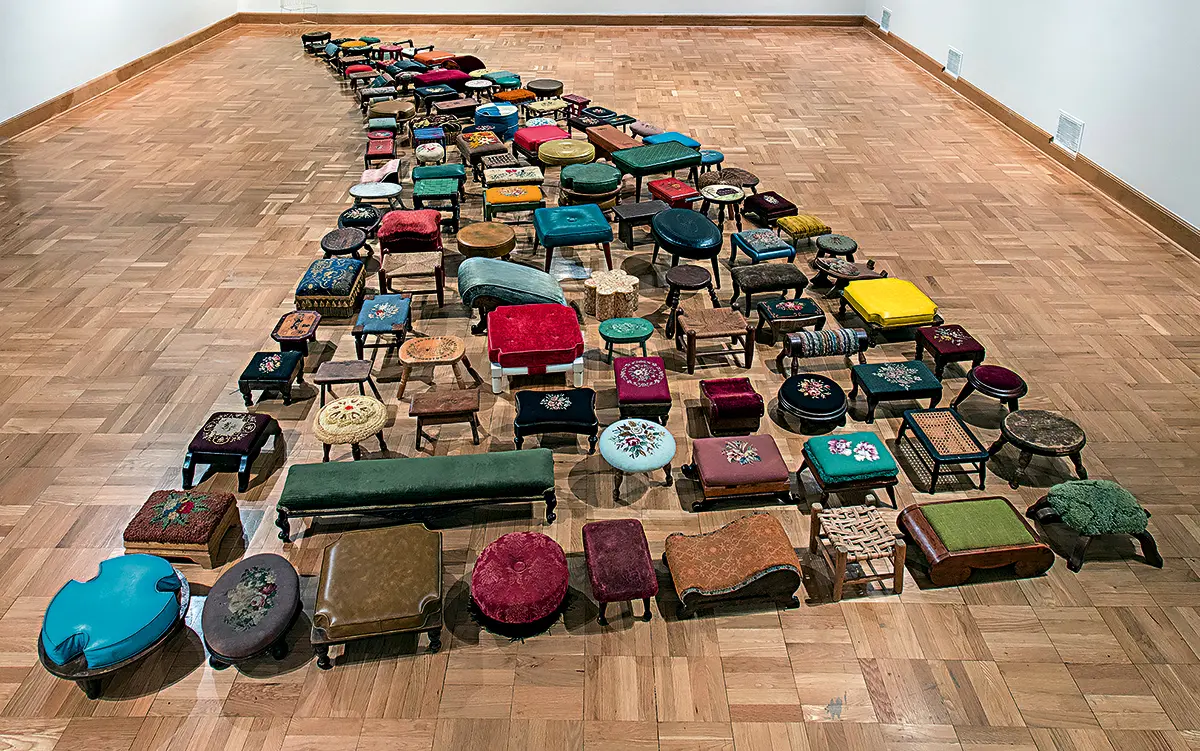
Soares inhabits objects and transforms them into something else. Her objects become a new element, a new metaphor, palindromes that move from the banal and the commonplace to the meaningful, the poetic, and the playful. Soares’ work is romantic, delicate, soft, fragile. She weaves archaeology and signs based on everyday domestic life, rhythms, music, and aromas intended to connect with viewers on a personal plane. For example, Un-rest (2016): a large number of footrests are placed in a large room around a fragile, almost imperceptible glass chair that provides no rest at all. In this work, the fragility and functionality of the objects (chair and footrests) are set aside in order to transform them into something poetic that does not need to exist but exists because of the very desire for them to be.
For Soares, it is key that audiences are able to cross their own boundaries and confront each work as an ephemeral experience; viewers don’t need to understand the work, but to feel, think, and complete it with their reading, as Barthes suggests. Her work engages all that is human, many ungraspable subjects that cross and touch on each other; art becomes the mirror on which we see ourselves and the window through which we observe life in a kind of shared subjectivity that links together objects, time, the experience of the present, and memory.
AMALIA CAPUTO
Artist and Art Historian.