Acknowledging the diversity of the Caribbean archipelago and previous scholarship that has focused on each island’s individual histories, languages, cultures, and traditions, this extraordinarily complex exhibition (with a scholarly and richly illustrated catalog co-edited by Tatiana Flores and Michelle A. Stephens),1 examines the Caribbean’s artistic legacies to form a new definition of the area’s mapping through the creative process. Challenging conventional geographic and conceptual boundaries of the Caribbean and their relationship to Latin America, the exhibition and the scholarship that inform it offer an “archipelagic model” around four themes: Conceptual Mappings; Perpetual Horizons; Landscape Ecologies; Representational Arts. This archipelagic framework serves to unite the visual arts and bridge the region’s divides by locating aesthetic and stylistic correlations.
Masterfully curated by Tatiana Flores for MOLAA, the Museum of Latin American Art in Long Beach, as part of the Getty Foundation’s Pacific Standard Time: LA/LA, the exhibition includes the work of over 80 contemporary artists from the insular Caribbean and its diaspora. It begins with a conceptual view of the islands, but not from the usual perspective that favors the mainland countries bordering the Caribbean Sea. The relationship of the Caribbean archipelago to the concept of Latin America, the premise that informs the Pacific Standard Time projects and determines the direction of this and other exhibitions, immediately raises questions about the region’s heterogeneity because many of the islands are not ordinarily associated with a Latin American connection, thus forcing a new approach that focuses on thematic continuities, rather than differences.
For all their distinctive and recognizable characteristics, there are still obvious commonalities to be addressed and they become evident in the art chosen for this exhibition. Dismissing assumed dogmas and stereotypes about what the art “should” look like, Caribbean art is considered for its authenticity–not because it is so often measured by its independence from Western artistic canons, but because it has a cultural identity to be celebrated for both its diversity and shared intentions. While there is no simple cultural definition for the Caribbean, or even what countries and islands are or should be included, there are connections to be made through geography, long colonial history, linguistic variety, ritualistic and religious complexities, a nearly extinct Amerindian population, and an African presence with its own turbulent and violent beginnings.
The Caribbean definition has long been a polemical debate found in literature, poetry, drama, and music, that is given visual significance by the artists in this exhibition who defy stereotypes, often credit the Western canon, and remain distinct products of the globalization of the 21st century. It is a unique opportunity to meet artists from island nations, many of whom are not well-known outside their homelands, and see their work in new vibrant relationships, to each other and to the conceptual themes presented by the curator. It is also an opportunity to consider the Caribbean as a whole, outside of its usual geographical subsets and island distinctions, as important as they are to any discussion of the area. The exhibition places the artists outside of regional boundaries, inviting them to participate in the hybridity, plurality, migration, transculturation, and creolization that seek to define them as they unify in meaningful new ways. It is cultural unity formed out of an eclectic mixture of European, African, Asian, and Amerindian origins seen through contemporary eyes. The works include painting, sculpture, installations, photography, video, and performances, most produced within the past 10 years.
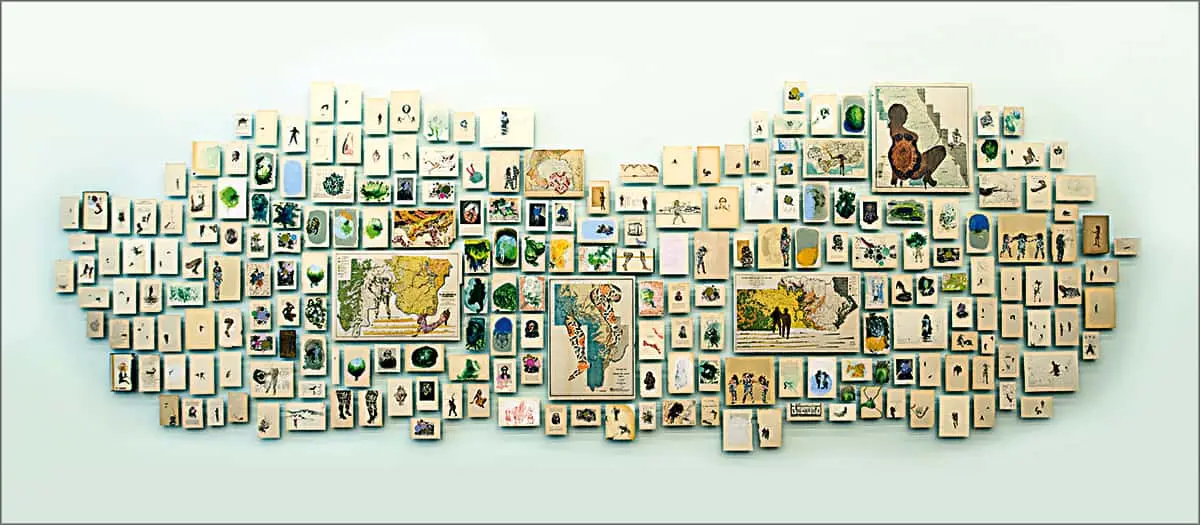
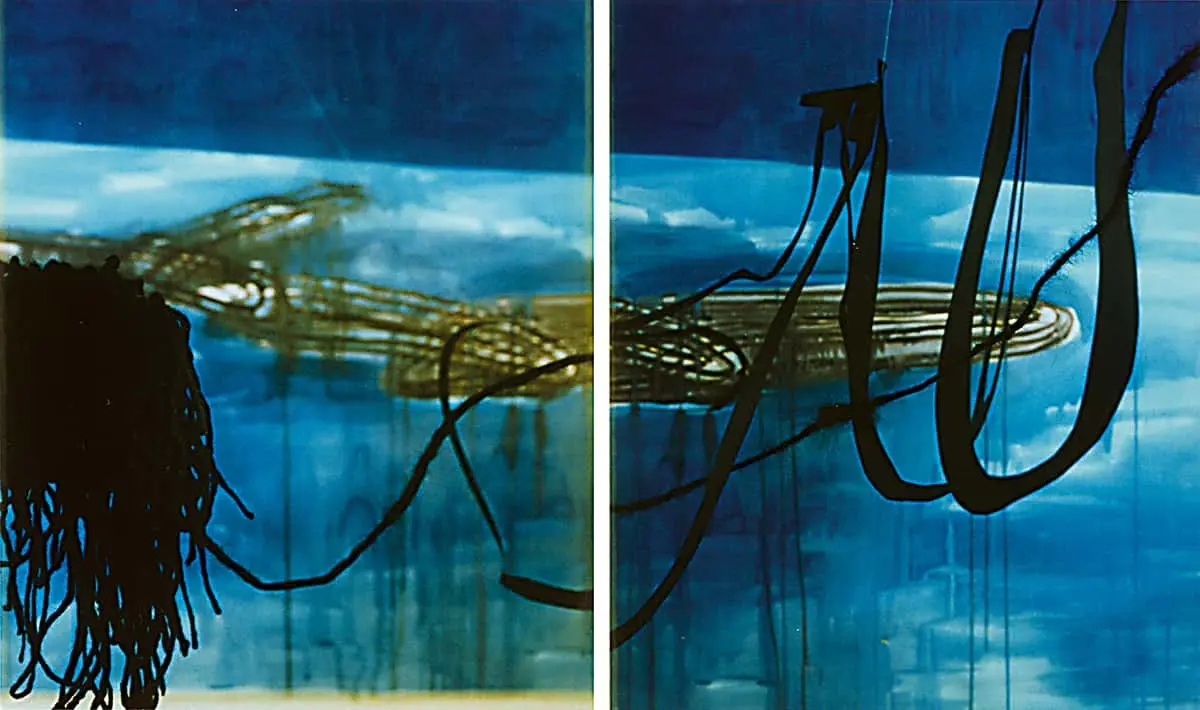
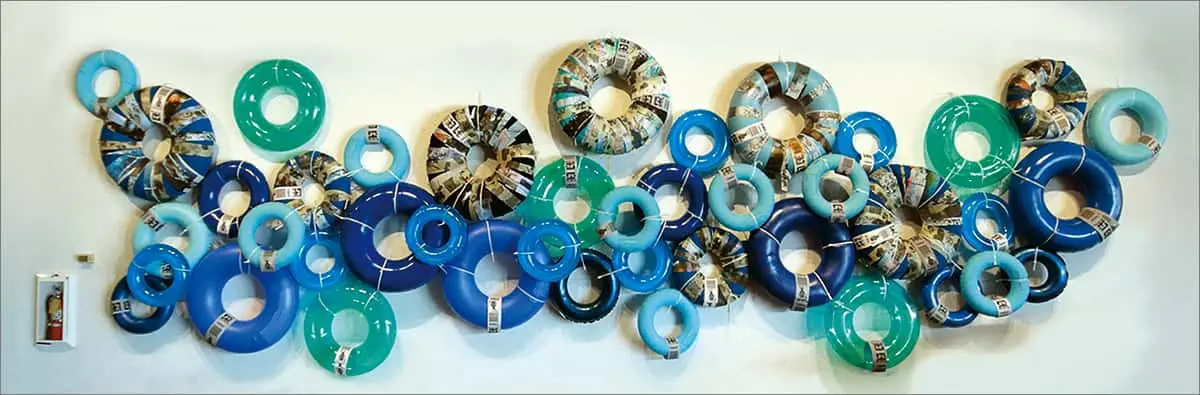
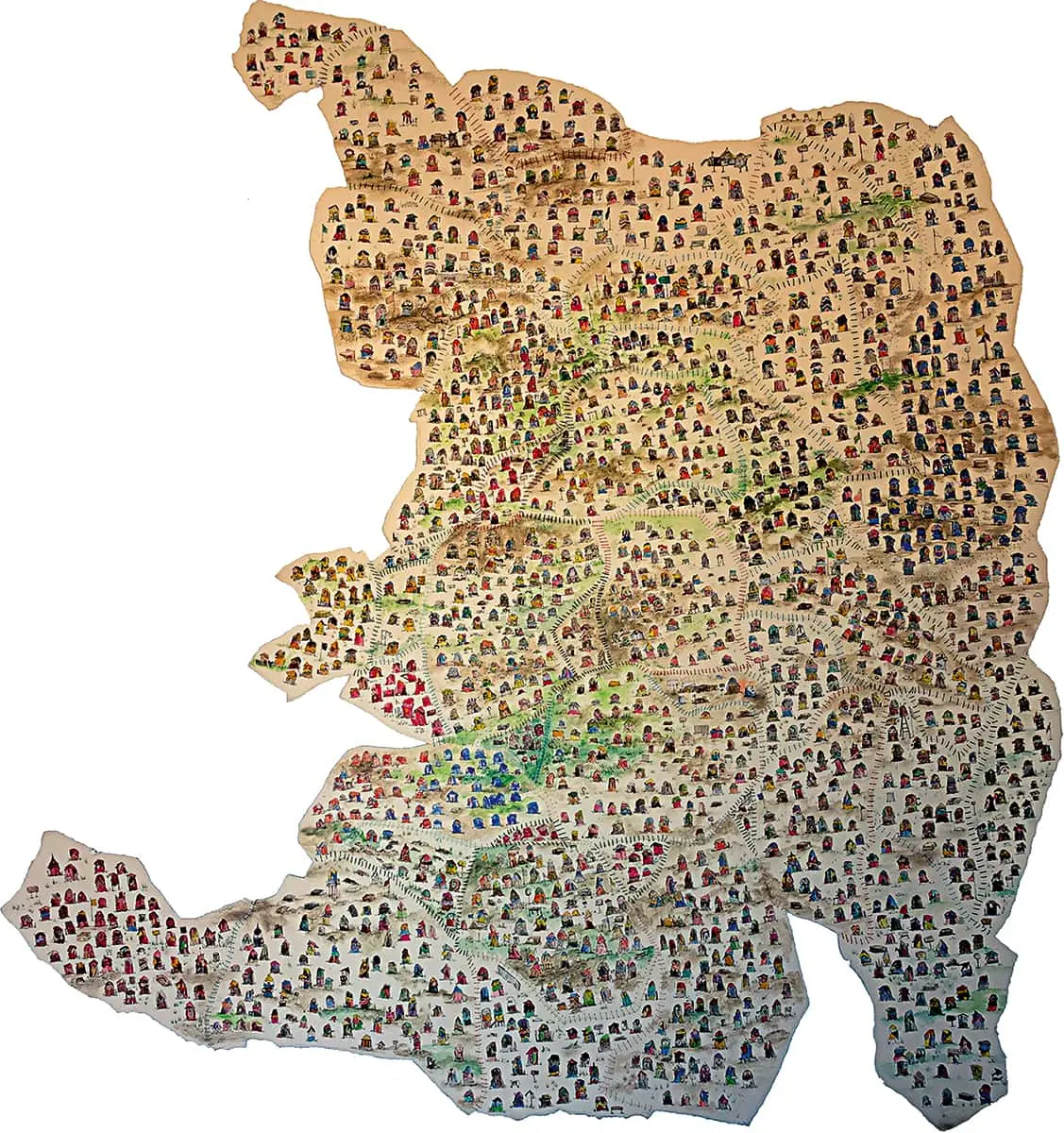
Works grouped within the first thematic section, Conceptual Mappings, challenge the spatial order of the traditional map that separates the islands from each other, from the mainland, and from the European perspectives of the past. It “problematizes the Caribbean’s segregation from the concept of Latin America [key to the tenets of Pacific Standard Time’s focus], while emphasizing their shared histories, geographies, ecologies, and contemporary conditions.” (Flores and Stephens, ed., 31). Firelei Báez intervenes in a colonialist map to denounce power dynamics in the Caribbean past as a means to introduce the traditions of cartography, so important to the Age of Exploration that began in the islands. In Man Without a Country (aka Anthropophagist Wading in the Antibonite River), 2014-2015, Firelei Báez’s map performs as background for her drawings on deaccessioned book pages. From the most recognizable of maps to their fragmentation and re-purposing, works such as that of Nyugen Smith look at Africa from a unique perspective. His complex pen, ink, thread, and Zambian soil drawing on paper describes an arraignment of small huts and tents in what appears to be a refugee camp, each part made of torn paper and held together by a thread. His Bundlehouse: Borderlines no.3, 2017, is strident, yet at times whimsical drawing that is a comment on borders, belonging and loss, and the importance of home, anywhere. Recent issues about migration throughout the world revisit the diaspora of peoples from Africa across the treacherous Middle Passage and are brought to light in the work of several artists. The colorful installation of plastic tubes and rubber floats of Scherezade García, titled In En mi mundo flotante, Paisajes de paraíso (In My Floating World, Landscape of Paradise) from the series Teorías sobre la libertad (Theories on Freedom), 2010, is not for play, nor is it meant to signify toys, but rather a seascape of detritus that could belong to any of the islands. A community of travel souvenirs, minus the bodies. For María Magdalena Campos-Pons, Esa Palabra MAR, y esta palabra ESPERANDO (That word SEA and this word WAITING), 2001, returns her to the sea and transforms the dangers of the Passage into a lyrical marine blue where her braids become the tendrils of the sea creatures that accompanied the slaves in life and death.
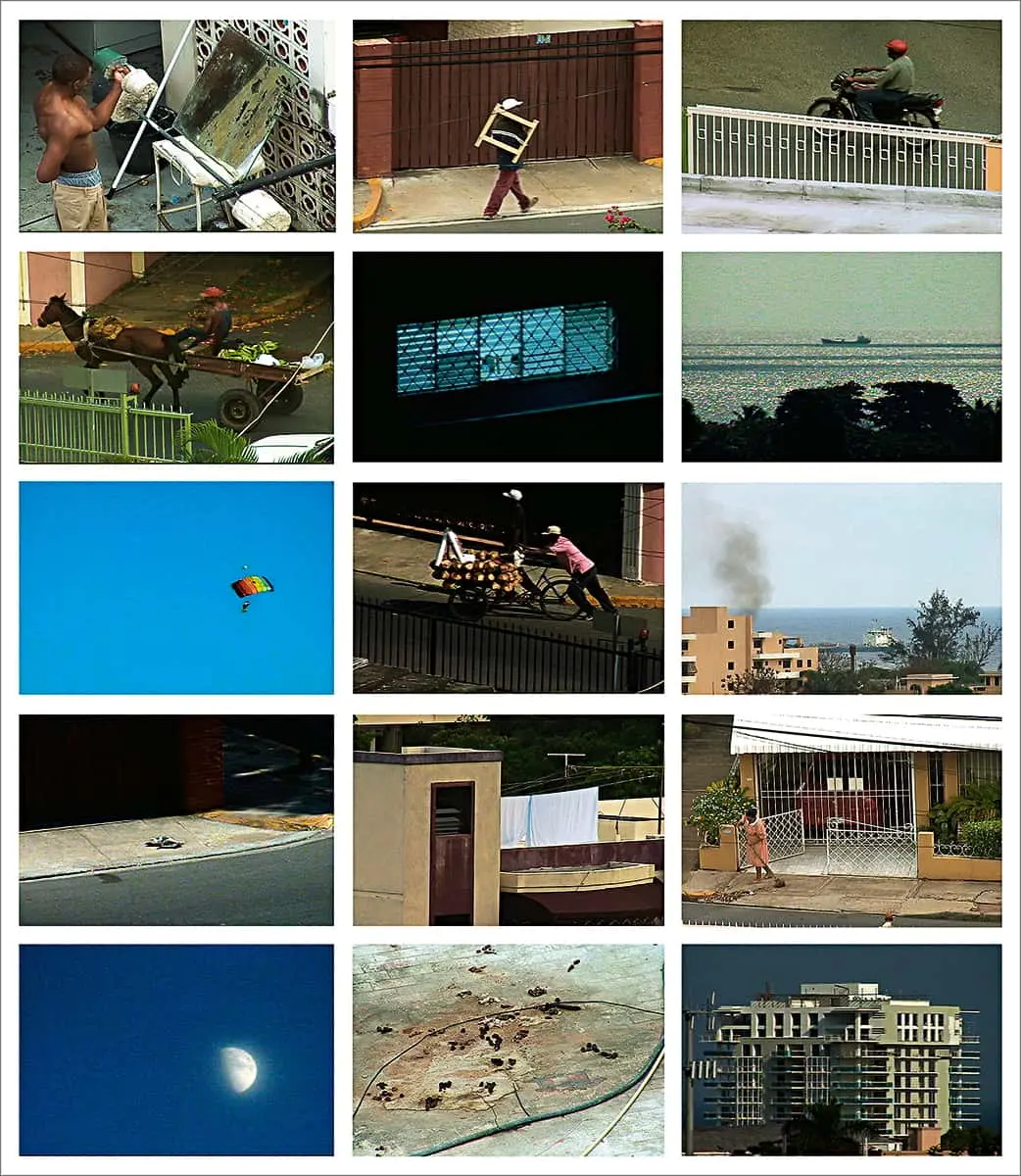
Perpetual Horizons uses the geographic features of the islands and the sea to visualize the limitless horizon, air and water, and the infinite vistas beyond. Thirteen drawings by Tony Cruz are subtle depictions of the horizon at different times of day, only slightly interrupted by a distant object to affirm its very elusiveness. Horizonte (Horizon), 2009, presents the falseness of the horizon line, defying the reality of an image of pure form, always fascinating and a key attraction of the tourism that is so significant to the Caribbean, and to the many artists lured to its endlessness. The transformative effects of nature defy the limitations of the borders that establish island nations and the shorelines of the sea to define their very identity. With her video, El mundo de afuera (The World Outside, 2007), Quisqueya Henriquez calls attention to the borders that have divided the island of Hispaniola into the Dominican Republic and Haiti for hundreds of years, despite their shared sea and geography. Slow and meditative, the camera focuses on the horizon and movement of the sea, ships, the harbor, city skyline, and daily life. Island life is slow, but the problems cannot be hidden beneath a slow pace that offers a critique of linear time and colonialism. The fascination with the gaze out to sea and what lies on and beneath it is documented in photographs, videos, and performances that trace the views from shore, their peace and tranquility often interrupted by noise, traffic, and the din of an urban soundtrack. The horizon and the possibility of infinity as acceptable and challenging are signifiers of island life and become a trope for personal expression and aspiration.
From the horizon to the landscape, the geographical diversity of the Caribbean is a commonality, but it also marks human qualities, historical determinants, and spatial constructs that have long been key subjects (and inspiration) for artists for hundreds of years. Notwithstanding the obvious beauty and attractiveness of the land and sea, the artists in this exhibition realize it is not enough to simply describe it, but use it as a new signifier for deeper meanings considering environmental challenges and current economic and social conditions – from plantation economies to new world order. This section, Landscape Ecologies, presents a different view of the “paradise” of the Caribbean through a contemporary lens with a message that can be disturbing, even threatening.

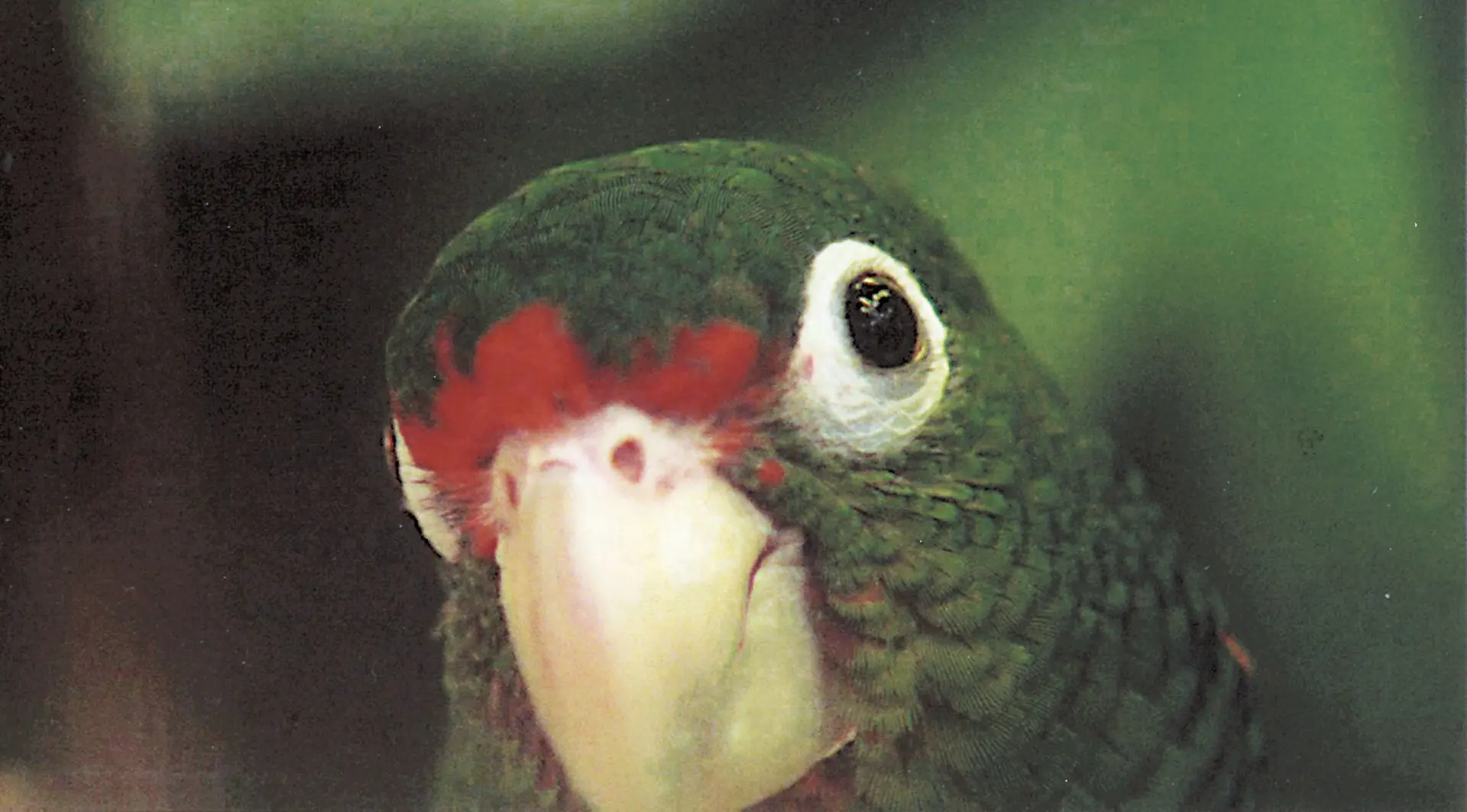
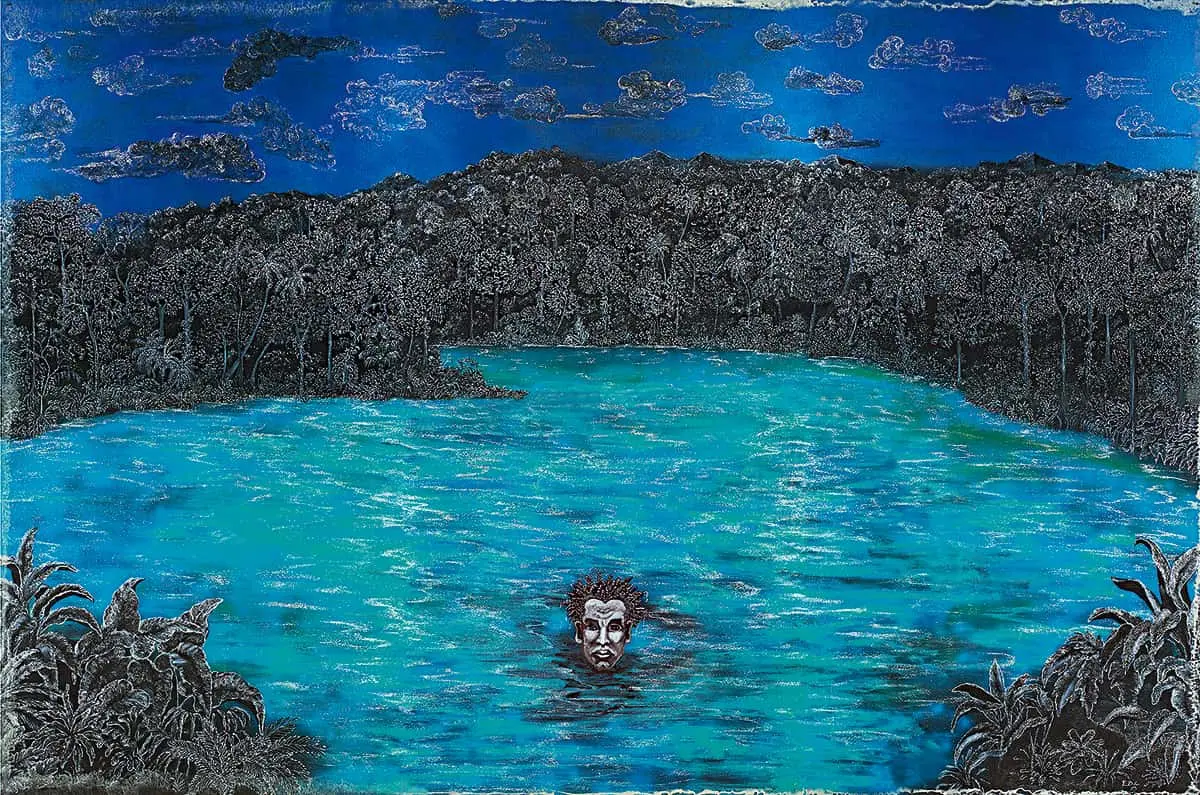
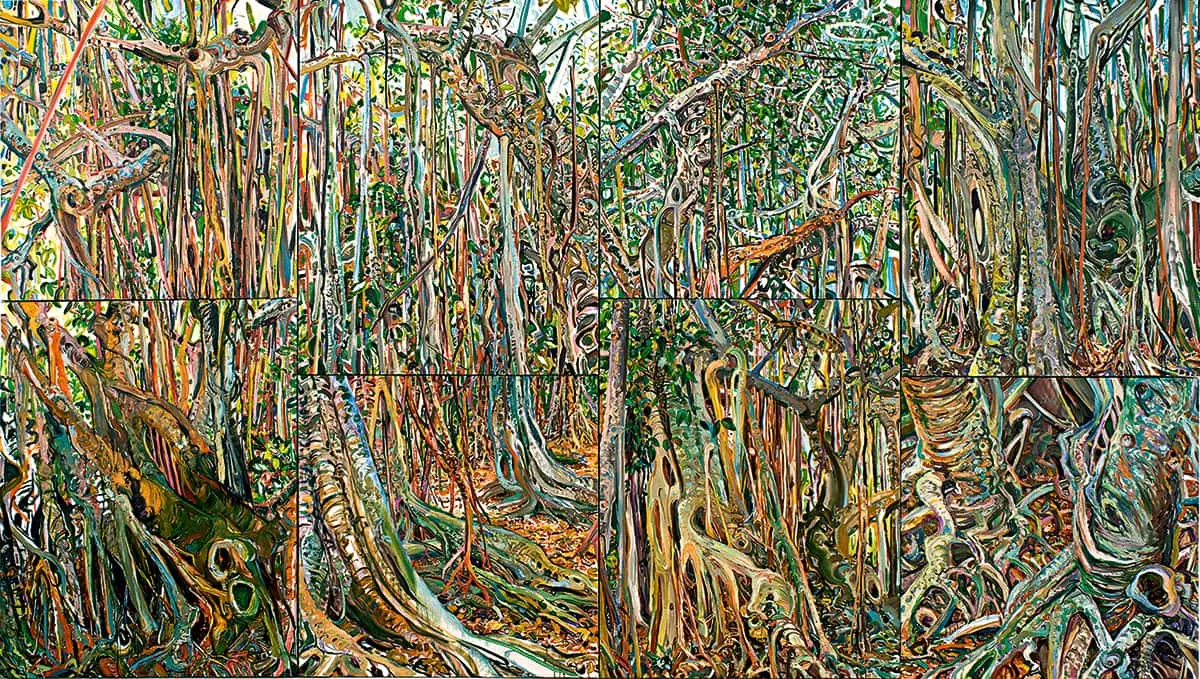
The large and confrontational Plein-air paintings of Lilian Garcia-Roig, Fluid Perceptions: Banyon as Metaphor, 2016, document a real-time process created over the course of a day that transforms the exoticism of a jungle-like mangrove into a menacing tangle. This must have been what greeted the early explorers as they hacked their way through unknown territories, from the sandy shores to the impenetrable interiors. It is a latent menace hidden beneath the idyllic. Edouard Duval-Carrié’s Lost at Sea, 2014, brings the sea to shore as he melds the era of discovery with the reality of a journey filled with memories of imprisonment and drownings that brought slaves to work. They are the ones that transformed the new and exotic landscape from one of tranquility to economic sustenance that still does not benefit all. The fact that there is nothing “natural” about what has occurred over the past 500 years, repeats itself throughout the exhibition. The deception of beauty in Deborah Jack’s Evidence 01, from the series tears, were reborn as…, 2009-2011, is really a green prison for native peoples and indentured servants. Nature has also become a prison for endangered species, highlighted in The Great Silence, 2014, where Allora & Calzadilla capture the distress of nature’s spectacular creatures through the philosophical voice of parrots. The artists in Landscape Ecologies offer their own imaginative observations about the plight of nature and a call to action.
The active process marks the section on Representational Acts as the artists’ obligation to reconfigure their environment, socially and politically, by upending the colonial attitude that informed art and culture of the past. Through visual statements for the often-uncomfortable reality of the present, these Caribbean artists also comment on race, gender, sexuality, and how these subjects are ensnared, even trapped, in their personal environments. It is in this section in particular, that the exhibit has drawn from the writings of Caribbean thinkers and poets to frame and interpret the art in uniquely conceptual ways. While the literature has had a marked presence within the curatorial process to enrich each thematic section, now history, colonialism, corruption, violence, and disenfranchisement take on new meanings through art and add different perspectives on how we view the art as well. Representation may be regarded as an affirmation of self, as a manifesto on behalf of the community, or to assert multiple means of self-expression, outside of the typical Caribbean framework.
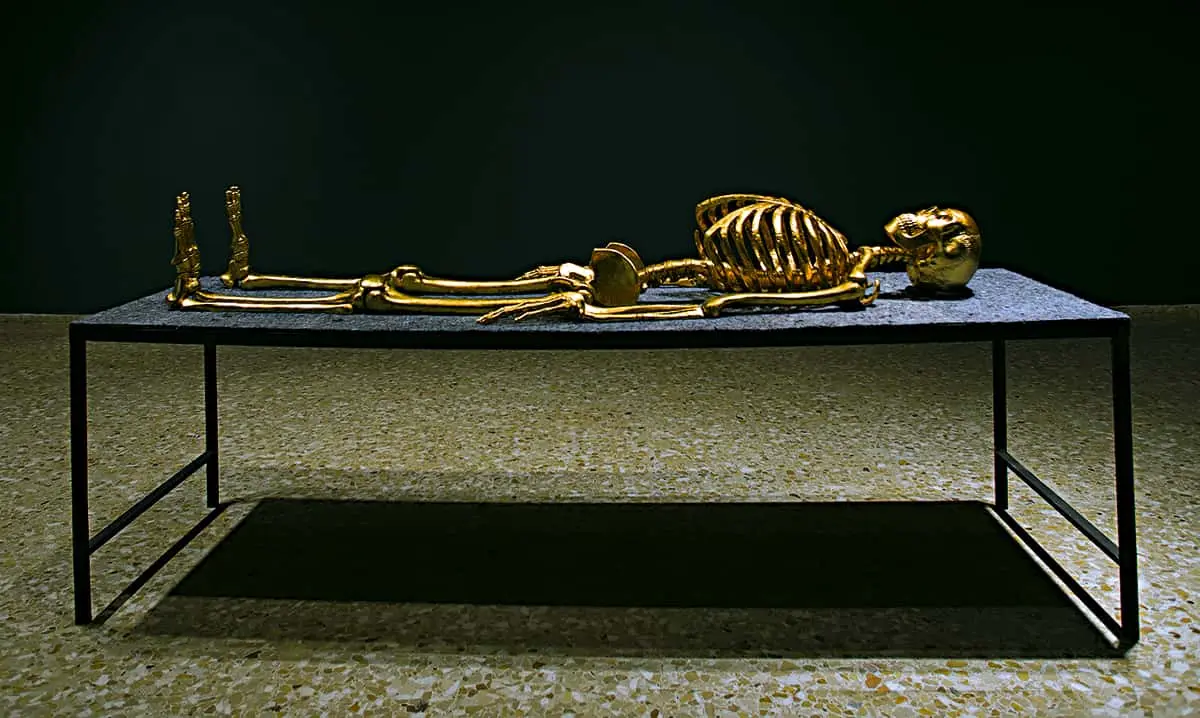
For Jorge Pineda, his means of self-expression employs the theme of mortality in an installation of a skeleton made of chalk and covered in gold leaf lying atop a table. Anatomy Lesson: Exquisite Corpse, After Joseph Beuys, 2013, invites viewer activation when they draw upon the chalkboard walls with the skeleton’s bones. A unique approach to skeleton imagery, a common feature in the art of the Americas, his installation is a direct reference to European art on many levels. In performances, photographs, installations, paintings, and objects, the artists in Representational Acts know the power of art to challenge, provoke change and go beyond stereotypes to represent a new paradigm of unity across the archipelago. Theirs is a fitting message to mark the final segment of the exhibition and a summation of its key tenets. The Caribbean, so long hyped as “paradise,” and cultivated as an image of exotic pleasure, is revealed through the eyes of artists who consider its complexities, including the repression of slavery and colonial domination, its insularity, and environmental challenges, and images of self, to create a new repertoire of images and view of unity as global agents of change.
NOTE
1. Tatiana Flores and Michelle Ann Stephens, editors, Relational Undercurrents: Contemporary Art of the Caribbean Archipelago (Long Beach: Museum of Latin American Art, 2017).
CAROL DAMIAN, PH.D.
Art Historian.