For Paolo Gasparini (Gorizia, 1934), images by themselves say nothing unless they are accompanied by other images, by sound, by voice, and, eventually, by the argument that they reproduce. The order he imposes on images is not arbitrary, but the product of a creative intent; this is why in each of his works he pursues a wider meaning that exceeds what can be contained within his small photographs. For Gasparini, “photography is ideology;” this is why the main drivers of his work are his own political commitments. Gasparini’s proposals are not limited to bearing witness to the tragic living conditions of certain social groups in the large cities of Venezuela, Mexico, and Brazil, or in Los Angeles, New York, and Paris. By means of a subjective narrative of the photographer’s experiences in connection to his craft, Gasparini’s works propose an ontology of the photographic image.
It is for this reason necessary to examine in some detail the methodological, intellectual, and ideological references that populate Gasparini’s photographic discourse, as well as to explore the different elements that contribute to the organization of the images and the ordering of the work. What photographic genres does he engage? How do similar subjects give rise to dichotomies in his work with graphic designer Álvaro Sotillo? What iconographic references are present in his oeuvre? Lastly, we will also delve into the relationships between the narrative dimension of Gasparini’s work and the language of film, contrasting it not only with the montage methods of Sergei Eisenstein but also with the essayistic filmmaking of Chris Marker and Agnès Varda, and with Santiago Álvarez’s documentaries.
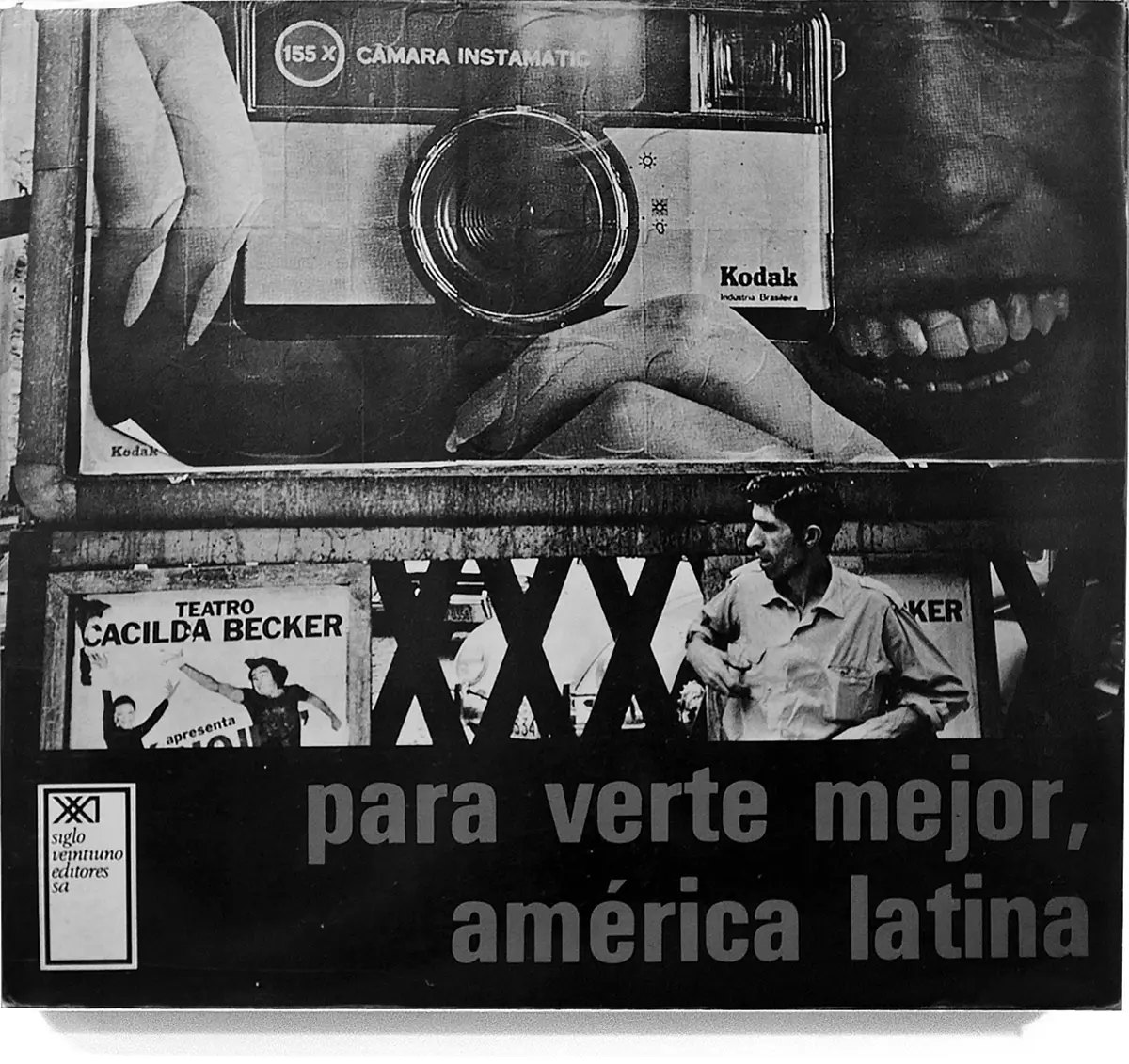
Paolo Gasparini systematizes photographic proposals by means of serialized images that he adjusts to the photo-essay format. His use of photography as a minimal unit of meaning allows Gasparini to build a body of work traversed by varied modes of visual representation. In order to represent reality, bring it out, and put it into circulation, he uses a variety of media resources. He creates photomurals that are colossal visual narratives. In some cases, he uses only photography for his support, as in the exhibitions La pasión sacrificada (Sacrificed Passion, 1983),2 Epifanías (Epiphanies, 1982-1984),3 and Del reverso de las imágenes (Of the Reverse of Images, 2015).4 In other cases, he connects images and texts by means of music or voice, as in the audiovisual works San Salvador de Paúl, minas de diamante (San Salvador de Paúl, Diamond Mines, 1979-2014),5 La identidad de un malentendido, el fotógrafo y la fotografía (The Identity of a Misunderstanding, the Photographer, and Photography, 1985-2011),6 or Las imágenes muerden (Images Bite, 2015).7 Collaborating with writers, printers, and graphic designers, he also manufactures narrative proposals in book/photobook format, like the already classic Para verte mejor América Latina (To Better See You Latin America, 1972)8 and Retromundo (Retroworld, 1982),9 or, more recently, Karakarakas (2014).10 Gasparini transforms data into images that he then connects, juxtaposes, and presents in simultaneous or progressive arrangements. To transform the real into images—to transform images into images of thought11—he often uses basic exercises of memory acts that make it possible for him to create true photo-essays.
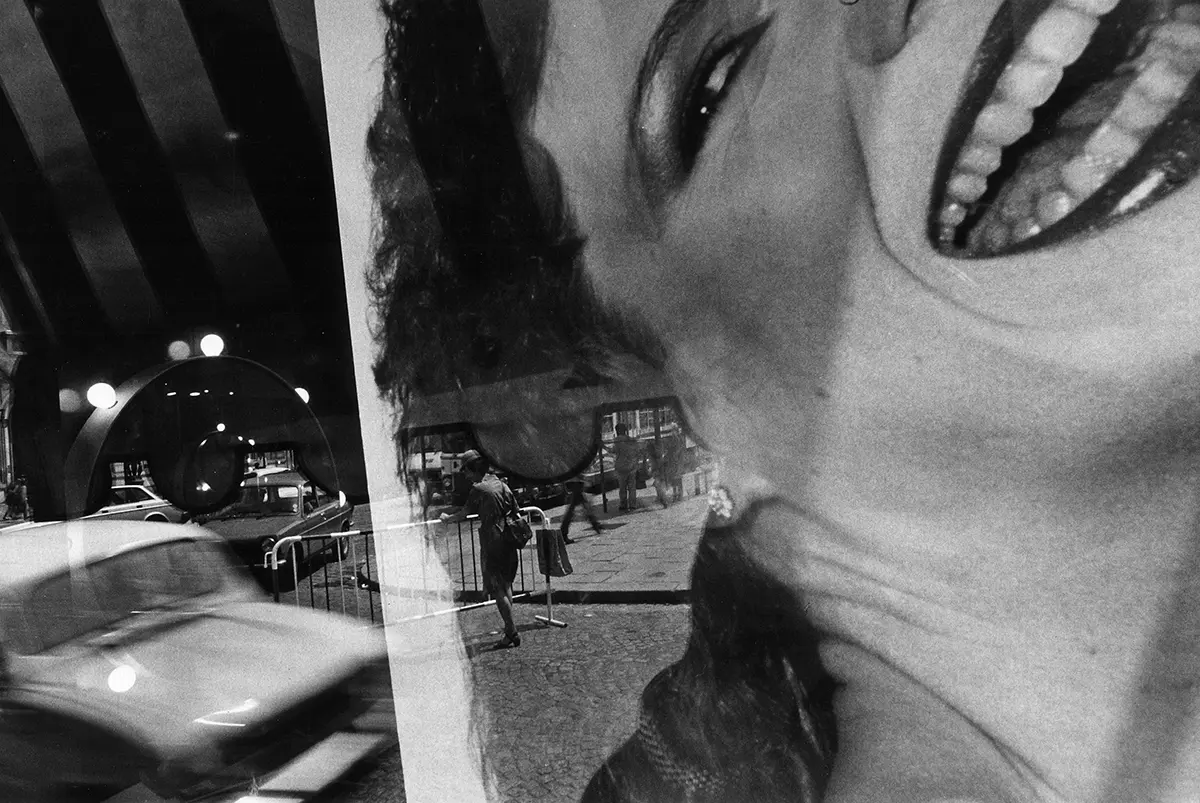
Gasparini’s photographic practice is broad and has many facets. He works with three narrative devices and in three discursive spaces of representation. On the one and, and always with exhibition purposes, Gasparini works on sensitive photographic paper—this is to say, within the framework of analog photography—in order to construct large-format visual narratives whose wide thematic arches make it possible for him to group his photographs into complex, open constellations, a distinctive trend in contemporary photography. On the other hand, he brings together images and text in the production of videos where the physical nature of images is dematerialized, freeing them from their weight as objects. Gasparini also produces audiovisuals of exhibitions, which he presents on VJ sessions. Lastly, he conceives photobooks that are veritable essays in book format. Here, the images appear articulated by an analytical aesthetic, and the texts, sharing the space with visual resources and graphic materials, function as subplots that contribute to the development of the main argument.
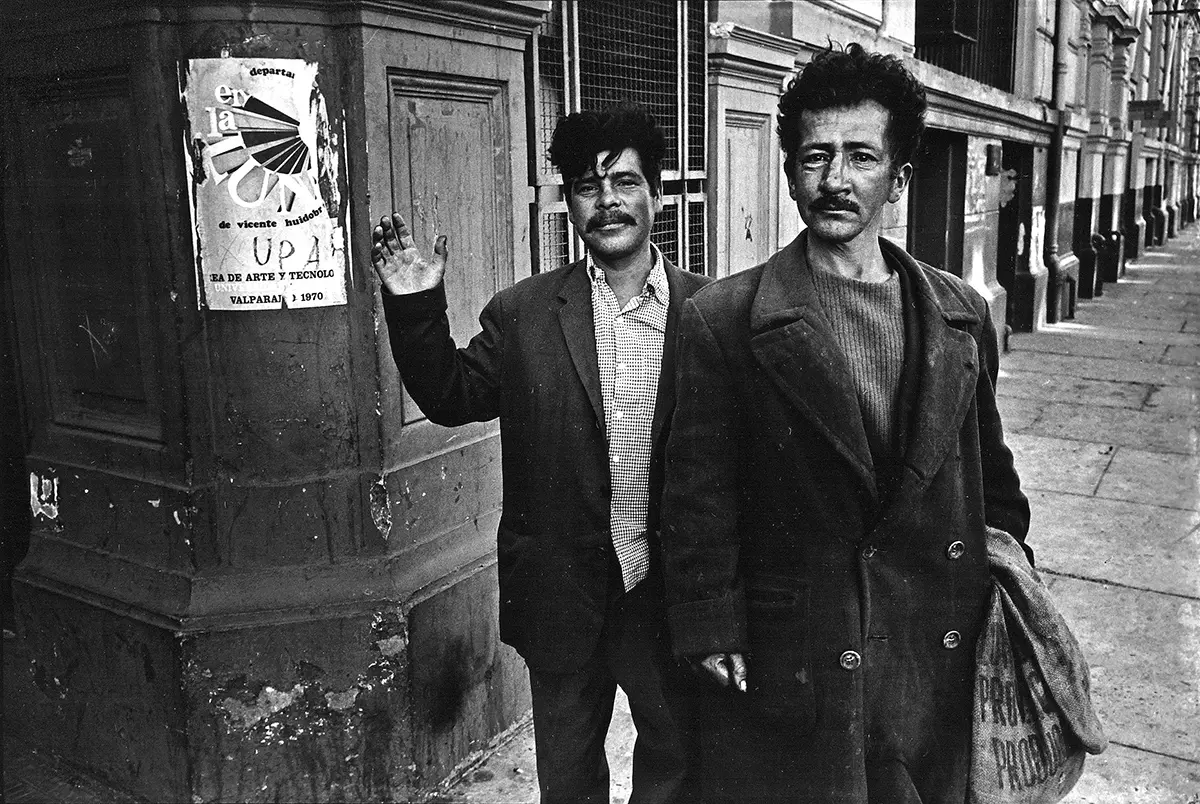
The shared axis that makes it possible to articulate such dissimilar supports is the principle of cinematographic montage. For his photo-essays, Gasparini leans on Eisenstein’s narrative model. In the famous battle on the ice between the Teutonic Knights and the Russian forces in Aleksandr Nevsky (1938), Eisenstein sets two opposite motifs into dialog: the white-clad Teutonic warriors’ banners and lances are contrasted in a single frame with the Prince’s militia, dressed in grey and armed with round shields. The geometric figures and the colors of the costumes indicate, in their contrast, the conflict, the confrontation, the action. Gasparini operates in a similar way when he articulates, in his still-frames, contradictory situations or dissimilar realities. Those situations and realities that were not ostensibly present at the time of the recording can always be evoked afterward in that kind of post-production process that is the design of the photobooks, audiovisuals, and photomurals. This allows the photographer to build on yet another one of the Russian filmmaker’s legacies: the use of editing not as a method for connecting scenes, but as a strategy for producing ideas anchored on a system of conflict. Gasparini assembles and syncs photos in a dialectical manner, using editing in progression but not in sequence. Thus, in his photo-essays, there is no beginning, but neither is there a conclusion.
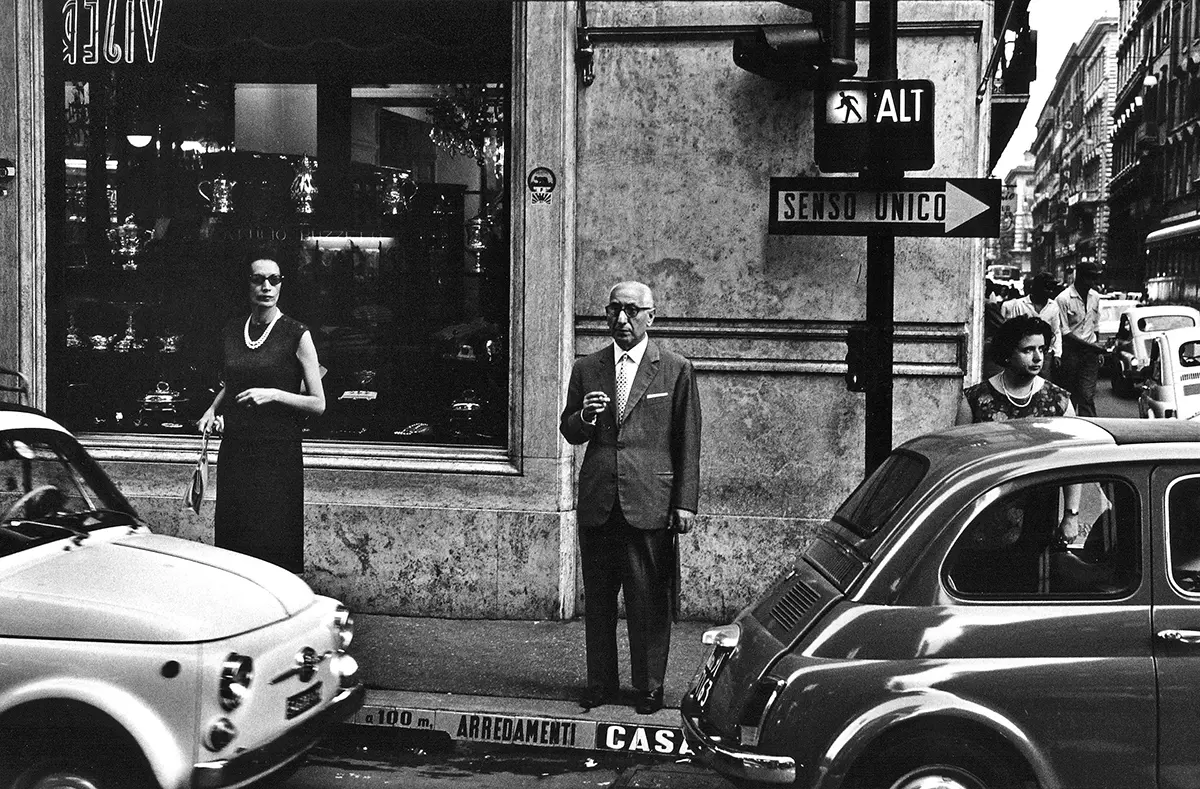
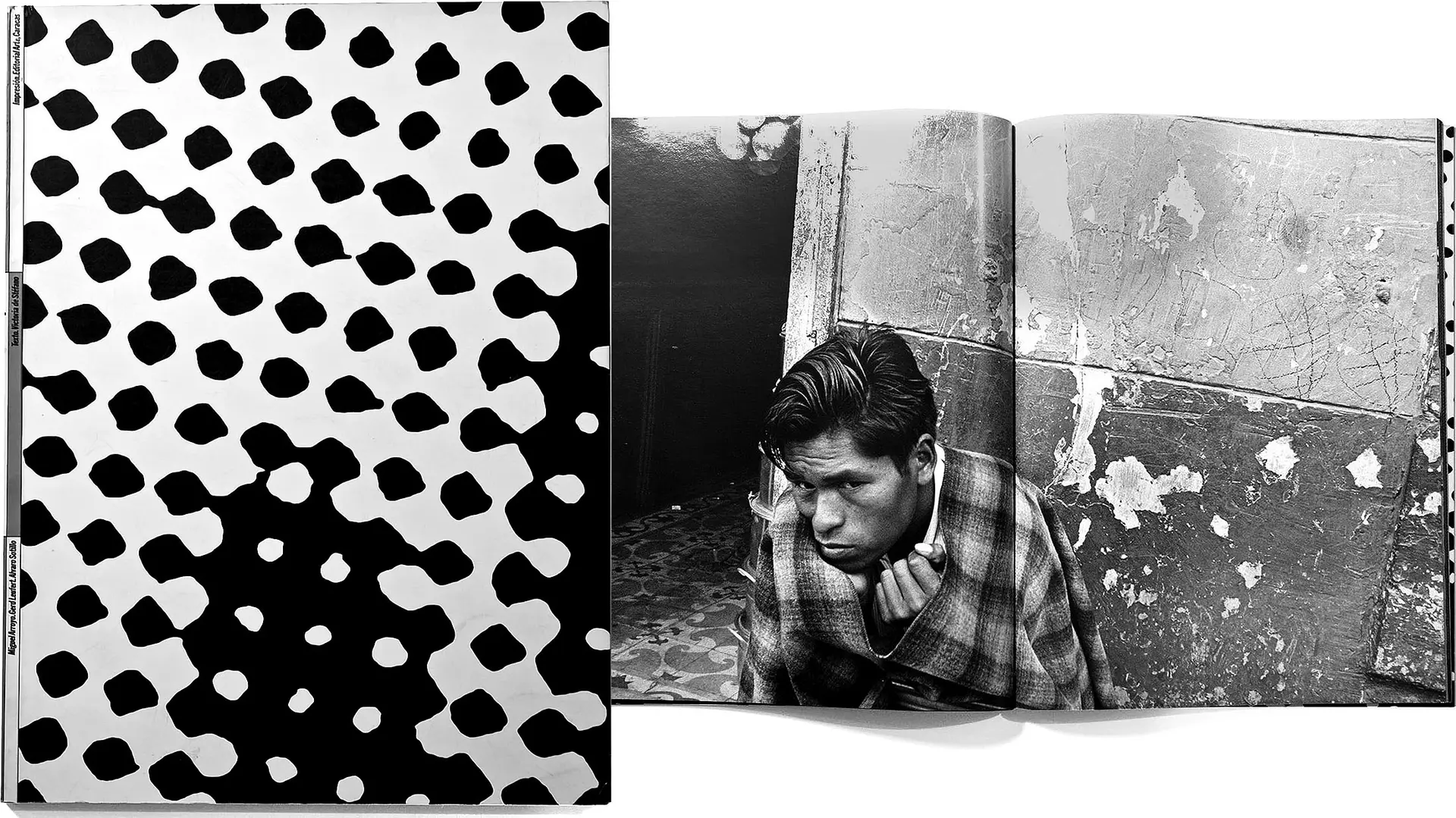
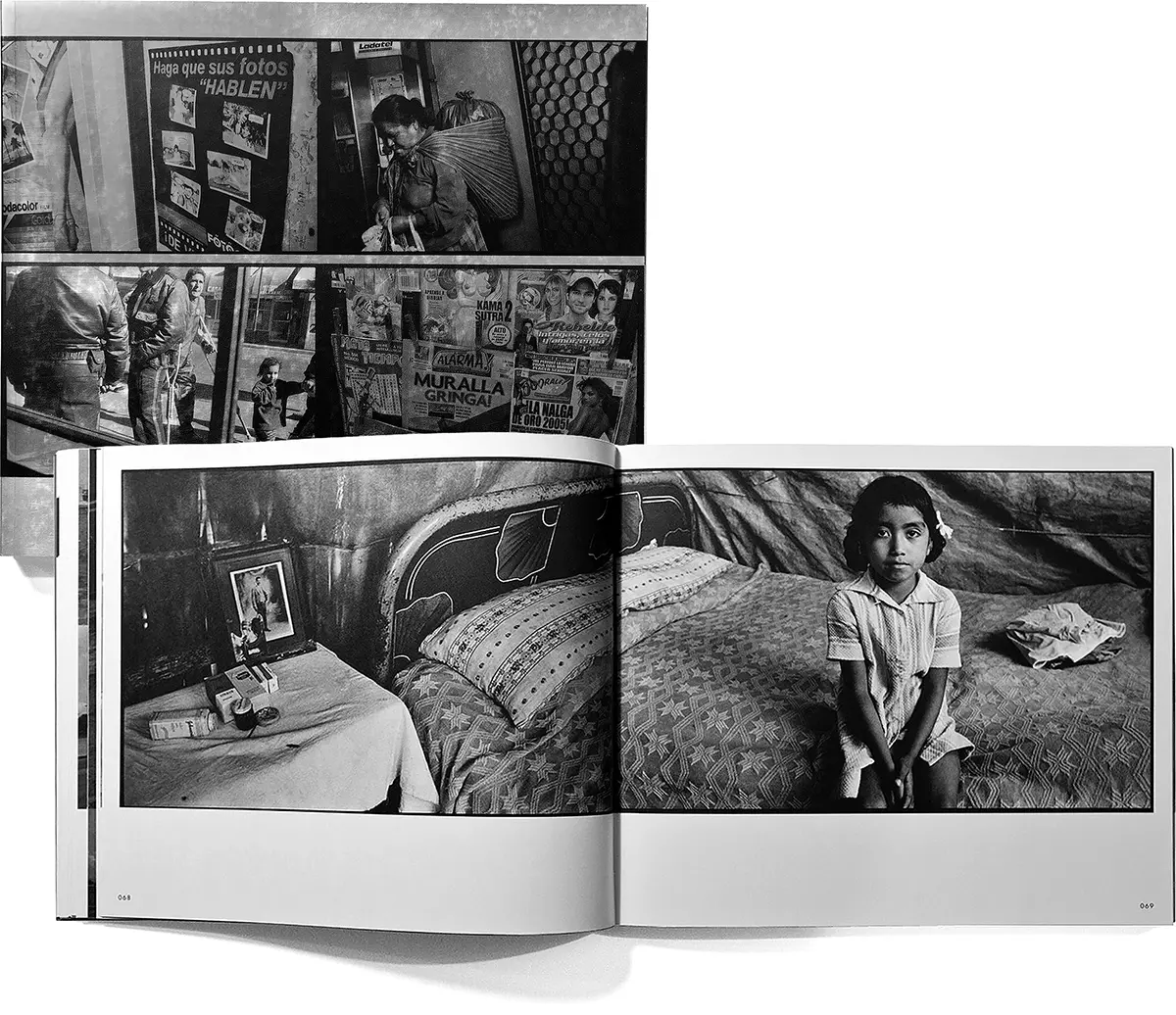
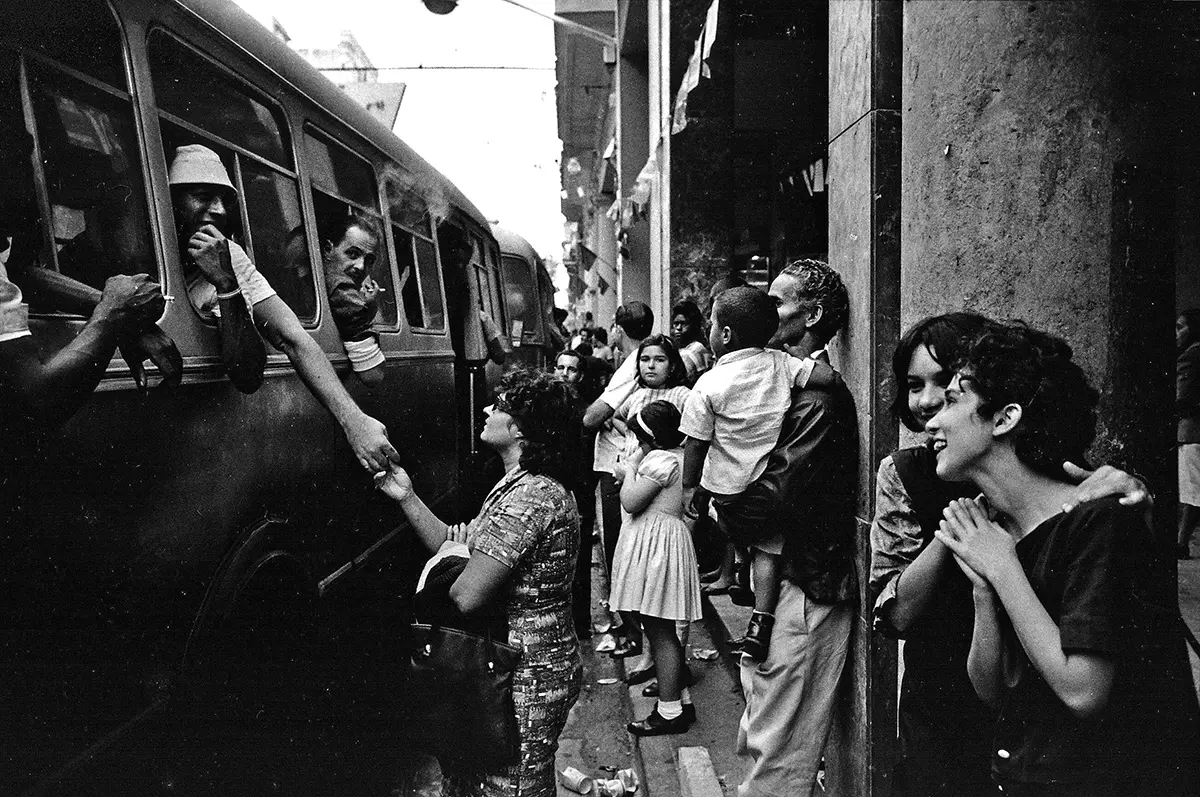
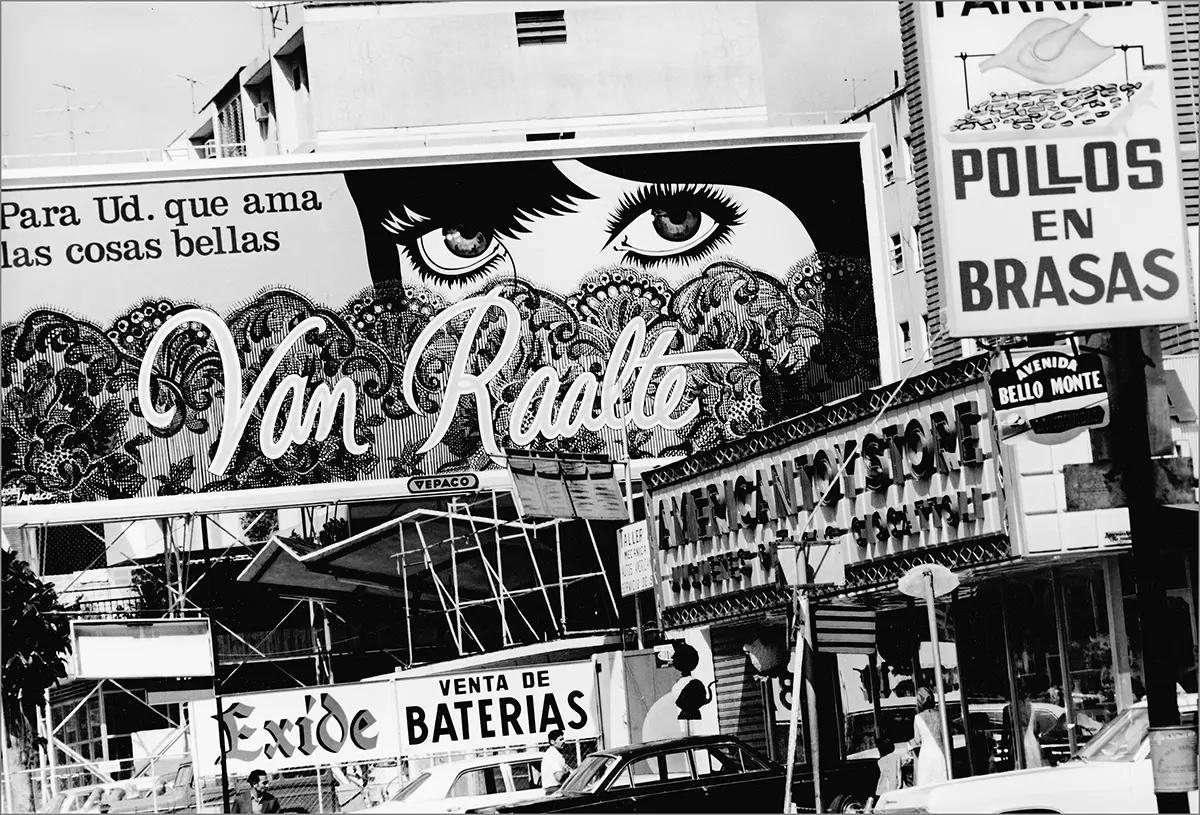
Paolo Gasparini’s thematic universe is linked to the documentary genre. He is a street photographer, obsessed with photographing the streets’ denizens, recording passers-by and those who live and work in cities like New York, Mexico, São Paulo, or Caracas. He records those he calls the asomados, the peekers-in, individuals who do not have a place but are not necessarily immigrants or exiles, in cities surrounded by poverty belts and streets or avenues crowned by advertisements. For Olivier Debroise, Gasparini’s is a “transnational gaze: he photographs Berlin’s streets, Paris’ hypermodern structures, and Rio’s favelas in the same way. Here and there he encounters relationships of similarity, repeating attitudes, unmistakable signs (…) Here and there the same reflections on the same windows, the same metal and glass structures, the same advertisements, the same mannequins. The same poverty, more emotional than physiological.”12 The unfortunate circumstances of the subjects he photographs have made it possible for Gasparini, working with designer Álvaro Sotillo, to address both the First and the Third Worlds in a photo book titled Retromundo. Sotillo uses papers of various weights and finishes to make a graphic interpretation of one and the other. The images of the First World are printed on a matte surface, and the photos have a visible elliptical grid, evocative of the photomechanical morphology of halftone printing. For the Third World, in turn, the designer uses glossy support and the tiny dots and ink blotches produced by offset printing. The interplay of dense and open grids on the book’s pages represents the contrast between these two realities.
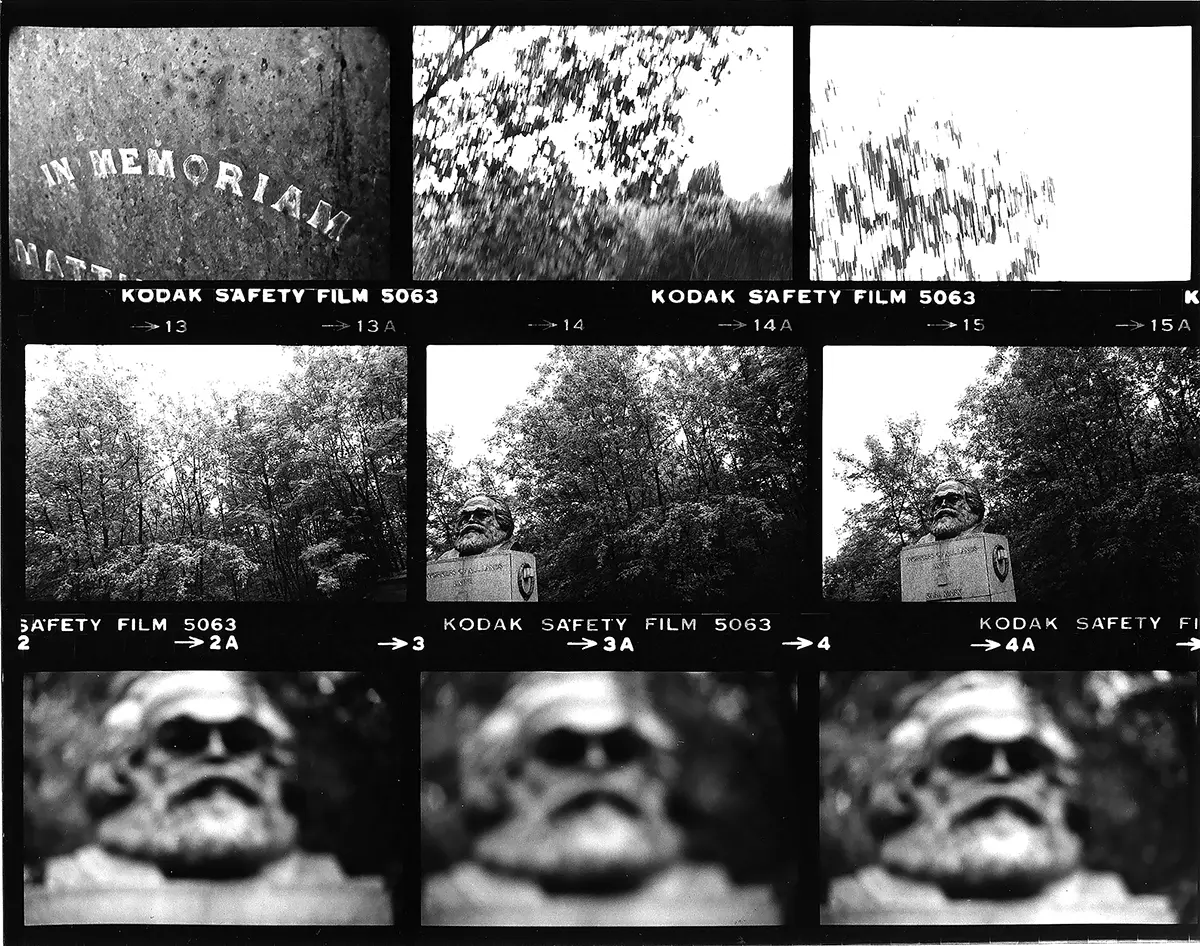
Gasparini’s body of work is filled with iconographic references to the messianic heroes of the political left: Emiliano Zapata, photographed by José Agustín Casasola; Che Guevara, by Korda and also by Freddy Alborta; Karl Marx’s tomb; sculptures of Lenin and Trotsky. In some cases, he appropriates the emblematic photographs of the official discourse about the history of Mexican photography—Edward Weston about Tina Modotti; Tina herself; Manuel Álvarez Bravo—like he did in the exhibition La passion sacrificada at the 46th Venice Biennale in 1995. Photographs of photographs that Gasparini alternates with images of the unfortunate living conditions of most citizens of Latin America. In this way, the photographer produces a photographic discourse emblematic of the failure of the leftist utopia in the region, a utopia forged in the Cuban Revolution—and represented in Mexico by the communist activist Modotti in her images of the Mexican Revolution’s peasant and indigenous protagonists—that is also a faithful reflection of the dramatic dystopia of contemporary Latin American societies.
Print rags, anonymous graffiti, newspaper illustrations, comics—these are some of the genres Gasparini appropriates and inserts into his work, following, again, film narrative techniques learned in Cuba13 alongside his friends Chris Marker, Santiago Álvarez, and Agnès Varda, the authors, in the early years of the Cuban Revolution, of such films as La Jetée (Marker, 1961), Now (Álvarez, 1965), and Salut les Cubains (Varda, 1963). From these films, Gasparini takes some of the expressive and technical resources that give shape to his photographic practice. It is important to note that the three films mentioned are based essentially on still photographs, “animated” by means of montage; or, to paraphrase Béla Balázs, on “loose pieces that become instruments of production,” conceptual units. The films often use such resources as fades, superpositions, slow sweeps, and zoom-ins into the image in the narrative plot. They are made “with photographs everywhere,” according to Álvarez14, and they commonly display vignettes, comics, and graffiti to hold the viewer’s attention, as well as off-camera narrations that authorize the introduction of personal reflections about reality, fiction, history, or memory, as in the case of Marker’s La Jetée, or the articulation of emotional considerations around the supposed objectivity of the photographic medium, as Gasparini does in La identidad de un malentendido: el fotógrafo y la fotografía15 and Las imágenes muerden16.
With Varda’s Salut Les Cubains, Gasparini shares the register of a people that enthusiastically join the harvest, the feast, the carnival, the literacy campaign—both Varda and Gasparini depict the Cuban people as hopeful for Fidel Castro’s political messianism—as well as a passion for visual poetry and literary film essays in the manner of the Rive Gauche of French cinema. It is not by chance that Gasparini accompanies his videos and photobooks with poetic texts. His book El suplicante (The Supplicant, 2010)17 and the audiovisual Letanías del polvo (Dust Litanies, 2007)18, for instance, are based on a poem about travel written by Juan Villoro; Sin Sur (With No South, 2003)19 illustrates Boletín y Elegía de las Mitas (Bulletin and Elegy for the Mita), a poem by César Dávila Andrade; novelist Victoria de Stefano regularly writes, in a literary mode, precise analysis of Gasparini’s photobooks. In Gasparini’s work, the written word sometimes functions as a musical score, less to illustrate than to provide a rhythm and a cadence in the context of editorial projects based on the recurrence of images. A good example of the use of montage as an instrument for visual writing.
Time and again Gasparini uses his vast repertoire to attempt mental recapitulations, memory exercises of the body of work he has produced over the course of sixty years. The repeated inspection of contact sheets and prints, like looking at a rearview mirror, establishes a real distance between objects and reality. In formulating new narratives on the basis of archival photographs combined with recent images, the photographer simulates a return to that which was left behind in order to refine meanings forged in memory and, with them, to point towards what is to come.
NOTES
1. Philippe Dubois, “Los cinefotógrafos de la memoria autobiográfica”, in Fotografía & Cine. Andrea Garrido and Iván Salinas (trans.). Mexico: Serie Ve, 2013, p. 14.
2. Paolo Gasparini. La pasión sacrificada. Sala Mendoza. Latin American Photography Conference, Caracas, 1993; Venezuela Pavilion, 46 Esposizione Internazionale d’Arte, Venice Biennale, 1995, and Sala Società Operaia, Spilimbergo, Italy, 2000.
3. Paolo Gasparini. Epifanías. Museu da Imagem e do Som. São Paulo, 1982, and Saint Luce Gallery. 15th International Photography Festival, Arles, 1984.
4. Paolo Gasparini. “Del reverso de las imágenes”. López Quiroga Gallery, Mexico City, 2015.
5. Paolo Gasparini. San Salvador de Paúl, minas de diamante. Consideraciones intempestivas de un fotógrafo moralista (14 min.). Text and Photographs, Paolo Gasparini. Caracas: Ediciones Audiovisuales El Dodo, 1979-2014.
6. Paolo Gasparini. La identidad de un malentendido: el fotógrafo y la fotografía (33 min.). Text and Photographs, Paolo Gasparini. Caracas: Ediciones Audiovisuales El Dodo, 1984-2011.
7. Paolo Gasparini. Las imágenes muerden (20 min.) Mexico City: The Dodo & Co., 2015.
8. Paolo Gasparini. Para verte mejor, América Latina. Text, Edmundo Desnoes. Mexico City: Editorial Siglo XXI: 1972. 2nd edition, 1983. 3rd edition, 2009. Facsimile edition in “Protest Box”, Martin Parr (ed.) Göttingen: Seidl, 2011.
9. Paolo Gasparini. Retromundo. Text, Victoria de Stefano; Graphic Design, Álvaro Sotillo. Caracas: Editorial Alter Ego, 1987.
10. Paolo Gasparini. Karakarakas. Texts, Victoria de Stefano and Sagrario Berti; Graphic Design, Ricardo Báez. Self-financed. Caracas: Ex Libris, 2014.
11. Paolo Gasparini, personal conversation. January 2017.
12. Olivier Debroise. “Imágenes del destierro”, inn Paolo Gasparini. Fábrica de metáforas, de afuera hacia adentro. (Essay published in the magazine Siempre, Mexico City, June 1985). (cat.) Museo de Bellas Artes/Consejo Nacional de la Cultura, Caracas, 1989, p. 36.
13. Paolo Gasparini lived in Havana between 1961 and 1965, the golden age of Cuban documentary film, a fruitful laboratory of revolutionary and anti-imperialist propaganda.
14. Cited by Juan Antonio García Borredo, in reference to the work of Cuban filmmaker Santiago Álvarez. http://arditodocumental.kinoki.es/santiago-alvarez/ [Accessed on August 4, 2012].
15. Op. cit.
16. Op. cit.
17. Paolo Gasparini. El suplicante. México 1971-2007. Texts, Juan Villoro and Paolo Gasparini. Mexico, Editorial RM, 2010.
18. Paolo Gasparini. Letanías del polvo (45 min.) Text, Juan Villoro. Caracas: Ediciones Audiovisuales El Tambor Tarahumara, 2009.
19. Paolo Gasparini. Sin Sur (32 min.). Text, César Dávila Andrade. Caracas: Ediciones Audiovisuales El Dodo. 2003-2012.
SAGRARIO BERTI
Independent researcher of visual culture.