What is the essence of the kind of art that is deemed “political”? According to what categories would the art of Ana Gallardo (Rosario, 1958) be “political”? What motivated Okwui Enwezor to invite her to the 56th Venice Biennale in 2015? That event, titled All the World’s Futures, had a clear political intention, even if its contents weren’t always easy to decode, as it included works that required a degree of knowledge about their motivations. Such was the case with Gallardo’s Pedimento (Pediment, 2009-2015), which could be interpreted at first glance simply as an invitation to express desire via the modeling an object in clay, yet had the great subjects of art (and of philosophy, and of literature) at its core: death, old age, suffering, pleasure, loneliness, love (the latter also the central subject of Gallardo’s La hiedra (The Ivy) installation.)
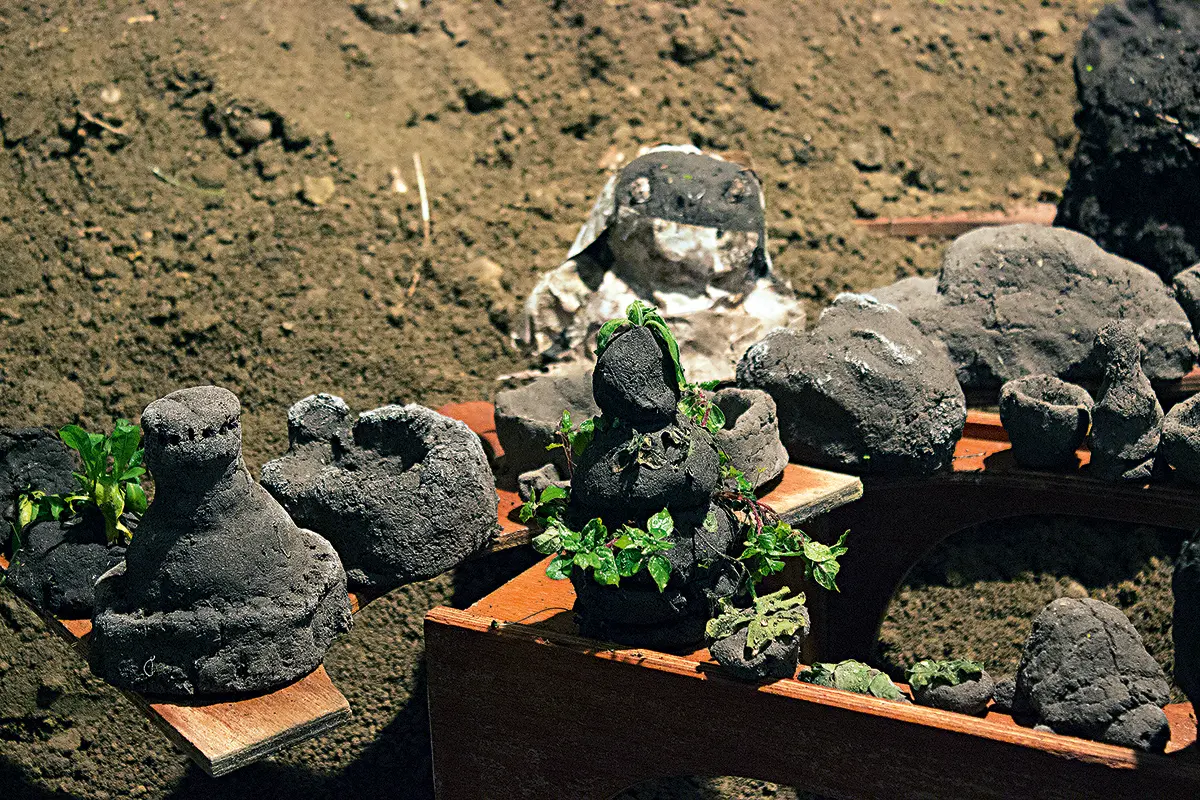
Pedimento situates us at the same time in the here-and-now of everyday life and in a beyond, the magical universe of the supernatural, via a ritual encountered by the artist in the Mexican state of Oaxaca. By the side of the road, there is a shrine that people visit to ask for the Virgin Mary’s favor; they make their petitions in clay, using local water and mud, and leave their little statuettes out in the open. When it rains, the figurines melt and return to the earth, carrying the wishes of the supplicants.
In Venice, the pedimento project began in the women’s prison, where a number of inmates, mostly immigrants serving life sentences, we're unable to imagine an object that would accompany them in their old age since they could see no future for themselves. Afterward, as part of the Biennale, the audience was invited to create a clay object and make a petition of their own, asking for something they considered important to have when they reached their old age.
“Almost all of my work is connected to bringing greater visibility to the situation of the old, to the violence that it is to grow old, to realize you are close to dying,” Gallardo says. “Society casts you aside and mistreats you. Women have double the difficulty. We grow old faster and in a different way. Menopause changes your body. Nobody understands what that means. The system abuses and ridicules you for it.” 1
New Spaces for What We Share
Gallardo believes that the political role of the arts has always been the same: to shake structures. “We have a kind of power that articulates a problem and renders it visible so that a change can begin to be made.” Politics, beyond the exercise of power (which can also take place in other realms), consists in making us see the world and—in a more strictly political sense—giving voice to those who do not possess it.
In Instrumental (Toolkit, 2000), she brings to the fore the tragic situation of women forced to undergo abortions in conditions of extreme precariousness, at great risk to their lives. A regular 200 x 200 mesh screen supports some bunches of parsley. These “surgical instruments” for a clandestine intervention shed light on institutional cynicism and ineffectuality. A quote from Brazilian Catholic nun Ivone Gebara, set in one of the walls, reads: “A society that offers no objective conditions for employment, healthcare, housing, and education is an abortive society.” The same subject was broached at the 31st São Paulo Biennial (2014) by the Bolivian artist-activist collective Mujeres Creando, with their installation Útero illegal (Illegal Uterus). Group founder María Galindo said that this work “denounces the Latin American left, Cristina Kirchner, Dilma Rousseff, Evo Morales, who curtail abortion rights and push thousands of women into high-risk situations, claiming ownership over their bodies.”
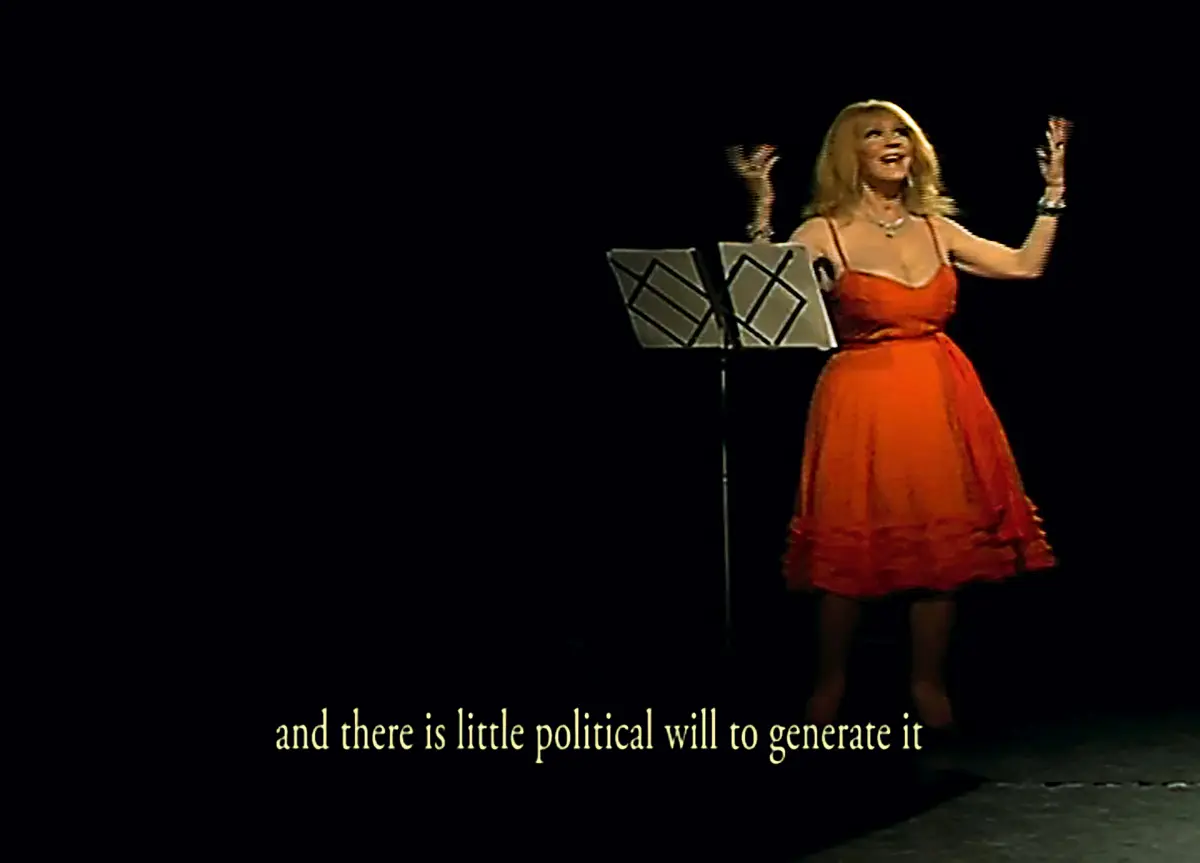
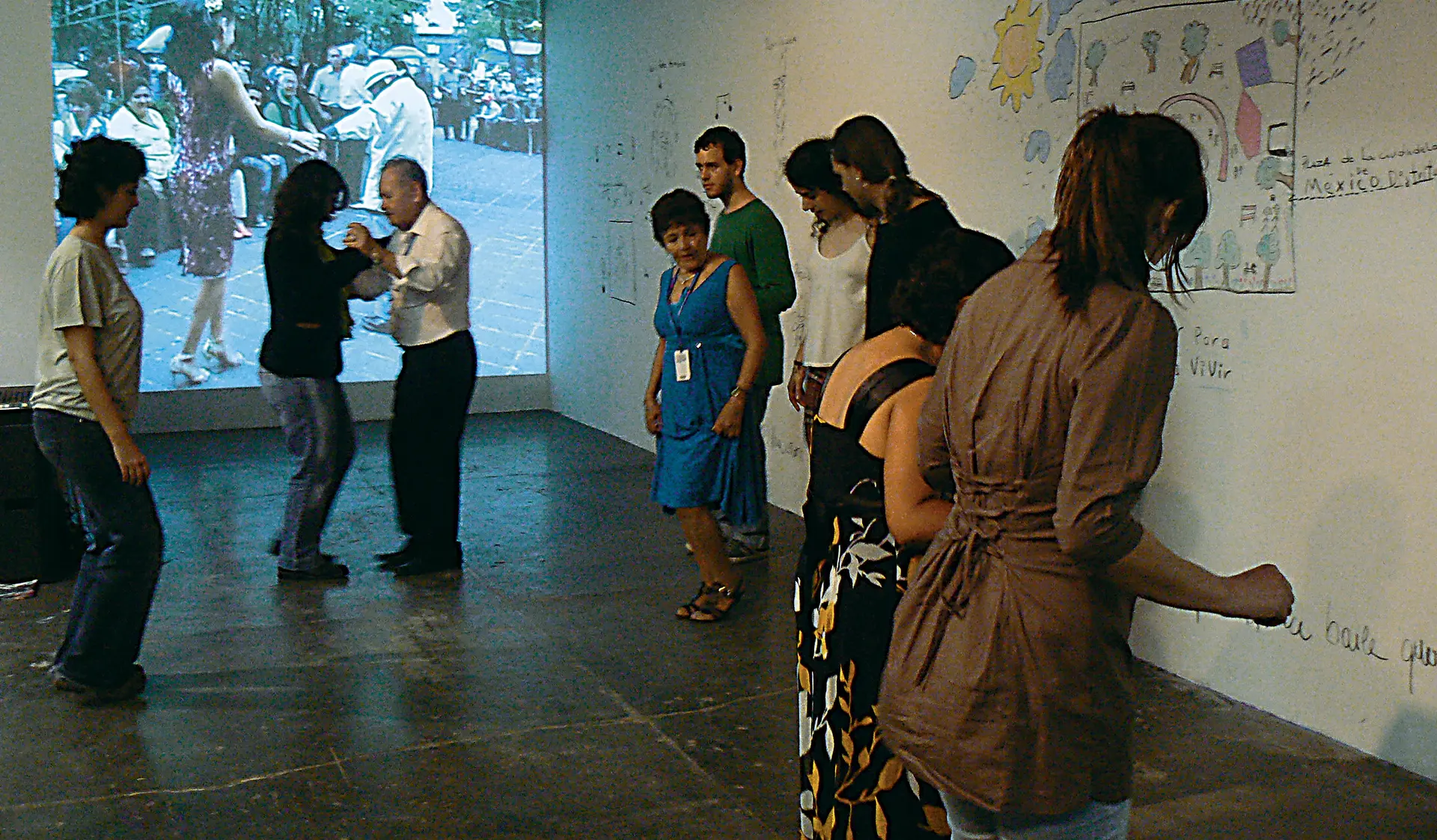
Un lugar para vivir cuando seamos viejos (A Place to Live When We Get Old) is one of Gallardo’s best-known “political” works, bringing front and center members of an age group often marginalized in society and helping them renew their vitality, especially by means of dance. It was one of the works that most forcefully impressed audiences at the 29th São Paulo Biennial (2010). This performative work in progress, recorded in video, gave proof of its subject’s resilience, and their capacity to pull through together and relish the joy of their encounters. In this way, it was made clear that time is not the same thing as age. The latter is a bureaucratic or sociological concept (this or that age needs to be reached before one can obtain a driver’s license, vote, or retire) that the former can abstract; abstracting age, time can relate not to that which has been lost, but to something new that is gained.
In Une ethnologie de soi: Le temps sans âge (2014), Marc Augé takes as his model the wisdom of a cat who adapts to and enjoys, the limitations imposed by age. Augé speaks of time as making it possible for us to savor the moment and inviting reinvention. Where age is constraining, time is liberating.
Gallardo breaks with the myth of youth as a value in itself, only found in the young. Youth can accrue over time so that one is able to do what one always wanted but couldn’t, and to cherish actions as simple as dancing, singing, or making friends.
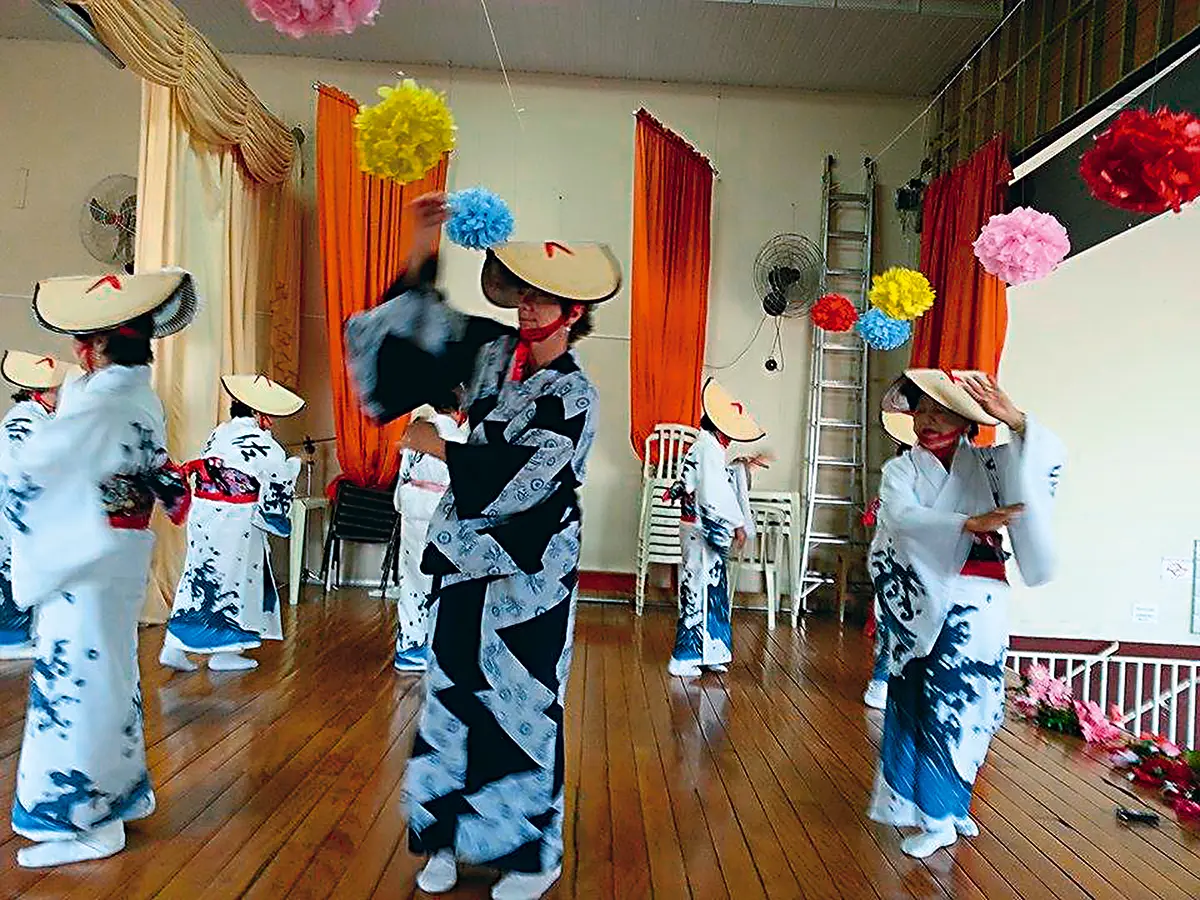
Dancing plays a central role in Un lugar para vivir cuando seamos viejos. Also in Baile japonés (Japanese Dance, 2014), which features 83-year-old Mariko Sabata, whom Gallardo met at the Sorocaba Triennial, in Brazil.
The optimistic stance of Un lugar para vivir cuando seamos viejos contrasts with other works by Gallardo that focus on the dark side of existence. In Extracto de un fracasado proyecto (Excerpt from a Failed Project, 2012), a frustrated Gallardo speaks forcefully and irately. With stark violence, she uses a knife to write a text on the wall. In that way, she expresses her desolation at the suffering of Estela, a patient in Mexico City’s Xochiquétzal geriatric center for impoverished prostitutes. Gallardo obtained a grant to conduct interviews at the center, but her project was sidetracked after the director asked her to help care for Estela. Gallardo accepted after some hesitation, and she was ultimately unable to complete the project following Estela’s death.
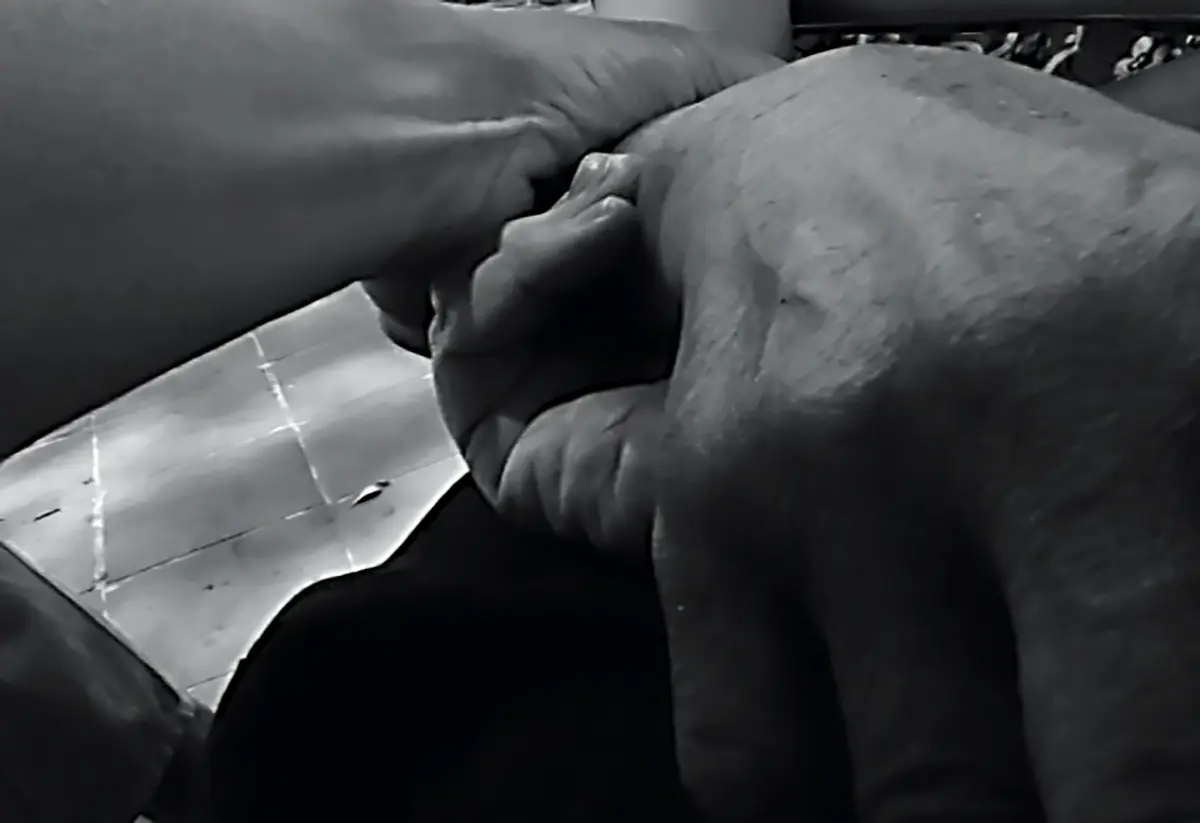
In her video Estela (2012), anger is overtaken by tenderness. Recorded surreptitiously using a body camera, it presents the artist’s hand in close-up as it massages and caresses Estela’s aged, inert hand.
The video A boca de jarro (At Point Blank, 2009) emphasizes the dignity of its protagonist. Silvia Mónica, a transvestite prostitute, is able to achieve her dream. But she not only sings: her song is also a denunciation of childhood abuse.
As in all of her “portraits”, Gallardo becomes her subject’s confidant. Empathetic activism emerges that can be expressed in artworks (in the traditional sense) or in concrete actions of support. For Gallardo, there’s no difference between those two options, in terms of their importance or primacy. Her concept of an expanded art—as Beuys noted—“is not a theory but a way of doing things.”
Interested in human communication, Gallardo’s new “spaces for what we share” bring to memory some of Xul Solar’s initiatives, such as his panlengua and his neocriollo languages.
The resources Gallardo deploys are modest and varied, yet no less effective when it comes to creating a “school for old age” or a site for dialog with young artists whom she supports in their education and helps achieve visibility. In recent years, La Verdi—a hundred-year-old house next to the Verdi Theater in the La Boca neighborhood—has become a space for work and friendship. It offers studio spaces for artists and an exhibition area, and it fosters the commingling and the exchange of experiences between historical artists and their younger colleagues.
Breaking boundaries, the workshops can be either inside or outside the museum. While the videos record past actions, they can be ongoing—into the present—inside the museum. Instead of going to the senior center, older people can go to the museum and interact with the audience, fulfilling their dreams of being artists, actors, or singers. Thus employed, they remain and live in the world with dignity.
The Autobiographical Ground Becomes Figure
An autobiographical ground unfolds, silently, behind every work of art. In Gallardo’s work, that silence becomes a figure; it can be seen in an unmediated form. She has no qualms in putting her own story on display, letting you know who was her father, her aunt Rosita, or her uncle Eduardo, a whose excited face we see in a video that records the tale of a trip she never took, but his niece took for him. Gallardo’s private world is also unveiled in Curriculum laboral (Résumé, 2009), an audio work that unspools the history of diverse jobs the artist has held in order to make a living, and in Casa rodante (Mobile Home, 2007), which refers to the experience of finding herself homeless.
For Gallardo, the personal is political. It opens up a world that involves and moves us. This is the same opening-up operated, in philosophy, of authors like Michel Onfray, who begins with his autobiography—the detail of his experiences as an adolescent in an orphanage—in order to articulate the keys to hedonistic ethics.
Such explicitly materialized autobiographical background is what distinguishes Gallardo from other members of her generation, and in particular from her compatriots in Grupo de la X, an artist’s collective with a unique profile in the late 1980s and early 1990s. The group was established in 1987 around the superb artist and teacher Enio Iommi. Along with Gallardo, the group included Carolina Antoniadis, Ernesto Ballesteros, María Causa, Enrique Ježik, Jorge Macchi, Juan Paparella, Andrea Racciatti, and Pablo Siquier, among others.
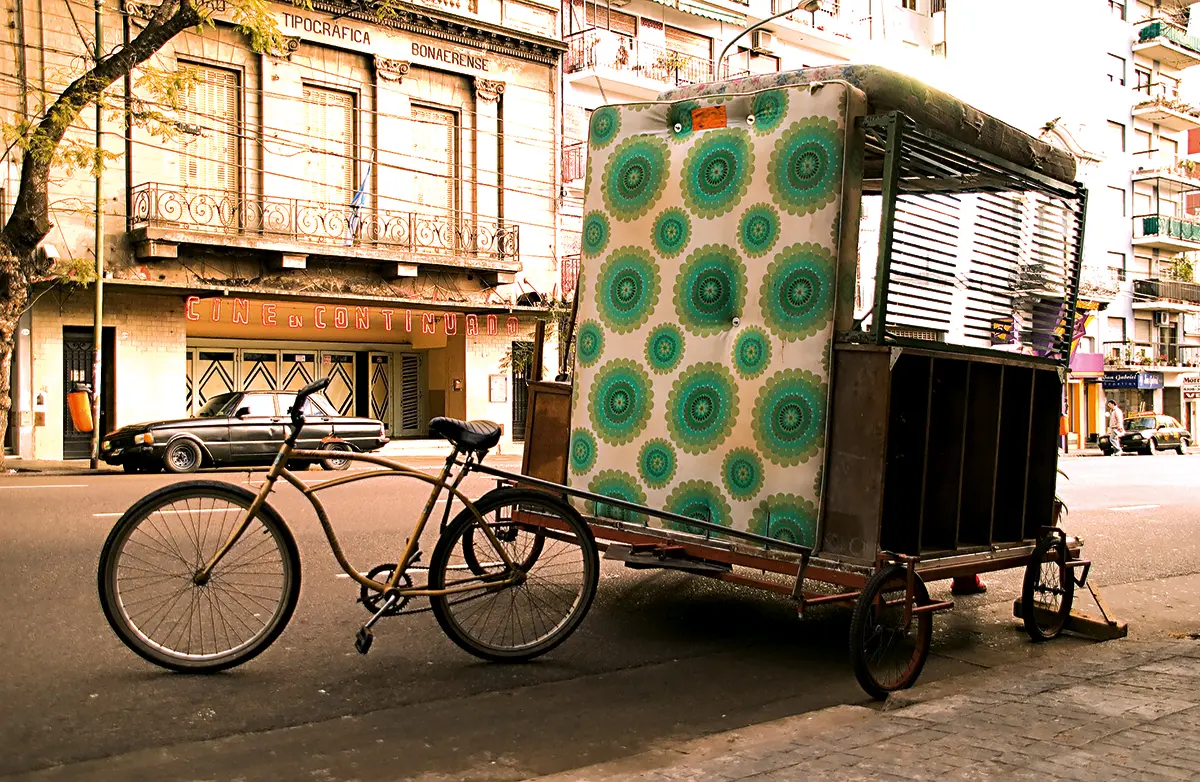
Autobiographical display requires a certain number of objects-affects that are traces, vestiges, and documents. This is what happens in Casa rodante (which won the 9th Klemm Visual Arts Award), which documents her homelessness situation in 2016, along with her daughter Rocío. Mattresses, furniture items, and diverse objects mounted on a cart were pushed by the artist, with the help of a bicycle, for eight kilometers.
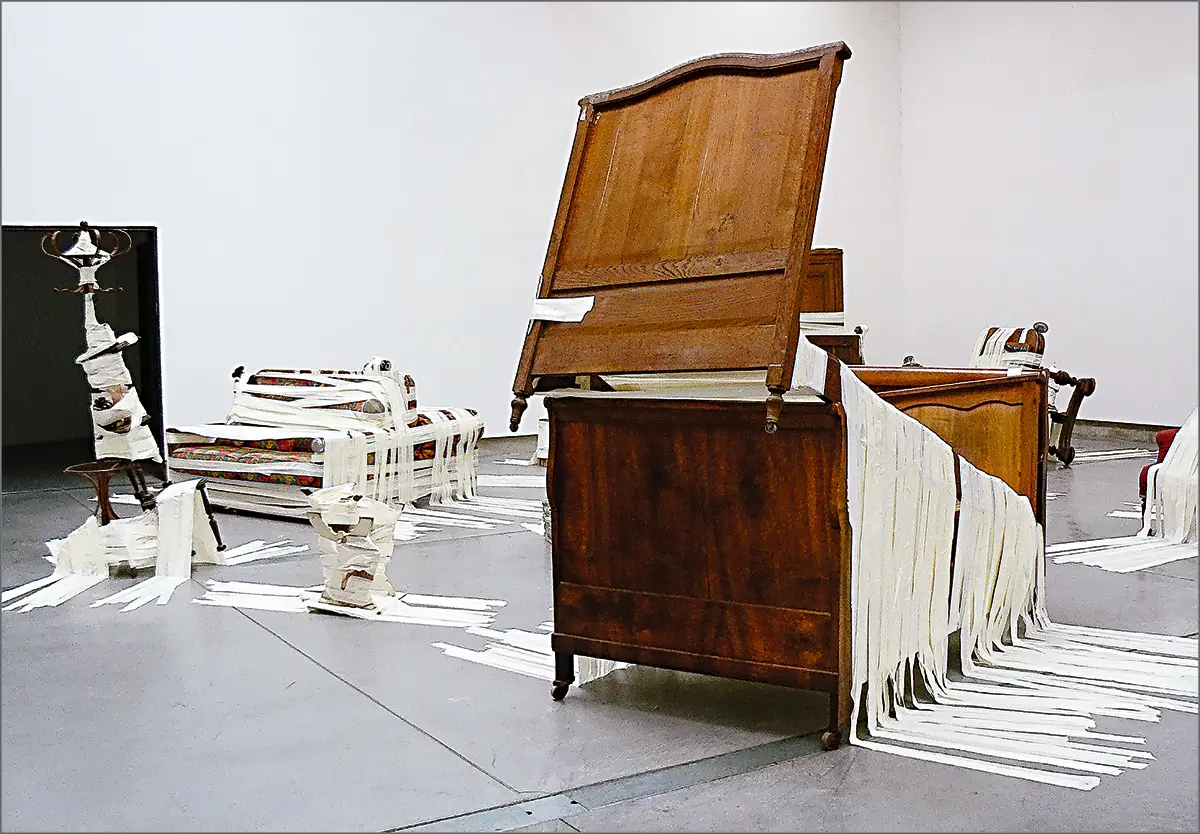
Previously, in 2003, a series of history-freighted objects were featured in the installation Patrimonio (Patrimony), unfolding on two face-to-face walls. On one of these walls were pencil, charcoal, and watercolor drawings representing objects from the past. On the other, furniture items and other objects were covered with masking tape, which rendered them silent and almost invisible.
“Each piece of furniture found or borrowed is inhabited by a story that can shield my life,” Gallardo says. “I appropriate those stories. I take them and make them my own, by force and in madness. The masking tape plays the role of a mother who holds the stories I steal. The tape protects, tames, contains, holds, cares for, and organizes them for me, as though I were still a child.” 2 This happens in Fragmentos para una niña triste (Fragments for a Sad Girl, 2008), presented at the Centre Regional d’Art Contemporain in Montebéliard (France.)
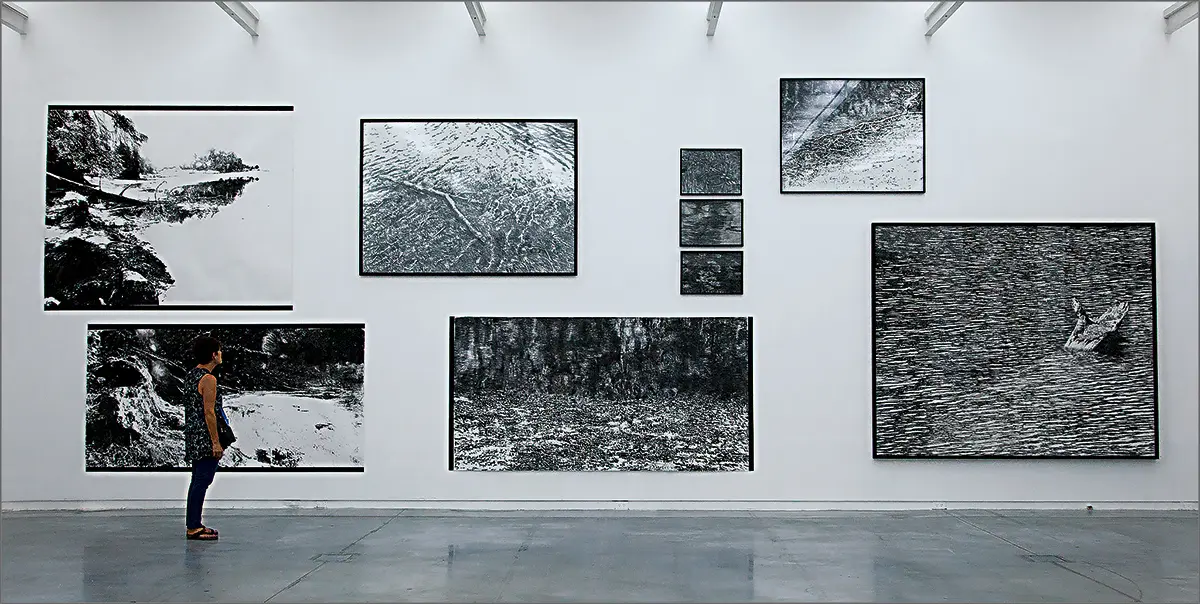
Boceto para la construcción de un paisaje. La Laguna de Zempoala (Sketch for the Construction of a Landscape. Zempoala Lake, 2010) is one of Gallardo’s recent autobiographical works. This large installation occupied the lower level of the Museo de Arte Moderno de Buenos Aires (MAMBA) on the occasion of the anthology exhibition Un lugar para vivir cuando seamos viejos (2015-2016). It comprised charcoal-on-paper works depicting the lake where Gallardo scattered her mother’s ashes. It was a daughter’s tribute to the (painter) mother who exerted, like her (poet) father, an important influence in her life.
“María del Carmen, my mother, died in 1965 in Rosario, Argentina,” Gallardo explains. “I think she would have preferred to die here, in Mexico, where her mother was born and where I find myself temporarily, or in Santander, Spain, her own place of birth. I do know she didn’t want to die where she did. At the time, my sister Gaby and I were only 5 and 7.” In a way, with Boceto para la construcción de un paisaje. La Laguna de Zempoala Gallardo repairs the resting place. She feels that in that location her mother “is celebrated, that she rests in peace, and that life is perfect.”
NOTES
1. Interview with the artist, 22/12/16.
2. Ibid.
ELENA OLIVERAS
Art critic and researcher. She is a member of the International Association of Art Critics and an active member of the National Fine Arts Academy of Argentina.