I. Globalization
The first impression one gets from this Documenta in Kassel is its global, or globalizing, character, which is a different character than simply an international one. Conceived and directed by the unforgettable professor Arnold Bode, Documenta has been international since its inception. Professor Bode proposed to the authorities of a city devastated by the air war unleashed against Nazi Germany, the celebration of a huge exhibit capable of recovering the thread of modern art that was severed so abruptly by Adolf Hitler during the 1930s. Unlike Joseph Goebbels, his Minister of Propaganda, Hitler established a rigorous opposition to anything created between Classicism which for him was a mixture of academicism and monumentalism, Vienna style, and the alternate esthetics proposed by the vanguards. For Hitler, the avant-garde was unequivocally a “degenerate art” that infected Germany’s healthy and virile spirit with the virus of a cosmopolitism and internationalism belonging more to Jews and Bolsheviks than to the good old Germans. On the other hand, for Bode, that very internationalism —or universalism if preferred— was one of the vanguards’ most stimulating and vital components and an indispensable antidote against the nationalist delirium that Nazism had imposed upon Germany. Consequently, since its first edition in 1955, Documenta was pleased to offer a variety of modern international art, both European and, to a larger extent, American. But that openness was put into doubt in 1987, when at a press conference held in the Staats-theater during Documenta 8, Manfred Scheneckenburger, that edition’s director, answered a question asked by the Brazilian art critic Berta Sichel. She said that despite its openness and amplitude, Documenta was an event situated “in the context of Western culture,” and that’s why it belonged to it. In other words, the apparent internationalism without borders presented by Bode and his supporters was limited and it coincided with a Eurocentric or Atlantist vision of the world. The directors of the ninth and tenth editions the Dutch Jan Hoet and France’s Catherine David respectively tried to correct that excess by incorporating a few artists from Argentina, Brazil, Cuba, Israel, and China.
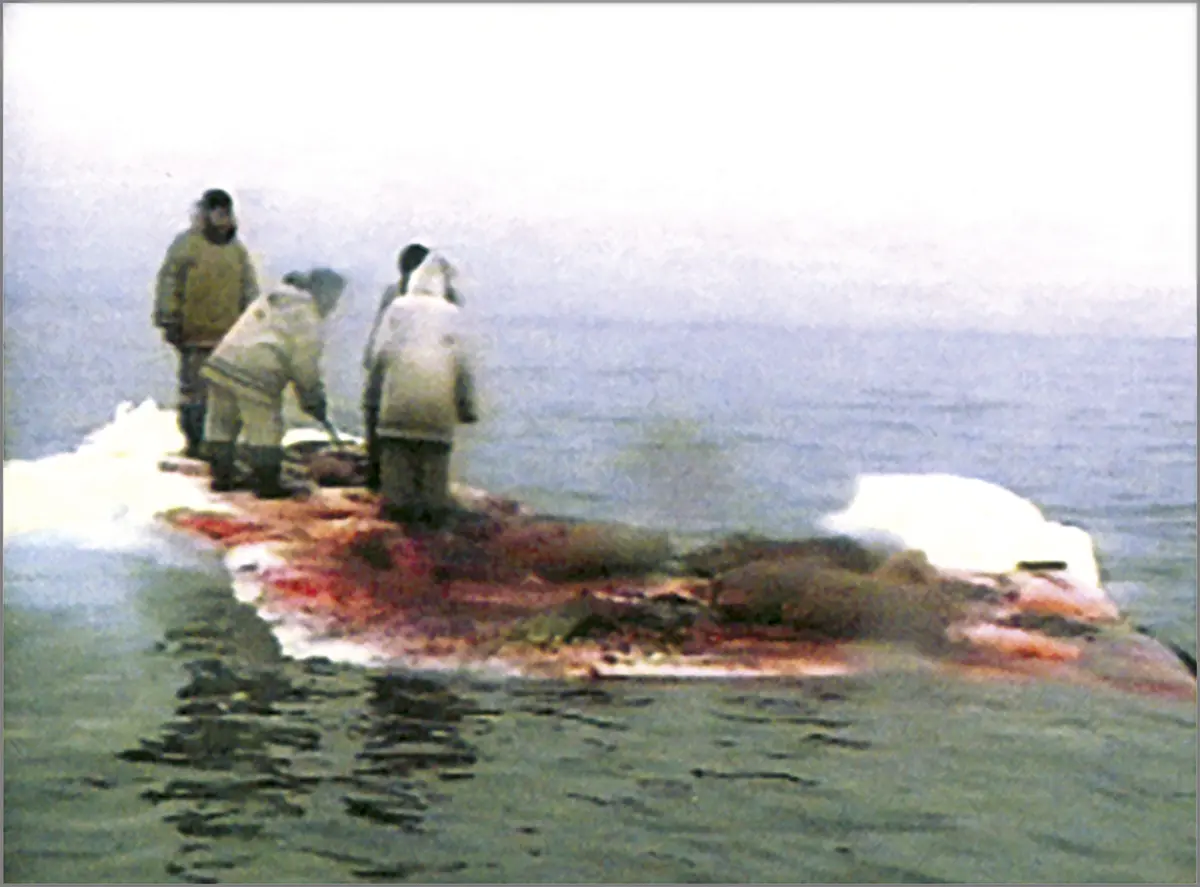
Igloolik Isuma Productions. Nunavut/Our Land, 1995, stills from episode 12: “Unaaq”/ “Harpoon”. Color video, 28 min. 50 sec. Director: Zacharias Kunuk.
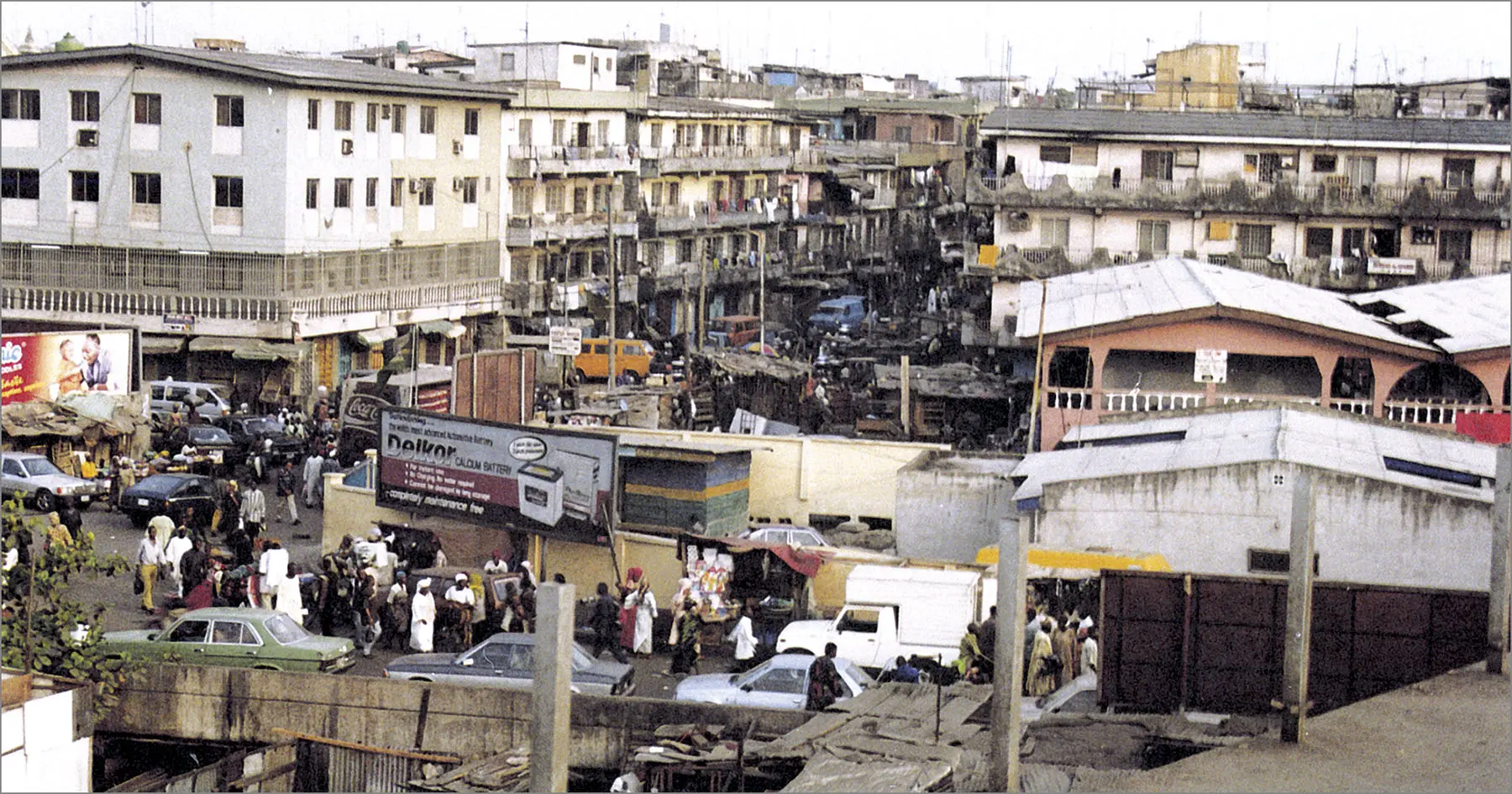
But today, this openness to the art from other parts of the world, which back then was timid, seems even more pallid if it is compared with the selection, four years ago, of the team of directors for the 11th edition of Documenta. Heading the team for the first time was an African, art historian Okwui Enwezor from Nigeria; surrounding him were the Argentine Carlos Basualdo, Germa–NY's Ute Meta Bauer, Susanne Ghez from the USA, South Africa’s Sarat Maharaj, Mark Nash from England, and Spain’s Octavio Zaya. These appointments weren’t the only thing done to effectively guarantee an edition of Documenta that would be open to artists from everywhere on the planet and not only to Western art. In an unexpected way, Enwezor and his team decided to expand Documenta’s space, timeframe, and concept in order to grant it the global character I mentioned early. And the main road to accomplish this was reached by designing it not as a single event, but as a sequence of events, among which this summer’s mega exhibit in Kassel was meant to be the closure or the conclusion of the sequence, the one with the most media exposure. It’s also the most traditional of all, no doubt, but it’s equally important to the others in theoretical and conceptual terms. These events were labeled as platforms, and they were five. The first platform, titled "Democracy Unrealized”, was done in two parts. The first one was held between March 15 and April 20, 2001, in Vienna, while the second one was between October 9 and 30 of the same year, in Berlin. It gathered artists, architects, and specialists in diverse disciplines around a cycle of debates with the fundamental purpose to question the thesis presupposing that liberal democracy and global capitalism are mutually interdependent phenomena and that that same democracy is fully and definitely realized, at least in countries of the West. The second platform, “Experiments with Truth: Transitional Justice and the Processes of Truth and Reconciliation”, was celebrated between May 7 and 21, in New Delhi, and the central topic of its debates was the post-dictatorial situation in Eastern Europe, South Africa, and in Latin America, which have posed unforeseen problems in terms of Rights and Justice, and also placing a sort of carpet with a previously unseen tone and emphasis on the disjunctives between memory, oblivion, and pardon. The third platform, “Creólité and Creolization”, was held between January 11 and 16, 2002 in Santa Lucía, the Caribbean island, and it tackled the issues of hybridization and cultural mestizaje evoked by Creólité, a term coined in the French context of such islands, which in English could be described as the condition of being Creole, or “Creoleness.” The fourth platform, “Under Siege: Four African Cities, Freetown, Johannesburg, Kinshasa, Lagos”, was celebrated in Lagos between March 15 and 20, 2002, and was devoted to examining the vital role that these four cities have played in the economic, political, social, and cultural contexts of Sub-Saharan Africa, highlighting the dynamism and at the same time the volatility that characterizes them. Complementing this platform was a book of Latin American urban imageries, edited by the Colombian semiologist, Armando Silva. The fifth platform, “Exhibition Documenta 11”, the exhibit of the works themselves, was held between June 8 and September 15 in Kassel, closing the cycle opened in Vienna and Berlin.
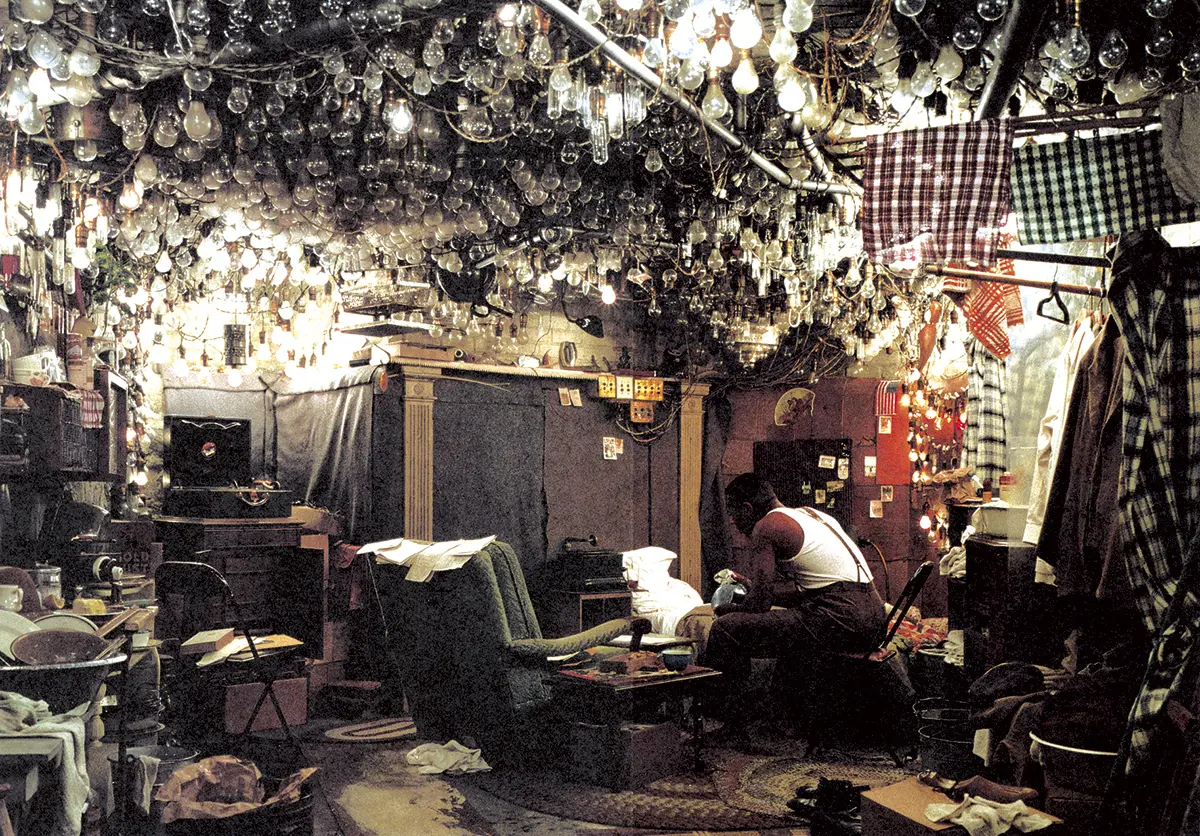
Jeff Wall. Invisible Man, 2001. Cibachrome transparency, aluminum light box. 94 1/2 x 126 in. (240 x 320 cm.).
This Documenta closes with a contradiction or at least with inconsistency as noted in the fact that the platforms were extended to four of the five continents when the majority of the artists included in the Kassel exhibit come from Europe or the Americas. And almost all, even the African and Asian artists, were already part of the mainstream of international art even before being invited to Documenta 11. They were in fact represented by important Western galleries, most of them from New York. This choice for renowned artists and not for those who remain isolated and anonymous in their own countries does not seem very coherent with a project that from its beginnings adopted a different globalization model that was supposedly distant from the centralist and homogenizing globalization promoted by the venture capital and transnational companies who have the mass media as their efficient allies.
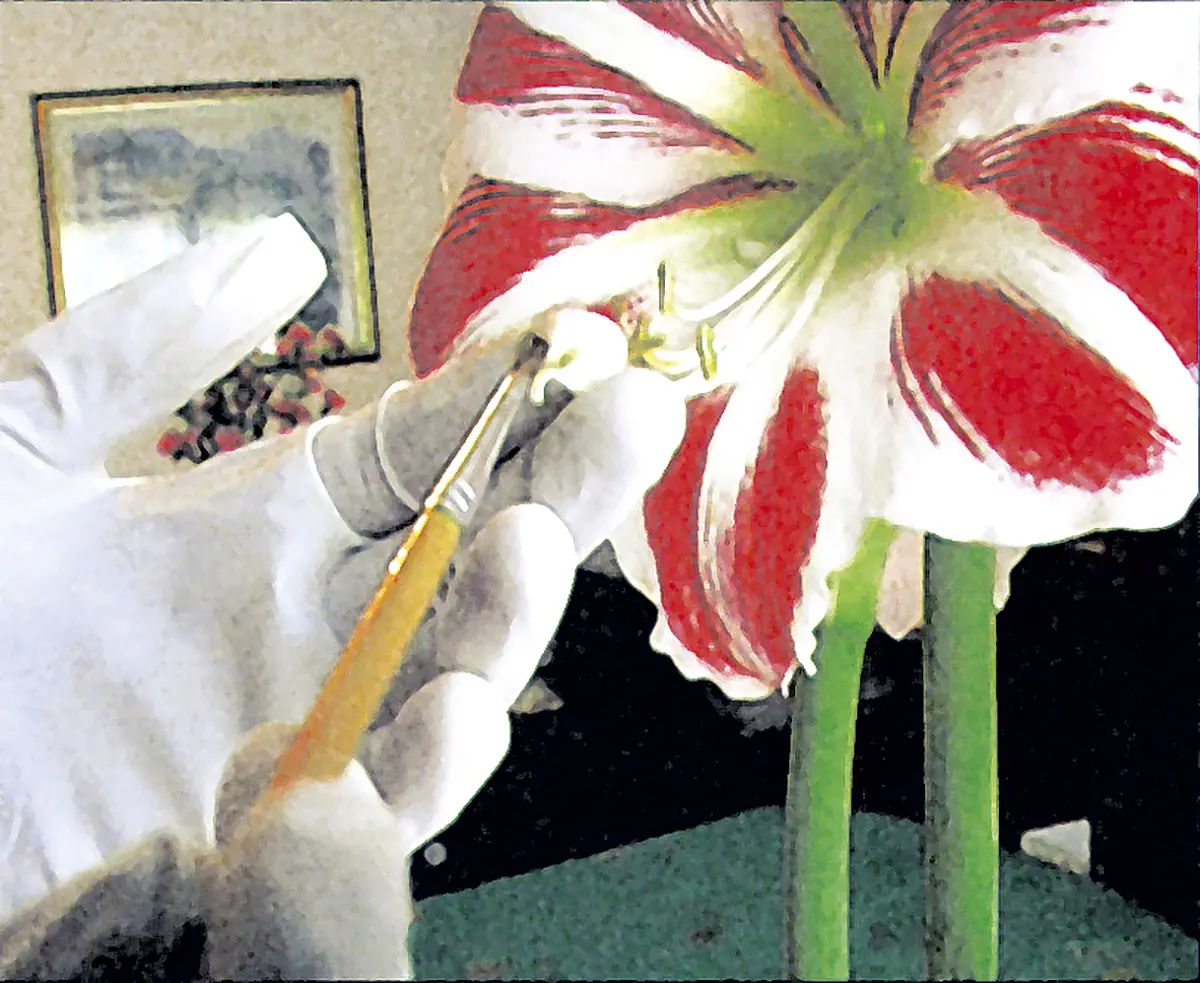
Kutlug Ataman. The 4 Seasons of Veronica Read, 2002. Four-screen video projection.
II. The Other Images
This lack of coherence pointed out before, doesn’t completely eliminate the achievements of Documenta in the terrain of the promotion of the Third World’s other image. And by being different, the other image becomes critical of the images and stereotypes dished out by the Western powers to mask the extremely complex problems and realities found in those countries. The most convincing example of this sort of bull’s-eye in Documenta 11, is without a doubt Nunavut (Our Land), a series of episodes filmed between 1994 and 1995. It mixed documentary and fiction codes for a total running time of 13.5 hours. Headed by Zacharias Kanuk, the main objective or leitmotif of the collective of artists who created the film was to rescue 4,000 years of Innuit (more known as Eskimo) history buried into oblivion by “50 years of missionaries, schools, and television.” And by broadcasting through a series of monitors arranged along Binding Brauerei’s central hall, they achieved a passionate visual discourse on the life of people from whom we know only live in the Arctic Circle, dwell in ice structures called igloos, and feed on seals and whales. That’s the least we know. Kanuk considers his work a reply to these irritating subjects. The film becomes an efficient way to extend –under different historical circumstances and using other technical resources, of course– those millenary oral traditions that have kept the Innuit together as well as their identity were recently declared by Canada as an autonomous and self-governing people.
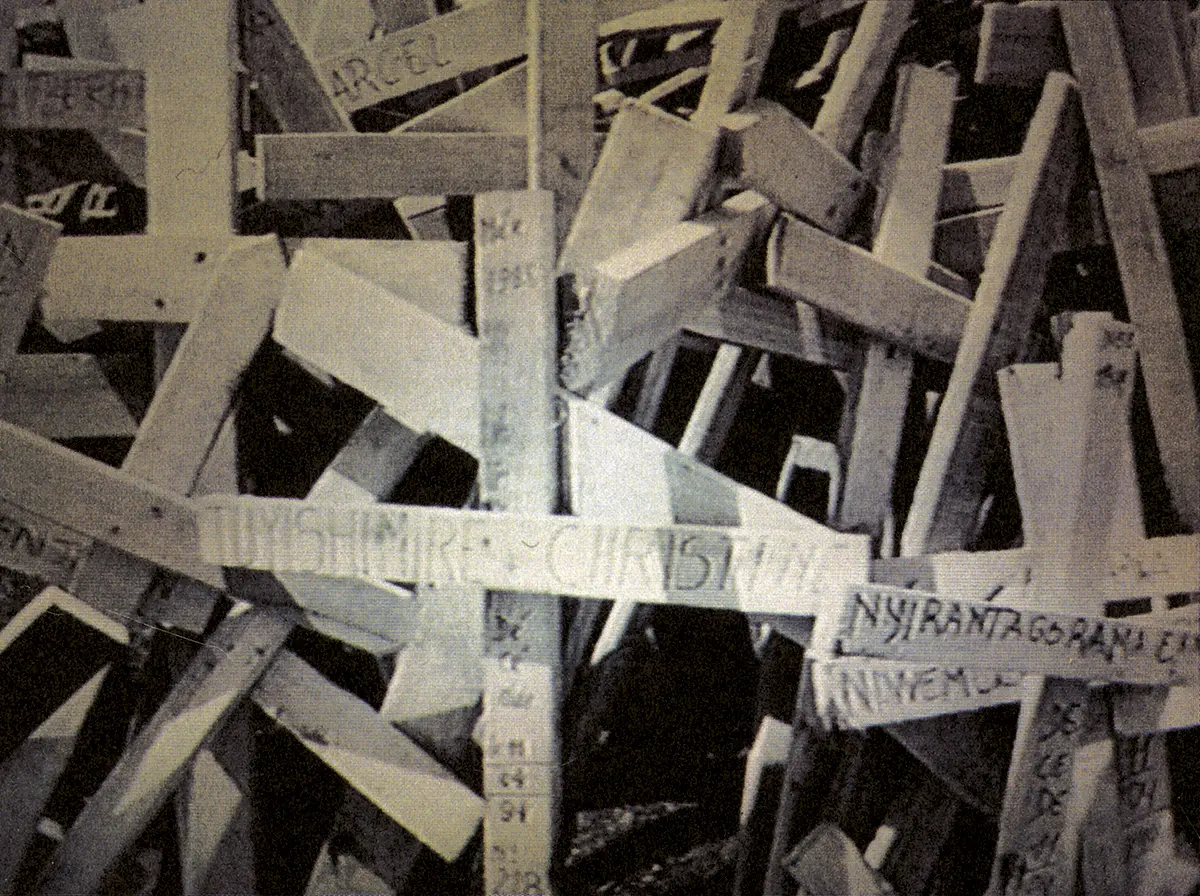
Eyal Sivan. Itsembatsemba, Rwanda One Genocide Later, 1996. Film: 35 mm., sound, 13 min. Directors: Alexis Cordesse/Eyal Sivan.
Another notable example of this effort by Documenta’s promotion of “authentic” –or unpublished images from Third World countries is offered through the photographic work of Nigerian artist Olumuyiwa Olamide Osifuye. He presented a group of photographs that he calls a “visual biography” of his native Lagos. With a population of 8 million or more, Nigeria’s capital city shares the same complexities and contradictions as any other typical Third World city. The difference here is that Osifuye sees it with a gaze that’s different from the disdain or the exoticism with which First World photographers usually see such cities.
There are more examples of this effort of Documenta to show what’s not usually shown in the Third World. The most ambiguous is perhaps the work of Trinh T. Minh-ha, a Vietnamese artist living in Paris. She showed Naked Spaces: Living is Round, a 135-minute documentary filmed in an African village that, according to the artist, is trying to overcome the anthropological gaze that the Western places on primitive societies, along with its correlate: the patriarchal gaze appealing to lyrism. The problem is that even if she was successful at overcoming that obstacle, she fell into another pit, maybe an even deeper one: estheticism, the type of estheticism that Leni Reifinstahl achieved when she filmed the Nuba in Sudan.
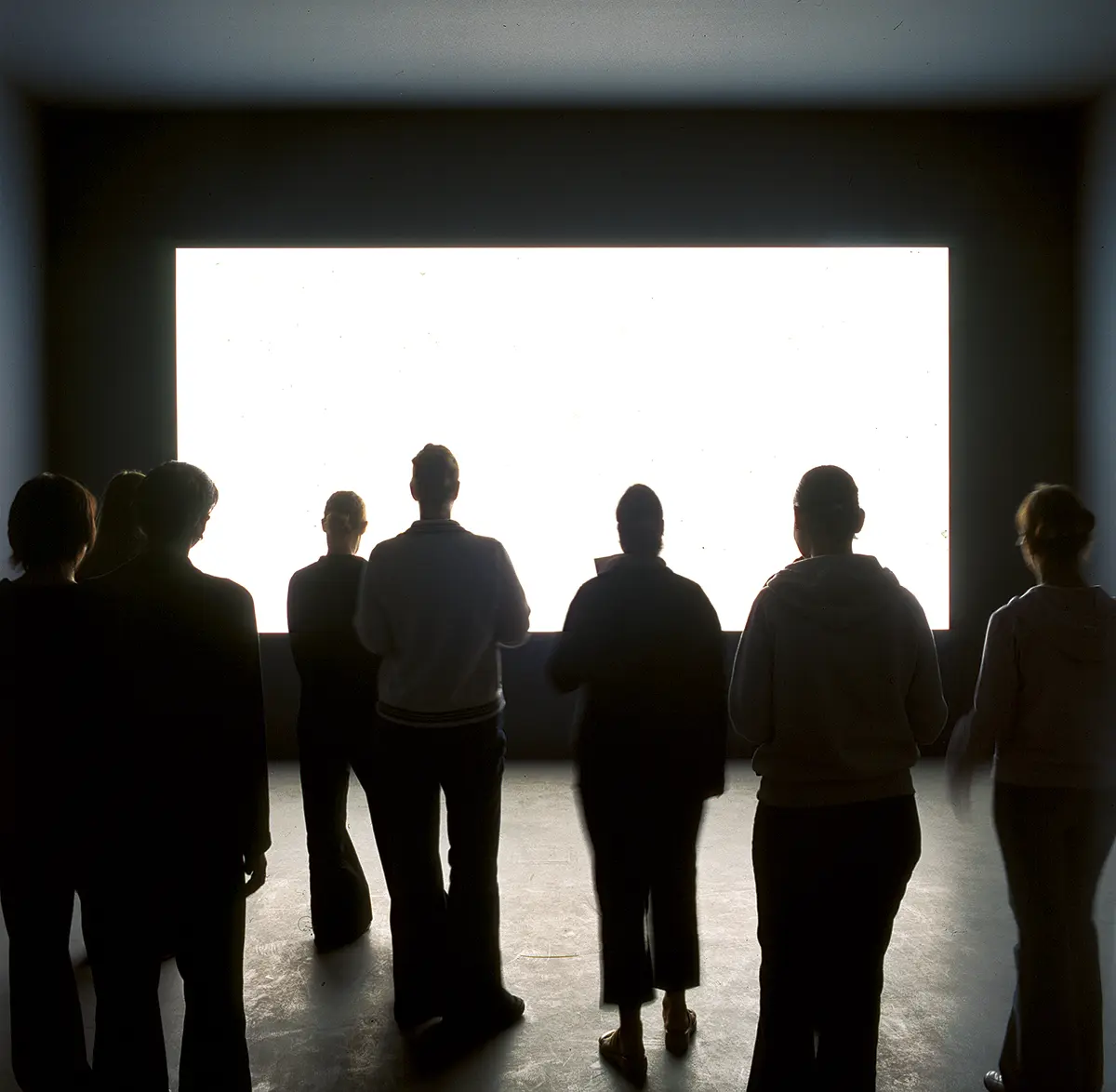
Alfredo Jaar. Lament of the Images, 2002. Installation with three light texts inserted into a wall, two corridors and blinding white light.
III. The Anthropology of Nearness
In the last few years, Marc Augé has become a sort of celebrity with his book Non-Places, in which, besides tackling supermarkets, airports, and malls, he establishes the difference between the anthropology of farness or the remote with which the so-called tribes or primitive societies are seen by the West, and the anthropology of nearness, or proximity, in other words, the completely industrialized societies from which anthropology as a discipline arisen during the 19th century. Differences in the object of study, but the focus and methods used remain the same in these two branches of anthropology. This distinction can be used to enlighten us on the relationships we find between works by artists such as Trinh T. Minh-ha, the Innuit filmmakers, or the ones by the German Ulrike Ottinger and Johan Van der Keuken, from Holland. They all have the same willingness to document what wasn’t documented before, but their approach has been applied to the environments of industrialized societies. The clearest example of this is presented by Canadian artist Jeff Wall, with Invisible Man, a large-format Cibachrome print framed inside a lightbox. On it, we see an African-American man sitting with his back to the viewer. He’s busy with some home-related thing or another, surrounded by the 1,369 light bulbs he’s collected throughout the years to illuminate the Harlem basement where he lives. The anthropology of nearness is mostly from individuals and not from tribes, mostly from the exception than from following socially established rules. And Wall is not the only one. Fiona Tan, an Indonesian artist living in Berlin, presented an installation titled Countenance, inspired by the work of German photographer, August Sander during the 1920s. As it is well known, Sander wanted to document, through individual portraits, all professions, and lines of work performed by the Germans at the time. On the other hand, with 200 filmed portraits paying close attention to details, gestures, and shifts in expression, Tan wanted to systematically register the differences between Germans from the East and from the West. Kutlug Ataman, a Turkish artist who lives in London, had a similar purpose, but his project was less ambitious because instead of focusing on so many different subjects and situations, he limited himself to register, with painstaking detail, a single case: Veronica Read’s, curator at the British Collection of Bulbs and Tropical Flowers. Ataman’s video installation, composed of four screens and titled The Four Seasons of Veronica Read, shows this respectable English woman lovingly handling the flowers she grows for a year in a small garden at her suburban London house. In this piece, the flowers, symbols of sexuality and sexual organs in many cultures, are revealed as evoking the tastes and distastes found at the root of those typical beings from a modern culture called collectors.
Finally, we should mention the African-American artist Lorna Simpson and her installation 31 2002, consisting of a display of 31 video monitors showing us in detail the lives of two black women during a single day. It’s a sort of reality show, with no dramatism or sentimentality. A truly anthropological document.
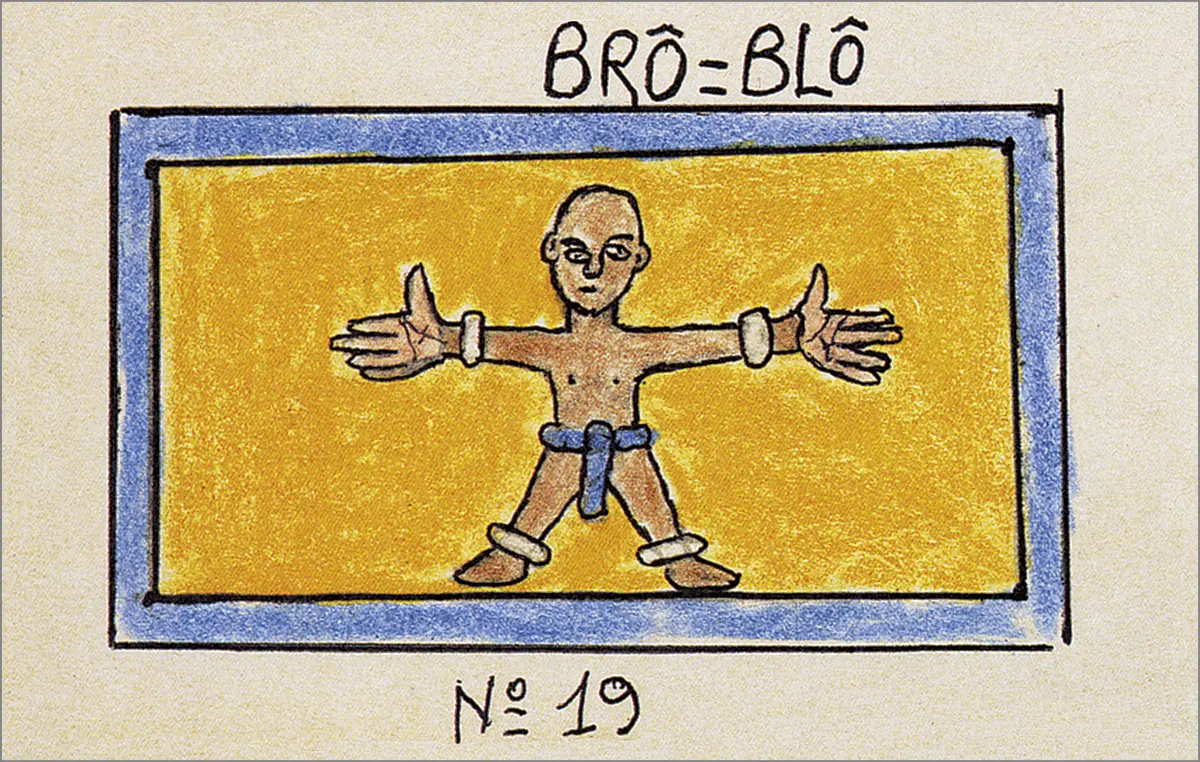
Frédéric Bruly Bouabré. Alphabet Bété, 1990-1991. 448 drawings, colored pencil, ballpoint pen on cardboard. 3 3/4 x 5 7/8 in. (9,5 x 15 cm.). C.A.A.C.- The Pigozzi Collection, Geneva.
IV. Political Radicalization
When this edition of Documenta has conceived four years ago, globalization –understood as it is by the Western powers– was a beautiful, futuristic tale that seemed to fascinate everybody, except the minority of radicals who took advantage of the G-8 or the IMF summits to protest against its perverse consequences. But by the time the fifth platform opened, the Kassel exhibition, the scenario had changed drastically, deeply modified by the global financial crisis and the open war –with no limits or mercy– against terrorism waged by President Bush in response to the attacks of September 11th, 2001, in New York and Washington. The promise of a free world open to all has been eclipsed by the collapse of the Internet’s flagship enterprises, the militarization of political life, the spectacular increase in racism and xenophobia, and the closing of borders to put a stop to migration from both Eastern Europe and the Third World into the Western countries. Then, it should not be a surprise that political radicalization had its presence in this Documenta. And not only in the previous platform debates but in the Kassel exhibit as well. There we found works highly critical of the models of domination used currently in the Western world and elsewhere. The most obvious of these works was Sommer in Italien, a series of photographs taken by the German artist Lisl Ponger in Geneva. That city, during the summer of 2001, saw violent street wars between law enforcers and protesters against globalization. Ponger refused to take photos of the evidence. Instead of photographing the clashes directly, she photographed the aftermath –the sites and places where the fighting took place. A result is a group of unsettling, empty images, where there are no people and where the only thing remaining from the violent battles are the signs and marks left by them.
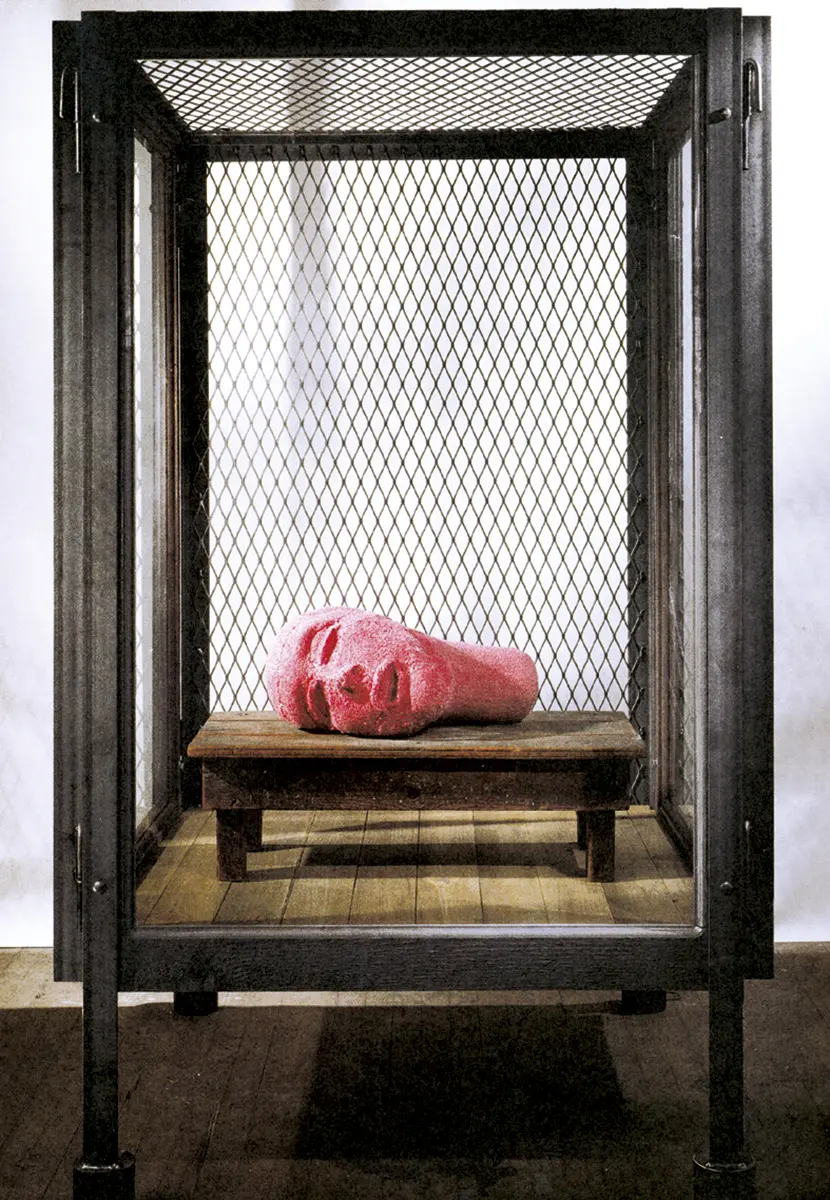
Louise Bourgeois. Cell XXIII (Portrait), 2000. Steel, fabric, wood, glass. 42 x 42 in. (109 x 109 cm.).
This elliptical approach to the scenario of a grave conflict was also used by Eyal Sivan, a dissident Israelite artist living in Paris. In Itsembatsemba, Rwanda One Genocide Later he took this operation of estrangement even further. Lasting 13 minutes and produced in 1996, the film’s subject matter is the Tutsi genocide, one of the most horrendous in the 20th century –which was a century of genocides.
According to international observers, nearly a million people were killed, but none of them, not a single corpse, is shown in the film. The only thing we can see is the naked, empty sites where the slaughters took place. The soundtrack accompanying the images was taken from Uganda’s RTLM broadcasts. During April and May 1994, the Ugandan radio and television channel incited people to go and kill their Tutsi neighbors.
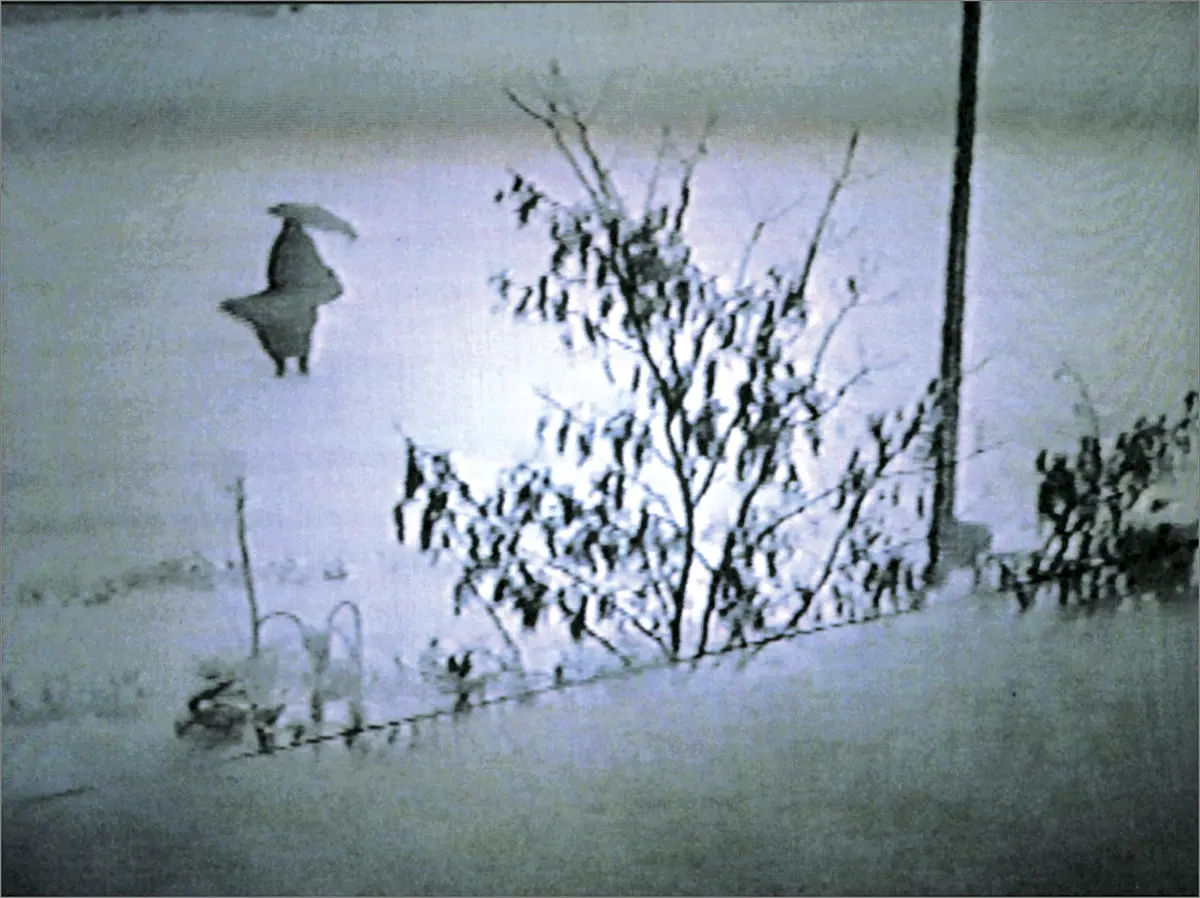
Seifollah Samadian. The White Station, 1999. Film: 35 mm, color, sound (no dialogue), 9 min.
The work by Alfredo Jaar, from Chile, is even more refined. This time we saw an installation titled Lament of the Images. It consisted of a darkened space that had three illuminated texts alluding to the year's Nelson Mandela spent in prison during Apartheid, the decision of Bill Gates to burry 17 million photo images into a granite mine, and the decision of the United States Department of Defense to buy all images taken by commercial satellites in orbit over Afghanistan before the bombing, followed by a corridor. The spectator then entered a new space where he was suddenly blinded by a strongly illuminated screen. The blindness of a notable political prisoner caused by working in the mines is put in contrast with the blindness, or preferably the privation of images that the unlimited ambition of Bill Gates as well as the political censorship of the Bush government, have imposed upon us.
In this same line of Documenta, we can also talk about Tania Bruguera, a Cuban artist who made Untitled, a painful and impacting installation. Maybe too impacting. It consisted of a rectangular room that was completely dark. A powerful flash strobed every so often to blind the spectators entering the room. When the flash went off, the disoriented spectators heard the clamber of soldiers marching and the metallic sounds of weapons being cocked. If the reference to the fact that Kassel, during WWII, was a weapon-producing city was obvious, then the way the artist evokes it by blinding the spectator is surely a hidden one, and it posits blindness as a radical rejection of the mass hypnosis-induced today by the mass media.
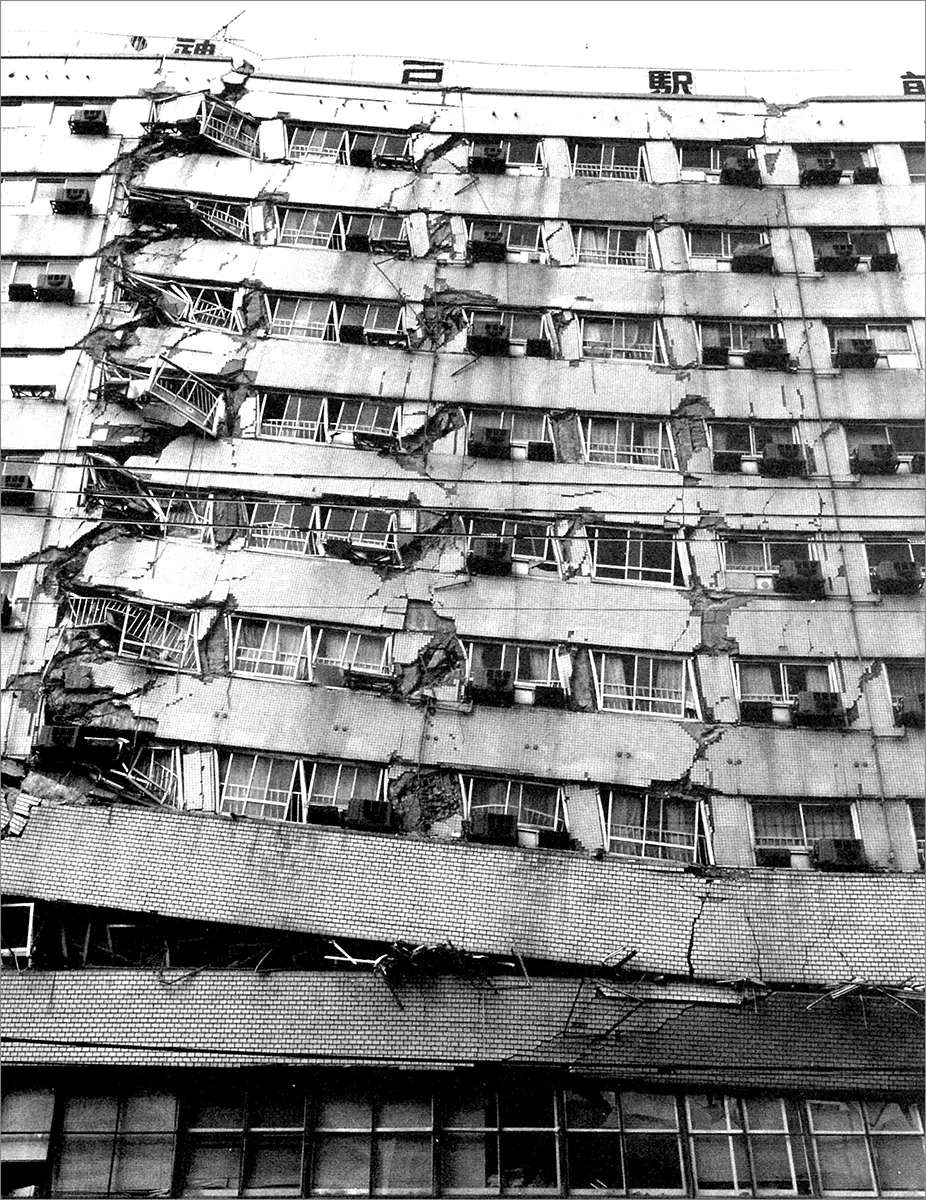
Ryuji Miyamoto. After the Earthquake, 1995-98. Black and white photographs. 23 5/16 x 20 in. (61 x 51 cm). Museum for Moderne Kunst, Frankfurt and Main.
V. Art as Usual
And where was art in this Documenta? I’m talking about art in the commonest sense of the word –or the most institutionalized. And for the same reason, more centered on its interests, specific recourses, and the problematics characterizing individual expression, before any anthropological, political, or social concerns that so frequently and strongly were present throughout this Documenta. Well, that art was present, and it was represented by excellent works. For example, French artist Louise Bourgois showed a group of cells as subtle and defiant as her other works. Stan Douglas created an installation titled Suspiria. In it, the Canadian artist mixed images taken from Dario Argento’s film of the same title, and the brothers Grimm’s fairy tales, reminding us of the markedly phantasmagoric nature of TV images. Here we also have to take into account Frédéric Bruly Bouabré, the veteran artist from the Ivory Coast, who attracted the attention of everybody with his Alphabet Bebé, a group of 448 drawings done with colored pencils. The work is an itinerary of all the subject matters that hold the attention of this poet and is a formidable generator of images. Another African, the Congolese Bodys Isek Kinquelez, once again surprised us with his scale models of architecture that are both fantastic and visionary, though not lacking criticism and irony. Such was the case of Ville Fantome, the work he exhibited at this time, which constituted the artist’s own version of Manhattan being wounded by the fire and collapse of the Twin Towers.
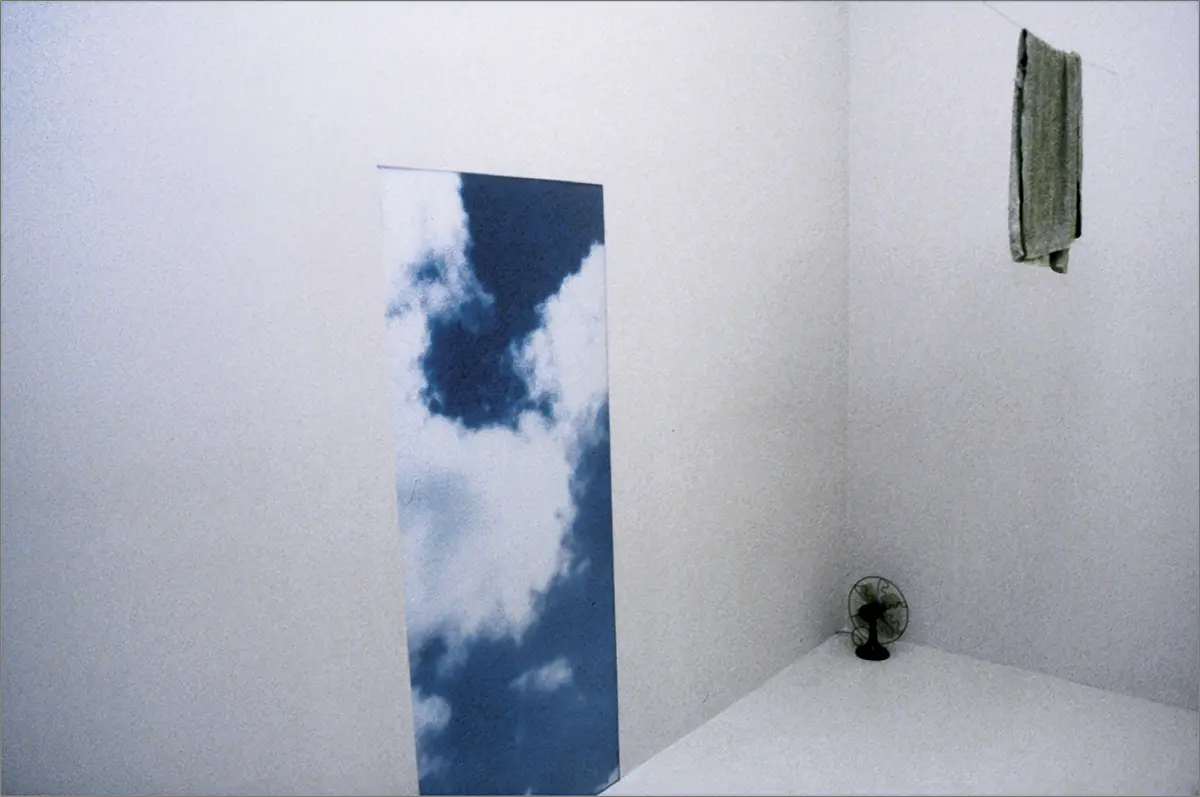
Luis Camnitzer. Untitled, 2001-2002. Mixed media installation. 177 x 157 1/2 x 393 3/4 in. (450 x 400 x 1000 cm.).
With his film The White Station, Iranian photographer Seifollah Samadain reached one of Documenta’s highest points. The film was made from an apartment in one of Tehran’s highest buildings. From there we see how a woman cloaked in a black chador fights off a winter blizzard with her black umbrella while waiting for the bus. A moving sight to behold. Moving was also a film by Pavel Braila, Moldavian artist living in Holland. In this 16-mm film transferred to DVD, he transforms into an authentic visual poem the onerous task of changing the wheels of a railroad engine to fit Western track sizes.
Finally, we should mention Ryuji Miyamoto, who exhibited a series of wonderful photographs showing the damage done to many of Kobe’s buildings by the earthquake that struck Japan in 1995. The photos showed the buildings before they were completely demolished or rebuilt.
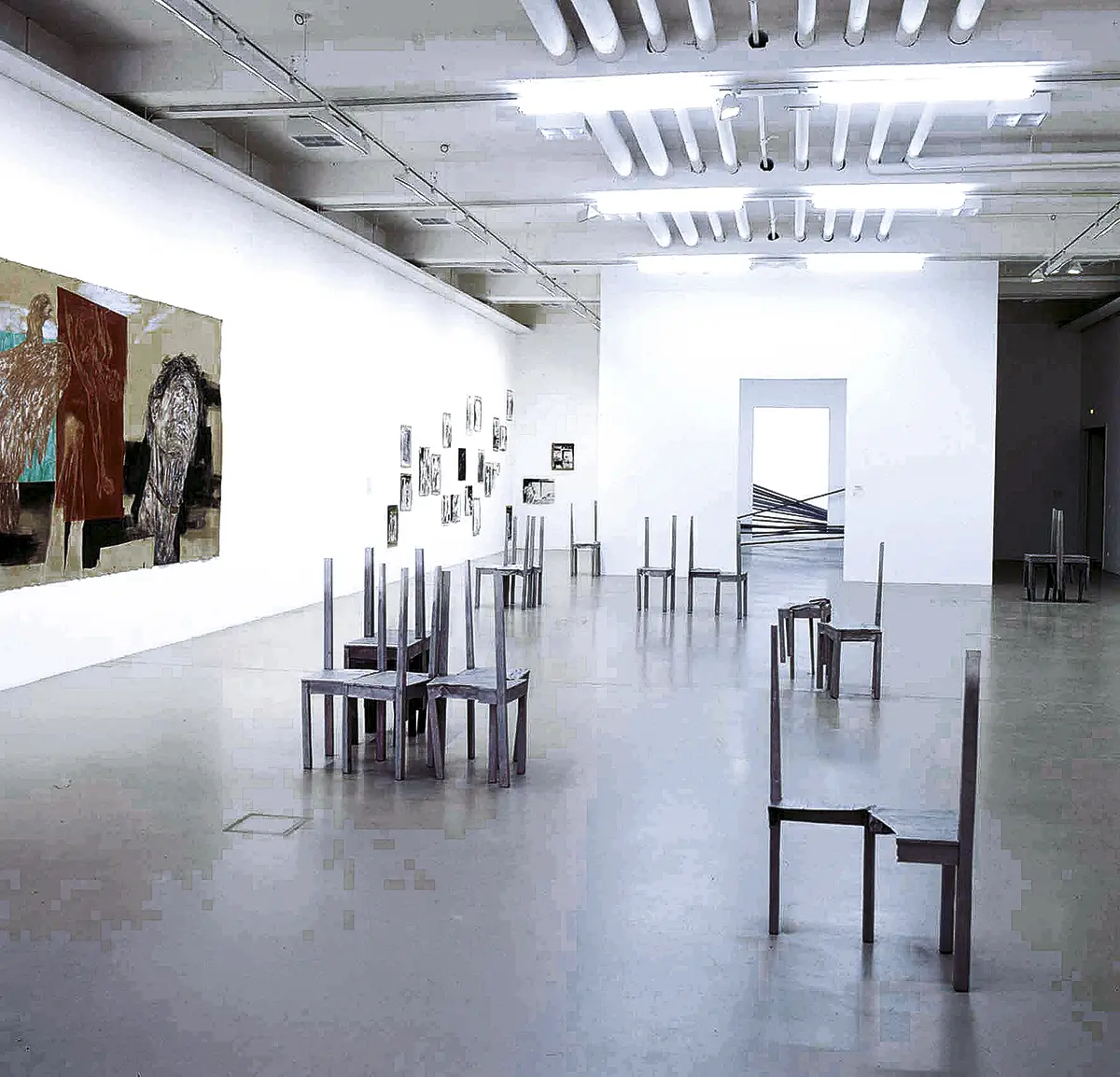
Doris Salcedo. Tenebrae, 2002. Installation with wooden chairs. Variable dimensions.
VI. Latin America Coda
Never before has the participation of Latin American artists been so high at Documenta. There were works by Gabriel Orozco, from Mexico; Tania Bruguera and Carlos Garaicoa, from Cuba; Doris Salcedo, from Colombia; Cildo Meireles and Artur Barrio, from Brazil; Alfredo Jaar, from Chile; Víctor Grippo, from Argentina (who died just before opening day); and Luis Camnitzer, from Uruguay. I have spoken already of Tania Bruguera and Alfredo Jaar. Of Camnitzer, we’d have to say that he once again hit the bull’s eye when he spoke of prisons and clandestine places of confinement and torture introduced by the military dictatorships of the Southern Cone during the 1970s. Carlos Garaicoa was faithful to himself with an installation in which he makes a new reading of certain deteriorated streets and buildings in downtown Havana, with the purpose of showing the extreme impotence and degradation that the Ilustración project has reached. And not only this project, but also the Marxist one that, as the Argentine Aníbal Ponce said in the 1930s, wasn’t more than a “tender bud in the olden tree of knowledge.” Doris Salcedo exhibited some of the chairs on which she had deposited her desire to represent, or allegorize, the inexorable loss of what’s held dear, familiar, and memorable. The same did Grippo, with some school desks he’d already shown in the Havana Biennial, loaded with nostalgia, their wood panels filled with inscriptions carved with knives by endless generations of students. Fabián Marcaccio exhibited his work in the Binding Braueri building in Kassel –reconverted into one of its new venues. There, he showed a series of mural paintings that responded to the purpose of questioning the relationships between abstraction and figuration, painting and advertising, the public and the private. Neither Gabriel Orozco, who mounted a sort of display with earthenware nor Artur Barrio, who presented an installation loaded with foodstuffs and evocations from the favelas’ promiscuous spaces, reached the quality and intensity we had gotten used to seeing.
CARLOS JIMÉNEZ
Writer and art critic. Professor at the Universidad del Valle. Author of Extraños en el paraíso. Ojeadas al arte de los ochenta and Los rostros de Medusa. Estudios sobre la retórica fotográfica.