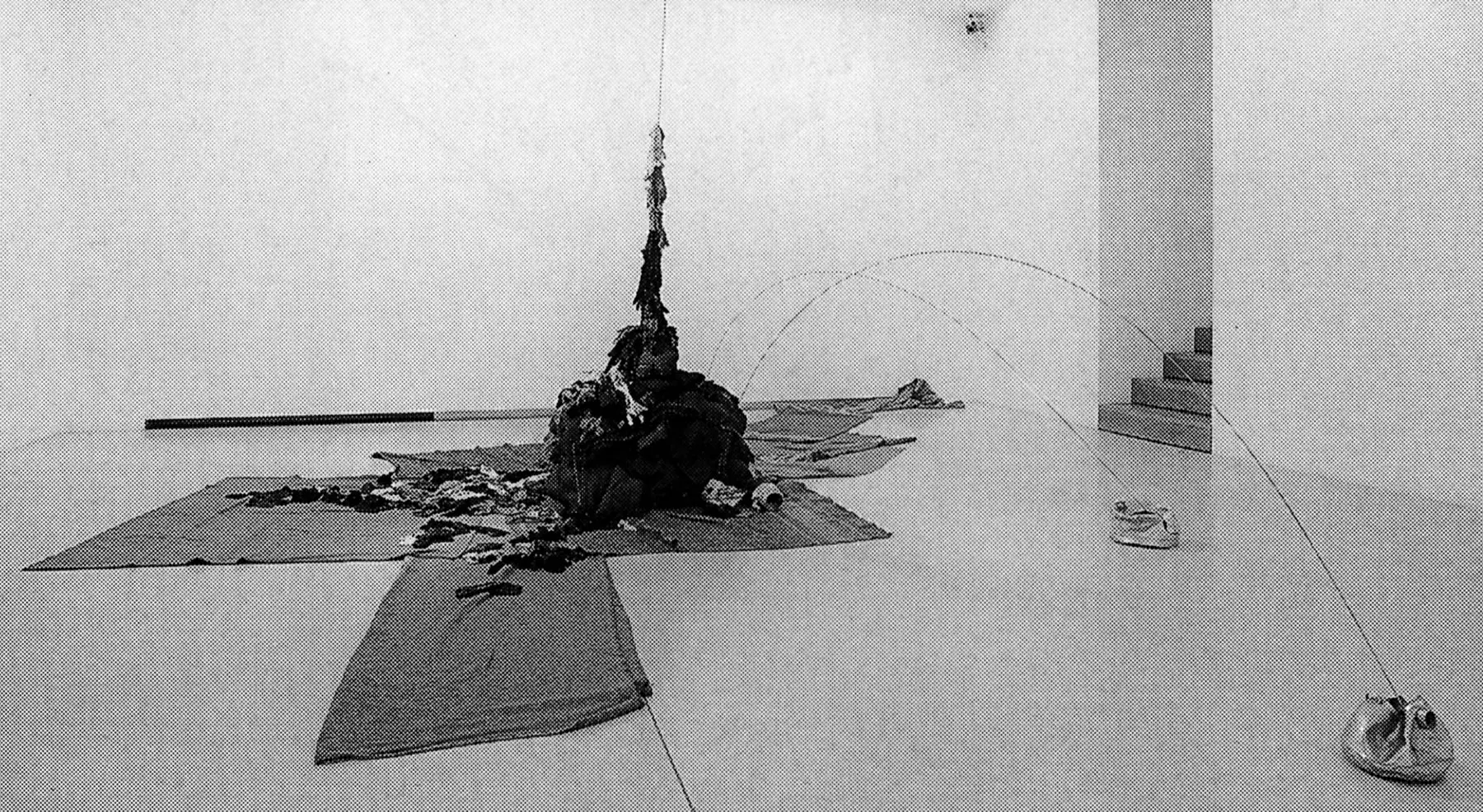
The Latin American offensive in Paris, which was mainly focused on contemporary art, did not produce the expected groundswell in the public and the press remained relatively lukewarm. This may be because the number of works on show detracted from the quality. There were at best, a few sparks of interest in the one-person shows and well-known artists. The event, which was conceived, organized, and financed by the Washington-based Inter-American Development Bank (IDB) to celebrate its fortieth anniversary, was intended to transform the French capital into the center of Latin American art in Europe over a period of three months. The project was also an attempt to meet the expectations of some of its organizers, namely, to make culture the spearhead of encounters and to make cultural needs felt in the political arena, and focus attention on the role which culture can play in the international policy of countries.
The various debates and discussions which took place during the event focused on the subject in order to initiate an introspective consideration by both private and institutional bodies.
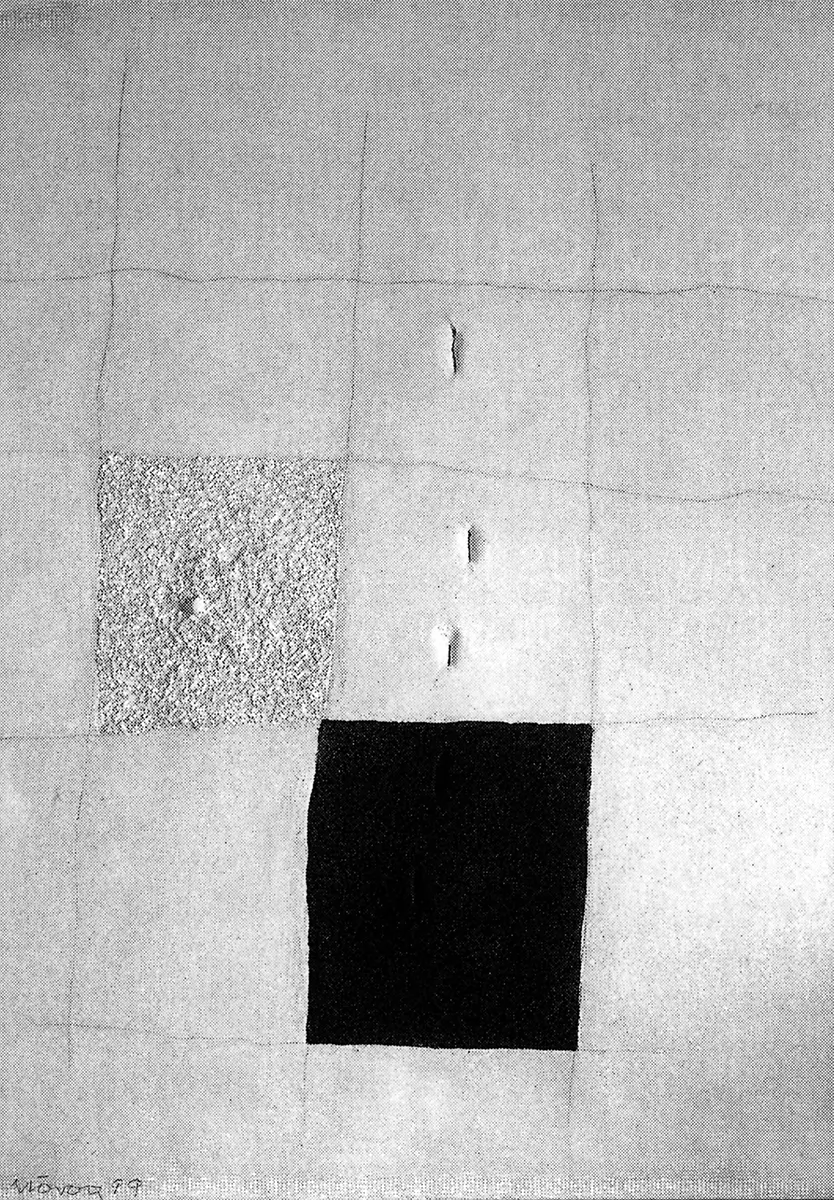
Novoa. From the series Fifteen Variations for a Black Square, 1999. Mixed media on paper. 39,3 x 47,2 in. Maison de L'Amerique Latine.
However, over and above the interest, the event may have here and there concerning the cultural reality of countries and the role and importance of artistic creation, the real question refers to the dissemination of Latin American art in France, concerning reception, and public. It is worth noting that it was an economic financial pretext that served as the starting point for highlighting an extremely symbolic aspect of the Latin American cultural sphere, its artistic production. The absence of public institutions from the project indicates the role of short-term or long-term commercial objectives in a context where the international art market is rapidly absorbing that of Latin America. France is just a tiny part of that specific market.
On the other hand, in support of this hypothesis, it is also worth noting that Latin America will be the guest of honor at the next edition of the International Contemporary Art Fair (FIAC), which will be held in Paris between 15 and 20 September 1999.
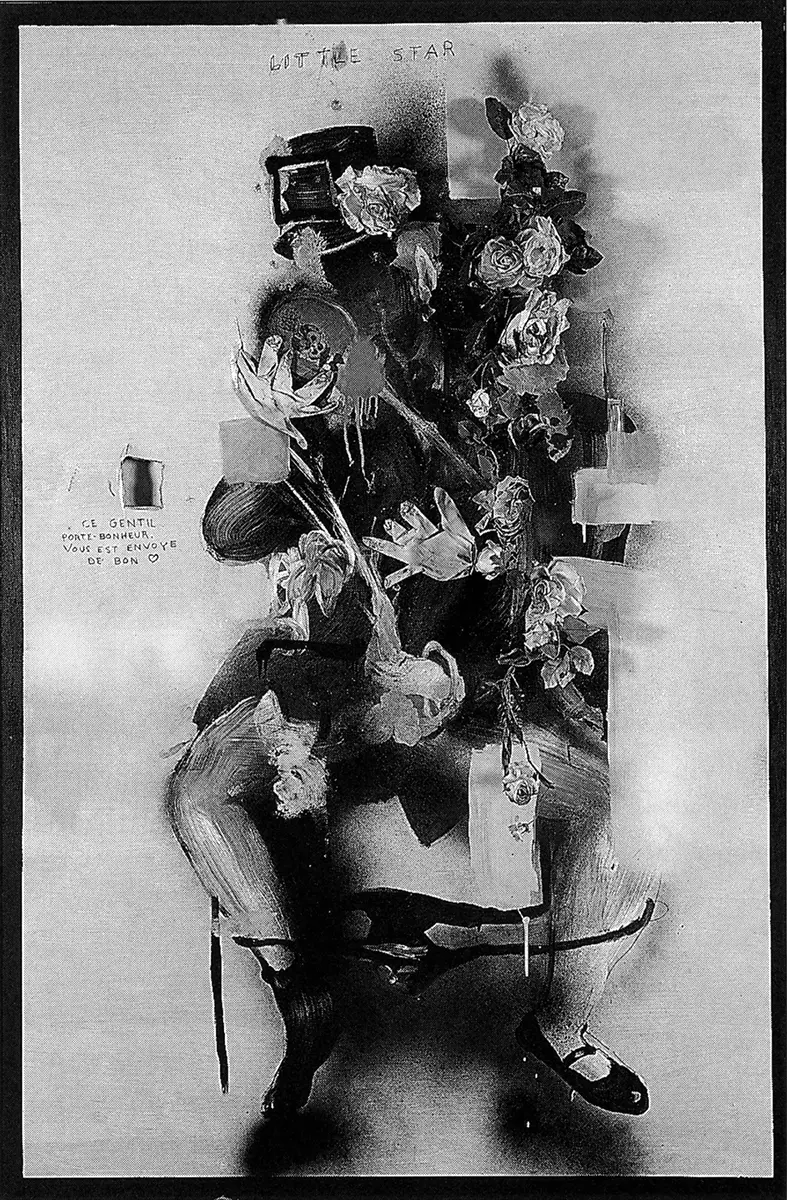
Julio Galán. Little Star, 1998. Oil and mixed media on canvas. 74,8 x 51,1 in. Galerie Thaddaeus Ropac.
There was however no doubt that the main event on the art calendar in Paris this spring was the Latin American offensive and that whether in group shows or individual exhibitions, very different artists confirmed the vitality of this art, their interest in different media and formal registers, their free-ranging inspiration and expression as well as their desire to question themselves about identity.
Under the impetus of the IDB, the cultural services of the City of Paris and the EDF foundation (Electricity and gas services of Paris) presented two major group exhibitions, one at the Passage de Retz and the other in the Espace Elektra. For its part, the Maison d'Amérique Latine organized a retrospective exhibition of work by Leopoldo Novoa, while fifteen galleries, led by the gallery owner Marwan Hoss (former president of the FIAC), proposed various individual or group shows.
The event was complemented by other exhibitions which, by a coincidence due to the calendar, were also on view. All these shows provided a fairly wide range, in terms of style and generation, of the current production of the continent.

Carlos Ginzburg. Homo Fractalus, 1999. Mixed media. Variable dimensions.
Before examining in detail the few individual exhibitions which did make a real contribution to developing the public's knowledge of current Latin American art, we could focus for a moment on two group shows the first at Espace Elektra and the second at Passage de Retz. The former featured the exhibition titled Living in Paris from February 24 to April 18, which offered a selection made by the Venezuelan artist Elohim Feria and the French commissioner Sylvain Lecombre, on the subject of the choice of Paris as a place of work and life. The thirty artists whose work, in most cases, is too rarely seen in Paris, included the Uruguayan Carmelo Arden Quin (who arrived in Paris in I948), the Venezuelan sculptor Asdrubal Colmenarez and the Argentinians Lea Lublin and Marie Oresanz. The diversity did not detract from the quality of the selection, though there was some visual and museographical disorder, probably due to the irregular and limited configuration of the space available.
Special mention should be made of the more recent generations of the sculptors Carmen Perrin (Bolivia) and Frida Baranek (Brazil), the painters José García Cordero (Dominican Republic) and Julio Villani (Brazil), as well as such promising young conceptual artists like the Argentineans Alejandra Riera and Elena Ferrer, and the Colombian Horacio Osorio.
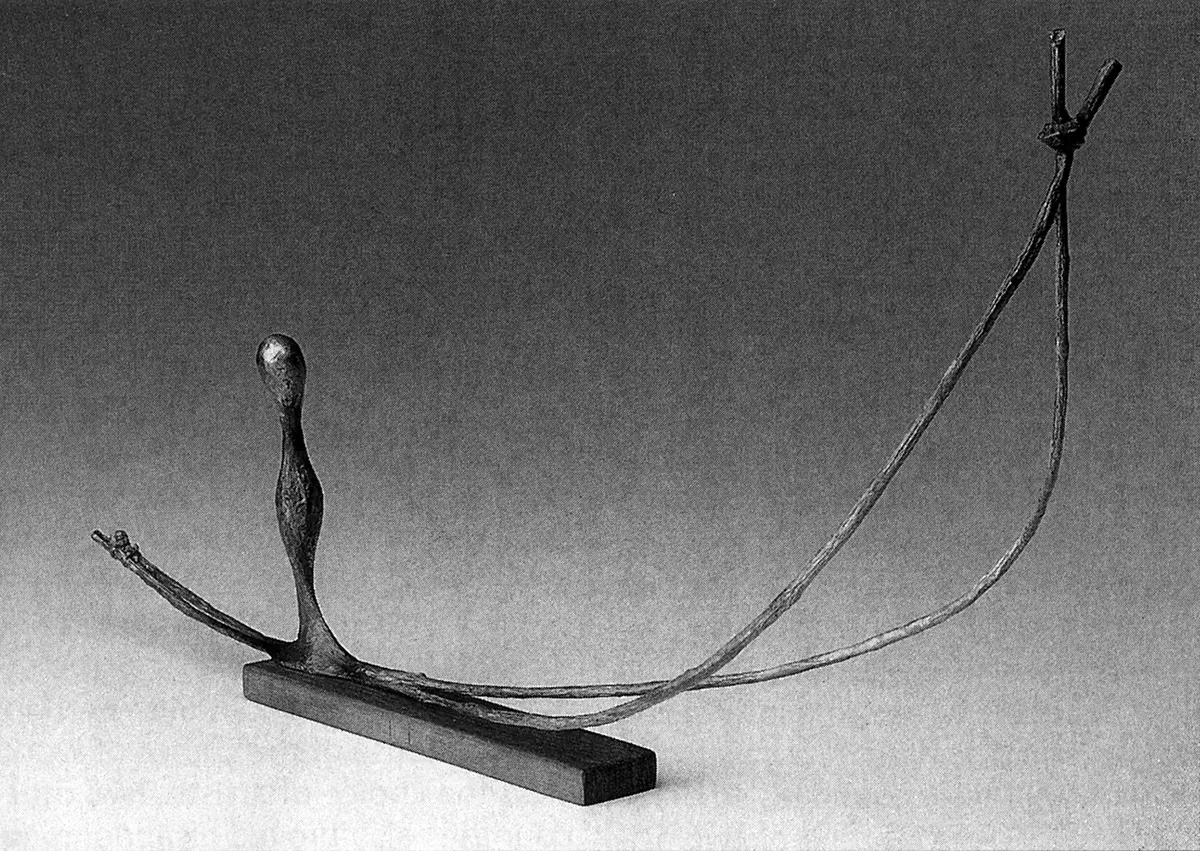
Nohra Herman. From the series Circles, Ships, Storms, 1999. Bronze sculpture. Variable dimensions. Galerie Koralewski.
At the Passage de Retz, the emphasis was on emerging art, with work by sixty-nine artists from twenty-six countries. The selection of these young artists (aged 25-40) was made by critics, institutions, and galleries from Latin America, and ratified by a French committee headed by the gallery owner Marwan Hoss, Antonio Segui, and the director of the National School of Fine Arts, Alfred Pacquement. The show offered a rather uneven range of work, although it had the merit of including artists from Central America and the French, English, and Spanish Caribbean, countries whose artistic production is virtually ignored in France. However, the geographical and nationalist concept governing the presentation was an a priori factor that is always difficult to accept as an aesthetic criterion. Furthermore, it would have probably been more interesting for a public that is not familiar with the art of these countries to have chosen work by only one or two artists, rather than try to offer a hazardous diversity through large numbers.
In spite of this initial inconvenience, three selections did however stand out from the rest: Brazil, with five artists, including Rosana Palazyan, Marco Paulo Rolla, and José Damasceno; Argentina, with six artists, including Marcelo Torretta, Daniel Ontiveros, and Carolina Antoniadas, and Uruguay, with four artists, including Alejandro Sequeira, Pablo Uribe, and Diego Donner. On behalf of Chile, there were only two artists, Víctor Manuel Pavez Miranda, and Bruna Teffa, although the selection was acceptable, and only three for Guatemala, including Michael Benedict. Honduras was represented by two good artists, Carlos Corea, and Xenia Mejía. As for Mexico, the selection was disappointing, perhaps more because of the choice of works than the choice of artists. Two other countries also proved disappointing: one would have expected from the selections from Venezuela (five artists) and Colombia (four artists, including Jorge Iván Lenis) rather more impressive pieces.
José García Cordero. The Aesthetics o f the Guerrilla: Che's Mountain, 1998. Acrylic on canvas. Elektra Space.
At the Maison d'Amérique Latine, the mineral, poetic, and rigorous space of the Uruguayan Leopoldo Novoa (1919) offered up the mysteries of the artist's imaginary territories. Novoa, who divides his time between Galicia and Paris (where he settled in 1965) presented a mini-retrospective, where the works reflected the path of a solitary explorer who has cohabited with the earth and the cosmos for more than thirty years. The series of works on paper, all from 1999, looked like refined checkerboards in which color is reduced to an interplay between black and a range of whites and leads our eye to establish new associations permanently involving both the intellect and the emotions.
Fifteen other galleries proposed a selection that was both historical and contemporary, ranging over different periods and spaces in an attempt to convince the visitor of the perennial dynamism of artistic creation in this continent. Patrice Trigano showed the Cuban sculptor Agustín Cárdenas; Marwan Hoss presented work by Cicero Días and Joaquín Torres-García, alongside Antonio Seguí; Thessa Herald contrasted different generations around Roberto Matta (the Mexicans José Luis Cuevas and Saul Kaminer, the Venezuelan Pancho Quilici); Denise René paid tribute to her first kinetic artists (Martha Boto, Narciso Debourg, Julio Le Parc, Luis Tomasello and Gregorio Vardanega, amongst others); Albert Loeb remained faithful to Jose Gamarra, Luis Caballero, Jorge Camacho, and Wifredo Lam. Other galleries preferred a country-based selection including the 1900-2000 Gallery, with work from Brazil, including artists such as Rubens Gerchman, Franz Krajcberg, Flavio Shiro, and Antonio Dias and the following generations, with Fernando Barata and Manfredo de Souzanetto. The Jacques Albaz Gallery focused on Colombian art including works by Beatriz Gonzalez and Luis Fernando Zapata amongst others. Some galleries proposed one-person shows which were not to be missed-the Argentinian Pablo Reinoso at Krief, the Mexican Julio Galán at Thaddaeus Ropac, the Argentinian Carlos Ginzburg at Lina Davidov, the Brazilian Arthur Luis Piza at Jeanne Bucher, and the Cuban Ricardo Rodriguez Brey at Xippas.

Cristina Martínez. Constellations, 1999. Mixed media. 39,3 x 47,2 in. Galerie Argentine.
Under the title, Paris Nostalgia, the Thaddaeus Ropac Gallery (also at Salzburg) presented seven large canvases by Julio Galán dated 1999. Galán remained faithful to his obsessions and revealed his dazzling virtuosity in the handling of his pictorial and symbolic tools. In these canvases, he works with kitsch objects, with the space becoming increasingly open. The rigidity of the composition and the drawing has now disappeared and the interplay between the collages, painting, and objects evokes symbols most of which refer directly to the male sex. At the Xippas Gallery, Ricardo Rodríguez Brey presented an installation and two objects.
Brey's work reflected in its organization a concern with construction and balance which is not unrelated to the rigor of Rebecca Horn, even though the metaphorical and fetishistic universes of the two artists are very different.
Younger artists, such as the Argentineans Norma Herman and Julieta Hanono featured works at the Koralewski Gallery and Marwan Hoss Gallery respectively. The latter presented works by Julieta Hanono (born in 1960 and a resident in Paris since 1989, when she began to paint). Something of the legacy of art brut in her use of recycled materials and handling of color can be sensed in works that use a variety of supports. Marwan Hoss's choice was a selection of canvases of varying sizes in which the artist developed a fragmented narrative system. She sets a number of figures dispersed in space that make reference to childhood. The represented void serves as a counterpart to the unstable imagery. An empty space vis-à-vis the full space of Segui, whose work was being presented alongside hers, and between whom there is a certain relationship. The Koralewski Gallery showed works on paper and small format bronze pieces by Nora Herman (born in 1958 and living in Paris since 1982). Her work is characterized by a rich game with the circle and the line resulting in an imaginary construction of nature. Lightness and transparency are the structures of this balance sought out by the artist in her works, which seem to be light and uncertain mediations between the air and matter.
The Argentine Gallery presented the most recent works by Cristina Martínez, from the same country. Her "landscapes" are evoked through graphic elements, forms, traces, and signs and which establish an intimate and secret relationship with the elements, water, and earth, but also with the cosmos in an evocation of air, night, and stars. The role played by chance in the emergence of the forms and the emphasis placed on materials, graphisms, and signs echo the work of the informalists and the tachists of the 1960s. But her patient and interior kind of work, like an inward-looking glance, paradoxically suggests a kind of immateriality. It might also hark back to another tradition of the organic dimension of Chinese landscape art, where formless elements simultaneously emerge only to fade away again.
The sculptor Sebastian was present in several parts of Paris following his invitation as guest of honor to the 51st Violet Salon of Sculpture. Under the title The Geometry of Color, thirty small format pieces, presented at the Mexican Cultural Center, and five monumental works placed in various parts of the Latin Quarter (opposite the French Academy, the Carrefour de I'Odeon, the rue de I'Ecole de Médecine, the Place Saint-Sulpice and the Carrefour Port-Royal).
This celebration of Latin American art, coming seven years after the rather conventional ceremonies of 1992, confirmed, at least on this side of the Atlantic, that the time of the "tortoise and the chameleon" as mentioned by the critic of the newspaper Le Monde Philippe Dagen, has long been overtaken by a free and creative use of borrowings, sources, and inventions. The healthy anthropophagy practiced with delight by these artists and their predecessors for almost a century is a modus vivendi that has been assumed and shaped by the nature of art that proclaims its nomadism and its interbreeding as the very essence of its identity.
CHRISTINE FRÉROT
Historian and art critic, member of the AICA, and curator. Research scholar at the EHESS and encharged of courses at the University of Paris. Specialized in Latin American art.