Obituario22 de octubre de 2010
Virginia Pérez-Ratton
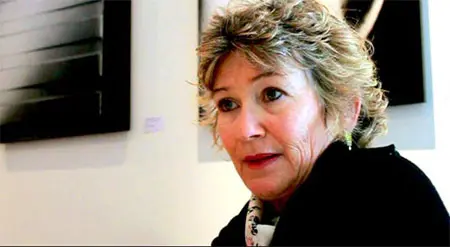
Amid mediatic imaginaries that speak of resuscitated mummies and old messiahs coming back from the dead, we learn of Virginia Pérez-Ratton's untimely death. She was a vibrant artist who left us at the peak of her youthful maturity. It is difficult to speak in the past tense when referring to this essential woman who was always moving forward and constantly proposing transformative projects, as she was a woman of the future. This curator, artist, and cultural activist became the main agent of transformation in the artistic scene of the last fifteen years in Central America. The significance of the movement she headed transcends regions and embraces a paradigm of artistic and cultural dynamics only plausible in the context of globalization. Pérez-Ratton was not only crucial in pushing and organizing such process, but she also steered it in the right direction. From the time she inaugurated the Museo de Arte y Diseño Contemporáneo in San José, Costa Rica, she followed three intertwined directions: local, regional, and global. Under her directorship the Museum became an aggressive and multifaceted institution and a model for the projection of a museum in ¿peripheral¿ contexts. But her energy reached beyond the institutional framework. Her dedication to art was a full time job that required the entirety of her being. Devotion is the best adjective to describe her work, as she spent a lifetime dedicated to supporting art. To such extent that her own artistic career was put on hold while she helped others artists develop their works. After leaving the museum she founded Ars TEOR/éTIca in 1999, a small non-profit art space in San José. This institution quickly became an essential place to promote and study Central American Art, both regionally and globally. Pérez-Ratton created the only information center about Central American contemporary art, published catalogs and periodicals, and organized international exhibitions and conferences, educational programs, and many other activities directed at satisfying local needs but with an international focus. A great example of her efforts were the exhibitions she organized under the title Mesótica. Her crusade on behalf of contemporary art successfully confronted the traditional, nationalistic, conservative, and commercial modernism that prevailed in the region. Besides her institutional endeavors, a great part of Pérez-Ratton's contributions came from her work as a curator and independent cultural activist. The following anecdote underscores Virginia's famous and result-oriented ¿excesses:¿ when Harald Szeeman was organizing the 2001 Venice Biennale, Pérez-Ratton travelled all the way to the famous curator's home in Switzerland, and knocked on the door to ask him if he was planning to visit Central America in order to consider including proposals from that region. Needless to say that it never crossed Szeeman's mind. But Virginia talked him into traveling to San José, and so off he went to visit studios and see visual material by artists from the region. As result, several Central American artists participated for the first time in the main exhibition of the Biennale, and two of these artists were awarded prizes. Who will be knocking on doors now? Hopefully Virginia's endearing, intense, and inspirational ghost will come from beyond to shake us, to scare us into action from our comfortable predisposition to inaction and complaining.