Obituario19 de febrero de 2016
Alirio Oramas
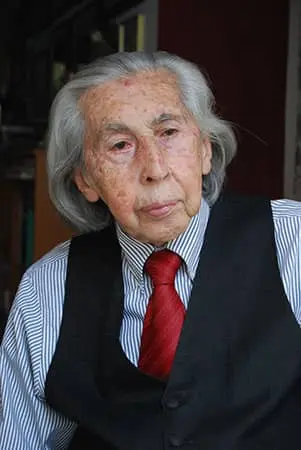
Alirio Oramas, a key figure in Venezuelan art of the second half of the Twentieth Century, died on January 3rd. Oramas leaves behind the fruits of an extensive and prolific career as an artist, teacher, and active member of workshops, groups, and projects that had significant resonance in art sphere. Alirio Oramas was born in Caracas on August 30, 1924. He studied painting at the Escuela de Artes Plásticas in his native city and attended La Grande Chaumière academy and the Abstract Art Studio in Paris; in the French capital he also studied art, archeology and museology at Louvre school, the Musée de L'homme, and the Musée National des Arts et Traditions Polpulaires. Later he worked as a restorer at the Museo de Barcelona (Spain), and in 1956 his work was exhibited at Galería Caralt in the Catalan city, alongside Canogar and Tápies. In a spirited avant-garde vein, Oramas took part in the foundation of the Taller Libre de Arte in Caracas, an essential platform for the emergence of new languages in Venezuelan art and a catalyst for the confluence of cubism, abstraction, and figurative modes. Most of the artists who would later come together in Paris as Los Disidentes—Oramas joined the group from Caracas in 1950—participated in the Taller. A year later, he received the National Arts Award for Cometas y Papagayos ("Kites and Parrots"), which evokes Oramas' childhood games in the streets of La Pastora. Between 1955 and 1957, Oramas participated in the arts-integration project in Caracas' University City, helmed by architect Carlos Raúl Villanueva, with five murals focused on color progression. Starting in 1964, he joined the faculty of the Cristóbal Rojas Art School, contributing to the education of younger generations of artists; in 1965 he established the Talleres Periféricos de Arte del Inciba, the El León de Oro Workshop, and, later, the expansionist movement (with Omar Carreño). In 1974, working with Lucila de Oramas, he established the Armando Reverón Museum (Macuto, State of Vargas), which he directed until 1977, significantly raising the presence of Reverón's work with his efforts. Alirio Oramas is known primarily as a representative of Venezuelan abstract art, yet we find in his oeuvre a variety of aesthetic languages exploring figurative expression, informalism, performance, and installation, lesser known aspects of his production that reveal an irreverent attitude, a distaste for creative stasis, and a sustained inner quest. He will be remembered as a keen researcher and one of the first Venezuelan artists to experiment with non-conventional forms. Oramas, who won the Arturo Michelena Prize in two consecutive years (1966 and 67), was a profound explorer of color in the pictorial plane, a deconstructor of the essence of form, and his fertile career situates him as a reference point in the development of modern art and modern cultural identity in Venezuela.