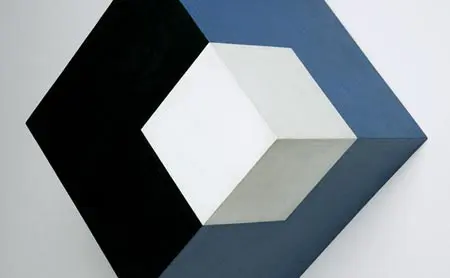
Willys de Castro
The Pinacoteca do Estado de São Paulo, presents until October 14, 2012 an exhibition by Willys de Castro, one of the most important Brazilian artists from the Concrete and Neo-Concrete movements that emerged during the 1950s and 1960s. With nearly 130 works, including paintings, drawings, objects, graphic design, studies and projects created between 1952 and 1988, the exhibition is based on 50 works from the Pinacoteca's collection.
Chronologically organized, the show begins with the work entitled Pintar los Ángeles (To Paint the Angels, 1952), sketches of this painting and other works on paper from the same period that serve to contextualize later works by Castro, as geometrical figures disintegrate into abstract compositions ruled by planes of colors. Also included in the show are works from 1956 and 1957 that consist of a series of paintings based on rigorous mathematical principles. Here, the repetition of structures formed by the combination of certain geometrical forms, sometimes result in increasing progressions that generate intense centrifugal movements, or in soft rhythms that make reference to musical cadences. In these works Castro works with common elements and specific problems that are specific to each proposal: pure colors, geometric forms, optical and kinetic effects, and the influences of graphic design.