ExhibitionApril 8, 2020
Vida Americana: Mexican Muralists Remake American Art, 1925–1945 at Whitney Museum
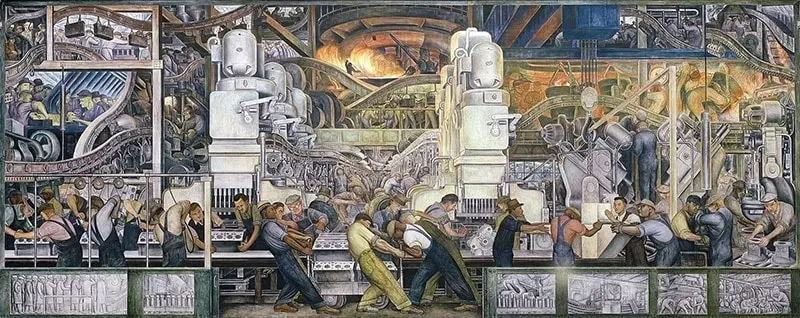
The exhibition features nearly 200 works by sixty Mexican and American artists. The curatorship seeks to demonstrate the impact that Mexican muralism had in the United States, creating works that highlight the history and daily life as well as a protest against economic, political, and racial injustices in the United States.
In 1920 in Mexico, a fragile peace emerged at the end of the Revolution, which created a cultural change between art and the public; these new artistic practices created the space for the representation of national identity, occupations, and common people, as well as a criticism of social injustices. This artistic movement allowed a liberation in the United States from the traditional European movements; it was described in various publications such as The Nation, New Masses, and Creative Art. As journalists traveled, many American artists spent time in Mexico. However, the most significant impact of Mexican muralism towards the United States occurred between 1927 and 1940 when the leading Mexican muralists, José Clemente Orozco, Diego Rivera, and David Alfaro Siqueiros, spent extended periods of time in the United States, making murals, paintings, and engravings, as well as exhibiting their work and interacting with the local art scene.
The exhibition was organized by Barbara Haskell, curator, with Marcela Guerrero, assistant curator; Sarah Humphreville, senior curatorial assistant; and Alana Hernández, former assistant curatorial projects.
In 1920 in Mexico, a fragile peace emerged at the end of the Revolution, which created a cultural change between art and the public; these new artistic practices created the space for the representation of national identity, occupations, and common people, as well as a criticism of social injustices. This artistic movement allowed a liberation in the United States from the traditional European movements; it was described in various publications such as The Nation, New Masses, and Creative Art. As journalists traveled, many American artists spent time in Mexico. However, the most significant impact of Mexican muralism towards the United States occurred between 1927 and 1940 when the leading Mexican muralists, José Clemente Orozco, Diego Rivera, and David Alfaro Siqueiros, spent extended periods of time in the United States, making murals, paintings, and engravings, as well as exhibiting their work and interacting with the local art scene.
The exhibition was organized by Barbara Haskell, curator, with Marcela Guerrero, assistant curator; Sarah Humphreville, senior curatorial assistant; and Alana Hernández, former assistant curatorial projects.