ExhibitionJune 27, 2017
"Verboamerica"
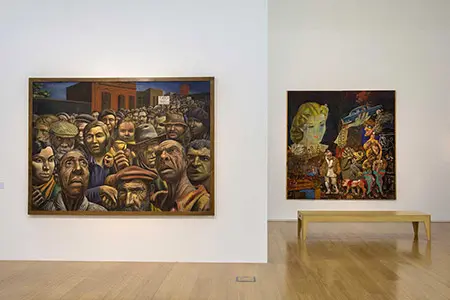
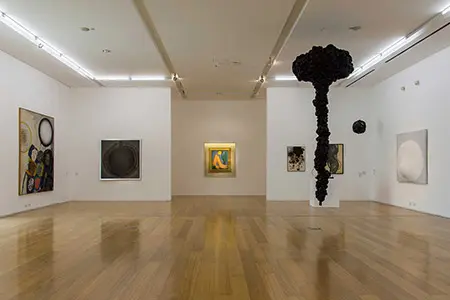
The Museo de Arte Latinoamericano de Buenos Aires (MALBA) turns 15. To mark the event, historian and researcher Andrea Giunta, along with Agustín Pérez-Rubio, the museum's artistic director, have proposed a rereading of the permanent collection. The exhibition titled "Verboamerica" is the result of a research project of more than two years centered on the construction of a postcolonial history that views Latin American art not as the product of an adaptation of western conceptualizations but rather as a singular aesthetic program that is very much its own. In order to materialize this concept, the exhibition is divided in different thematic sections: Maps, Geopolitics, Power; City, Modernity, Abstraction; Learned City, Violent City, Imagined City; Work, Multitude, Resistance; Countryside, Periphery; Bodies, Affections, Emancipation; and, Indigenous America, Black America. "Verboamerica" proposes a new way of approaching the museum's collection through 170 artworks from different historic periods, without following a chronological or stylistic order, and showcasing works by artists like Tarsila do Amaral, Frida Kahlo, Liliana Maresca, and Las Yeguas del Apocalipsis. This political and critical reading that confronts the Eurocentric art history model, includes paintings, drawings, photographs, videos, books, historical documents, and installations that gravitate towards key ideas like anthropophagy, Indigenism, blackness, Neo-Concrete Art, MADI, Constructive Universalism, and Muralism. The project is accompanied by a catalog, in Spanish and English, and by a revised glossary of terms.
Gallery