Art NotesJuly 27, 2016
Variations on a Mexican Theme
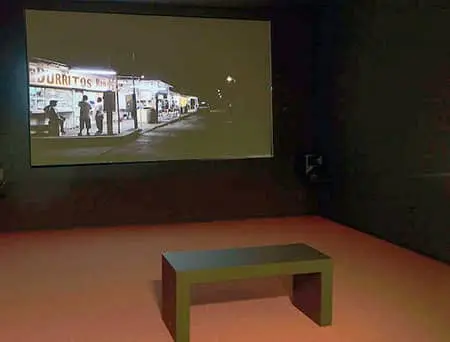
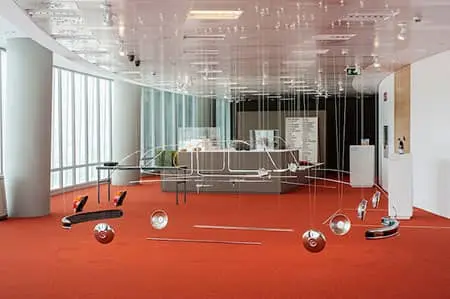
An artist in his own right, Guillermo Paneque, curator of this exhibition, stands out from most contemporary curators who, more often than not, are also art critics, art historians or experts on the organization and mounting of exhibitions. This detail is important because it defines the nature of this group exhibition organized at the exhibition space in the headquarters of Iberdrola—a skyscraper designed by Argentine architect César Pelli—located next to the Guggenheim Museum in Bilbao, Spain. Paneque did not pretend to represent any artistic school or trend, or offer an exhibition that encapsulates an important period or context in the history of Mexican art. Instead he simply offered a very personal take on Mexican art and culture that is reflected in the title chosen for the exhibition. And Paneque does offer "variations" on a theme that is as wide-ranging and extensive as Mexico itself, a country but also an "obscure object of desire" —to use the title of one of Luis Buñuel's finest movies—that has attracted the soviet gaze of Sergei Eisenstein, of surrealists Antonin Artaud, André Breton and Leonora Carrington, and of constructivist Josef Albers, to mention a few prominent creators that felt a fascination for the Aztec country. Paneque's approach to Mexico reflects the gaze of a postmodern artist that, by not distinguishing between historic periods, schools, or trends, is able to present in the same exhibition space pre-Columbian sculptures from the Museo Nacional de Arte in Mexico City, books by European naturalists and travelers, anonymous photographs depicting country or urban scenes; fossils, traditional handicrafts, as well as works by the Mexican muralists and by modern and contemporary artists. And films are also represented through quotes, documentaries and movies by filmmakers like the aforementioned Luis Buñuel, Gabriel Figueroa, Alfredo Robert, and Carlos Reygadas. And the exhibition is not limited to works by Mexican artists. It also includes paintings by Spanish Ignacio Zuloaga, Austrian Arnulf Rainer, and Canadian Alan Glass; photographs by Italian Tin Modottil, a video by Belgian Julien Devaux and an expanded field painting by her conational Francis Alÿs, among others. Paneque organized this heterogeneous group of works by dividing the exhibition into the following chapters; The restless Gaze, Journeys, About to Occur, Rites, Fossils, Double Bottom Boxes, The Redeemed Object, Like a Painting We will Gradually Fade, and Epilogue. The show achieves prominent points of intensity with the videos by Edgardo Aragón, Joachim Koester, and Chantal Peñalosa, a video installation by Teresa Margolles and one of the already classic sculptures by Damián Ortega consisting of a deconstructed Volkswagen Bettle: Fantasma (Ghost). The catalog of the exhibition is a book titled México, Ensayo de un Mito (Mexico, Essay of a Myth). The essays by eighteen intellectuals are dedicated to exploring and dissecting that living myth.
Gallery