Book ReviewsMarch 24, 2023· By Francine Birbragher-Rozencwaig PHD
Une passion mélancolique selon Frida Kahlo
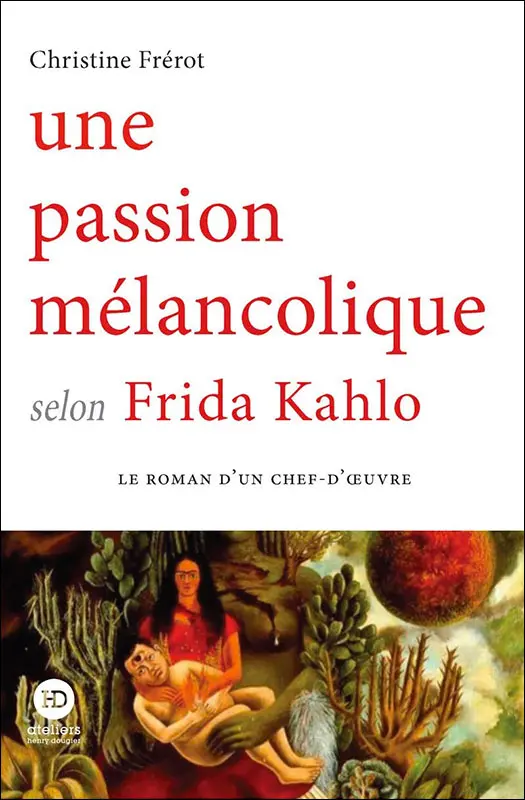
The book Une passion mélancolique selon Frida Kahlo written by Cristine Frérot, is part of the series "Le roman d'un chef-d'œuvre” from the publisher Ateliers Henry Dougier, Paris, which presents masterpieces of art history in the form of a novel. In this case, Frérot combines the romantic narrative and her knowledge of Mexican art in a text that presents the life and work of the iconic Frida.
Based on the description and analysis of one of her most complex paintings, The Love Embrace of the Universe, the Earth (Mexico), Myself, Diego, and Mr. Xólotl, 1949, the author, personifying Diego Rivera, tells the story of the artist in short chapters without necessarily following a chronological order.
By way of introduction, Diego (Frérot) describes the main elements represented in the painting: Frida dressed in a red Tehuana dress, holding in her arms a Diego with the body of a baby and the head of an adult, Mexico with its tropical vegetation and its pre-Columbian art and one of her dogs, Mr. Xolotl. Diego also makes a detailed analysis of the composition and the complex symbolism linked to the artist's life and her relationship with Mexican land and culture. The artist compiles in this image the different themes that she represents in her pictorial work: her relationship with Diego, love, betrayal, her passion for Mexico, her interest in its pre-Columbian past, and the difficulties and suffering she experienced throughout her life due to health problems.
In the second chapter, Diego briefly recounts his beginnings as a painter and how he met Frida. From then on, he narrates experiences, trips, and encounters with characters from the political and artistic spheres, which, in one way or another, marked their lives and the development of their pictorial works.
Lovingly, Diego explains how Frida was immobilized for several months due to an accident at a young age. For that reason, she began to write and paint. Citing the artist's diary and letters, he describes the beginnings of their relationship and the ups and downs they experienced throughout their lives. Diego shares with the reader details about the physical and emotional ailments that affected the artist, especially those related to his infidelities, and how these defined the intimate and autobiographical nature of her self-portraits.
Among the experiences that marked her significantly, he mentions the trip made by the couple to the United States in the 1930s, during which Frida suffered an abortion and multiple disappointments due to Diego's infidelities.
An essential chapter entitled "Frida, Trotsky, Breton: politics, romance, and manifesto" presents two fundamental themes. On the one hand, communism, with which Frida and Diego identify, and on the other, surrealism, with which Frida has been associated despite not considering herself a surrealist painter or identifying herself with the postulates of her manifesto.
Regarding Frida's professional development, Diego talks about her trips to the United States and France in the late 1930s. In New York, she presented a successful solo exhibition (1938). In Paris, invited by André Breton, she exhibited in a group show (1939) but received little recognition. More than a decade passed before she had her first solo show in Mexico (1953).
There was great love and mutual admiration between Diego and Frida despite the multiple separations and infidelities on the part of both. Frida's work is essentially autobiographical and intimate, while Diego's is characterized by being mainly a historical testimony of political and social struggles. Both shared the love for the indigenous world, pre-Columbian and popular art, represented in many of their works.
In the end, Diego (Frérot) analyzes the pictorial representation that one makes of the other. The muralist includes Frida's portrait in several of his murals, representing her as a fighter, an independent woman, and an artist who, with palette in hand, is part of Mexico’s history. Frida represents him in different ways depending on the state of their relationship. She begins with the painting that immortalized them as a couple entitled Frida and Diego Rivera (1931) and ends with The Love Embrace of the Universe… (1949), in which she appears as a maternal figure embracing Diego, who always, in one way or another, occupies the center of her constellation.
The book ends with a brief postscript that mentions the donation Diego Rivera made to the Mexican people after Frida’s death in 1954, which included his collection of pre-Columbian objects and the Blue House in Coyoacán, where she lived. The publication also includes an appendix with quotes from various authors related to The Love Embrace of the Universe… (1949), a chronology of the artist's life, a short bibliography, and a list of Frida Kahlo's works mentioned in the text.
Based on the description and analysis of one of her most complex paintings, The Love Embrace of the Universe, the Earth (Mexico), Myself, Diego, and Mr. Xólotl, 1949, the author, personifying Diego Rivera, tells the story of the artist in short chapters without necessarily following a chronological order.
By way of introduction, Diego (Frérot) describes the main elements represented in the painting: Frida dressed in a red Tehuana dress, holding in her arms a Diego with the body of a baby and the head of an adult, Mexico with its tropical vegetation and its pre-Columbian art and one of her dogs, Mr. Xolotl. Diego also makes a detailed analysis of the composition and the complex symbolism linked to the artist's life and her relationship with Mexican land and culture. The artist compiles in this image the different themes that she represents in her pictorial work: her relationship with Diego, love, betrayal, her passion for Mexico, her interest in its pre-Columbian past, and the difficulties and suffering she experienced throughout her life due to health problems.
In the second chapter, Diego briefly recounts his beginnings as a painter and how he met Frida. From then on, he narrates experiences, trips, and encounters with characters from the political and artistic spheres, which, in one way or another, marked their lives and the development of their pictorial works.
Lovingly, Diego explains how Frida was immobilized for several months due to an accident at a young age. For that reason, she began to write and paint. Citing the artist's diary and letters, he describes the beginnings of their relationship and the ups and downs they experienced throughout their lives. Diego shares with the reader details about the physical and emotional ailments that affected the artist, especially those related to his infidelities, and how these defined the intimate and autobiographical nature of her self-portraits.
Among the experiences that marked her significantly, he mentions the trip made by the couple to the United States in the 1930s, during which Frida suffered an abortion and multiple disappointments due to Diego's infidelities.
An essential chapter entitled "Frida, Trotsky, Breton: politics, romance, and manifesto" presents two fundamental themes. On the one hand, communism, with which Frida and Diego identify, and on the other, surrealism, with which Frida has been associated despite not considering herself a surrealist painter or identifying herself with the postulates of her manifesto.
Regarding Frida's professional development, Diego talks about her trips to the United States and France in the late 1930s. In New York, she presented a successful solo exhibition (1938). In Paris, invited by André Breton, she exhibited in a group show (1939) but received little recognition. More than a decade passed before she had her first solo show in Mexico (1953).
There was great love and mutual admiration between Diego and Frida despite the multiple separations and infidelities on the part of both. Frida's work is essentially autobiographical and intimate, while Diego's is characterized by being mainly a historical testimony of political and social struggles. Both shared the love for the indigenous world, pre-Columbian and popular art, represented in many of their works.
In the end, Diego (Frérot) analyzes the pictorial representation that one makes of the other. The muralist includes Frida's portrait in several of his murals, representing her as a fighter, an independent woman, and an artist who, with palette in hand, is part of Mexico’s history. Frida represents him in different ways depending on the state of their relationship. She begins with the painting that immortalized them as a couple entitled Frida and Diego Rivera (1931) and ends with The Love Embrace of the Universe… (1949), in which she appears as a maternal figure embracing Diego, who always, in one way or another, occupies the center of her constellation.
The book ends with a brief postscript that mentions the donation Diego Rivera made to the Mexican people after Frida’s death in 1954, which included his collection of pre-Columbian objects and the Blue House in Coyoacán, where she lived. The publication also includes an appendix with quotes from various authors related to The Love Embrace of the Universe… (1949), a chronology of the artist's life, a short bibliography, and a list of Frida Kahlo's works mentioned in the text.