AnniversarySeptember 17, 2021
30 years Museo Torres García
In 2021, the Museo Torres García turns 30 years old; during these decades, the institution has established itself as a key player in the culture of Uruguay. For the celebration, it launched a microsite that reflects the institution's main lines of work, management, and contents from its beginnings until today.
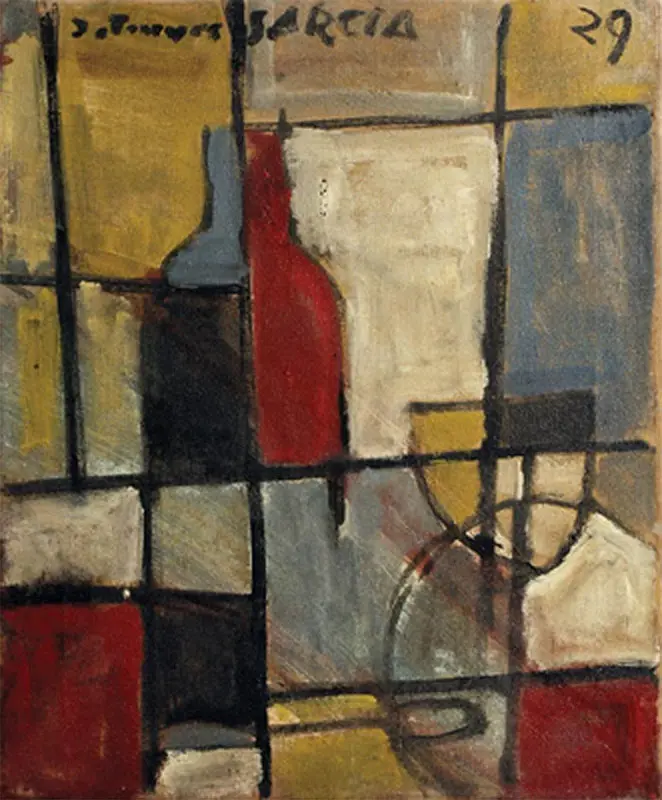
On the microsite http://www.torresgarcia.org.uy/aniversario/ "Aniversario 30 años" visitors can find archival images of the history of the Museum and its creation, images of the artist's works and manuscripts, as well as information on the legacy of Joaquín Torres García (1874-1949), the Museum's mission, vision, and values.
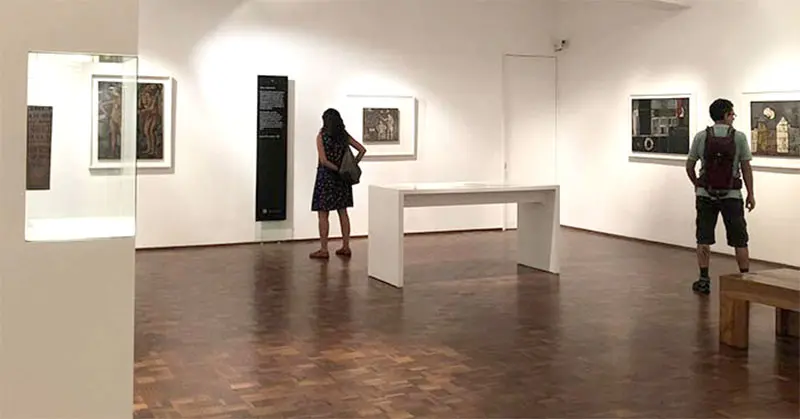
The Museo Torres García presents the artist's family's interest in sharing the artist's legacy with the community. The institution depends on the Fundación Joaquín Torres García, a non-profit civil organization founded on November 26, 1986, by Manolita Piña de Torres García (the artist's widow, 1883-1994), to preserve and disseminate the artist's work. The Museum is in the historic center of Montevideo, on the Sarandí pedestrian street. Its seven floors exhibit different facets of the artist's work and intellectual production and temporary exhibitions of national and foreign artists. Since its foundation, the Museo Torres García has become a significant art center and pedagogical instrument to research arts and culture through exhibitions, publications, didactic, cultural, and tourist activities. The building was ceded in usufruct by the Ministry of Education and Culture of Uruguay and was adapted for the installation of the Museum in 1991. The building is a representation of Art Nouveau and was originally built for the famous bazaar, Broqua, and Sholberg.
The history of the Torres García Museum began after the death of Joaquín Torres García in 1949, when his family and friends, led by Manolita Piña, decided to create a museum that would contain the master's legacy, both works, and documents.
The first Museo Torres Garcia opened on July 28, 1955, the anniversary of Torres Garcia's birth. The Museum was moved and reopened several times due to the hesitant support of the official authorities. In 1973, when the civic-military dictatorship was installed, the MTG was practically expelled from the Ateneo in Montevideo, where it operated, and this first stage ended. With the return to democracy, the current Fundación Torres García was set up, presided over by Manolita Piña, who signed an agreement with the Ministry of Education and Culture, with the decisive role played by the then Minister, Dr. Adela Reta. Manolita Piña was supported and helped by her children Olimpia, Augusto, and Ifigenia, and agreements were signed with the Uruguayan state and the Generalitat de Cataluña, which made possible the installation of the Torres García Museum, first in a space ceded by the UPAEP and from 1991 in its present location.
The Museum has focused on interactivity in its exhibitions to bring the public closer. It has also implemented the use of new technologies in its exhibition proposals, as in the case of the exhibition "Time to Look," in which augmented reality made it possible for visitors to visualize the works of Joaquín Torres García destroyed in the fire at the Museum of Modern Art in Rio de Janeiro in 1978, with the help of a mobile device.
The Torres García Museum conserves works (paintings, drawings, and watercolors) and 12,674 handwritten documents (letters, artist's books, and essays).
On the microsite http://www.torresgarcia.org.uy/aniversario/ "Aniversario 30 años" visitors can find archival images of the history of the Museum and its creation, images of the artist's works and manuscripts, as well as information on the legacy of Joaquín Torres García (1874-1949), the Museum's mission, vision, and values.
The Museo Torres García presents the artist's family's interest in sharing the artist's legacy with the community. The institution depends on the Fundación Joaquín Torres García, a non-profit civil organization founded on November 26, 1986, by Manolita Piña de Torres García (the artist's widow, 1883-1994), to preserve and disseminate the artist's work. The Museum is in the historic center of Montevideo, on the Sarandí pedestrian street. Its seven floors exhibit different facets of the artist's work and intellectual production and temporary exhibitions of national and foreign artists. Since its foundation, the Museo Torres García has become a significant art center and pedagogical instrument to research arts and culture through exhibitions, publications, didactic, cultural, and tourist activities. The building was ceded in usufruct by the Ministry of Education and Culture of Uruguay and was adapted for the installation of the Museum in 1991. The building is a representation of Art Nouveau and was originally built for the famous bazaar, Broqua, and Sholberg.
The history of the Torres García Museum began after the death of Joaquín Torres García in 1949, when his family and friends, led by Manolita Piña, decided to create a museum that would contain the master's legacy, both works, and documents.
The first Museo Torres Garcia opened on July 28, 1955, the anniversary of Torres Garcia's birth. The Museum was moved and reopened several times due to the hesitant support of the official authorities. In 1973, when the civic-military dictatorship was installed, the MTG was practically expelled from the Ateneo in Montevideo, where it operated, and this first stage ended. With the return to democracy, the current Fundación Torres García was set up, presided over by Manolita Piña, who signed an agreement with the Ministry of Education and Culture, with the decisive role played by the then Minister, Dr. Adela Reta. Manolita Piña was supported and helped by her children Olimpia, Augusto, and Ifigenia, and agreements were signed with the Uruguayan state and the Generalitat de Cataluña, which made possible the installation of the Torres García Museum, first in a space ceded by the UPAEP and from 1991 in its present location.
The Museum has focused on interactivity in its exhibitions to bring the public closer. It has also implemented the use of new technologies in its exhibition proposals, as in the case of the exhibition "Time to Look," in which augmented reality made it possible for visitors to visualize the works of Joaquín Torres García destroyed in the fire at the Museum of Modern Art in Rio de Janeiro in 1978, with the help of a mobile device.
The Torres García Museum conserves works (paintings, drawings, and watercolors) and 12,674 handwritten documents (letters, artist's books, and essays).
Gallery