ObituaryMarch 10, 2017
Sofía Imber
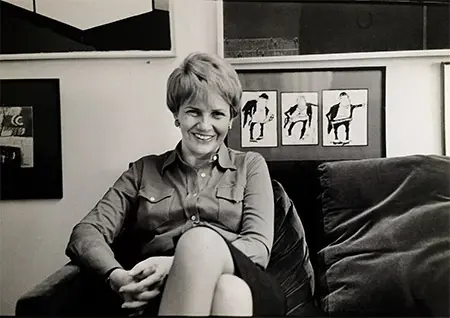
The decisive participation of Sofía Imber in the development of the journalism, art criticism, and cultural institutions of Venezuela made her one of the most influential figures in the contemporary history of the country and Latin America. With an attractive personality, a one-of-a-kind controversial style, radical and exemplary commitment to her work and critical sharpness when it came to the interpretation of creative and social processes, Imber spearheaded the transformations necessary to elevate the Venezuelan museums to a level of quality marked by the excellence in the development of collections and communicational and educational activities. Sofía Imber was born in Soroca, Romania, in 1924. The family soon moved to Venezuela to flee the wars. She began practicing journalism from an early age alongside her first husband Guillermo Meneses. While living in Europe during the 1950s, they participated in the promotion of modernity in art and literature. Imber facilitated the relationships between artists like Fernand Léger and Víctor Vasarely with architect Carlos Raúl Villanueva, who by then had already begun his project for the University City of Caracas. Back in Venezuela, Imber and Meneses, alongside designer Nedo MF and with the sponsorship of businessman Hans Neumann, created the CAL (Criticism, Art, Literature) magazine, which conjugated the "last literary and artistic vanguard" in Venezuela in its highest aesthetic form. CAL is legendary; it generated a field of experimentation for graphic design, established new canons for approaching modern art, and disseminated creative freedom and ideas in depth. It represented a complete experience of integration of the arts and thought. During the beginning of the 1970s, with her second husband, writer Carlos Rangel, Imber began another project that would revolutionize the concept of opinion programs in television. It was the Buenos Días [Good Morning] program, which was unprecedented for its agile and incisive way of approaching interviews. During the period that it aired, Buenos Días greatly contributed to the consolidation of the debate of ideas. It included the participation of presidents, Nobel prize winners, philosophers, artists, politicians, and writers like Jorge Luis Borges, Mario Vargas-Llosa, and Octavio Paz. In 1972 Imber began the process of her main institutional creation: the Museo de Arte Contemporáneo in Caracas, inaugurated in 1974 and directed by her until 2001. The museum established a "before and after" in cultural management, streamlining bureaucratic processes through the figure of the Fundación de Estado, with which she promoted a model for excellence during her tenure—through the quality of the exhibitions organized, the collection developed, and her communicating, innovating and integrating skills. At the same time Sofía Imber directed the cultural section of the periodical El Universal and built an effective platform for the promotion of her activities through the Buenos Días program. Through the cultural section of El Universal she opened a forum for the emerging voices in the art criticism of Venezuela that were heard there with freedom and in an environment that encouraged debate. The museum became the paradigm of an open museum, pioneering social programs of participation with communities. From the beginning, Imber decided to direct it "as a newspaper," a space for dialog in which art itself expanded her vision of the "contemporary," from perspectives that rejected labels and classifications and that included other disciplines like education, anthropology, literature and psychology. The high level of the exhibitions stood out and its 20th century art collection remains unmatched for the quality of its works and prominence of its ...