ExhibitionJune 9, 2025
Sandra Gamarra: Pinacoteca Migrante
The Ministry of Culture presents "Pinacoteca Migrante," an adaptation of Sandra Gamarra's project, curated by Agustín Pérez Rubio. This project was initially developed for the Spanish Pavilion at the 2024 Venice Biennale. The exhibition, organized by the Ministry of Culture, the Agencia Española de Cooperación Internacional para el Desarrollo (AECID), and Acción Cultural Española (AC/E), will be housed at the Biblioteca Nacional de España until September 14. This marks the first time a project presented at the Venice Biennale is being exhibited in Spain.
Gamarra's work critiques the museum as a hegemonic Western institution, one that has long presented its narratives as universal and universalizing. In "Pinacoteca Migrante," she critically examines the pictorial and museum traditions of Spain, focusing on a series of historical narratives that have been overlooked, particularly those concerning migrants—both human and non-human, including people, plants, and raw materials — that often endure forced journeys.
Based on extensive research of over 150 paintings and objects from Spanish collections and museums spanning the Empire to the Enlightenment, the project highlights the absence of non-hegemonic narratives and exposes the biases inherent in the representations of colonizers and the oppressed in museums.
"Pinacoteca Migrante" aims to establish a model that updates protocols surrounding accessibility, diversity, and sustainability within institutions. It seeks to dismantle the structures that uphold hegemonic hierarchies rooted in colonialism while proposing an institutional approach that addresses contemporary issues related to racism, sexism, migration, and extractivism.
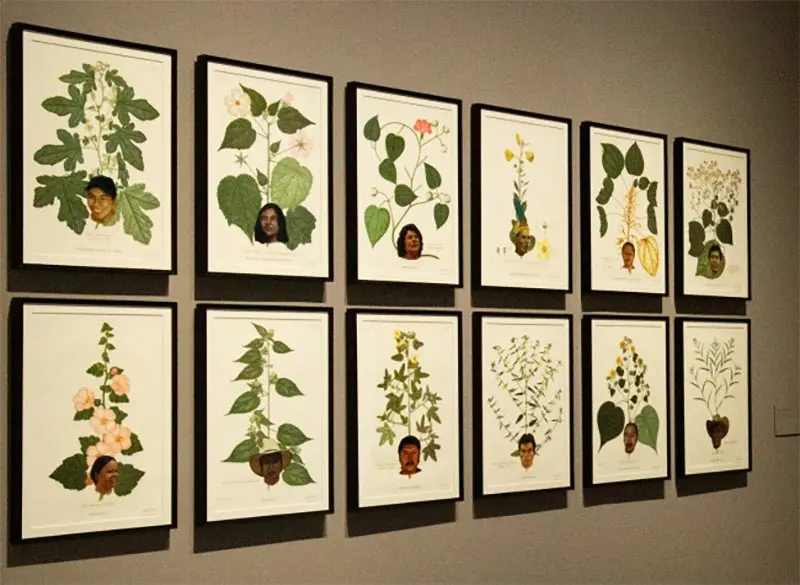
The Biblioteca Nacional de España was transformed into a museum for this project, featuring six rooms and a garden. The first gallery, titled 'Tierra Virgen' (Virgin Soil), explores paintings of Spanish landscapes and former colonies in Latin America, the Philippines, and North Africa, linking them to current ecocides. Next is the 'Gabinete de la extinción' (Cabinet of Extinction), which connects colonialism to extractivism by showcasing the "treasures" gathered by European botanical expeditions during the 18th and 19th centuries.
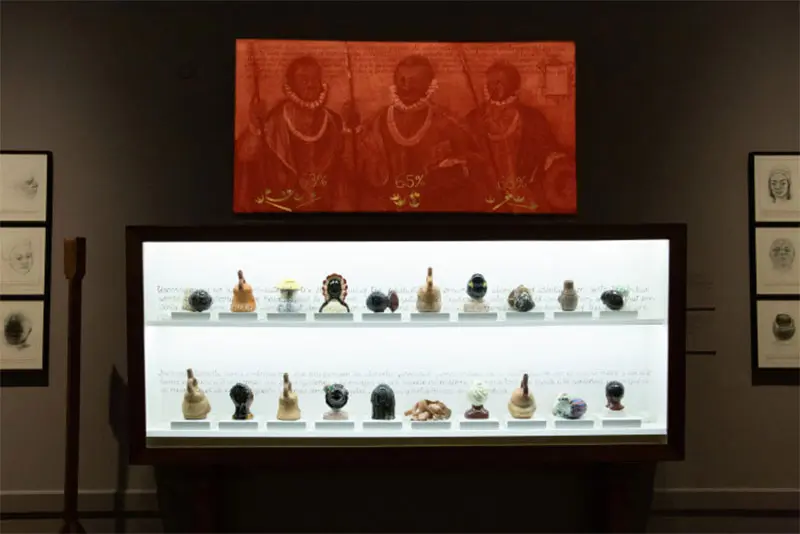
The 'Gabinete del Racismo Ilustrado' (Cabinet of Enlightened Racism) then details how anthropology and science were exploited as tools for racial discrimination. The gallery, 'Máscaras Mestizas' (Mestiza Masks), delves into colonial portraiture practices that reinforce political and social norms, revealing how societies accept or marginalize their subjects.
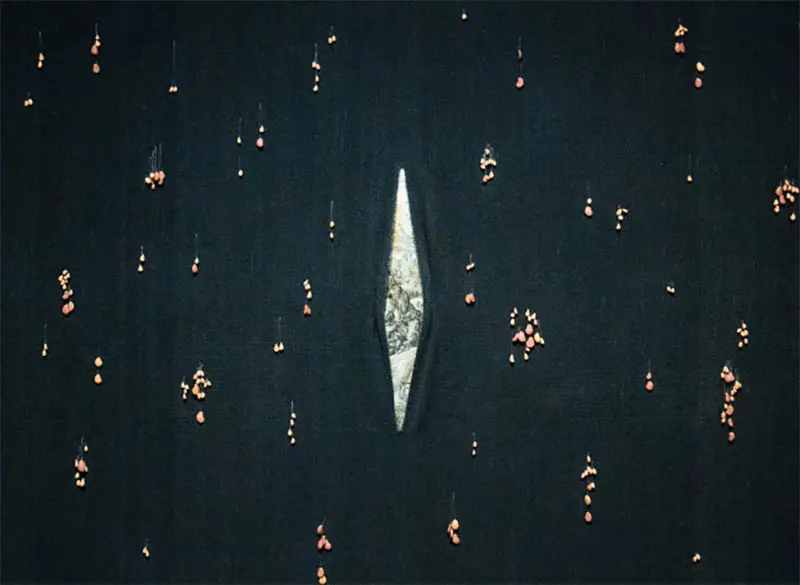
The final room, 'Retablo de la Naturaleza Moribunda' (Altarpiece of Dying Nature), associates still-life painting with the construction of opulence and wealth. In the center of the exhibition, an area simulating an outdoor space is presented as the 'Jardín Migrante' (Migrant Garden). This garden is filled with painted replicas of monuments and representations of allochthonous or invasive plants, accompanied by decolonial readings that contextualize these guests.
The exhibition at the Biblioteca Nacional de España presents an adaptation to the space, so it does not include all the works; however, it maintains its essence and critical discourse.
Gamarra's work critiques the museum as a hegemonic Western institution, one that has long presented its narratives as universal and universalizing. In "Pinacoteca Migrante," she critically examines the pictorial and museum traditions of Spain, focusing on a series of historical narratives that have been overlooked, particularly those concerning migrants—both human and non-human, including people, plants, and raw materials — that often endure forced journeys.
Based on extensive research of over 150 paintings and objects from Spanish collections and museums spanning the Empire to the Enlightenment, the project highlights the absence of non-hegemonic narratives and exposes the biases inherent in the representations of colonizers and the oppressed in museums.
"Pinacoteca Migrante" aims to establish a model that updates protocols surrounding accessibility, diversity, and sustainability within institutions. It seeks to dismantle the structures that uphold hegemonic hierarchies rooted in colonialism while proposing an institutional approach that addresses contemporary issues related to racism, sexism, migration, and extractivism.
The Biblioteca Nacional de España was transformed into a museum for this project, featuring six rooms and a garden. The first gallery, titled 'Tierra Virgen' (Virgin Soil), explores paintings of Spanish landscapes and former colonies in Latin America, the Philippines, and North Africa, linking them to current ecocides. Next is the 'Gabinete de la extinción' (Cabinet of Extinction), which connects colonialism to extractivism by showcasing the "treasures" gathered by European botanical expeditions during the 18th and 19th centuries.
The 'Gabinete del Racismo Ilustrado' (Cabinet of Enlightened Racism) then details how anthropology and science were exploited as tools for racial discrimination. The gallery, 'Máscaras Mestizas' (Mestiza Masks), delves into colonial portraiture practices that reinforce political and social norms, revealing how societies accept or marginalize their subjects.
The final room, 'Retablo de la Naturaleza Moribunda' (Altarpiece of Dying Nature), associates still-life painting with the construction of opulence and wealth. In the center of the exhibition, an area simulating an outdoor space is presented as the 'Jardín Migrante' (Migrant Garden). This garden is filled with painted replicas of monuments and representations of allochthonous or invasive plants, accompanied by decolonial readings that contextualize these guests.
The exhibition at the Biblioteca Nacional de España presents an adaptation to the space, so it does not include all the works; however, it maintains its essence and critical discourse.
Gallery