ObituaryJune 23, 2016
Rómulo Macciò
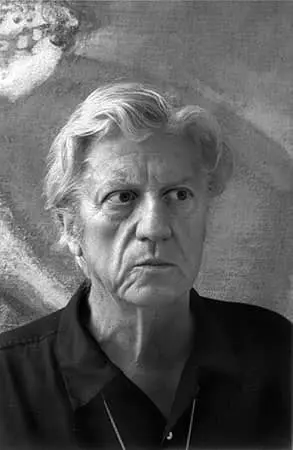
Do we need to put words to painting? Definitely no. In the spirit of Rómulo Macciò (Buenos Aires, 1931-2016), painting is a wordless craft. It requires no explanation; it is not said but shown, he believed. Yet Macciò's career can be put in words—a career that was actively and engagedly devoted. He formulated new articulations in a sensitive, deep dialog with the painting of his era, as well as of the past. He can be said to have been one of the key figures in Latin American art. A self-taught painter, Macciò worked since the age of 14 in advertising and graphic design. In 1956, at 25, he presented his first solo exhibition, at Galatea gallery. A year later he joined the group of Seven Abstract Painters alongside Osvaldo Borda, Víctor Chab, Josefina Robirosa, Martha Peluffo, Kazuya Sakai, and Clorindo Testa. They were intent on producing abstract art that was spontaneous and "warm." Later, in 1958, Macciò was part of the Boa group, with Clorindo Testa and Rogelio Polesello, which advocated for the Bretonian postulates of "gestural automatism." Yet the seeds of his definitive success came in 1961, when he joined Luis Felipe Noé, Jorge de la Vega, and Ernesto Deira in organizing the Other Figuration exhibition; he presented a number of other shows with them through 1965. Their goal was not the establishment of a school or movement, but, as Macciò explained, "a youth revolt against rose-colored painting. We were decidedly against all aestheticism." They represented a renewal that broke the boundary between abstract and figurative painting, giving new pride of place to chaos and the human figure with the gesture of their informalist contemporaries. Macciò differentiated himself in the group by his use of a more graphic language. Thanks to his work experience in graphic design, the clarity and the capacity for synthesis that his work acquired gave forceful meaning to the image, as did his work with rarefied spaces that interrupt and cancel each other out. To the visceral brushstroke, the blotch, and the arbitrariness of color he added the human figure, but not along the lines of the traditional canon. It is a broken, fragmented outline, treated with ferocious gesturality that traverses the works like a howl. But, far from encapsulating himself in a given formula, Macciò knew how to reinvent himself: he has a unique voice that always worked in freedom. The 1960s were a key decade in Macciò's success, establishing his global presence. He took part in international exhibitions, among them the Paris Biennial (1961 and 1963), the São Paulo Biennial (1963 and 1985), and Venice (1968 and 1988). He won numerous honors, including the Torcuato Di Tella International Prize, the Grand Honor Prize at the LVII National Fine Arts Salon, and the Guggenheim fellowship. His works are in the collections of such prestigious institutions as the Guggenheim Museum in New York City, the Musée d'Art Moderne in Paris, and the Reina Sofía in Madrid, among others. Macciò transcended local boundaries and lived in Paris, London, New York, Madrid, and Buenos Aires, cities that were all incorporated into his work. Yet, he always returned to his native country, to the Buenos Aires neighborhood of La Boca where he had his studio, because, as he said on several occasions, he was bound to its Italian-immigrant roots and its "working-class climate." He was one of he artists who worked on the murals for the local soccer team Boca Juniors' stadium, and, in the tradition of Quinquela Martín, he painted the river, the barges, and the abandoned hulls of the local landscape from a unique point of view. In a 1975 interview published in ...