ObituaryMay 19, 2008
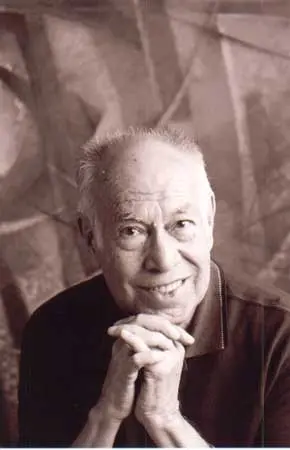
Roberto González-Goyri
Roberto González-Goyri¿s contribution to Guatemalan, Central-American, and Latin-American art can be measured perfectly from several points of view: First, for his research in the field of the Pre-Hispanic culture of his country; as did his compatriot Carlos Mérida, Goyri extracted from this culture an immense iconographic wealth and assimilated it into his art, sensitivity, and talent, to contribute to the development of a nationalist artistic expression with a universal sense, and second , for his prolific artistic endeavor that included painting, sculpture, stained glass, printmaking, drawing, teaching, and even stage design. As a privileged witness to historical moments in Guatemalan culture, he left behind ¿ for the history of art and other generations ¿ a body of work that at present is the point of reference in the art of this Central-American country. Together with Carlos Mérida, González-Goyri was the most important muralists to create works for public and private buildings in Guatemala, murals that observed, analyzed, and explored the essence of the Maya culture and extracted from it, as mentioned, not only a fundamental iconography, but also a cosmogonic universe that brought him closer to nature, to his countrymen¿s magical nature, and to the energy of a geographical area that remains mysterious. The Popol Vuh (The Maya book of creation) became for this artist a rich source of inspiration in his creative endeavor. This artist was passionate about his country and its pre-Columbian culture. Among the most important examples of his mural works are the following: La religión de Guatemala y sus Raíces Prehispánicas, Coloniales y Sincréticas Contemporáneas (Guatemalan Religion and its Contemporary Pre-Hispanic, Colonial and Syncretic Roots), an acrylic on canvas done in 1991 and exhibited at the National Museum of Archeology and Ethnology in Guatemala City; La Economía y su Relación con la Educación, la Industria, la Agricultura y la Cultura (The Economy and Its Relation with Education, Industry, Agriculture and Culture,, a work rendered on concrete, 1964 and located at the façade of the Banco Nacional de Crédito Hipotecario (National Mortgage Credit Bank), and a third noteworthy work, Untitled, a mural on concrete executed in 1964¿1965 and located at the western façade of the Bank of Guatemala. The artistic career of Roberto González-Goyri (November 20, 1924) initiated in 1938 when he began attending the National Academy of Fine Arts of Guatemala; at the same time, he worked in the workshop of José Pinto, a local artist educated in Italy and London. During this period of studies, he collaborated (1941) in the realization of stained glass work for the National Palace. Before ending his studies in Fine Arts, Roberto worked at the National Museum of Archeology as a pottery restorer and was also responsible for maintaining a registry and inventory of the museum¿s archeological pieces. This formative period, along with the time he spent in New York City, was central to the subsequent development of his artistic work. In the Big Apple, in addition to visits to museums, galleries, and art centers, González-Goyri ended up studying at the Art Students League, where his interest in developing his creative ability began, as he would affirm years later. A fortuitous encounter with Edgar Negret in that great Northeastern U.S. city became providential; this young Colombian sculptor, through his work and their visits to the Clay Club Sculpture Center, from 1948¿1950, would become a guide to Roberto: At this Center, both artists experimented with materials and new sculptural techniques. While working there with total freedom, both young men demonstrated interest in a planimetric and cubist visual composition of the space; this in turn, little by little, drew them closer to abstraction, although the Guatemalan artist never completely abandoned figuration. Indeed, González-Goyri was always loyal to the structural principle of connect...