ExhibitionSeptember 22, 2011
Ricardo Martínez
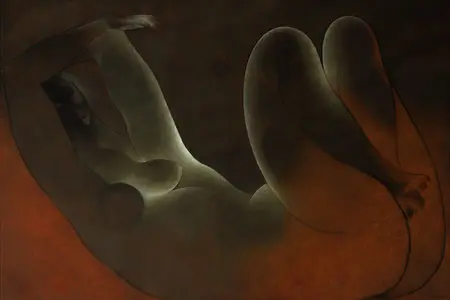
Occupying the entire recently renovated and spacious upper floor of the Museo de la Ciudad de México, the first posthumous retrospective of Ricardo Martínez (1918-2009) successfully conveys the special place his monumental and sensual stylization of the human figure has among the great masters of modern Mexican painting. Arranged in chronological order, the exhibition offers an interesting approximation to the vast artistic trajectory of this visual artist, including more than 110 works-from museums, foundations, and private collections-as well as a series of materials and objects that contextualize Martínez¿s artistic biography; noteworthy among these are pre-Columbian artifacts collected by the artist himself. The curatorial discourse conveys Martínez's relentless search for the construction of a language of his own. Such quest begins with markedly surrealist works like Cellista (Cellist, 1942) or San Jorge (Saint George, 1943), and continues with a singular approach to landscapes, as in Paisaje de Santa Rosa en Verde (Landscape of Santa Rosa in Green, 1947), Mujeres con Bueyes (Women with Oxen, 1953), or Los Elotes (Corn on the Cob, 1954); images populated with agaves, rocks, animals and characters devoid of detail or decorative elements. After walking through a section of the exhibition that reveals themes and interactions associated with the Mexican School of Painting, in works like Las Ollas (The Pots, 1953) or Juego de Niños (Child's Play, 1955), the exhibition curated by José Valtierra then addresses the period in which Martínez begins to paint larger works, such as Madre e Hijo (Mother and Child, 1960), Pareja (Couple, 1960), or Grupo de Mujeres (Group or Women, 1964)-images that depict stylized human figures greatly influenced by pre-Columbian art. Then there are Martinez's emblematic paintings like El Brujo (The Warlock, 1972), Hombre Hablando (Man Speaking, 1975), or Gran Venus (Grand Venus, 1979), in which colossal corporeal masses fill the pictorial surface with images bursting with color and bathed in extraordinarily iridescent light. This original visual language by the Mexican artist, rendered with an economy that borders on the minimal, reached even greater depths in the joyfully monumental anatomies created during the last decades of the Twentieth Century; in works like Gran Desnudo I (Grand Nude I, 1983), Gran Desnudo II (Grand Nude II, 1984); Figura con Fondo Azul (Figure with Blue Background, 1985); and Mujeres con Niño (Women with Child, 1996). The walk through the exhibition concludes with paintings created by Martínez during the first years of the Twenty-First Century. Noteworthy among these are: La Llorona (The Weeping Woman, 2004)¿in which the artist returns to the use of the motif of the howling dogs that is so recurrent in his iconography from the 1950s-and Sin Título (Hombre Sentado) (Untitled [Seated Man], 2009), a work Martínez finished three days before his death. This is how a retrospective simply titled Ricardo Martínez succeeds in transmitting-independent of nationalist, stylistic currents-the idea of a deeply rooted, singular poetic that turns corporeity into an archetype, a territory full of energy and magic, and into an artistic form of expression open to aesthetic enjoyment.

Gallery