ExhibitionDecember 20, 2011
Diego Rivera Retrospective at MoMA
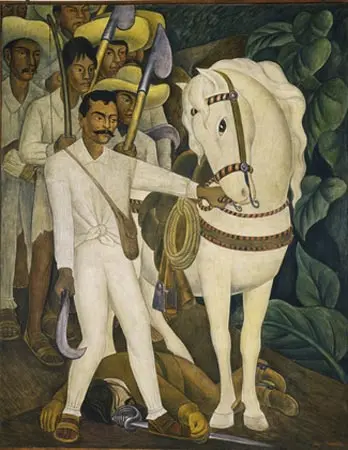
The Museum of Modern Art (MoMA) inaugurated in November a retrospective of the murals by Mexican artist Diego Rivera that will remain open to the public through May 14 of 2012. The exhibition does not solely showcase the eight site-specific murals created by Rivera in 1932, but also presents a selection of some of his most important works from the 1930s. There are large and small scale paintings, as well as information¿recently made available¿about the production and financing of Rivera¿s work and, specifically, of the artist¿s sketches for his controversial mural at the Rockefeller Center entitled Man at the Crossroads (1932-34). The exhibition pays special attention to the works created during his stay in New York as it also attempts to demonstrate the highly cosmopolitan nature of an artist who¿through art¿succeeded in generating a space that questions and explores the interaction between radical politics and the artistic trade during the 1930s. In 1932, the MoMA invited Rivera to come to New York and spend six weeks in the museum working to complete an exhibition of his famous murals. Given that the murals could not be transported, Rivera found an ingenious way to create a "portable" version of them¿frescoes painted on lime plaster and wood¿and completed five works that addressed themes that centered on social inequality and the Mexican Revolution. Because of the success of the exhibition, soon after the exhibition's opening Rivera added three more murals that centered on themes that dealt with the working class in New York and the city¿s social stratification during the Great Depression. Within the repertoire of these masterworks, it is possible to appreciate the Agrarian Leader Zapata from 1931. The MoMA celebrates the work and life of Diego Rivera with a retrospective based on the exhibition once presented in 1932. Although more than 80 years have gone by since Rivera created the New York murals, the exhibition at the MoMA brings back the past to life and even succeeds in inspiring the public to wonder if the past shown there is so different from the world in which we live today.