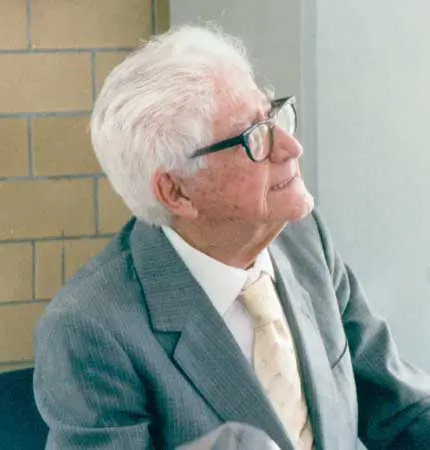
ObituaryMarch 29, 2006
Raúl Anguiano 1915-2006
Painter, engraver and muralist, he was one of the last exponents of the Mexican School of Painting, besides being the author of a prolific production throughout a trajectory that extended for more than seventy years. Founding member of the Popular Graphic Workshop (1937) and the Salon of Mexican Plastic (1949), Raul Anguiano shaped, through a figurative language inscribed in naturalist realism, Mexico¿s rural and indigenous world, recreating its environment and daily life, customs and traditions, joys and tragedies. Among his oil paintings are some of the emblematic works of Mexican painting of the 20th century, such as El hijo muerto (The dead son) (1943), and La espina (The Thorn) (1952), that belong to the Museum of Modern Art of Mexico. In the same way Anguiano¿s dexterity for drawing was evident in the trestle works where he approached portraits and feminine nudes in their vast and varied graphic production and in book illustration. A vigorous geometric construction and the reiterated exploration in the historical and social theme, culture, and sense of what is Mexican characterize the numerous murals that he painted in Mexico City, among which figure Represión porfirista and El fascismo destructor del hombre y la cultura (The destructive fascism of man and culture), 1936, in the Scholastic Revolution Centre; Sor Juana, Hidalgo y Cárdenas (Sister Juana, Hidalgo and Cardenas), 1979, in the Secretariat of Foreign Relations, and Trilogía de la nacionalidad (Nationality trilogy), 1988, in the Office of the Attorney General of the Republic. Among the murals that he produced in the present decade Preservación de la naturaleza (Preservation of Nature), in the Secretariat of the Environment and Natural Resources, Historia y leyenda de Coyoacán (The history and legend of the Coyoacan), in the Raúl Anguiano House of Culture, and La creación (The Creation), in the ITESM, in Mexico City, as well as Grandeza mexicana (Mexican Greatness), in the Brower Museum of Cultural Art, Los mayas (The Maya), in the Consul General of Mexico in Los Ángeles, and Biografía de la pintura mexicana (Biography of Mexican Painting), in East Los Angeles College, in the United States. Having participated in more than a hundred individual exhibitions and innumerable national and international collective shows, his works form part of private collections and prestigious museums in Mexico, the United States, Italy, Belgium, Poland, China and Argentina. Anguiano, who also carried out an important teaching role in the ambit of plastics, received diverse recognitions: the José Clemente Orozco Medal, from the Jalisco Congress, his State of birth, 1956; the Gold Medal from the Pan American Salon of Porto Alegre, Brazil, 1958; the Commander Grade Medal from the Italian Republic, 1977; the National Prize for Science and Arts, Mexico, 2000, and the Eduardo Neri Civic Merit Medal, from the Mexican Chamber of Deputies, 2005. Last year he paid tribute to the retrospective Raul Anguiano in graphic Arts (1915-2005), that was housed in the San Carlos National Museum of Mexico City. His work will also be present in several exhibitions during 2006, such as the mentioned Pintura mexicana al fin de siglo (Mexican Painting at the end of the Century), that will take place in China.