ExhibitionOctober 20, 2016
Nicola Costantino, Rapsodia inconclusa (Unfinished Rhapsody)
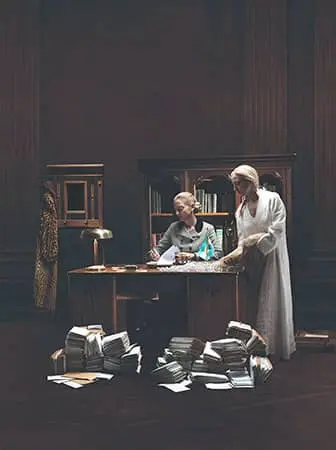
The Argentinean Pavilion at the 55th edition of the Biennale of Venice (2013) made news for non-artistic reasons. A tiny sign concentrated the gazes of journalists and spectators. "The curator and the artist believe that the space is too big for the work and that it can lead to its misinterpretation," read a graffiti created by Nicola Costantino and Fernando Farina. They were referring to the fifth and last station that, like the title of the exhibition, was directly commissioned by Argentinean president Cristina Kirchner. That final section of the exhibition presented three videos, one of them with images of La Cámpora, a political group close to Kirchner. The inclusion of politics in this Pavilion overshadowed the creation by Costantini, whose proposals reflected on the persona of Eva Perón through four stations respectively titled Eva. Los Sueños (Eva. Dreams), Eva. El Espejo (Eva. The Mirror), Eva. La Fuerza (Eva. Strength), and Eva. La Lluvia (Eva. Rain). And Costantini's approach was not literal, favorably or unfavorably. Instead, she was suggestive, emotional and metaphorical, as she favored an intimate look at the person, speculating about Perón's personal ups and downs, instead of addressing her public or political side. Three years later on the floors of the Museo Macro in Rosario, we are presented a reconstruction of the Venice exhibition (including the part commissioned by Kirchner) with all the information associated to the controversy that the 2013 show caused in the political scene. There is in the current multidisciplinary work by Costantini the same problem that occurred with the original exhibition: the controversy appears to be as important as the work, which here consists of video, installation, and a screening on a stage the recreates the world of Eva Perón. All of this is complemented by an interview with the artist. The exhibition is a good opportunity for Argentinean viewers to know about the work that represented Argentina at the Venice Biennial and to reflect on the injection of politics in art, the processing of the controversy in mass media and the subsequent exhibition of a unsuccessfully dissimulated scandal.