Distinctions & AppointmentsNovember 26, 2008
Prizes Awarded at the Visual Arts Biennial of the Central American Isthmus (BAVIC), Honduras
Prizes Awarded at the Visual Arts Biennial of the Central American Isthmus (BAVIC), Honduras
Nicaraguan artist Marcos Agudelo won the first prize of the Visual Arts Biennial of the Central American Isthmus (BAVIC, its Spanish acronym), which he received in the Honduran capital of Tegucigalpa. This Nicaraguan artist and architect was awarded for his video-installation entitled A la Tumba Perdida de Andrés Castro, los Héroes sin Tumba de Nicaragua (To the Lost Grave of Andrés Castro, the Lost Graveless Heroes of Nicaragua), a work that according to this artist ¿originates in the repetitive idea of manipulation of patriotic symbols by the government in power in Nicaragua, as well as in our indifference as a civil society toward the protection of our identity¿.
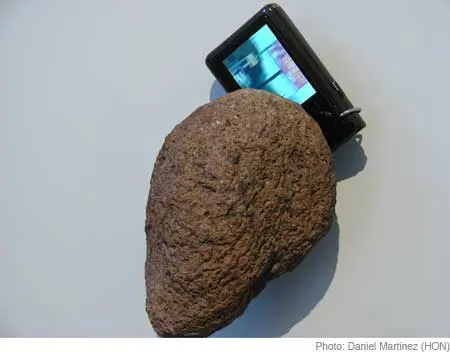
This winning work is a video on Nicaragua¿s history and political reality. It is displayed through a small MP4 player placed behind a stone that was dug from a grave. Marcos Argudelo referred to this work as ¿a clandestine monument to a graveless hero, and to so many other graveless heroes in Nicaragua, which is inspired in pre-Columbian burial rituals and in the idea that we are like the ceiba (like the renovated and constructive force of the tree), whose roots rest alongside stones¿. The artist added that ¿the grave is a reference to one of the most important heroes in Nicaragua, Andrés Castro, the man who defeated the filibusterers and William Walker during the National War¿. Agudelo, currently living in Barcelona where he is studying for a doctorate in architecture, said he wanted to dedicate the prize to Nicaraguan poet Ernesto Cardenal, an important internationally recognized figure with a well-known intellectual career.
Juanita Bermúdez, a coordinator of the Art Biennial for Nicaragua, affirmed that the work was well received on its artistic merits and because of the message it conveys.
The jury panel was made up of outstanding experts such as Félix Ángel, Julián Zugazagoitia, and Rodolfo Kronfle. They agreed that the work was ¿a piece that reverted conventions concerning public art displays and became an efficient way of rethinking history, and an anti-monument that simultaneously permitted in very poetic fashion, meditation on the current political landscape, as it easily transcended the specificity of the context from which it sprung to become a valid commentary of universal reach¿.
Agudelo¿s work was chosen from among 72 participating works from throughout Central America, which will be exhibited in the Honduran capital until February 20.
Other prize-winning works included:
Second Prize
Second prize went to Estéban Piedra from Costa Rica for his work entitled Estudio para la Deconstrucción de una Casa (Study on the Deconstruction of a House). This piece was chosen due to its sophisticated inquiry into an intimate poetic world, and for being a brilliant exception within the prevalent discursive delineations of the art of the region, of which many examples can be observed in this exhibit.
Third Prize
Guatemalan artist Verónica Riedel received Third Prize. Her work Tuk Tuk (Mototaxi Blindado) (Tuk-Tuk [Armored RickshawTaxi]) was recognized for its effective and ludic hybridization of a repertoire of aesthetics used for social criticism and to allude to the several phenomena that shape it.
Honorable Mention
The jury decided to award an Honorable Mention to Errol Barrantes from Costa Rica for his work En las Faldas del Virilla (At the Foot of the Virilla) from the series Soñar no Cuesta Nada (Dreaming Is Free).
Nicaraguan artist Marcos Agudelo won the first prize of the Visual Arts Biennial of the Central American Isthmus (BAVIC, its Spanish acronym), which he received in the Honduran capital of Tegucigalpa. This Nicaraguan artist and architect was awarded for his video-installation entitled A la Tumba Perdida de Andrés Castro, los Héroes sin Tumba de Nicaragua (To the Lost Grave of Andrés Castro, the Lost Graveless Heroes of Nicaragua), a work that according to this artist ¿originates in the repetitive idea of manipulation of patriotic symbols by the government in power in Nicaragua, as well as in our indifference as a civil society toward the protection of our identity¿.
This winning work is a video on Nicaragua¿s history and political reality. It is displayed through a small MP4 player placed behind a stone that was dug from a grave. Marcos Argudelo referred to this work as ¿a clandestine monument to a graveless hero, and to so many other graveless heroes in Nicaragua, which is inspired in pre-Columbian burial rituals and in the idea that we are like the ceiba (like the renovated and constructive force of the tree), whose roots rest alongside stones¿. The artist added that ¿the grave is a reference to one of the most important heroes in Nicaragua, Andrés Castro, the man who defeated the filibusterers and William Walker during the National War¿. Agudelo, currently living in Barcelona where he is studying for a doctorate in architecture, said he wanted to dedicate the prize to Nicaraguan poet Ernesto Cardenal, an important internationally recognized figure with a well-known intellectual career.
Juanita Bermúdez, a coordinator of the Art Biennial for Nicaragua, affirmed that the work was well received on its artistic merits and because of the message it conveys.
The jury panel was made up of outstanding experts such as Félix Ángel, Julián Zugazagoitia, and Rodolfo Kronfle. They agreed that the work was ¿a piece that reverted conventions concerning public art displays and became an efficient way of rethinking history, and an anti-monument that simultaneously permitted in very poetic fashion, meditation on the current political landscape, as it easily transcended the specificity of the context from which it sprung to become a valid commentary of universal reach¿.
Agudelo¿s work was chosen from among 72 participating works from throughout Central America, which will be exhibited in the Honduran capital until February 20.
Other prize-winning works included:
Second Prize
Second prize went to Estéban Piedra from Costa Rica for his work entitled Estudio para la Deconstrucción de una Casa (Study on the Deconstruction of a House). This piece was chosen due to its sophisticated inquiry into an intimate poetic world, and for being a brilliant exception within the prevalent discursive delineations of the art of the region, of which many examples can be observed in this exhibit.
Third Prize
Guatemalan artist Verónica Riedel received Third Prize. Her work Tuk Tuk (Mototaxi Blindado) (Tuk-Tuk [Armored RickshawTaxi]) was recognized for its effective and ludic hybridization of a repertoire of aesthetics used for social criticism and to allude to the several phenomena that shape it.
Honorable Mention
The jury decided to award an Honorable Mention to Errol Barrantes from Costa Rica for his work En las Faldas del Virilla (At the Foot of the Virilla) from the series Soñar no Cuesta Nada (Dreaming Is Free).