ExhibitionJuly 31, 2023
Philip Guston: What Kind of Man Am I? The Metropolitan Museum
Philip Guston (1913–1980) was born in Montreal to immigrants who had fled the persecution of Jews in Odessa, in present-day Ukraine, a decade earlier. Raised in Los Angeles, he worked in the Midwest for part of the 1940s and settled permanently in New York in 1949, dividing his time between Manhattan and his studio in Woodstock.
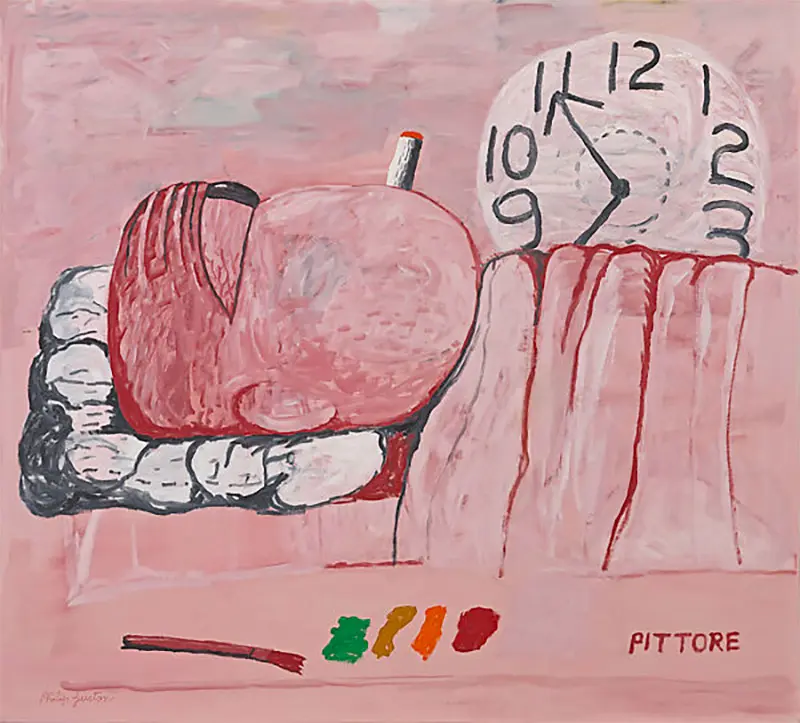
Guston consistently interrogated his purpose and identity as an artist, giving rise to a self-reflexive body of work that embraces abstract and figurative content. He worked with symbols of evil and prejudice and explored the experience of mortality and vulnerability, especially in the late work seen here. Guston’s art engages with some of the most distressing aspects of human nature. Contradictions go into Guston’s practice’s heart, endowing it with aesthetic and philosophical urgency.
This show features eight works created during the last eleven years of Guston’s life. It celebrates a promised gift of two hundred and twenty paintings and drawings from the artist’s daughter Musa Guston Mayer. Thanks to Mayer’s generosity, The Met will become the largest repository of Guston’s work and the future center for its study.
To learn more about his work, watch: https://www.youtube.com/watch?v=kdNHInly8zc&t=5s
Guston consistently interrogated his purpose and identity as an artist, giving rise to a self-reflexive body of work that embraces abstract and figurative content. He worked with symbols of evil and prejudice and explored the experience of mortality and vulnerability, especially in the late work seen here. Guston’s art engages with some of the most distressing aspects of human nature. Contradictions go into Guston’s practice’s heart, endowing it with aesthetic and philosophical urgency.
This show features eight works created during the last eleven years of Guston’s life. It celebrates a promised gift of two hundred and twenty paintings and drawings from the artist’s daughter Musa Guston Mayer. Thanks to Mayer’s generosity, The Met will become the largest repository of Guston’s work and the future center for its study.
To learn more about his work, watch: https://www.youtube.com/watch?v=kdNHInly8zc&t=5s