Art NotesDecember 1, 2010
Pedazos de país
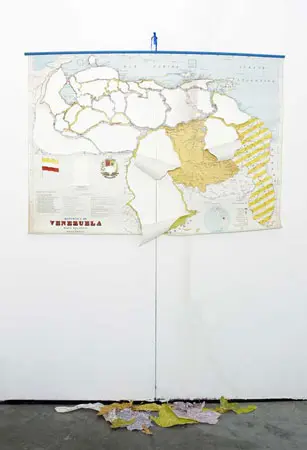
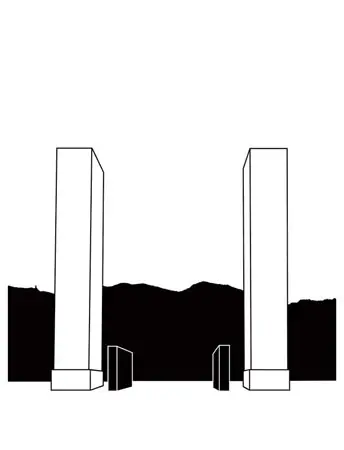
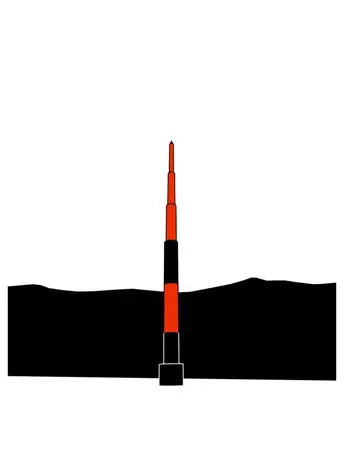
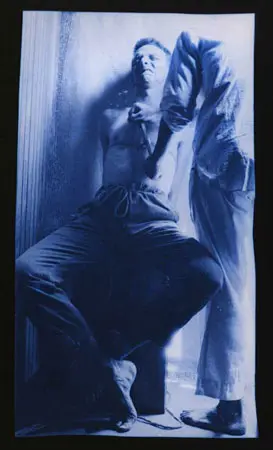
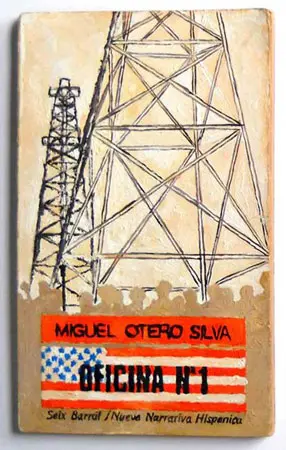
The selection of works included in Pedazos de país focuses on 12 young Venezuelan artists who, through hybrid creative strategies, as pointed out by Gerardo Zavarce in his introductory text, attempt ¿a vision of the various symbolic imaginations that articulate the visible forms, the marks of identity, that allow us to imagine a nation ¿in this case, Venezuela¿, make it cohesive, and give it shape and meaning both individual and collective.¿ Oficina # 1, helmed by artists Suwon Lee and Luis Romero as a space open to the confrontation of ideas and a point of convergence for various areas of the culture and practice of contemporary art, celebrated its fifth anniversary with this unique collective show. While it doesn¿t pretend to be historical, the exhibition takes time to rethink, from the perspective of a skeptical generation mistrustful of one-dimensional interpretations, real events that took place along a timeline that moves back and forth from the wars of independence, anchoring itself in the period of modernity between 1935 and 1965, and all the way to the most recent moments of our history. Pedazos de país alludes to an unfinished narrative, rewritten as is convenient, where misremembrance and oblivion make impossible any single story. It is precisely the exegesis of such imprecisions what has made it possible for these artists to establish, on the basis of their own paradoxes and contradictions, the correlation of a fragmented country, built from pieces. From the practice of representation, they subscribe their own fiction as a symbolic expression opposed to the totalizing notion of the state project or the r-founding of the Republic. As a whole and not only as individual works of art, the museographic proposal is based on unconnected fragments of our social and political scene; each work wants to be a testimony inscribed on the margins of the official story. The pieces of the nation are reconstructed here in a sensible narrative that presents the least eligible stratum, the one that lie veiled or hidden as a strategy to reveal the arguments of modernity and progress, nationalism and revolution. The starting point for the exhibition are perhaps the localist themes narrated by Miguel Otero Silva, a noted journalist linked to the conspiracy conceived by the Generation of 1928 in ins attempt to topple the Gómez dictatorship. Otero Silva¿s 1961 novel Oficina No. 1 identifies the historical and social moment of an agrarian Venezuela in transit to its condition of Oil State; Casas Muertas depicts the essence of Venezuelanness; and Cuando Quiero Llorar no Lloro exposes the conditions of a society that is starting on the path towards political repression and violence. These are emblematic works of Venezuelan literature that describe the contradictions between the emergence of sudden, vast oil wealth and the most deplorable poverty, along with notions of social stratification, relationships of dependence, and cultural neo-colonialism. Broken mirrors of a society that give us back the image of a divided country. On the basis of this trilogy, Bishenry Rivas intervenes and alters the condition of these classics, establishing a different relationship between the object represented and the work itself. The books persist as physical and conceptual supports on which the artist superimposes layers of oil paint to reproduce once again the representation, assigning it a different point of vies, by promoting another history of values and meanings. The attraction for popular images and what they represent in the collective¿s historical memory is what moves Christian Vinck to depict Che Guevara, invariably heroic in the revolutionary imagination, in a somber and exhausted state. Or, in the case of Umberto Pepe, to reproduce in oil a widely known photograph of Rómulo Betancourt with bandaged hands after the attempt on his life in 1960. In local memory, that event has a tinge or irony, since the image reminded citizens that a few days befo...
Gallery