ExhibitionDecember 18, 2015
Paz Errázuriz
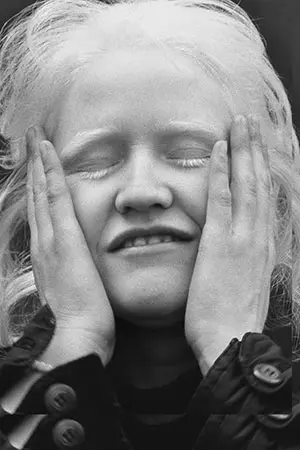
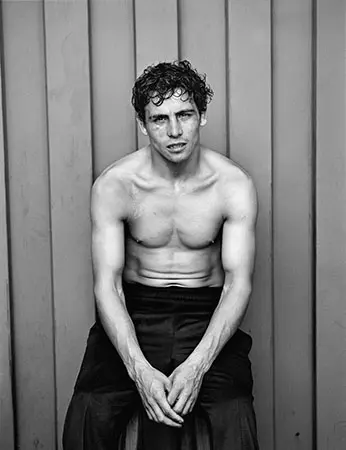
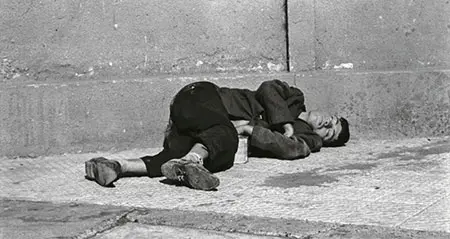
A retrospective of the work of Paz Errázuriz—one of Chile's photographers with the greatest international projection, and a representative of her country at the last Venice Biennale—is on view at the MAPFRE Foundation through February 28, 2016. Paz Errázuriz defines her work in the following way: "I work in closed series, and some of them can take me years. I do not feel part of any group, yet I am close to all of them. These are matters that society chooses not to see, and I intend to encourage people to dare to look." Paz Errázuriz's work portrays contemporary life through characters such as boxers, transgender individuals, patients in psychiatric hospitals, circus workers, and tango dancers. The artist focuses on marginal locations and subjects that are outside of convention, often in enclosed spaces. In her photographs, Errázuriz builds images of characters that are full of dignity and naturalness. She interacts and shares with her subjects for extended periods, so that, after weeks of confidences and trust, the required climate of respect is generated so as to portray them in all their dignity. The exhibition Paz Errázuriz spans four decades in the Chilean artist's career, through 172 photographs and two videos arranged into 10 thematic sets, grouping the different series created by Errázuriz. Agentes y espacios del devenir social ("Agents and spaces of the social process") focuses on her earlier years as a photographer, in the complicated political context of the Pinochet regime. In those years, when coursing the city with a camera represented a serious risk, the artist worked on her series Los dormidos ("The Sleepers"), about people who spent their life unprotected, in the streets. The section titled Las edades de la vida (y la muerte) ["The stages of life (and death)"], includes, among others, the series Errázuriz devoted to her son Tomás, whom she photographed once a month between July, 1986 and December, 1990; this series is presented as a video, with the title of Un cierto tiempo ("A certain time"). Reclusión ("Reclusion") and Lucha y Resistencia ("Struggle and Resistance") deal with the loss of liberty under dictatorship. Errázuriz works with institutionalized subjects (in psychiatric hospitals, for example) and explores human ties based on tenderness and care; on the other hand, she also explores the struggle for human rights, in particular the "Women for Life" collective. Prostitution, both masculine and feminine, is the subject of El sexo, instrumento de supervivencia ("Sex, a means of survival"), a section featuring Errázuriz's portrayal of sex workers, with particular focus on a group of transgender men who worked in brothels in Santiago and Talca, a project that crystallized in her celebrated series La manzana de Adán ("Adam's Apple"). Impedimentos de la mirada ("Obstacles to the gaze") deals with blindness and achromatopsia, a congenital condition where afflicted individuals perceive reality in black and white—the same black and white that suffuses most of Errázuriz work. La desaparición de una etnia ("The disappearance of an ethnic group") presents us with the everyday life of an aging community that survives thanks to the fishing of cholga (a mollusk) and the manufacture of rattan baskets. Fortaleza y debilidad ("Strength and weakness") and El circo ("The Circus") confronts two worlds. One, the supposedly macho universe of boxing, which Errázuriz portrays in its most vulnerable facet; the other, the iconography of the circus, here dev...
Gallery