ExhibitionApril 21, 2017
Another Lygia Makes it to MET
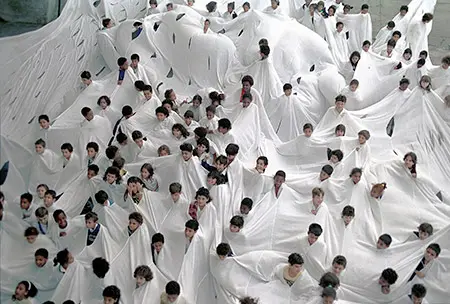
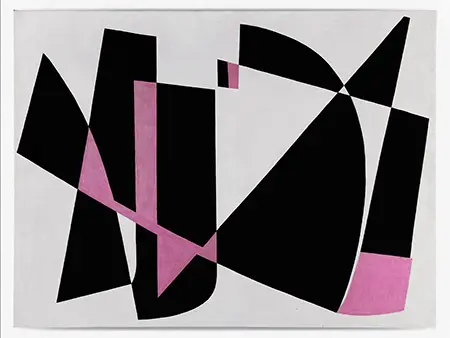
Brazilian artist Lygia Pape is less well known in New York than her contemporary, Lygia Clark, whose retrospective at MoMa in 2014 was the first time that a woman artist from Brazil had a retrospective there. However, this exhibition at the MET Breuer may soon alter that discrepancy as Lygia Pape proves to be an equally fascinating abstract artist who was also self-taught and did not have formal training. This Concrete movement intended to defend the absolute objectivity of art though paintings that have no other significance or explanation than their very presence. It was very much against expressions of any sentiment, or forms directly derived from nature, considered merely representational. So although she joined them when she participated in the National Exhibit of Arte Abstrata in Petropolis, as early as 1953 where Ivan Serpa and Lygia Clark were also showing their works, she was soon to evolve with them into the creation of the Grupo Frente in 1956; this was the Rio de Janeiro branch of Concretism that conflicted with Sao Paulo's Ruptura group on aesthetic considerations. Simple as the art of abstraction may seem on first viewing, it has had a long history of conflictive, sometimes emphatically dialectical differences in the paths leading up to it. In this aspect the Brazilian move towards abstraction had two camps interpreting modernism, just like the Russian modern artists had developed two fronts in the early days of Modernism in Russia, with different interpretations in St Petersburg and Moscow, in the early twentieth century. While the Ruptura artists in São Paulo took a rigorous approach to abstraction, Pape and her carioca contemporary, Lygia Clark, and the much younger Helio Oiticica all shared a more fluid and euphoric vision. By 1959 they had developed a more active, experimental evolution of abstraction that they named Neo-Concretism. This interpretation gave an important place to sensuality, interaction with the art through performance and the integration of their aesthetic vision into daily life. Lygia's choice of colors is very different from those of the European abstraction, which were incorporated later into the American Minimalism. Their source is different, as was so well explained in the Antropofagia manifesto much earlier in Brazil's history of Modernism; and one suspects the light of her native Brazil was always at the back of her compositional ideas. Just to see her famous work, "Livro da Criação" ("Book of Creation"), from 1959, is more than enough reason to see this exhibition that reveals the seriousness and firmness of purpose of her work. It comprises 16 square boards that translate man's history into a narrative of pure geometric forms. From the beginnings of discovery of water and fire, it creates a springboard for the interpretation of our evolution through these beautiful and colorful creations. Plato would have been proud to see his world of ideal/eternal forms reinterpreted with her colors that are brighter and warmer than the usual gray and black juxtapositions on white with which we are more familiar.
Gallery