ObituaryJanuary 22, 2015
Oscar Morriña
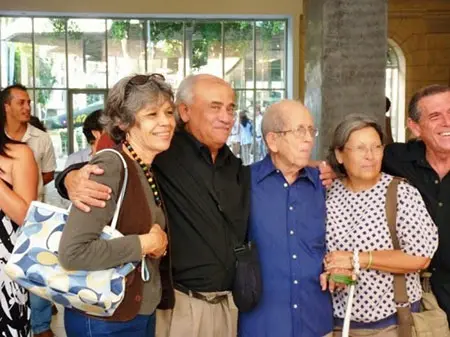
Morriña (a word that means "sadness") is what the news provoked in his former students and his friends: Oscar Morriña died last December 27th. He had been sick for some time. That is why, on December 22nd, he was unable to attend the Teacher's Day cocktail with which the University of Havana's Art History Department closed the celebrations for the 80th anniversary of its foundation. Last year, he was absent from the opening of a show at the Museo Nacional de Bellas Artes, in Havana, organized in recognition of his long and fruitful career as a teacher of visual arts appreciation. On exhibit on that occasion were books by him (Ver y comprender las artes plásticas; Las líneas hablan y juegan …), as well as drawings he authored, known only to a few people until then. His name was most often associated with the exercise and appreciation of graphic design and with the Foundations of Form course for Art History freshmen he taught for decades. There, he helped many adolescents become familiar with the national and world tradition; the principles and laws of formal construction; the suggestions of rhythm, color, and proportion… Based on the theories of the Gestalt, , he prepared them for more content-oriented classes. For many, Morriña was the most amiable and liked figure in the Department. Perhaps because for a time he was a teacher and a student simultaneously, he was able to retain all his empathy and helped break through the student's fear of their college professors while gaining their respect. Generations of students apt to tag their teachers with mocking nicknames, called him, simply and affectionately, "Morri". He was my freshman group's tutor (1983-1984), and my officer in the Student Guard. He was also my colleague in a Jury for the Amelia Peláez Ceramic Arts Biennial, organized by the Museo Nacional de la Cerámica Artística Cubana Contemporánea. And he always retained his affability, expressing his opinions always as suggestions, his blue gaze behind the glasses and the beginning of a smile in his lips, even after he became a Emeritus Professor at the University of Havana. "Morri" was already of an advanced age when we met; for me, he never aged. The lesson he taught of looking for the artistic/aesthetic in our lived environment rather than solely in galleries or art books, has been as rich as his morphological analyses of the work of art, through which he not only taught us hot to see and understand, but also how to enjoy.