Art NotesJanuary 14, 2016
Objetos Frontera
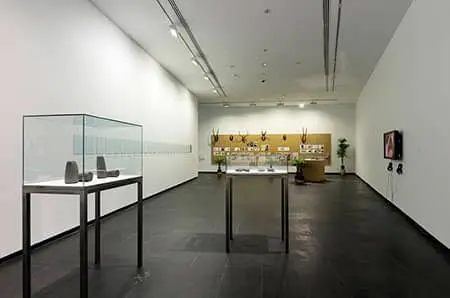
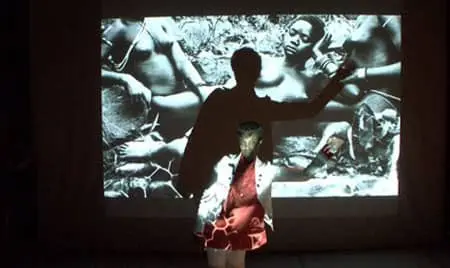
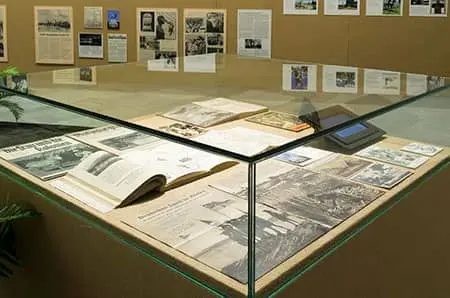
Madrid's 2 de Mayo Art Center (CA2M) presents Objetos Frontera ("Borderline Objects"), an exhibition curated by Sophie Goltz, through February 28th. Objetos Frontera offers a reflection on colonial museum practices, the construction of the "Other" and their representation in exhibition spaces. The project emerged from the research behind Artificial Facts (2014-2015), presented in Dresden, which in turn derived from Activations in Cape Town, Porto-Novo (Benin), and Dresden. It includes works by Molinos Gordo, Burning Museum, Dierk Schmidt, Emma Wolukau-Wanambwa, Jorge Satorre, Kader Attia, Lisl Ponger, Mariana Castillo Deball, Michelle Monareng, Paulo Nazareth, Peju Layiwola, Penny Siopis, Regina José Galindo, Sammy Baloji, and Lazara Rosell Albear. The presentation of distant cultures through object-based displays reveals the domination strategies informing the colonial gaze. Thus, El retroceso 10 (2013), by Mexico City artist Jorge Satorre, explores the transformation of ethnological objects into museum pieces in Mexico. In turn, Afro-Brazilian artist Paulo Nazareth (Governador Valadares, Brazil) works with the history of slavery in Brazil and survival as a driver for displacement, as well as the migrant imagination and black subjectivity. Panplets (º1- º9) invites viewers to take with them flyers depicting various images connected to the phenomenon of migration and proposes, for instance, considering the vessels used by migrants part of humanity's historic heritage. The socio-economic relationship between center and periphery are made visible through the forces and the capital that make them possible. In her video El expolio (2010), Regina José Galindo (Guatemala City) presents a performance in which a Guatemalan dentist gives her eight gold fillings; symbolically, a dentist in Berlin extracts them. The concepts of memory and collective history also play an important role in the exhibition's curatorial discourse. Sammy Baloji (Democratic Republic of Congo) and Lazara Rosell Albear (Havana) collaborate in Bare-Faced (descarado), about the connections between Cuba and Congo through the trance involved in certain religious practices. In turn, Emma Wolukau-Wanambwa (Glasgow) works in a more political vein, analyzing the 1939 Colonial Exhibition in Dresden, where the Third Reich extolled Germany's colonial past and projected its domination into the future. The body as the site of political conflict is also present, via Kader Attia (Paris) and his photographic work about post-colonial relationships, their violence, and the physical threat they involve. In UMRISS, meanwhile, Mariana Castillo Deball (Mexico City) alludes to the commercialization of mental illness as a visual construct, based on a pharmaceutical advertisement In sum, Objetos frontera explores the meaning of objects in new contexts and their eloquence in telling "other histories", woven, at the same time, into traditional historiography.
Gallery