Art NotesOctober 1, 2010
New York Graphic Workshop: 1964-1970: An Essential Memory
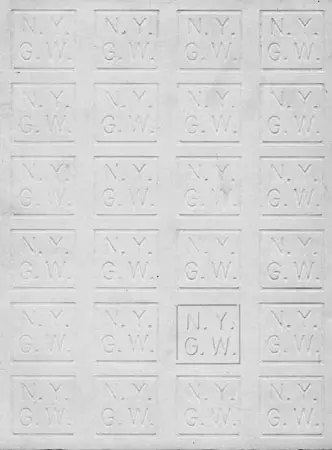
New York Graphic Workshop: 1964-1970, the catalog for the similarly titled exhibition at the Blanton Museum of Art, held between September 2008 and January 2009, curated by Gabriel Pérez-Barreiro, revisits a key ¿episode¿ in the memory of Latin American conceptual art¿s contributions in the United States. Against the usual ¿exclusion of non-European and non-American¿ in the construction of the history of art, the book inscribes detailed documentation of the production of the production of this unique graphic arts workshop¿pioneer in the reposition of the graphic arts in conceptual terms¿founded in 1965 in New York by the experimental collective formed by Luis Camnitzer (Uruguay), Liliana Porter (Argentina) and José Guillermo del Castillo (Venezuela). Edited by Gabriel Pérez-Barreiro, Úrsula Dávila-Villa, and Gina McDaniel Tarver, the book includes a reconstruction of the history and activities of the NYGW, by Beverly Adams; documentation for each exhibition, gathered by Sylvia Dolinko; interviews with Porter and Camnitzer, by Andrea Giunta; and an essay by Michael Wellen about Castillo¿s work. It constitutes, as a whole, the narrative of an essential chapter that despite its historical contributions remained practically unknown after the dissolution of the group in the early 1970, as well as a recovery of archives about works that were lost and/or never exhibited during the last three decades. Many works, reproduced here for the first time, are perpetuated in the catalog. Readers are now able to revisit an experimental proposal that expanded the border of the graphic arts into the conceptual arena, breaking down the idea that they were an inadequate medium for ¿a sophisticated investigation into de frontiers of art.¿ Besides redefining the craft of the printmaker in order to explore a kind of artistic production focused on ¿the mechanical and repetitive nature of the medium¿ rather than on its traditional techniques, as well as the design of new strategies of circulation, they incorporated the fictional creation of one of the earliest collective artists: Juan Trepadori. The figure of Juan Trepadori¿ingeniously conceived as mediocre¿embodied a dual conceptual strategy: it allowed for commercial survival on the basis of a playful response to traditional expectations regarding the graphic arts, but also a biting self-reflective view of the taboo of ¿saleable¿ works (the images that are expected from the Latin American art stereotype) that would have been barred to them. While they dismissed such images in the practice that made them artists using printmaking with a conceptual purpose, though the figure of Trepadori they were able to run circles around the art circuit. McDaniel Tarver does in this book the first evocation of Trepadori, on the basis of an exhaustive investigation of the NYGW archives, where the imaginary biography of this artist is preserved: he was presented as born in Paraguay in 1939, self-taught, and ready to donate a portion of the financial proceeds from the selling of his work for the support of Latin American students at Pratt Institute. This last item was true, because behind Trepadori both the workshop members¿connected to the institution¿and several guest artists created and sold works, and gathered funds that were effectively used for scholarships. Pérez-Barreiro¿s essay highlights the way in which the NYGW expanded the definition and the borders of printmaking, not only by defining as ¿any repeated action that multiply an image,¿ but by extending it spatially to create installations. Porter¿s To Be Wrinkled and Thrown Away, where viewers were invited to carry out the actions of the title, exemplifies the execution of this concepts, such as the transference to the viewer of a certain power of authorship. The objects contained new theoretical perspectives about the function and limits of the craft. Among others, as Adams points out, the possibility of ¿removing the difference between a...