ObituarySeptember 9, 2015
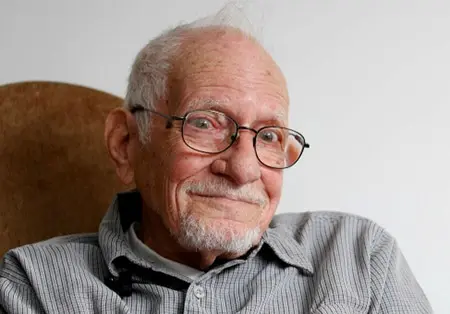
Nereo López
2015 has seen the departure of two of Colombia's great photographers, Carlos Caicedo, who passed away on July 13th, and Nereo López, who died at the age of 95 on August 25th. While the former is insufficiently known despite his great talent, the latter is and will be remembered as one of the Colombian Caribbean's greatest artists. Alongside Hernán Díaz, Nereo attained prominence in the cultural field in Colombia during the 1960s, since, as photographer Camilo Lleras has noted, in that decade "there were only two lines or tendencies: Hernán Díaz's, which was VOGUE-like and followed the work of Richard Avedon, and Nereo's, which was a line of independent photo-reportage."1 Nereo became the country's first photo-essayist, working for Time, Life, and O Cruzeiro. Influenced by Cartier-Bresson, Irving Penn, Robert Capa, and Eugene Smith, his work was dominated by a gaze that combined objectivity, humor, and a well-measured aestheticizing taste. Nereo was a "street photographer," and as such he created the majority of his works outdoors. He focused on portraits, and within that inexhaustible genre he chose images of men in activity, preferably doing manual work, peasants, and children. He was a chronicler with great knowledge of Colombia's geography, and he made uncommon trips to document popular celebrations and customs. Nereo was also a member and a witness to what is known as the "Barranquilla Group," a network of writers and artists of the Colombian Caribbean that included Alvaro Cepeda Samudio, Gabriel García Márquez, Alejandro Obregón, and Enrique Grau, among others. His most productive and intense friendship, however, was with writer Manuel Zapata Olivella, with whom he traveled Colombia's coastal regions to document their peoples. In 1996, after a career spanning four decades, Nereo was appointed to the Regent's Lectureship at the University of California, Santa Cruz, and his work began to garner recognition. The Cross of Boyacá, the Colombian Republic's highest honor, was bestowed on him that same year; in 1998 he received the National Photography Tribute, which included the acquisition of his entire body of work by the National Library. A good portion of his oeuvre appears in Nereo López. Un contador de historias (2011), published by La Silueta. In 2002 he received the Ministry of Culture's Lifetime Achievement Award, and another book with his work was published. Nereo didn't rest on his laurels, however. He continued to work for another decade, exploring digital photography and remaining active until the day of his death. His departure not only deprives us of the last surviving member of the Barranquilla Group, but also closes an entire chapter in Colombia's visual history. His profound humanism, independence, and sense of humor will remain as examples for all who knew him.