ExhibitionJune 4, 2021
Nam June Paik
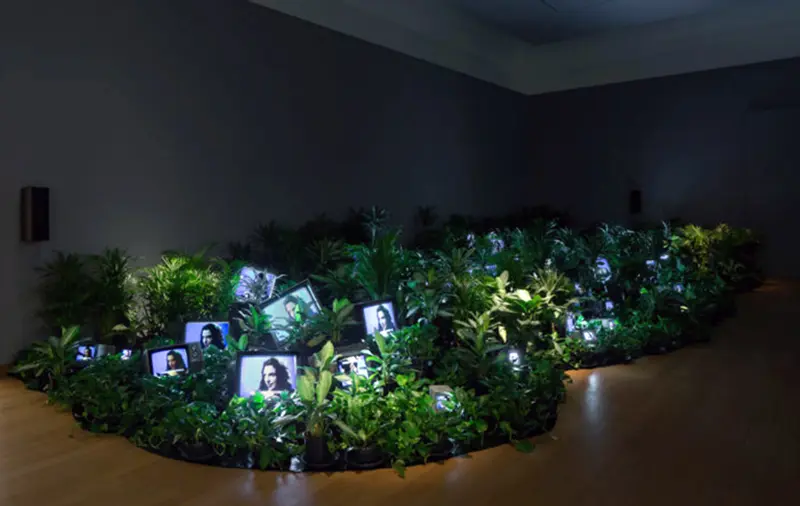
The exhibition Nam June Paik at the San Francisco Museum of Modern Art (SFMOMA) will be on view until October 3, 2021. It was organized with the support of the TATE Modern in London, with additional presentations at the Stedelijk Museum Amsterdam and National Gallery Singapore. The retrospective will be Paik's first major exhibition in the U.S. in more than 20 years.
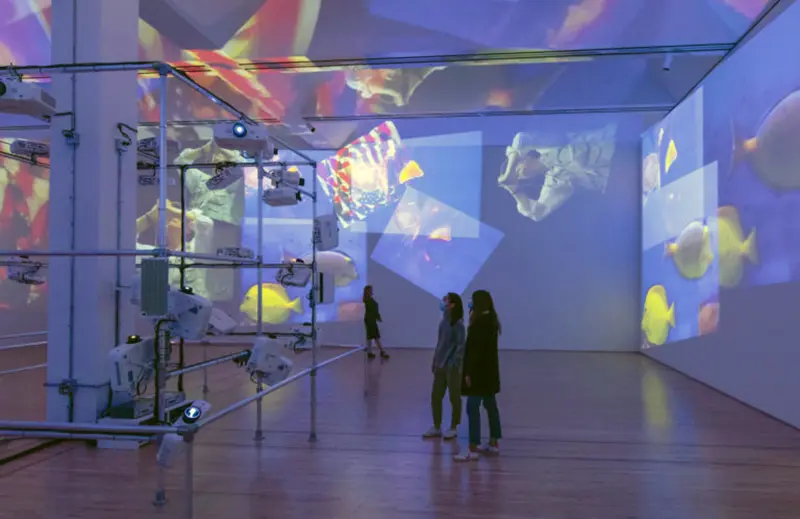
The exhibition brings together more than 200 works by the South Korean artist, considered a pioneer of video art. He embraced art, music, performance, and technology innovatively in a multidisciplinary approach, influencing contemporary art.
Nam June Paik (1932-2006), trained as a classical composer, sought to radically expand the parameters of art, challenging genres, and disciplines. During his five-decade career, he worked with avant-garde artists and pop stars. He made groundbreaking video art, immersive installations, a family of television robots, live broadcasts, participatory artworks, and more. "Someday," he said in 1965, "artists will work with capacitors, resistors, and semiconductors as they do today with paintbrushes, violins, and scrap metal."
Paik anticipated the importance of media and new technologies, coining the phrase "electronic superhighway" in 1974 to predict the future of communication in the Internet age. This exhibition celebrates Paik's collaborative approach that transcended genres and traditions while highlighting the artist's innovative, playful, and profoundly radical work.
Curator of Media Arts Rudolf Frieling and Assistant Curator of Media Arts Andrea Nitsche-Krupp propose a five-point guide to understanding the artist's career.
The works "Video Commune (Beatles Beginning to End)" (1970, re-edited 1192) and "Electronic Opera #1 (1969) are streamed free of charge on the museum's website:
https://www.sfmoma.org/nam-june-paik-video-commune-stream/
The exhibition brings together more than 200 works by the South Korean artist, considered a pioneer of video art. He embraced art, music, performance, and technology innovatively in a multidisciplinary approach, influencing contemporary art.
Nam June Paik (1932-2006), trained as a classical composer, sought to radically expand the parameters of art, challenging genres, and disciplines. During his five-decade career, he worked with avant-garde artists and pop stars. He made groundbreaking video art, immersive installations, a family of television robots, live broadcasts, participatory artworks, and more. "Someday," he said in 1965, "artists will work with capacitors, resistors, and semiconductors as they do today with paintbrushes, violins, and scrap metal."
Paik anticipated the importance of media and new technologies, coining the phrase "electronic superhighway" in 1974 to predict the future of communication in the Internet age. This exhibition celebrates Paik's collaborative approach that transcended genres and traditions while highlighting the artist's innovative, playful, and profoundly radical work.
Curator of Media Arts Rudolf Frieling and Assistant Curator of Media Arts Andrea Nitsche-Krupp propose a five-point guide to understanding the artist's career.
The works "Video Commune (Beatles Beginning to End)" (1970, re-edited 1192) and "Electronic Opera #1 (1969) are streamed free of charge on the museum's website:
https://www.sfmoma.org/nam-june-paik-video-commune-stream/
Gallery