Art NotesAugust 6, 2015
"My Buenos Aires, Portrait of a City"
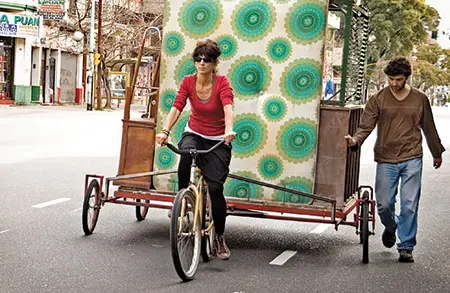
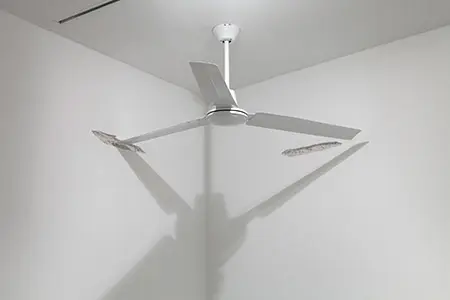
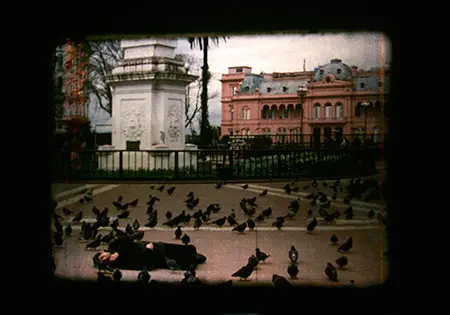
For its third edition centered on a capital city—after Winnipeg, Canada, in 2011, and Johannesburg, South Africa, in 2013—La Maison Rouge, a private gallery, showcases the current art scene in Buenos Aires through a group of in situ works selected by curators Paula Aisemberg and Albertine de Galbert. The exhibition, taking place since June 20 to September 20, 2015, addresses a number of themes to define the identity of a city and its many facets, giving priority to the space occupied by the body and its confrontation with the place. In a country where most of the population lives in urban areas—13 of the 41 million people living in Argentina live in Greater Buenos Aires—the complexity of the theme is evident. Although the artists' central point of reflection, the city can only be captured in the moment, as it is constantly transforming and evolving. And it is precisely its fleeting nature that poses the challenge for the artistic approach, even when such approach must yield to the temptation of the dominant urban norm and the evidence of a "connective" thread that shapes the city's identity. However, even as these elements—prevalent in all megalopolises—are captured and incorporated into the artist's imaginary, the city nonetheless retains its mystery. It remains mythical, dreamt about, integrated into fantasies, hated or rejected, but always alive. Most of the artists selected were born between the sixties and eighties—with some exceptions like Marta Minujin, Margarita Paksa, Roberto Jacoby, Marcelo Brodsky, León Ferrari, who died in 2013, and Martha Dermisache, who died in 2012—and about three-quarters of the works were produced after 2000, in a selection that forges the contemporaneity of the show. The museography takes into account the thematic focus without being imprisoned by it, and offers a walk in which the works sometimes interact without ever threatening or excluding each other. The concept, informed by psychoanalytic reflections—in Buenos Aires, this imperative—plays with opposites: the uninhibited and the explicit, the hidden and the revelatory, the public and the private; all elements permeated by violence and politics. A case in point is the work by Antonio Segui entitled Les Toca a Ustedes Escribir la Historia (It Is Your Turn to Write History, 1965), which is not part of this exhibition but would have fit perfectly in it. It consists of a jigsaw puzzle that must be put together to reconstruct a subjective portrait of Buenos Aires. The exhibition offers several emblematic works, including the film Totloop (2003, 3'40) by Kacero Fabian (1961) who staged a simulated death to test the indifference in the city; in another video titled A Boca de Jarro (Point Blank, 2008, 2'35) by Ana Gallardo (1958), a transsexual sings newspaper articles to the beat of tango music to denounce the abuse of children. A large display case contains the highly humorous "anticlerical" objects by León Ferrari, created between 2000 and 2006, in various materials and sizes. Then, there is the installation titled La Alcoba del Amor (The Love Bedchamber) by Marta Minujin, created in 1963 but reworked in 2008, which opens its pink door-vagina into a space enclosed by chains, amidst an orgy of colorful striped cushions. In the same exhibition room, there is the really beautiful piece titled Hook (2015, metal, 450 x 150 x 12cm) by Mathias Duville (1974), a sculpture in the form of a hook that threatens visitors with its sharp, bright, and dangerously straight tip. And to close this incomplete survey, the burnt house by Eduardo Basualdo (1977) titled La Isla (The Island, 2007–2014, burnt wood, skulls and various objects, 320 x 600 x 385cm), which is part of the collection of the Musée d'art contemporain in Lyon, invites visitors to experience the unknown and fear that ac...
Gallery