MuseumNovember 21, 2017
Louvre Abu Dhabi Museum
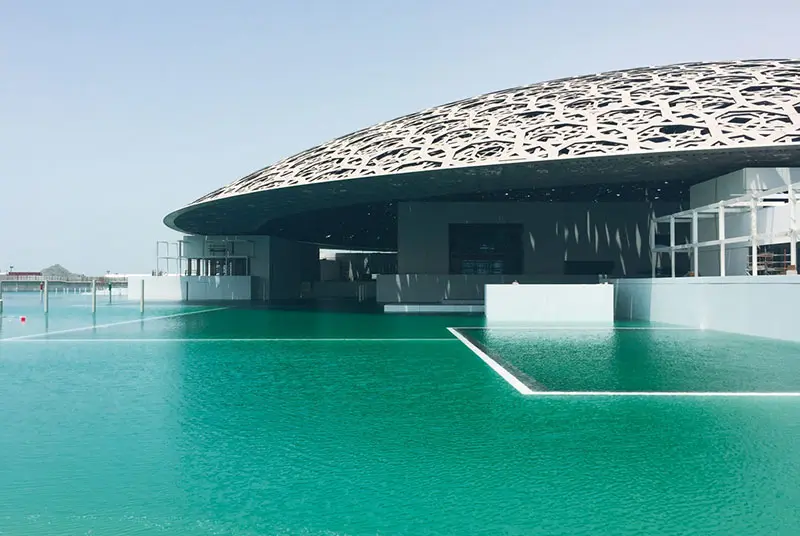
The brand new Louvre Museum in Abu Dhabi, inaugurated on November 8 in Saadiyat Island, is part of the alliances that the French museum has been establishing for some years now with other countries to open new venues. This new building erected in the middle of the ocean and the desert was created with the goal of offering a survey of the history of art and exposing the artistic influences between different cultures throughout all periods, in addition to positioning the United Arab Emirates on the international map of museums. The chairman of the Abu Dhabi Tourism and Culture Authority, Mohamed Khalifa al-Mubarak, unveiled before hundreds of journalists the works of art that will be on display at the 6,400-square-foot museum. The Louvre Abu Dhabi will feature a collection of 600 works of art, half of which belong to the museum while the other half are masterpieces loaned by 13 major museums in France. Some of the pieces exhibited are a colossal stature of the Egyptian King Ramesses II (1279-1213 BCE), a Chinese Head of Buddha (534-550 AD), pages of the "Blue Quran" (880 AD), a self-portrait by Vincent van Gogh (1887 AD), and Ai Weiwei's Fountain of Light (2016). "It was many years ago that we thought about building a universal museum in a partnership between the United Arab Emirates and France, and today is a great day; the project took ten years to complete and we are now unveiling it," declared Mohamed Khalifa al-Mubarak during the inaugural event, and added: "Much more than just a museum, it is a place for global interaction and connectivity that will help create a better world for next generations to come." Designed by French architect Jean Nouvel, the building features a structure inspired by tradition and culture. The white color, its geometric shapes and narrow streets of the souks, under the shade of an oasis covered by palm trees, aims at reproducing the 180 meter high and 7,500 ton dome under which most of the galleries are contained. According to Nouvel, "The dome offers a feeling of happiness and protection." Through its spacious exhibition rooms arranged like a neighborhood anchored in the middle of the ocean, visitors can experience a chronological survey from prehistory to today divided into twelve chapters, which include the establishment of the first peoples, universal regions, cosmography, the art of the royal courts and the modern world.