ExhibitionMarch 7, 2014
Mira Schendel
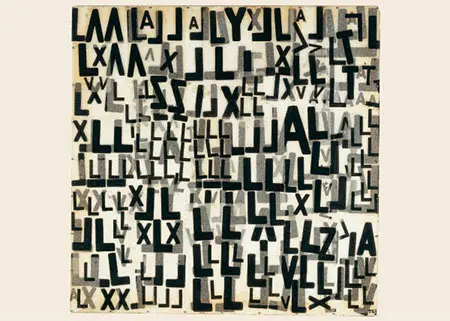
The Fundação de Serralves opens to the public the first major exhibition of Mira Schendel. Regarded as one of the most prolific Latin American creators, Schendel approached throughout her career themes associated with language and meaning and, along with Lygia Clark and Oiticica, contributed to redefining the image European modern art in Brazil. The exhibition consists of two hundred paintings, designs and sculptures, some of them shown for the first time. Some of her early works—dated between 1955 and 1965—though rarely been shown to the public, are pieces that help us understand the importance in the confrontation between figurative and geometric impulses in Schendel's artistic production. Another common thread throughout her three-dimensional works—and one that is very evident in this exhibition—is the tension between the fragility of the materials used and the expressive force these acquire when transformed into sculptures. A good example of this can be observed in the works from her Droguinhas (Little Nothings, 1965-66) series, which consists of pieces fashioned with rice paper that were exhibited for the first time in1966 in London. Other works in the exhibition include the installations Ondas Paradas de Probabilidade (Still Waves of Probability, 1969) and Variantes (Variants, 1977). The exhibition has been organized in collaboration with the Tate Modern and the Pinacoteca do Estado de São Paulo.