ExhibitionOctober 29, 2021
Matta. Graphic work: 1943-1968. From the New School in New York to the Intellectual Revolution of 1968.
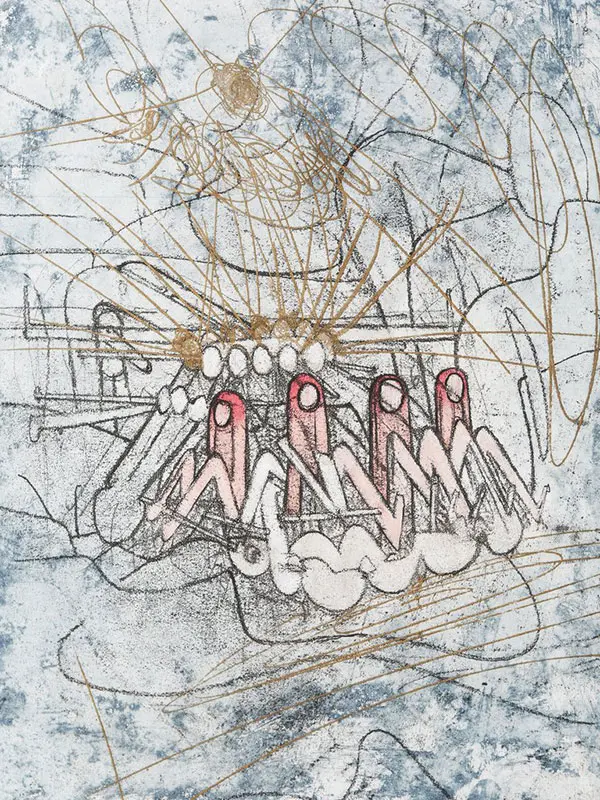
The Matta Cultural Center of the Embassy of Chile in Argentina - CCMATTA, presents until December 15, 2021, the exhibition "Matta. Graphic Work 1943-1968. From the New School in New York to the Intellectual Revolution of 1968," curated by Inés Ortega-Márquez, where 108 works—including lithographs, etchings, aquatints, dry point, illustrations, books, and other objects—showcase one of the least studied facets of one of the most renowned Chilean artists of the 20th century: the engraver.
This exhibition is part of the celebration of the 110th anniversary of Matta's birth. The CCMATTA wanted to commemorate the artist awarded with the Chilean National Art Award, the Prince of Asturias Award for the Arts in 1992, and one of the most famous Latin American surrealists. By exhibiting these works, which covers different stages of the artist, from his first engravings made in Stanley William Hayter's Atelier 17 (between 1943 and 1948) to works made in the sixties. It is a collection of engravings from the same year Matta learned to engrave, 1943, until the end of 1968, his most creative and highly productive period.
Inés Ortega-Márquez commented, "For the first time, a complete vision of Matta's graphic work from his most fertile and creative period is offered. A retrospective that shows 90% of the work produced and catalogued in L'oeuvre Gravé de Matta, compiled by Roland Sabatier and published in 1975 by Georges Visat, a great multidisciplinary artist and the most important art editor. The prints on display belong to a private Chilean collection and making them visible represents a commitment to art and Matta".
At the opening of the exhibition, Ambassador Nicolás Monckeberg commented, "The show that will be on display starting this week opens with the series The New School, which takes its name from the artistic movement developed in the United States; linked to surrealism and later to abstract expressionism." This stage includes works made in the late forties and early fifties, a period in which Matta returns to Europe and denounces the failure of technology and machine powers. At the end of the exhibition are presented works made in the sixties, a decade that could be identified as his most political stage, highlighting series, books, and independent engravings.
The exhibition can be visited on Thursdays, Fridays, and Saturdays between 3:00 and 7:00 pm. Tagle corner Avenida del Libertador (entrance to Plaza República de Chile).
This exhibition is part of the celebration of the 110th anniversary of Matta's birth. The CCMATTA wanted to commemorate the artist awarded with the Chilean National Art Award, the Prince of Asturias Award for the Arts in 1992, and one of the most famous Latin American surrealists. By exhibiting these works, which covers different stages of the artist, from his first engravings made in Stanley William Hayter's Atelier 17 (between 1943 and 1948) to works made in the sixties. It is a collection of engravings from the same year Matta learned to engrave, 1943, until the end of 1968, his most creative and highly productive period.
Inés Ortega-Márquez commented, "For the first time, a complete vision of Matta's graphic work from his most fertile and creative period is offered. A retrospective that shows 90% of the work produced and catalogued in L'oeuvre Gravé de Matta, compiled by Roland Sabatier and published in 1975 by Georges Visat, a great multidisciplinary artist and the most important art editor. The prints on display belong to a private Chilean collection and making them visible represents a commitment to art and Matta".
At the opening of the exhibition, Ambassador Nicolás Monckeberg commented, "The show that will be on display starting this week opens with the series The New School, which takes its name from the artistic movement developed in the United States; linked to surrealism and later to abstract expressionism." This stage includes works made in the late forties and early fifties, a period in which Matta returns to Europe and denounces the failure of technology and machine powers. At the end of the exhibition are presented works made in the sixties, a decade that could be identified as his most political stage, highlighting series, books, and independent engravings.
The exhibition can be visited on Thursdays, Fridays, and Saturdays between 3:00 and 7:00 pm. Tagle corner Avenida del Libertador (entrance to Plaza República de Chile).