ExhibitionNovember 25, 2020
MASP launches group show histories of dance materials
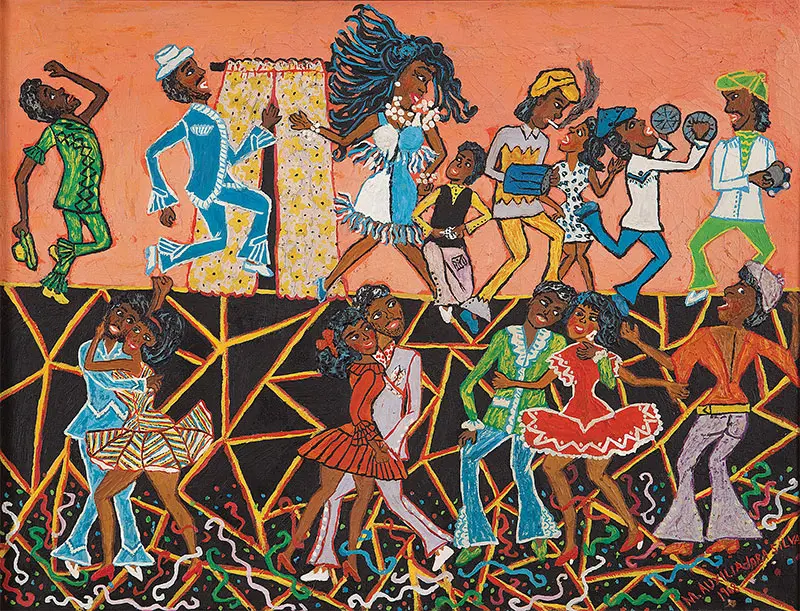
The exhibition Histories of Dance—scheduled to happen between June and November 2020– will take the form of an anthology, a catalogue, a special section in the museum's website and a live on MASP's Instagram @masp from November 16th thru December 2nd.
These changes are the consequence of drastic budgetary and logistical adjustments due to the covid-19 pandemic, making it impossible to realize a physical show with more than 200 national and international works, including live performances, videos, paintings, textiles, sculptures, installations and archival material.
The solution found by the curators Adriano Pedrosa, Artistic Director, MASP, Julia Bryan-Wilson, Adjunct Curator of Modern and Contemporary Art, MASP, and Olivia Ardui, Assistant Curator, MASP, is to present the audience with a partial memory of what would have been Histories of Dance, which is also the theme of the yearlong program of 2020.
Histories of Dance poses key questions about the interlocking relationships between visual culture, art, politics, and dance. Previous exhibitions have surveyed historical moments in which dancers and artists closely collaborated, such as the Ballets Russes or the Judson Dance Theater. This show takes a more metaphorical approach, asking how dance and its intrinsic characteristics of dynamic movement have been translated across a range of diverse practices. Histories of Dance is structured around the vocabulary of dance itself, such as improvisation, tension, composition, and gravity, using dance as an expanded framework for motion of all kinds.
The exhibition also highlights the importance of Latin American kinetic and Brazilian neo-concrete art within these debates, investigating the political stakes of collective movement.
Central to the show is an open space, or arena, commissioned by Carla Chaim, that would have hosted a rotating series of live performances, presentations, rehearsals, and workshops by local dancers, choreographers, artists, and performers. Placing active bodies at the heart of the exhibition allows us to critically question the possibilities, dialogues, and disruptions that may arise from the presentation of movement and bodies in motion in the museum.
The exhibition catalogue is the record of what would have been the exhibition and includes essays by the curators, a list of artists, comprehensive texts of the sections articulating the exhibition. Available from November 20th at the website masploja.org.br.
In addition, a section in the museum's website will be dedicated to the project and will feature abbreviated versions of the section essays and a selection of works that would have been part of the exhibition: https://masp.org.br/historiasdadanca.
From November 16th to December 2nd, MASP's Instagram will also focus on content related to Histories of Dance. On November 30th, at 6pm (São Paulo time), Julia Bryan-Wilson and Olivia Ardui will be in a live conversation on MASP's Instagram about the exhibition and related publications. The conversation will be in English and will be subtitled later on IGTV and MASP's YouTube channel.
These changes are the consequence of drastic budgetary and logistical adjustments due to the covid-19 pandemic, making it impossible to realize a physical show with more than 200 national and international works, including live performances, videos, paintings, textiles, sculptures, installations and archival material.
The solution found by the curators Adriano Pedrosa, Artistic Director, MASP, Julia Bryan-Wilson, Adjunct Curator of Modern and Contemporary Art, MASP, and Olivia Ardui, Assistant Curator, MASP, is to present the audience with a partial memory of what would have been Histories of Dance, which is also the theme of the yearlong program of 2020.
Histories of Dance poses key questions about the interlocking relationships between visual culture, art, politics, and dance. Previous exhibitions have surveyed historical moments in which dancers and artists closely collaborated, such as the Ballets Russes or the Judson Dance Theater. This show takes a more metaphorical approach, asking how dance and its intrinsic characteristics of dynamic movement have been translated across a range of diverse practices. Histories of Dance is structured around the vocabulary of dance itself, such as improvisation, tension, composition, and gravity, using dance as an expanded framework for motion of all kinds.
The exhibition also highlights the importance of Latin American kinetic and Brazilian neo-concrete art within these debates, investigating the political stakes of collective movement.
Central to the show is an open space, or arena, commissioned by Carla Chaim, that would have hosted a rotating series of live performances, presentations, rehearsals, and workshops by local dancers, choreographers, artists, and performers. Placing active bodies at the heart of the exhibition allows us to critically question the possibilities, dialogues, and disruptions that may arise from the presentation of movement and bodies in motion in the museum.
The exhibition catalogue is the record of what would have been the exhibition and includes essays by the curators, a list of artists, comprehensive texts of the sections articulating the exhibition. Available from November 20th at the website masploja.org.br.
In addition, a section in the museum's website will be dedicated to the project and will feature abbreviated versions of the section essays and a selection of works that would have been part of the exhibition: https://masp.org.br/historiasdadanca.
From November 16th to December 2nd, MASP's Instagram will also focus on content related to Histories of Dance. On November 30th, at 6pm (São Paulo time), Julia Bryan-Wilson and Olivia Ardui will be in a live conversation on MASP's Instagram about the exhibition and related publications. The conversation will be in English and will be subtitled later on IGTV and MASP's YouTube channel.