ObituaryJuly 16, 2015
María Freire
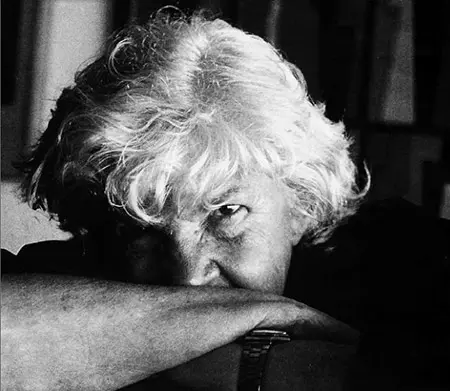
Uruguayan painter, sculptor and art critic, María Freire died on June 19 of this year at the age of 97. An unavoidable referent of geometric art in Río de la Plata, Freire (Montevideo, 1917) had one of the longest running artistic trajectories in Uruguay. She developed abstraction alongside her husband, José Pedro Costigliolo, until his passing in 1985. According to Alicia Haber in her article for Arte MUVA: "The artistic production of María Freire was unmistakable. It is remarkable that she managed to maintain her creative independence next to a figure as renowned as Costigliolo, in a world in which female artists still did not play leading roles. Because of her passion and expressive strength, nor the conservative environment or the local prejudices that prevailed in Uruguay back then succeeded in preventing her from escaping the shadow that her husband, consciously or not, casted on her or influenced her very personal expressive language. María Freire was also an example of autonomy for gender studies on women in modern art." She studied sculpture and painting at the Círculo de Bellas Artes (with José Cuneo and Severino Pose) and at the Universidad del Trabajo (with Antonio Pose), between 1938 and 1943. She received the "Gallinal" scholarship and traveled to Europe to study (in Amsterdam and Paris, 1957-1960). She taught Drawing in secondary education and History and Artistic Culture in undergraduate Architecture School. Freire practiced art criticism in the "Action" periodical (1962-1973) and co-founded the Grupo de Arte No Figurativo (1952). Between 1954 and 1992 she participated in 17 personal exhibitions in Montevideo, São Paulo, Rio de Janeiro, Buenos Aires, Barcelona, Brussels and Washington. About María Freire's work, Gabriel Peluffo-Linari wrote the following: "... since 1959 she has produced a variable formal repertoire, but one whose constructive codes could also be reduced to a few: the cutting of the plane, which involves the polygonal construction of the sign (South American series, 1958-1960); the perforation of the spatial plane, resulting in a nodal construction that involves a virtually infinite development (Capricorn and Córdoba series, 1965-1975); and the volumetric disturbance of the plane through the subdivision of its surface, creating reliefs and vibrations according to chromatically modulated sequences (Variants and Vibrant series, 1975-1985)." Freire was awarded several distinctions, including the Honor Award at the São Paulo Biennial (1957); First Prize (Watercolor) at the National Salon (1961); Free Theme Award (Drawing) at the National Salon (1964); Grand Prize for Painting at the National Salon (1968); and the Grand Prize for Painting at the 7th Spring Salon in Salto (1978), among others. In 1996 she was awarded the Figari Award. Her works are part of the collections of the Museo Nacional de Artes Visuales, Museo Juan Manuel Blanes, Museo de Arte Moderno in São Paulo, Museo de Arte Moderno in Río de Janeiro, Museo Reina Sofía, and in several other public and private collections of Latin American art.