ExhibitionJune 21, 2024
María Elvira Escallón at the Museo de Arte Miguel Urrutia - MAMU
Colombian artist María Elvira Escallón (1954) presents "Encuentros en la fábrica de polvo" at the Museo de Arte Miguel Urrutia (MAMU) from June 15, 2024, to January 20, 2025.
This anthological exhibition by María Elvira Escallón, curated by Ana María Lozano, covers her work from 1997 to the present. Escallón approaches different media such as sculpture, photography, and installation; her practice is motivated by different investigations in which she explores context, history, spaces, and architecture. Thus, she reflects on themes such as memory, ruin, wear and tear, and abandonment, considering political and economic factors and, in the case of Colombia, the armed conflict. Likewise, the artist explores the limits between nature and culture in long-term projects, which often involve interviews, in situ interventions, and fieldwork.
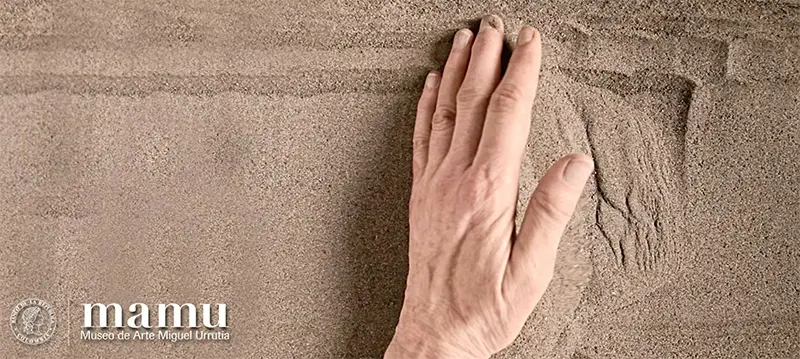
For example, Precipitación de arenas (2022) was born out of the rainfall of the Cauca River that took place in Cali during the 41st National Artists' Salon. This work consists of a thread of sand that falls from the ceiling, occupying a small room and covering furniture and objects. In her works, time and the body are fundamental.
The exhibition begins on the second floor of the MAMU and culminates in El Parqueadero with the most complete installation ever made of the Pequeño Museo del Aerolito de Santa Rosa de Viterbo (Small Museum of the Aerolith of Santa Rosa de Viterbo). This tour is woven from six axes:
1.En la fábrica de polvo (In the Dust Factory): María Elvira Escallón has explored the presence of the matter we call 'dust' from different approaches. In this case, we could understand it from three possible approaches: dust as an exponent of the accumulation of time, deposited on something, or marking a space.
2.Ante el tiempo (Before Time): several significant works by María Elvira Escallón have used the phrase as an artistic material. These phrases come either from literature, biblical texts or more informal sources.
3.Nuevas floras (New Floras): involves several series that reflect on various representations of the plant world present in the most diverse supports, architectures, or things throughout human history.
4.Explorando parentescos (Exploring Kinship): we have done little to understand the plant world. It would seem that for centuries we have unleashed such strategies of invisibilization that only plants are spared from them when it comes to decorating, eating, healing or trading.
5.Del otro lado (On the Other Side): How many times have you wondered what lies beneath the cobblestones of the avenue, what subjects are hidden behind the walls of your house, or what awaits on the other side of the neat geometry of the white cube?
6.Pequeño Museo del Aerolito de Santa Rosa de Viterbo (Small Museum of the Aerolith of Santa Rosa de Viterbo): This museum consists of various departments, collections, and historical and photographic archives that follow the wonderful and sad story of the meteorite that fell on the territory of what is now Colombia on Good Friday of the symbolic year 1810.
This anthological exhibition by María Elvira Escallón, curated by Ana María Lozano, covers her work from 1997 to the present. Escallón approaches different media such as sculpture, photography, and installation; her practice is motivated by different investigations in which she explores context, history, spaces, and architecture. Thus, she reflects on themes such as memory, ruin, wear and tear, and abandonment, considering political and economic factors and, in the case of Colombia, the armed conflict. Likewise, the artist explores the limits between nature and culture in long-term projects, which often involve interviews, in situ interventions, and fieldwork.
For example, Precipitación de arenas (2022) was born out of the rainfall of the Cauca River that took place in Cali during the 41st National Artists' Salon. This work consists of a thread of sand that falls from the ceiling, occupying a small room and covering furniture and objects. In her works, time and the body are fundamental.
The exhibition begins on the second floor of the MAMU and culminates in El Parqueadero with the most complete installation ever made of the Pequeño Museo del Aerolito de Santa Rosa de Viterbo (Small Museum of the Aerolith of Santa Rosa de Viterbo). This tour is woven from six axes:
1.En la fábrica de polvo (In the Dust Factory): María Elvira Escallón has explored the presence of the matter we call 'dust' from different approaches. In this case, we could understand it from three possible approaches: dust as an exponent of the accumulation of time, deposited on something, or marking a space.
2.Ante el tiempo (Before Time): several significant works by María Elvira Escallón have used the phrase as an artistic material. These phrases come either from literature, biblical texts or more informal sources.
3.Nuevas floras (New Floras): involves several series that reflect on various representations of the plant world present in the most diverse supports, architectures, or things throughout human history.
4.Explorando parentescos (Exploring Kinship): we have done little to understand the plant world. It would seem that for centuries we have unleashed such strategies of invisibilization that only plants are spared from them when it comes to decorating, eating, healing or trading.
5.Del otro lado (On the Other Side): How many times have you wondered what lies beneath the cobblestones of the avenue, what subjects are hidden behind the walls of your house, or what awaits on the other side of the neat geometry of the white cube?
6.Pequeño Museo del Aerolito de Santa Rosa de Viterbo (Small Museum of the Aerolith of Santa Rosa de Viterbo): This museum consists of various departments, collections, and historical and photographic archives that follow the wonderful and sad story of the meteorite that fell on the territory of what is now Colombia on Good Friday of the symbolic year 1810.