ExhibitionSeptember 22, 2011
Manuel Rodríguez Lozano
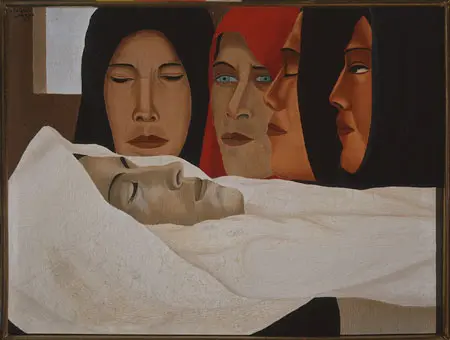
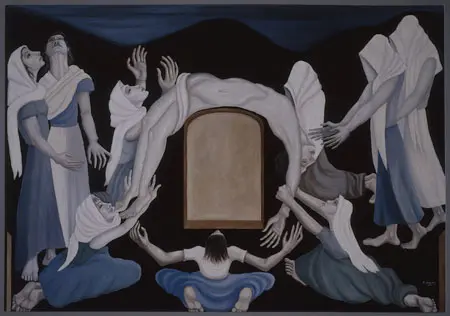
On the 40th anniversary of Manuel Rodríguez-Lozano's passing, the exhibition entitled Manuel Rodríguez-Lozano. Thought and Painting. 1922-1958 pays tribute to one of the most important Mexican painters of the Twentieth Century. Presented in the temporal exhibition area of the Museo Nacional de Arte in Mexico City, the exhibition consists of a vast and representative group of works-from public and private collections-that showcase the artistic development of the so-called "painter of desolation." Relying on an artistic language strongly influenced by the European vanguards of his time, Rodríguez-Lozano chose to take an alternative path to the one proposed by the muralists; an approach that led him to a distinct and personal proposal in which the national aesthetic acquired universal value and signification. The exhibition consists of 125 paintings presented alongside complementary materials associated with the period and cultural context in which Rodríguez-Lozano (1894-1971) produced his work; including reflections from his autobiographical book entitled Pensamiento y Pintura (Thought and Painting), published in 1960; as well as some original works by his students: Abraham Ángel, Julio Castellanos, Francisco Zúñiga, Ignacio Nieves-Beltrán (aka Nefero), Ángel Torres-Jaramillo (aka Tebo), and Antonio Reynoso. Under Arturo López-Rodríguez¿s curatorship, the exhibition discourse is organized according to four thematic axles. Entitled the "Colossal Gaze," the first of such axles presents several paintings in which monumental human figures are sometimes rendered with sculptural-like volumes, such as in La Diosa del Mar (The Sea Goddess, 1935), or are occasionally marked by a certain sexual ambiguity, as exemplified in the piece entitled IL Verdaccio (1935). Entitled "A Mexicanist Fauvism," the second segment of the exhibition presents early works like Paisaje Tropical (Tropical Landscape, 1922) that rely on intense colors and frontal planes, as well as works like Retrato de Salvador Novo (Portrait of Salvador Novo, 1924) that contain the stylized features of intellectuals from the period. "A Luminous Country" is the title of the third segment of the exhibition. It presents works like Dos Muchachas en Azul y Rojo (Two Girls in Blue and Red, 1930) that focus on themes that deal with Mexican identity. Noteworthy of this segment is the unsettling small scale series on canvas that include the piece entitled Santa Ana Muerta con Cuatro Figuras (Saint Ana Dead with Four Figures, 1933), in which Rodríguez-Lozano explores the motif of death so recurrent in the Mexican spirit and culture. Lastly, the thematic center of the fourth segment entitled "Silence and Tragedy," contains dynamic works that belong to the artist¿s so called "white period." It includes two of his most emblematic pieces: La Piedad en el Desierto (Pietà in the Desert, 1942), a fresco created for the Palacio de Lecumberri prison; and El Holocausto (The Holocaust, 1944). Both pieces foreshadow a vast production of paintings, such as EL Rapto (The Rapture, 1947), rendered with a cold palette that, with an economy of forms, creates imaginaries of women covered with shawls and immersed in desert landscapes with metaphysical atmospheres. Such paintings subtly etch notions of solitude, loss, sorrow, sadness, longing, and pain in Rodríguez-Lozano's expressive visual vocabulary; and one that, although anchored in the time and circumstances that framed his life, is also timeless and immersed in the drama of the human condition.
Gallery