ExhibitionApril 28, 2016
Magali LaraEl futuro
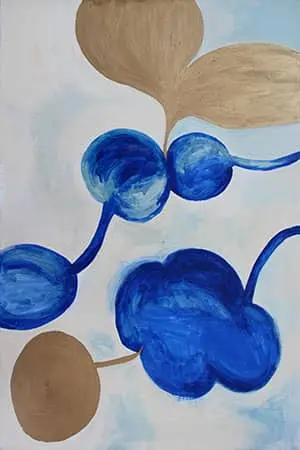
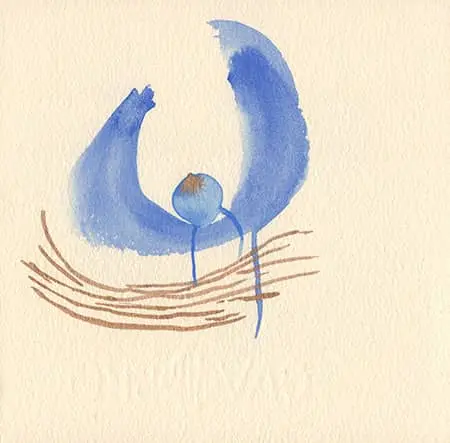
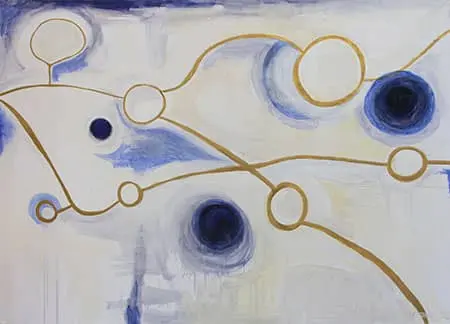
El futuro ("The Future") is the disquieting title given to ninety highly poetical works by Magali Lara, comprising small- and large-format paintings, drawings, prints on metal, and one artist's book. The exhibition speaks of the contemporary world in an expressive manner and eschews the figurative elements of the artist's earlier language, concentrating instead on abstraction. A few years back, Lara stopped incorporating into her works manuscript texts and the pictorial of draftsmanship-based representation of (real) life—those unsettling everyday situations she drew and accompanied by hand-written texts. Since the artist has not exhibited in recent times, the shift comes as a surprise to many in the audience familiar with her work. Surprise, time, change, expansion—all conditions that fit well with Estación Indianilla, an old station for the repair of mule-drawn streetcars that operated since 1880, reopened in 2006 as a cultural center. Who would have thought that no more streetcars were ever to be used or repaired? Who would have thought that Magali Lara was to leave behind the original/highly personal/widely recognized line of work that first made her known as part of the "emerging" practitioners of conceptual printmaking of the 1970s and 80s, with her local and international contributions to the artist's-book genre of the same generation? Almost no one could have predicted that the future held such a "vaccine" against repetitiveness. Among those early conceptualists, Magali Lara stood out by incorporating into the movement her gender-oriented concerns and her visual poetics. She combined line and pictorial stroke in unitary works in canvas or paper, until they began to generate polyptychs that could be small or monumental, powerful, ever-shifting. This vector has not been abandoned; it is one of the bridges between Lara's earlier and current works. The organically presented gesture of those drawings and words remains current in her work of the 1980s. Space, tremor, sharp draftsmanship, colorful matteric or washed brushstroke, expression of intimate feelings that create a globally understandable language (except for the words.) Magali Lara is explicit in her acknowledgement of the uncertainties of the future. Historicizing her various series, the artist disassembles those drawn "missives"/written drawings; retains the pictorial nuclei of the teardrops and the flowers; gathers, like plastic commas, a few fibers from a weaving; maintains the meaning of space; balances the conceptual with the pictorial; unmakes the commitments of the parts represented; establishes synonyms for the unknown future and abstract expression. Magali Lara does not engage in lyrical or strictly geometric abstraction—although she does trace circles—she posits labyrinths as another option of what is unknown about the future, and also in the balance of colors and tonalities does El futuro reveals itself dubious and uncertain. The presence of the color black remains vigorous; a warm selection of beiges, gold, and sand hues confront blues and a light blue-purple "wet on wet" that accentuates the undefined to come—as in ADN ("DNA")—and, above all, emphasizes open tones and forms that flutter into the unknown.
Gallery