ExhibitionJuly 7, 2014
The Fed-Ups (Again)
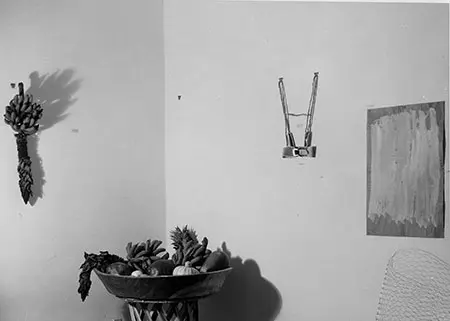
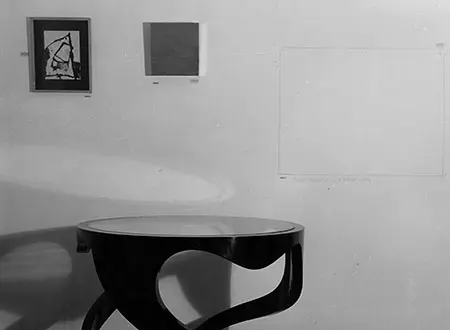
The Museo Experimental El Eco presented the exhibition entitled The Fed-Ups (Again). The name of the institution leads spectators/readers to a non-formalist perception because of the term "experiment", which also seems contradictory given that it follows the Spanish word for "museum". It is a construction created by Mathías Goeritz in the early second half of the twentieth century. The Fed-Ups (Again) is the presentation of an exhibition-manifesto and a tribute. But it is also a historic-critical revision based on texts written by Goeritz, one of the most insightful thinkers of the last century. Los Hartos (The Fed-Ups) is the title of one among several manifestos written by Goeritz. It is followed by the word "Again" in parenthesis, since it is his second version. The singular in Spanish "Estoy Harto…" (I am Fed-up…) becomes plural or "Estamos Hartos…" (We are Fed-Up…), an affirmation that anyone can relate to, from artists to house wives. The Fed-Ups presented their works in 1961 at the Antonio Souza gallery in Mexico City. For Mathías Goeritz, this began with the similarity—in Spanish—between the words "harto" (fed-up) and "artista" (artist); that is to say that everything began with something ludic and intellectual. Mathías Goeritz is an extremely intelligent, creative and spiritual neo-dada artist. Rather than focusing on religions, Goeritz concentrates in an intimate facet of spirituality, as he understands that art must offer that passage accompanied by a certain degree of humor and self-criticism. He reflects on the individual in the arts to attend the spiritual in a non-monastic, liturgical or religious sense (influenced by Hugo Ball). Mathías Goeritz created stained glass windows and other different types of works in churches and temples, also designed Judaic and catholic artifacts. They reveal elements from expressionism and minimalism, not with the goal of attaining a non-descriptive approach, but rather as way of achieving spiritual sublimation. Within Goeritz vast production, diversity serves as confirmation and precedent of that which the visual arts have been increasingly concerned with: the expansion of disciplines, the erasing of boundaries, Gesamtkunstwerk (collective interdisciplinary work) and the interaction between spectator and inhabitant. It should be remembered Goeritz's anecdote of a conversation with Philip Johnson at the Torres de Satélite (*). Both met in a party in New York City. There, Goeritz told Johnson about the Torres de Satélite and Johnson eventually traveled to see them. Once there, the renowned architect asked Goeritz: what do people think about them? A construction worker happened to walk by so Goeritz asked him: what is this? The answer sounded rehearsed but it was not: "They are us", answered the construction worker. In the publication created for the exhibition, the curator Mauricio Marcín compares past and present: "Today nobody would be scandalized by an egg being exhibited in the exhibition space of a museum, nobody would throw it against the wall. Instead, it would probably generate boredom in viewers as they have already seen every possible type of trifle exhibited." At this moment, The Fed-Ups (Again) attains a level of critical reflection—which coincides with a retrospective of Jeff Koons at the Whitney Museum of American Art in New York. Showing off and excess are the opposite of sublimation and spirituality. (*) Conversations between the author and Mathías Goeritz.
Gallery