ExhibitionAugust 18, 2023
The Occult Museo Nacional Thyssen-Bornemisza
"The Occult," curated by Guillermo Solana, brings together fifty-nine works from the Thyssen-Bornemisza collections (including both the museum's permanent collection and the private collections of various members of the Thyssen-Bornemisza family) in which they have noticed traces of the occult in their themes.
The RAE dictionary defines the "occult sciences" as follows: "mysterious practices and knowledge, such as magic, alchemy, astrology, etc., which, since ancient times, have sought to penetrate and master the secrets of nature." Refining further, one could characterize the tradition of the occult as being based on three assumptions:
1.The transmission since ancient times of secret wisdom only accessible to a few.
2.Correlations between different parts of the universe (elements, planets, temperaments, etc.) within a macrocosm and microcosm.
3.The existence of certain latent superpowers in the human being that unfold to lead us to a spiritual metamorphosis or transmutation.
Occult knowledge has survived for centuries in a hostile cultural environment - dominated first by hegemonic religion and later by rationalism and positivism - thanks to its capacity for camouflage and infiltration. And it is in the visual arts that esoteric ideas and beliefs have found the ideal terrain for their coded messages: from the hermetic allegories of the Renaissance to the manifestations of 20th-century avant-garde art.
The esoteric tradition offers us a series of codes to decipher hidden meanings. Its value consists in revealing details and aspects of the works of art that have gone unnoticed and proposing new heterodox readings.
Following the repertoire of the primary disciplines and currents included in the tradition of the occult, the exhibition is divided into seven sections:
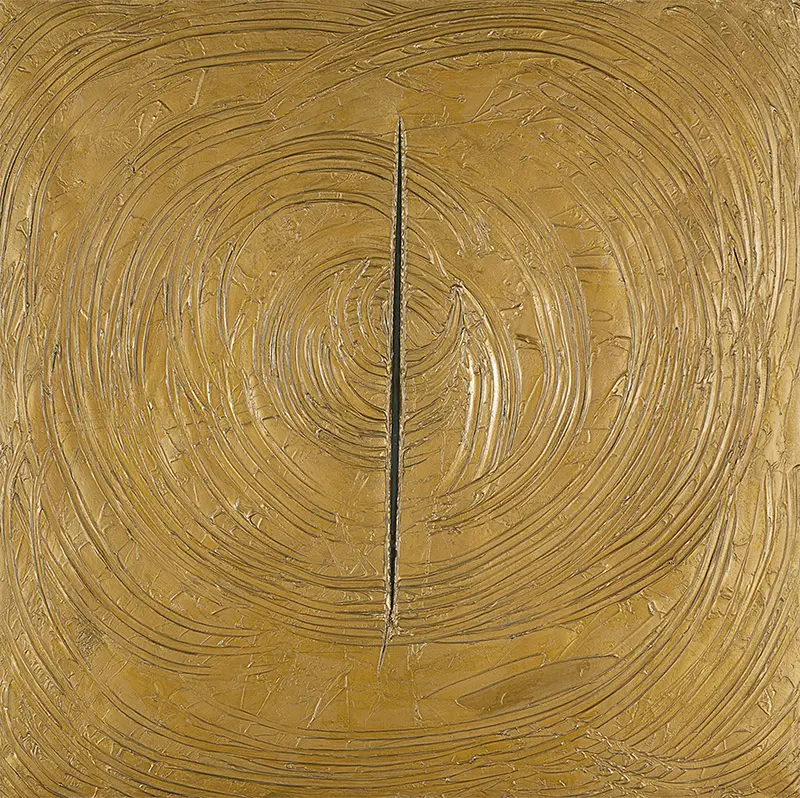
1) Alchemy: The fantastic rocks in the landscape backgrounds of Renaissance painting--especially of the Ferrara School--may allude to mining operations linked at the time to alchemical research. Alchemy reappears firmly in 20th-century art, for example, in Max Ernst or Lucio Fontana.
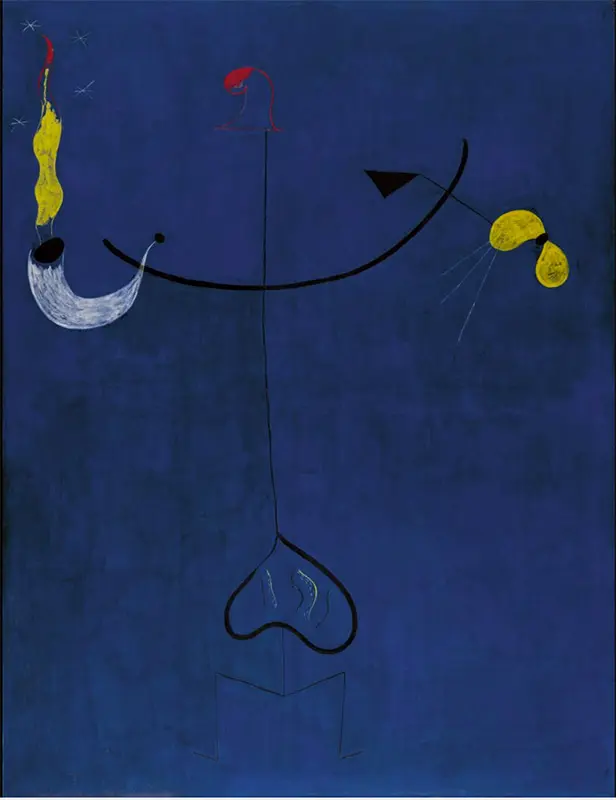
2) Astrology: The interest in celestial bodies and their influence on human life has left traces in countless works of art from different periods. It can be a zodiac on a religious tablet, a horoscope in a portrait, or the myth of the birth of a constellation. The stars and their virtual figures will once again fascinate artists such as Miró, Cornell, and Matta, among others.
3) Demonology: The fascination with the varieties of the demonic runs throughout the history of Christian iconography. Apart from the devils labeled as such, in Renaissance and Baroque paintings, there are many grotesque faces, signs of the "evil eye," and other disturbing presences that embody the wiles of the Evil One.
4) Spiritism Occultism: It was reborn in the 19th century in the form of an obsession with communication with the spirits of the dead. Fin-de-siècle painting, with its somnambulist figures in twilight or nocturnal environments, often evokes the atmosphere of spiritualist séances.
5) Theosophy: Founded in 1875 by Helena Blavatsky, the theosophical movement combined elements of the Western esoteric tradition with Eastern religions and philosophies. In the early 20th century, it enjoyed enormous cultural influence and inspired the pioneers of abstract art, such as Kandinsky and Kupka, Balla and Severini, Mondrian and Van Doesburg.
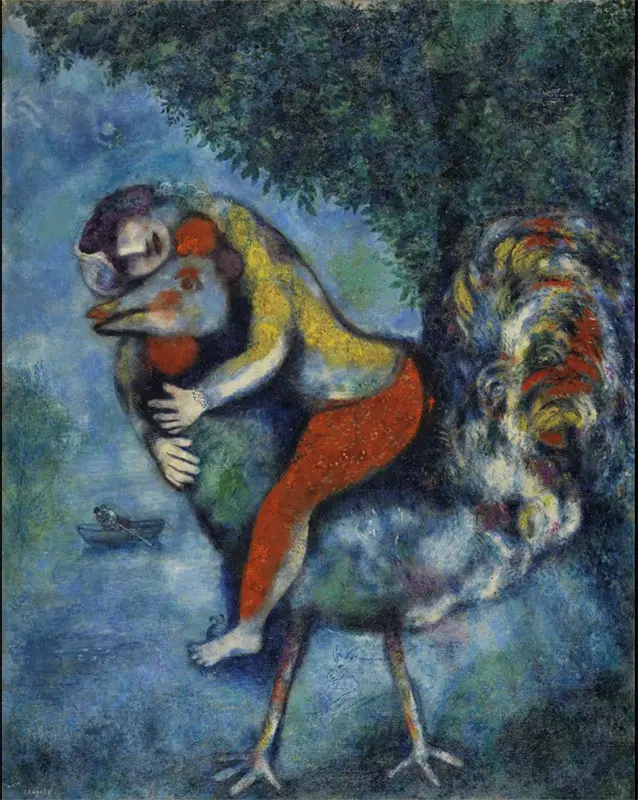
6) Shamanism: In many cultures, the avant-garde artist identifies with the shaman figure, spiritual mediator, and healer. Picasso, Chagall, Kandinsky, and Pollock are notorious cases of appropriating shamanistic objects and rituals.
7) Dreams, oracles, and premonitions: The surrealists were passionate about occultism and adopted its practices, although not necessarily its beliefs. Invested with apparent scientific rigor by psychoanalysis, the interpretation of dreams occupies a central place among their obsessions, mainly linked to premonitions and the powers of seers. The works of Dalí, Ernst, Tanguy, or Delvaux are in dialogue in this section, with artists challenging to label, such as Schad, Balthus, or Bacon.
The RAE dictionary defines the "occult sciences" as follows: "mysterious practices and knowledge, such as magic, alchemy, astrology, etc., which, since ancient times, have sought to penetrate and master the secrets of nature." Refining further, one could characterize the tradition of the occult as being based on three assumptions:
1.The transmission since ancient times of secret wisdom only accessible to a few.
2.Correlations between different parts of the universe (elements, planets, temperaments, etc.) within a macrocosm and microcosm.
3.The existence of certain latent superpowers in the human being that unfold to lead us to a spiritual metamorphosis or transmutation.
Occult knowledge has survived for centuries in a hostile cultural environment - dominated first by hegemonic religion and later by rationalism and positivism - thanks to its capacity for camouflage and infiltration. And it is in the visual arts that esoteric ideas and beliefs have found the ideal terrain for their coded messages: from the hermetic allegories of the Renaissance to the manifestations of 20th-century avant-garde art.
The esoteric tradition offers us a series of codes to decipher hidden meanings. Its value consists in revealing details and aspects of the works of art that have gone unnoticed and proposing new heterodox readings.
Following the repertoire of the primary disciplines and currents included in the tradition of the occult, the exhibition is divided into seven sections:
1) Alchemy: The fantastic rocks in the landscape backgrounds of Renaissance painting--especially of the Ferrara School--may allude to mining operations linked at the time to alchemical research. Alchemy reappears firmly in 20th-century art, for example, in Max Ernst or Lucio Fontana.
2) Astrology: The interest in celestial bodies and their influence on human life has left traces in countless works of art from different periods. It can be a zodiac on a religious tablet, a horoscope in a portrait, or the myth of the birth of a constellation. The stars and their virtual figures will once again fascinate artists such as Miró, Cornell, and Matta, among others.
3) Demonology: The fascination with the varieties of the demonic runs throughout the history of Christian iconography. Apart from the devils labeled as such, in Renaissance and Baroque paintings, there are many grotesque faces, signs of the "evil eye," and other disturbing presences that embody the wiles of the Evil One.
4) Spiritism Occultism: It was reborn in the 19th century in the form of an obsession with communication with the spirits of the dead. Fin-de-siècle painting, with its somnambulist figures in twilight or nocturnal environments, often evokes the atmosphere of spiritualist séances.
5) Theosophy: Founded in 1875 by Helena Blavatsky, the theosophical movement combined elements of the Western esoteric tradition with Eastern religions and philosophies. In the early 20th century, it enjoyed enormous cultural influence and inspired the pioneers of abstract art, such as Kandinsky and Kupka, Balla and Severini, Mondrian and Van Doesburg.
6) Shamanism: In many cultures, the avant-garde artist identifies with the shaman figure, spiritual mediator, and healer. Picasso, Chagall, Kandinsky, and Pollock are notorious cases of appropriating shamanistic objects and rituals.
7) Dreams, oracles, and premonitions: The surrealists were passionate about occultism and adopted its practices, although not necessarily its beliefs. Invested with apparent scientific rigor by psychoanalysis, the interpretation of dreams occupies a central place among their obsessions, mainly linked to premonitions and the powers of seers. The works of Dalí, Ernst, Tanguy, or Delvaux are in dialogue in this section, with artists challenging to label, such as Schad, Balthus, or Bacon.
Gallery