ReopeningMay 14, 2021
The Gallerie Degli Uffizi
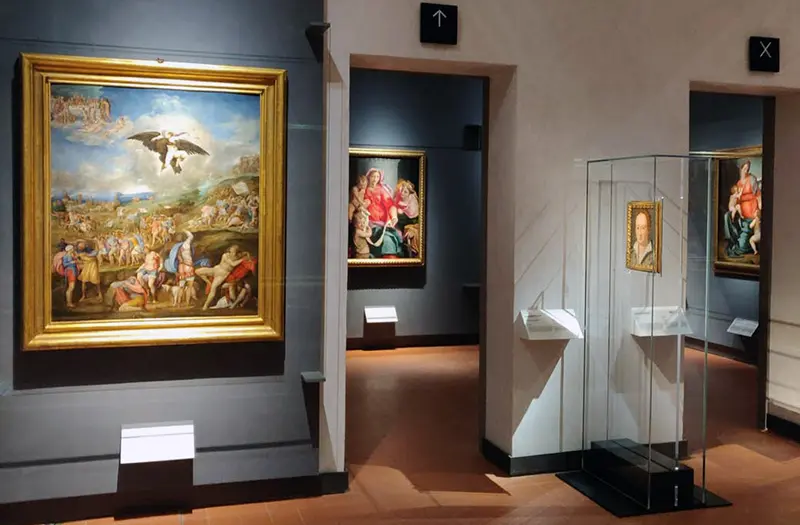
Le Gallerie Degli Uffizi in Florence, the most important art gallery in Italy, reopened its doors at the beginning of May (after more than two months of closure due to COVID). Thirteen new rooms dedicated to the great Florentine, Emilian, and Roman painting of the sixteenth century; and a fourteenth room that hosts the self-portraits of artists collected over the centuries, including Bernini, Cigoli, Chagall, Guttuso.
Uffizi reopens with changes in the entrance to the museum, aimed at streamlining and reducing queues, with a new ticket office, a new access system, and large reception areas in the part of the Vasari complex closest to the Arno.
A growth of the museum of over two thousand square meters, with the new rooms on the first floor of the Gallery (there are 129 works, many of which have never been seen by the public). Twenty-two rooms on the ground floor available from today to the Gallery (with the frescoes that unexpectedly resurfaced during the restoration work in the west wing, including the full-length portrait of Cosimo II de Medici, attributed to Bernardino Poccetti).
In the new rooms, a new museography and discourse were established. A glass of the latest generation protects the works without refraction. This technological innovation allows the visitor to approach a few centimeters from the paintings and sculptures' surface without detecting visual barriers without triggering alarms. The paintings previously exhibited in the aisles, where they were flattened with direct light to the ceiling, now take on a new prominence. New importance has been given to the extra-Tuscan schools; the canvas "Morte di Adone" by Sebastiano del Piombo is finally on view again at a height that allows every detail to be appreciated.
The next room presents two recent acquisitions by the Uffizi, paintings by Daniele da Volterra, a close follower of Michelangelo, depicting the "Sacra Famiglia con Santa Barbara" and "l'Elia nel deserto".
A work on display for the first time in the rooms dedicated to Emilian art is the canvas depicting "Omero e l'enigma dei pidocchi" by Bartolomeo Passerotti, from Pesaro, active in Bologna, comissioned for the Florentine Giovanni Battista Deti.
More information at: https://www.uffizi.it/magazine/le-nuove-sale-del-cinquecento-fiorentino-emiliano-romano-e-la-prima-raccolta-di-autoritratti-degli-artisti
Uffizi reopens with changes in the entrance to the museum, aimed at streamlining and reducing queues, with a new ticket office, a new access system, and large reception areas in the part of the Vasari complex closest to the Arno.
A growth of the museum of over two thousand square meters, with the new rooms on the first floor of the Gallery (there are 129 works, many of which have never been seen by the public). Twenty-two rooms on the ground floor available from today to the Gallery (with the frescoes that unexpectedly resurfaced during the restoration work in the west wing, including the full-length portrait of Cosimo II de Medici, attributed to Bernardino Poccetti).
In the new rooms, a new museography and discourse were established. A glass of the latest generation protects the works without refraction. This technological innovation allows the visitor to approach a few centimeters from the paintings and sculptures' surface without detecting visual barriers without triggering alarms. The paintings previously exhibited in the aisles, where they were flattened with direct light to the ceiling, now take on a new prominence. New importance has been given to the extra-Tuscan schools; the canvas "Morte di Adone" by Sebastiano del Piombo is finally on view again at a height that allows every detail to be appreciated.
The next room presents two recent acquisitions by the Uffizi, paintings by Daniele da Volterra, a close follower of Michelangelo, depicting the "Sacra Famiglia con Santa Barbara" and "l'Elia nel deserto".
A work on display for the first time in the rooms dedicated to Emilian art is the canvas depicting "Omero e l'enigma dei pidocchi" by Bartolomeo Passerotti, from Pesaro, active in Bologna, comissioned for the Florentine Giovanni Battista Deti.
More information at: https://www.uffizi.it/magazine/le-nuove-sale-del-cinquecento-fiorentino-emiliano-romano-e-la-prima-raccolta-di-autoritratti-degli-artisti